Care at Black Horse Health – Houston
Addiction care in a small Houston residential program
Black Horse Health provides medical detoxification and residential addiction treatment in Houston, Texas. Its current program emphasizes substance use alongside co-occurring mental health concerns, trauma, chronic pain, and problematic behaviors such as gambling or compulsive work. The provider describes a sixteen-bed setting with individualized treatment planning and a mixture of clinical and wellness activities. This is an overnight treatment program with a structured routine and professional support. It should be assessed through the actual care plan, including the appropriate entry level and any medical needs, rather than through accommodation features alone.
The official overview identifies young adults, professionals, and mature adults among the people it serves. Its main focus is addiction treatment that also addresses related psychological and physical difficulties. A person whose principal need is a separate psychiatric service should discuss that need directly rather than assume that every mental health condition named on the website has an independent admission pathway. The central question is how the team would address the person’s combination of substance use, symptoms, daily functioning, and existing treatment.
Detoxification and the transition into residential care
Black Horse describes medically managed detox with around-the-clock nursing, physician oversight, and medication-assisted treatment where indicated. The need for this stage depends on the assessment. The provider gives approximately five days as an example while also explaining that medical history and withdrawal needs can require a different duration. That is a planning reference, not a guaranteed timetable. The admission discussion should establish which services are needed at the start, who is responsible for medical decisions, and how the team determines readiness to move into the residential routine.
Detox and residential treatment have related but different purposes. Early medical care focuses on the person’s immediate needs and ability to engage in further treatment. The residential phase then provides time for individual and group work, daily structure, and planning for life outside the program. A quotation should make clear whether the initial medical phase is included or billed separately. The presence of medical detox and nursing does not by itself identify Black Horse as a hospital inpatient unit; the current listing concerns its detox and residential model.
Duration and individualized treatment planning
The residential program page describes stays commonly lasting thirty to sixty days, with the actual duration based on individual needs. The homepage also contains a FAQ example of sixty to ninety days after detox. These varying examples should not be turned into one compulsory length or a promise that a particular concern will be resolved within a month. The useful planning discussion concerns the initial goals, expected review points, and the criteria for extending treatment or moving to a less intensive level of support.
The treatment plan can draw together information about substance use, mental health, trauma, pain, relationships, and ordinary daily activities. These areas may interact without having one simple cause. For example, difficulty managing pain can affect sleep and participation, while distress or relationship conflict can interfere with the use of coping strategies. An individualized plan should identify the priorities that matter for that person and explain how the different professionals will coordinate their work. A broad list of specialties is most useful when it becomes a clear sequence of practical treatment goals.
Therapy methods and the work they support
Black Horse advertises cognitive behavioral therapy, dialectical behavior therapy, acceptance and commitment therapy, and EMDR alongside individual, group, and family work. These approaches are selected according to assessment rather than used as a fixed package for every resident. Cognitive and behavioral work can examine recurring patterns in everyday situations. Skills-oriented sessions may focus on managing distress, emotions, and relationships. Trauma-focused work requires its own clinical assessment and timing. The presence of EMDR on a treatment list does not establish that every resident will receive it immediately or that it is suitable for every presentation.
Group sessions provide opportunities to discuss challenges, practice communication, and hear different perspectives from others in treatment. Individual appointments allow more private exploration of personal history and specific goals. The balance between those formats should be explained during admission, including how often the resident is likely to see the relevant clinician. The program’s small size may be useful to someone seeking a more contained environment, but a sixteen-bed capacity does not itself specify the number or length of individual therapy appointments included in a stay.
The provider’s current homepage says that twelve-step participation is not mandatory and identifies SMART Recovery as an alternative. This is a meaningful distinction for someone who has a preference about peer support or has had a mixed experience with a previous recovery community. Clinical treatment and peer-support participation serve different roles and can be discussed separately. The resident can explore which resources they will realistically continue using after discharge, rather than choosing a format solely because it is offered during the residential program.
Chronic pain, trauma, and related difficulties
Chronic pain is a prominent part of Black Horse’s published service description. The provider connects pain management with its addiction and mental health work, using an integrated approach rather than treating every difficulty as an isolated issue. For someone already seeing a pain specialist or taking prescribed medication, coordination is particularly important. The program should explain who reviews the existing treatment, what interventions are proposed, and how follow-up will continue after the stay. This profile does not interpret a general claim about managing pain as a guarantee that medication can be stopped or that every underlying condition will resolve.
Trauma is also included in the program’s stated scope. The appropriate work may involve understanding the relationship between past experiences and present difficulties, improving coping, or undertaking a specific therapy when clinically suitable. A trauma-informed environment should be reflected in how the team communicates, seeks consent, and plans treatment. It does not mean that every resident needs to disclose traumatic experiences in a group or follow the same method. The proposed plan should account for the person’s readiness and other clinical priorities, including any initial medical stabilization.
The provider also describes support for process addictions, including gambling, sexual behavior, and work-related patterns. These concerns need a careful assessment of their effect on the person’s life and relationships. The term should not be used to collapse distinct diagnoses into one category or to assume that ordinary enthusiasm for an activity is a clinical disorder. Likewise, references to food-related behaviors do not establish a specialized eating-disorder treatment program. Someone seeking that kind of care needs explicit confirmation of the relevant expertise and medical support before considering admission.
Family participation during and after treatment
Black Horse’s family support information describes education, communication work, therapeutic meetings, and support groups. The current homepage identifies a Wednesday-evening Zoom meeting for families. This gives relatives a way to participate even when they are not staying in Houston. The admission team can explain who may attend, what the sessions cover, and how the resident’s consent affects the sharing of clinical information. General education for relatives and a private family therapy appointment should not be assumed to be the same service.
Family work can address the practical changes needed when the resident returns home: boundaries, communication, responsibilities, and the difference between support and taking over another adult’s decisions. It can also give relatives space to address their own concerns. The provider describes family involvement across the treatment pathway and continuing support after residential care. The exact arrangements should be agreed rather than treated as an unlimited service included for every relative. A useful plan identifies what the family can reasonably do and which responsibilities remain with clinicians and other professionals.
The residential environment and daily routine
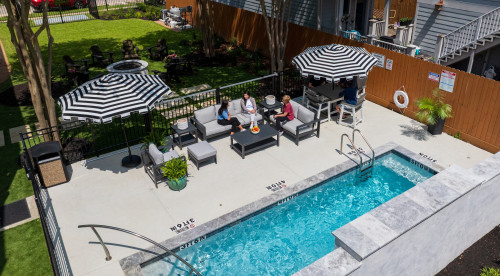
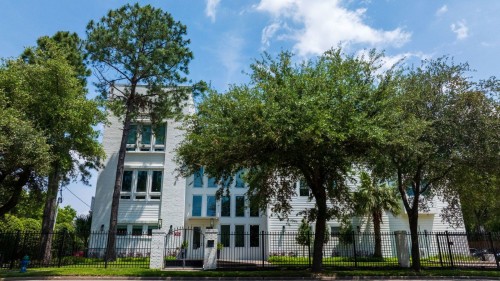
The official website advertises private rooms, prepared meals, an exercise area, and wellness programming. The current Recovery.com profile describes private or shared rooms and places the facility in Houston’s Heights neighborhood. Those descriptions support confirming the exact room type in the quotation rather than guaranteeing a private bedroom for every admission. The residence is part of an urban treatment setting, with communal activities and a clinical schedule. Photographs of a pool or outdoor lounge do not establish unrestricted access regardless of a resident’s treatment stage or health needs.
Published wellness activities include movement, yoga, art or expressive work, and nutrition and fitness assessments. These can provide different ways to engage in the day and support routines beyond talking therapy. Their role should be connected to the individual’s interests and capacity. A person with chronic pain, limited mobility, or other physical concerns needs a schedule they can participate in appropriately. The program should clarify how activities are adapted and which are optional, while preserving time for the core clinical work and sufficient rest.
Fees and current payment information
Recovery.com currently gives an estimated US$49,500 for thirty days, checked October 20, 2026. This is a third-party program estimate, not a verified tariff published by Black Horse. It should not be applied automatically to detox, a longer residential stay, or outpatient treatment. The numerical listing here refers to that thirty-day estimate and does not imply a fixed calendar-month price. An itemized quotation should identify the room, clinical services, medication, assessments, and any additional charges relevant to the proposed admission.
The current secondary listing describes private payment. The reviewed official pages do not establish a comprehensive insurance participation schedule or a guaranteed reimbursement arrangement. Anyone planning to use insurance should confirm benefits for the exact services and dates, including the difference between possible reimbursement and an agreement to accept an insurer’s payment as full settlement. The provider’s current official contact number is +1 713-702-3043, also shown on its contact page. A phone number displayed by a directory may serve a different tracking or referral function.
Step-down care is reserved for residential graduates
Black Horse’s current homepage explicitly states that its partial hospitalization, intensive outpatient, and ordinary outpatient services are available only to graduates of its residential program because of space constraints. This is important for someone looking for direct outpatient admission: the existence of those services does not mean that a new client can enter them independently. The team should explain which step-down option may be available, its schedule and location, and the practical arrangements for housing, transport, work, and clinical follow-up after overnight treatment ends.
The provider also describes alumni contact, ongoing groups, check-ins, and aftercare planning. The most useful transition plan connects these resources with the resident’s actual home circumstances and existing clinicians. People who live outside Houston should establish which support can continue remotely and which requires attendance locally. Readers comparing Black Horse with programs elsewhere can explore treatment providers in the United States, while keeping its small residential setting, combined pain and addiction focus, and graduate-only outpatient pathway central to the comparison.
Conditions
Levels of care
Settings
Amenities
Treatment approach
Medical assessment and withdrawal support, CBT, DBT, ACT, EMDR when appropriate, individual/group/family therapy, optional twelve-step or SMART Recovery support, movement and expressive activities, pain-related care and continuing-care planning
Fees & admissions
USD 49,500 / program
Recovery.com estimated USD 49,500 for thirty days, checked October 20, 2026. This is a third-party program estimate, not a provider tariff or a fixed calendar-month price. It does not establish the cost of detox, an extended residential stay, or outpatient care. Confirm the room, clinical services, medication, tests, additional charges and any insurance or reimbursement arrangement for the exact admission.
Confirm the current program, duration, accommodation and included services directly with the center.
Discuss medical detox needs, substance use and co-occurring concerns, current medications, the proposed room, treatment duration and itemized fees. Confirm family participation and which graduate-only step-down services can be arranged after residential care.