
Care at Celebrate Hope — San Juan Capistrano
Christian residential treatment in Orange County
Celebrate Hope is a Christian addiction treatment program associated with San Juan Capistrano in Orange County, California. Its current website describes a residential recovery environment in which clinical treatment, Christian counseling, Bible study, worship, and fellowship are integrated. The faith component is central to the program’s identity, rather than a small optional activity added to a general treatment schedule. Recovery.com describes the service as treating adults with substance use and co-occurring mental health needs. Someone considering admission should understand both parts of that offer: the clinical plan and the explicitly Christian setting in which it is delivered.
The program may be relevant to people comparing treatment options in the United States who want their religious beliefs to have an active place in recovery. Celebrate Hope’s official material presents a relationship with Jesus Christ, spiritual renewal, and participation in a faith community as part of its work. Those aims should be understood as the provider’s religious framework, not as clinical outcome guarantees. A prospective client can discuss how that framework fits with their own beliefs, previous treatment, and current needs before deciding whether the program’s daily environment is a comfortable and constructive match.
How faith and clinical care are combined
The official program description includes individual and group therapy, one-to-one Christian counseling, family support, life skills workshops, recreational activities, and care for co-occurring conditions. Bible study and worship appear alongside those services. This combination means that different sessions may have different purposes: a clinical appointment can address symptoms and behavior, while a spiritual discussion may focus on faith, meaning, or religious practice. Admission planning should identify the professionals responsible for each part and the expected schedule. Christian counseling should not be assumed to replace a medical assessment or the specific treatment needed for an identified psychiatric condition.
Celebrate Hope’s location page describes a Christian interpretation of the twelve-step model and a connection with local faith-based recovery communities. It also emphasizes the availability of churches and Celebrate Recovery meetings in Orange County. This establishes the orientation of the program, but not a fixed itinerary of outside meetings for every resident. The person’s treatment stage, transport arrangements, and clinical needs may affect participation. Someone already involved in a different recovery community can explain that history during assessment and discuss how ongoing support will connect with the program’s Christian fellowship and the plan for returning home.
The provider’s teaching centers on a change in daily life, values, and relationships as well as discontinuing harmful substance use. Its official pages describe practical coping skills, healthy routines, family involvement, and life skills training. Those elements give the faith-based approach a practical context: the work is intended to extend into decisions and routines outside the treatment setting. The actual plan should show how progress will be reviewed and how individual concerns will be addressed. A broad promise of spiritual transformation should not be used in place of clearly defined clinical goals or an explanation of the services included in the stay.
Assessment and medically supervised detoxification
The admissions process begins with a call or online enquiry, followed by a discussion of the program, insurance, packing, and visitation. Staff can also help arrange travel and airport transfers. The official page identifies Orange County’s John Wayne Airport and Los Angeles International Airport as possible arrival points. The itinerary should follow acceptance into an appropriate level of care, rather than precede the clinical discussion. Substance use history, medication, physical health, and psychiatric concerns can affect the admission plan, including whether detoxification is needed first and which services will be responsible for that stage.
Celebrate Hope advertises medically supervised detoxification with medication when appropriate and round-the-clock supervision. The official detox page says the approach is adapted to the person’s health, history, age, and pattern of substance use. It identifies care for alcohol and a range of illicit or prescription drug problems, but does not publish a single protocol or a guaranteed admission threshold for every presentation. The relevant medical professional should explain the proposed setting, monitoring, medication responsibilities, and any circumstances that would require hospital care. Continuous supervision should not be interpreted automatically as a physician physically present at all times.
The detox description also includes nutritional support, stress management, therapy, and faith-based activities as appropriate to the person’s condition. These elements should be sequenced around clinical needs, rather than treated as a uniform schedule that begins immediately on arrival. Detoxification and the subsequent psychological program have different purposes and may involve different staff or charges. The admission agreement should establish how the transition occurs, whether the same accommodation is used, and how the length of each stage is reviewed. Any existing prescribing clinician should be involved when appropriate and with the client’s permission.
Co-occurring mental health treatment
The official dual-diagnosis page describes assessment for mental health conditions alongside substance use. It names depression, bipolar disorder, anxiety-related conditions, post-traumatic stress, ADHD, and certain personality-related difficulties among the presentations considered. These are areas of advertised work, not an assertion that every person with one of those diagnoses can be treated safely in the same residential setting. The assessment should clarify current symptoms and functional needs, including how medication management and psychiatric review will be provided. A primary addiction admission with co-occurring care should not be confused with an unrestricted acute psychiatric hospital service.
Celebrate Hope says its co-occurring approach can include individual and group therapy, medication management, nutritional support, recreation, and Christian counseling. Recovery.com additionally lists CBT, DBT, EMDR, family therapy, and psychodrama among the center’s therapies. Those named modalities are third-party descriptions in the sources reviewed for this profile; their current availability, practitioner, and suitability should be confirmed with the provider. A useful treatment plan explains which method is proposed for a specific concern and how it will be coordinated with the rest of care. A long therapy menu is less informative than the appointments actually scheduled for the individual.
Residential life and the role of community
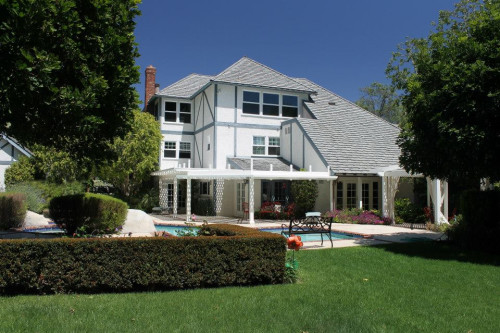
The website presents Celebrate Hope as a residential recovery retreat with structured daily care and a shared faith community. Its public pages emphasize an Orange County setting, but do not establish a universal room configuration or a private bedroom for every resident. Recovery.com gives a broad occupancy range, which should not be treated as the capacity of an independently verified single house. Before admission, the provider should identify the proposed accommodation, sleeping and bathroom arrangements, accessibility, staff presence, and transport between any separate locations. A private treatment program is not necessarily a program with private bedrooms.
Recreation, physical activity, and time in the surrounding area are described as parts of the program. The location page discusses beaches, parks, walking, and access to a local faith community, but those descriptions do not guarantee particular excursions or unlimited access to outside facilities. The actual daily schedule should make clear how recreation fits around therapy, medical appointments, worship, meals, and rest. Physical limitations, dietary needs, and communication responsibilities should be discussed before arrival. These practical details can affect participation as much as the appearance of a residence or the broader appeal of the California setting.
Family support is included in the official treatment description, and the admissions team can explain visitation arrangements. Family therapy, education for relatives, and ordinary social visits serve different purposes and should be specified separately. A person may want some relatives involved while maintaining boundaries with others; participation should reflect consent and the therapeutic plan. The program can also help organize an intervention when requested, according to the admissions page. That is a separate service and should be discussed in terms of who provides it, how the person’s clinical needs are assessed, and what costs or travel arrangements apply.
Length of stay and continuing care
Recovery.com describes 30-, 60-, and 90-day treatment options. The official admissions page advises packing for two to three weeks, but that instruction does not establish the full clinical duration or a maximum stay. These statements can be reconciled by obtaining an individualized admission plan rather than treating packing guidance as a quoted program term. The expected length, review points, and reasons for extending or changing care should be discussed in advance. Funding authorization and clinical recommendations may also differ, making a written explanation of the proposed course useful before a family makes financial or travel commitments.
The official program overview describes services extending from detoxification through aftercare, while the secondary listing identifies relapse-prevention support. The reviewed public pages do not provide a universal aftercare timetable or a guaranteed number of included sessions. Discharge planning should identify the next professional appointments, medication follow-up where needed, community recovery resources, and the living situation to which the person will return. For a client who values Christian fellowship, the plan may also address connections with an appropriate local church or recovery group. Those community links should complement, rather than silently substitute for, any continuing clinical treatment required.
Fees, documentation, and direct contact
As checked on October 20, 2026, Recovery.com estimates a cash-pay rate of USD 1,000 per day. This is a third-party estimate, not a provider-published tariff or a guaranteed monthly package. The earlier practice of multiplying the daily figure into a presumed 30-day fee does not establish what Celebrate Hope will actually charge. A current quotation should distinguish detoxification, residential treatment, accommodation, outside medical services, transport, and aftercare. The admissions page describes insurance verification, but verification alone does not guarantee payment. The exact plan, authorization requirements, deductible, coinsurance, and exclusions need to be established for the admission.
The official website currently displays +1 866 677 1872 as its contact number. The provider’s own licensing information page contains an older expiration date, so that display should not be treated as independent confirmation of present regulatory status; current documentation can be requested for the actual service and location. The practical decision rests on a verified clinical fit, a clear accommodation and staffing plan, and agreement with the program’s Christian orientation. Celebrate Hope’s distinguishing feature is the integration of substance-use treatment, co-occurring support, structured daily life, and explicitly Christian counseling and fellowship within a residential recovery setting.
Sources checked October 20, 2026: official website and direct telephone, program identity and provider-displayed licensing information, programs, detoxification, co-occurring treatment, admissions, Orange County and faith-community approach, and attributed secondary therapy, duration, and fee information. Current licensing and clinical outcomes have not been independently verified.
Conditions
Levels of care
Settings
Amenities
Treatment approach
Individual/group and Christian counseling, medication management when indicated, family support, life skills, recreation and a Christ-centered twelve-step interpretation; secondary listing names CBT, DBT, EMDR and psychodrama, whose current availability should be confirmed
Fees & admissions
USD 1,000 / day
Recovery.com estimates USD 1,000/day, checked October 20, 2026. Third-party guidance, not an official tariff or a guaranteed USD 30,000 monthly package. Remove the simple daily-to-monthly multiplication. Quote detox, residential accommodation, outside care, transfers and aftercare separately where applicable; insurance verification does not guarantee payment.
Confirm the current program, duration, accommodation and included services directly with the center.
Confirm detox suitability, spiritual-program fit, clinical exclusions, availability and aftercare directly.