
About Coachella Valley Recovery Center — Cathedral City
Coachella Valley Recovery Center provides residential addiction treatment and withdrawal support in Cathedral City, California, near Palm Springs. The provider describes individual and group treatment, attention to co-occurring mental health needs, and a small residential setting. Its current public facility tour highlights La Vista House, while older directory material describes another Cathedral City address and a wider group of homes. This profile makes those distinctions clear so that a prospective resident can confirm the exact property, care arrangements, room, and fee before admission. The setting may be appealing, but the treatment decision should rest on the services available to the individual.
La Vista House and the current address
The official website currently publishes 29660 Avenida La Vista, Cathedral City, CA 92234. Its contact page gives (866) 202-8765 for inquiries. Many program pages use Palm Springs as a regional reference; the published street address is in Cathedral City. Before arranging transport, ask admissions to confirm the receiving house and entry instructions. Do not use a regional page title, an old directory address, or the location shown in a photograph as a substitute for a confirmed placement.
The California Department of Health Care Services public dataset identifies Coachella Valley Recovery Center Inc. at the Avenida La Vista address under application 330196BP. That record lists residential detox, incidental medical services, six treatment places, and a license expiration date of December 31, 2027. The layer was last edited August 17, 2026, so these are dated administrative details rather than a live capacity or availability report. They support checking the specific house and service with admissions; they do not establish that every property associated with the brand has the same authorization.
The independent Recovery.com listing describes 18 beds and more than one home, with an older location reference to Verano Road. The six-place state record should not be expanded into an 18-person capacity for La Vista House. Likewise, a difference between these descriptions does not prove that another property has closed or lacks authorization. Ask which house is proposed, how many people currently live there, whether treatment groups combine residents from different houses, and which license applies to that exact address.
Detox assessment and residential support
The provider’s detox page describes medical assessment, monitoring, and medication when appropriate during withdrawal. Ask the clinical team which withdrawal risks and health conditions can be managed at the receiving residence and which require another setting. Clarify nursing coverage, prescriber access, overnight support, and emergency transfer arrangements. The state record’s incidental medical services designation and the provider’s description of medical support do not make the house a general hospital or establish every resource associated with hospital-level care.
When requesting an assessment, prepare the current medication list, recent substance-use pattern, medical history, and any previous withdrawal complications. Ask how records are reviewed and how the team communicates with existing clinicians. If detox is recommended, establish whether residential treatment follows at the same house and whether a new clinical or financial approval is needed. An advertised sequence of services cannot determine the safest plan for one person, and a published price does not predict how long withdrawal support will be necessary.
The residential program uses both residential and inpatient terminology. It describes structured living, supervision, and therapy, with stays commonly framed as 30 to 90 days while allowing for other durations after assessment. Ask what the proposed stay is intended to accomplish, when progress is reviewed, and how changes in the plan are explained. A more precise recommendation should connect the duration to the resident’s needs and next stage of care, rather than present a standard package as suitable for everyone.
Clinical work and co-occurring conditions
Coachella Valley Recovery Center lists individual and group therapy, psychoeducation, relapse-prevention work, and trauma-informed care, alongside activities such as yoga and music. Ask for the actual weekly schedule and distinguish licensed clinical sessions from recreation, peer support, and free time. Useful details include the frequency of individual appointments, the usual group size, the professionals involved, and how the program is adapted when someone has difficulty participating. A broad treatment menu is not a guarantee that every named service will be part of a particular resident’s plan.
For someone with depression, anxiety, or trauma-related difficulties alongside substance use, ask how those needs are assessed and coordinated with addiction treatment. Clarify psychiatric appointment availability, medication management, and the conditions the program cannot safely accommodate. If a specialist intervention is a priority, ask who provides it and whether it is clinically indicated at this stage. The phrase “dual diagnosis” should lead to a concrete explanation of care rather than an assumption that the residence can manage every psychiatric presentation.
The directory listing highlights professionals, executives, and veterans. Those descriptions may indicate experience with particular concerns, but they do not establish an exclusive population, a separate military unit, or permission to work throughout the day. Ask how job-related responsibilities, occupational stress, military experience, or privacy needs would be addressed in the actual program. If technology access is important, confirm what is allowed, when it is allowed, and how it fits with treatment. A flexible policy should be understood before making promises to an employer.
Rooms and amenities at the assigned house
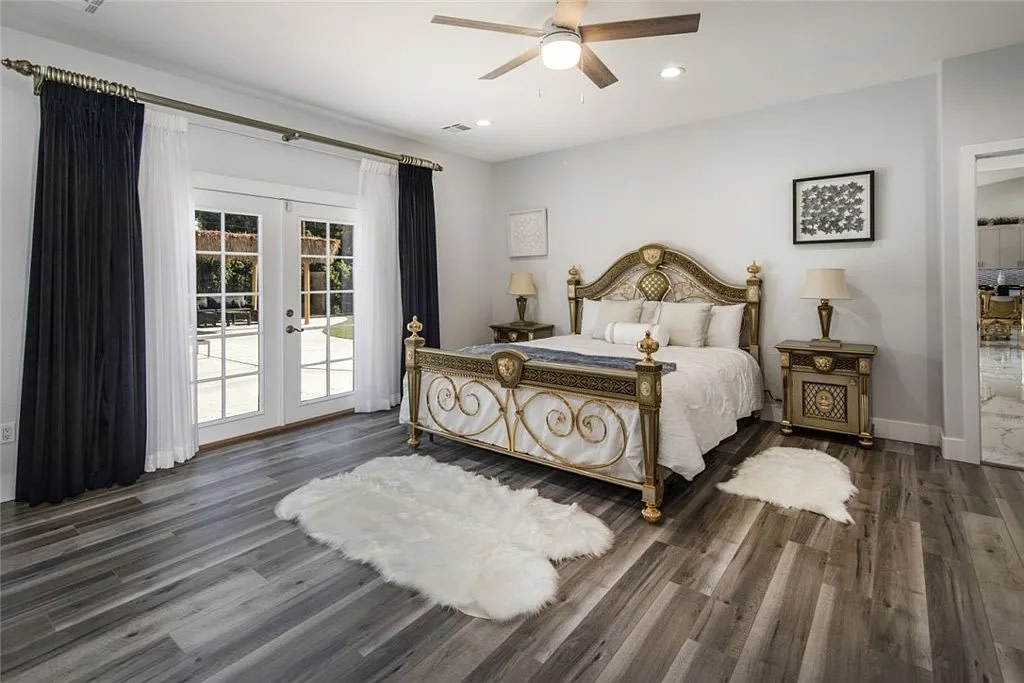
The current official tour describes semi-private rooms at La Vista House, chef-prepared meals, common areas, Wi-Fi, an outdoor lounge, and a pool and spa. Semi-private means the accommodation should not be marketed as a guaranteed private bedroom. Ask about the number of occupants, bathroom sharing, storage, the process for resolving a roommate issue, and the room offered on the proposed admission date. If the quotation names another house, confirm its features directly rather than transferring La Vista’s amenities to that property.
Accessibility and everyday comfort also deserve a specific discussion. Ask about steps, bathroom layout, distances between rooms, dietary requirements, laundry, outdoor access, and the help available overnight. Confirm which activities need clinical permission and whether the pool and other facilities are available during the proposed stay. A comfortable residence can be an important preference, but amenities should be compared alongside staffing, therapy access, and the ability to meet the person’s needs on a difficult day. The desert environment itself does not guarantee a clinical result.
Family visits and preparation for returning home
The program information encourages family involvement and says visiting arrangements may depend on the treatment stage and medical recommendations. Ask about the current policy for the assigned house, how appointments are scheduled, and whose consent is required before information is shared. Clarify whether relatives can join educational or therapeutic sessions remotely, especially when they live far away. A visiting opportunity and a structured family session are different experiences; knowing which is offered helps relatives prepare and avoids arranging travel around an unconfirmed assumption.
Family work can be used to agree on practical support after discharge. A resident might need help reaching appointments, obtaining prescriptions, arranging housing, or discussing household expectations. Ask how the team helps identify workable responsibilities while respecting the resident’s choices and privacy. If returning to the previous household is unsuitable, request alternative planning early. Participation by a relative does not guarantee that a relationship will improve, and it should not be used as evidence that every discharge concern has already been resolved.
The provider says relapse-prevention and follow-up planning begin during treatment. Ask for the specific next service, its location, start date, cost, and responsible clinician. Its public pages discuss subsequent outpatient care, but that does not establish an onsite outpatient clinic at La Vista House or a reserved place in another program. If the person returns outside the area, request a coordinated handoff to local care and clarify how the residential team will share records and support the transition with the resident’s permission.
Daily residential and detox estimates
On October 20, 2026, Recovery.com listed estimated cash prices of $1,000 per day for residential treatment and $1,200 per day for detox. These are separate third-party service estimates, not a provider-issued tariff or proof of a price for a particular room at La Vista House. This profile retains the residential daily amount as the dated reference. It does not combine the two care levels into a single residential range, and it does not assume that the detox amount applies throughout the whole stay.
At an unchanged $1,000 daily rate, 30 residential days would total $30,000 by arithmetic. That calculation is not a quoted 30-day package, and the actual agreement may depend on the assessed plan, property, room, and included services. Ask for an itemized quote identifying medical appointments, therapy, medication, laboratory work, meals, transport, and any outside care. Clarify how billing changes between detox and residential care, whether a longer stay changes the rate, and how additional charges are communicated before they are incurred.
The admissions page describes an initial inquiry and assessment, with assistance reviewing insurance. The provider mentions commercial plans and networks, but a logo or insurer name does not establish coverage for a particular member. Verify the exact plan, legal entity, receiving address, and level of care. Ask about network status, authorization, deductible, coinsurance, deposits, cancellation, and refunds. If an insurer approves fewer days than the treatment team proposes, request a clear explanation of the clinical and financial options before deciding what to do next.
Comparing the program with other options
Coachella Valley Recovery Center may be relevant when its assessed residential and withdrawal services fit the person’s needs and the assigned Cathedral City setting suits their preferences. Compare it with other United States treatment providers using consistent questions about the actual house, medical resources, room sharing, daily costs, and continuing care. The residential care guide and co-occurring conditions guide can help organize that discussion. The most useful next step is a current, individualized plan whose clinical and financial details both name the correct facility.
Sources and verification
Reviewed October 20, 2026. Sources include the linked current official program, contact, admissions, and La Vista House tour pages, Recovery.com estimates, and the California DHCS facility dataset, layer last edited August 17, 2026. Dated records do not establish current availability. Exact placement, medical suitability, insurance, and fees require confirmation.
Destinations
Conditions
Levels of care
Settings
Program approach
Individual and group therapy, psychoeducation, trauma-informed and co-occurring care, relapse-prevention planning, family participation, and supplementary wellness activities
Fees & admissions
Estimated USD 1,000 / day
Recovery.com checked 2026-10-20 estimates USD 1,000/day residential and separately USD 1,200/day detox. Not an official tariff or quote for a particular La Vista room. USD 30,000 for 30 residential days is arithmetic only at unchanged rate. Confirm exact house, service, room and inclusions; do not combine care levels into one range.
Confirm the current program, duration, accommodation and included services directly with the center.
Clinical assessment of substance use, withdrawal, mental and physical health, and medication. Confirm exact receiving house, current authorized services, overnight staffing, room sharing, benefits, quote and discharge plan.