
About Covenant Hills Women’s Treatment Center — Dana Point
Covenant Hills Women’s Treatment Center in Dana Point
Covenant Hills provides addiction treatment for adult women in Dana Point, California, with a choice between a Christian track and a traditional 12-Step approach. The organization also publishes a San Juan Capistrano contact address, which appears in some directory listings. The women’s overnight residence is the Dana Point program, not the contact office. This distinction is useful when planning travel, comparing settings, or asking where a person will live during treatment and any later transition to outpatient care.
The provider’s current facilities page identifies separate women’s and men’s campuses, in Dana Point and San Clemente respectively. This profile concerns the women’s program. Its approach combines substance use treatment with attention to co-occurring mental health concerns, individual circumstances, and continuing recovery support. Ask admissions how the proposed clinical plan addresses the applicant’s priorities, how the two tracks operate in practice, and whether the available residential setting fits her medical, psychiatric, accessibility, and daily living needs.
The residence, contact address, and documented capacity
California’s public substance use facility dataset, updated August 17, 2026 and reviewed for this profile on October 20, identifies the women’s residence under record 300074CP. It lists 34248 Via Santa Rosa, Apartments A, B, and C, Capistrano Beach, a residential program for women with 14 treatment places. The provider describes its women’s campus as Dana Point and also states a maximum of 14 women. This is a small shared program; the capacity does not indicate a private house reserved for one client.
The same state record identifies residential services and incidental medical services, with a displayed expiration date of November 30, 2026. That description does not establish hospital admission or an onsite detoxification unit. The provider separately lists 32236 Paseo Adelanto, Suite G, San Juan Capistrano as a contact address. Use the current admissions number, 800-662-2873, to confirm where an assessment occurs and where a resident should arrive. Request current documentation for the exact service and admission date.
A separate state record, 300074DP, identifies certified nonresidential services at 27184 Ortega Highway, Suite 206, San Juan Capistrano, with an October 31, 2027 expiration date in the reviewed dataset. The website footer displays an older date for that record. Neither the footer discrepancy nor a different contact address establishes closure. It does reinforce the value of confirming the current outpatient location directly. Services delivered after residential treatment should not automatically be assumed to take place inside the women’s residence.
Understanding the 60-day model
Covenant Hills promotes a 60-day treatment model, but its current traditional-track page explains that the second phase moves from a highly structured residential program toward less structured transitional and intensive outpatient care. Therefore, sixty days should not automatically be read as sixty nights in the same residential room. Ask for a written schedule identifying the anticipated residential period, transition criteria, later clinical hours, housing arrangements, and review points. Clinical recommendations and financial arrangements may produce a different individual course.
The provider describes day treatment for suitable clients who live at home or in a sober-living environment while attending scheduled clinical activities. Its broader program also includes intensive outpatient treatment and aftercare. Ask who determines readiness for each stage, what support remains available outside scheduled sessions, and how a change is handled if the planned step-down does not suit the person’s needs. The directory’s explanations of residential care and outpatient care can help make those distinctions clearer.
Detoxification is arranged with an affiliated medical facility
The provider’s current detoxification information says applicants are assessed to determine whether medical withdrawal management is needed. Where it is recommended, the person is directed or transferred to an affiliated medical facility. This is an important practical limit: an enquiry about the women’s residence does not establish that withdrawal care will occur there. Ask for the receiving facility’s name, address, clinical resources, transportation plan, and the criteria for returning or transferring to the residential program.
Discuss recent substance use, prescribed medications, previous withdrawal experiences, medical conditions, and mental health needs with the clinical team. Confirm which organization accepts responsibility during each stage, how information is shared with consent, and whether there are separate admission assessments or bills. A place in residential treatment may depend on the outcome of the initial assessment and subsequent stabilization. Obtain a plan for what happens if the first receiving service recommends a different level or longer course of care.
Choosing between the Christian and traditional tracks
The Christian track incorporates explicitly Christian spiritual work alongside clinical treatment. The traditional track uses a 12-Step framework and describes a personally understood higher power. Covenant Hills says clients can choose a track and can switch during treatment. Someone seeking a wholly secular program should ask detailed questions about the daily schedule, shared groups, language, spiritual expectations, and available alternatives. Optional Christian participation does not mean that the traditional track has no spiritual content.
The current facilities page states that the two tracks receive the same standard of clinical care and aftercare planning. Ask how spiritual counseling is distinguished from psychotherapy, who provides each service, and how a person’s preferences are recorded. A prospective resident may want Christian discussion, be undecided about faith, or prefer to keep religion separate from treatment. The useful question is whether the program can explain how it will respect that preference while delivering the agreed clinical work.
Personal choice also applies within a women-only setting. The provider discusses experiences such as parenting, relationships, trauma, and body image, but those subjects are not universal or equally important for every woman. Ask how clinicians establish the individual’s goals, avoid assumptions, and offer private discussion when a topic is unsuitable for a group. Gender-specific care should still be individualized. Questions about pregnancy, reproductive health, or a particular trauma history should be addressed directly rather than inferred from broad marketing examples.
Clinical work and psychiatric suitability
Current primary information describes individual and group therapy, family counseling, psychological assessment, relapse-prevention work, and treatment for co-occurring concerns. Ask for the expected frequency of individual appointments, the size and purpose of groups, and the process for reviewing progress. The provider also describes a Gorski-model relapse-prevention curriculum. A useful discussion goes beyond the name of a model to the actual work proposed: recognizing personal warning signs, practicing responses, and developing a continuing-care plan relevant to the resident’s home circumstances.
Co-occurring treatment does not automatically establish suitability for every psychiatric presentation or the resources of a hospital. Ask who assesses mental health needs, who can prescribe and monitor medication, and what happens if symptoms require more intensive assessment. For anyone already receiving treatment, discuss how existing clinicians can contribute with consent. The directory’s guide to co-occurring conditions can support these questions, while the specific admission decision must reflect current needs and the facility’s actual capabilities.
Secondary information makes particular claims about medications used in recovery. Rather than assuming every medicine is available or prohibited, ask about the exact prescription, formulation, prescriber, pharmacy, and follow-up schedule. Clarify whether an outside clinician continues to prescribe, whether appointments occur remotely or elsewhere, and whether transport or professional fees are additional. The answer should be documented before arrival, especially when a transition between detoxification, residential, and outpatient services would involve more than one clinical team.
Accommodation and practical access
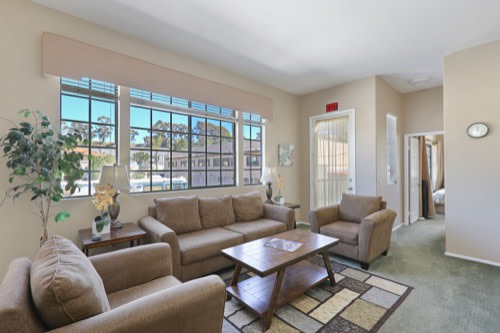
The provider describes a coastal, home-like environment within walking distance of the Pacific. That description does not make the program a beachfront resort or establish unrestricted independent outings. Ask about the actual bedroom, bathroom sharing, stairs, laundry, storage, meal arrangements, and accessibility. Secondary accommodation labels include shared rooms and broader private-or-shared options, without resolving a current private-room offer at this residence. Confirm the exact room and any supplement instead of assuming private accommodation is included.
Ask how phone calls, devices, work contact, visitors, and time away from the residence are managed during each phase. A person planning family responsibilities or remote work needs an agreed arrangement before admission. For later sober living, establish who operates the house, the room type, rent, house rules, transport to treatment, and medication responsibilities. Residential treatment, transitional housing, outpatient sessions, and aftercare meetings can form one plan while still involving different schedules, organizations, and financial commitments.
Fees and continuing support
Recovery.com, checked October 20, 2026, lists USD 22,500 for thirty days and USD 30,000 for sixty days. These are two attributed third-party program references, not an official current tariff, and not a price range for the same duration. Because the provider’s sixty-day model includes a transition in intensity, ask exactly which clinical phases and housing nights each offer covers. Neither figure establishes that detoxification at the affiliated medical facility, all medication, outside appointments, or later housing is included.
Request a written quote covering the assessed course, room, professional services, medication, tests, transport, and any separate housing. For insurance, verify the particular plan, treatment location, authorization, personal cost sharing, and the effect of a transition between levels. The traditional-track page describes aftercare at no charge, but confirm what participation includes, eligibility, timing, and whether any separate services carry a fee. A secondary claim about a return-to-treatment guarantee should only influence a decision after the current written conditions are supplied.
Before discharge, ask for the next clinical appointment, medication responsibilities, housing plan, family communication arrangements, and the contact process if the plan needs to change. Compare Covenant Hills with other United States treatment options according to clinical fit, the desired women-only environment, the practical role of faith, and the complete cost of the proposed course. For this particular listing, the key practical distinctions are the Dana Point residence, separately arranged detoxification, and a sixty-day model that can span more than residential care.
Sources and verification
Reviewed October 20, 2026: women’s program, current facilities, levels of care, detoxification arrangements, traditional track, California facility dataset dated August 17, 2026, and Recovery.com secondary description and price references. Individual suitability, current availability, and written terms require direct confirmation.
Destinations
Conditions
Levels of care
Settings
Program approach
Choice of Christian or traditional 12-Step track alongside individualized addiction/co-occurring-condition care, individual and group therapy, family counseling, psychological assessment, Gorski-model relapse prevention and continuing support
Fees & admissions
Estimated USD 22,500 / program
Recovery.com checked October 20, 2026 lists USD 22,500 for thirty days and a separate USD 30,000 for sixty days. These are third-party program references, not an official tariff. Confirm the clinical phases, residential and transitional housing nights, separate detoxification, medication, professional appointments, transport and aftercare included in the proposed written offer.
Confirm the current program, duration, accommodation and included services directly with the center.
Confirm adult women’s program suitability, receiving address, any separate detoxification facility and transfer, clinical/medication resources, chosen track and spiritual expectations, residential versus transitional dates, housing, room, family arrangements, coverage and a full written quote.