
Care at Crosspointe Recovery — Sherman Oaks
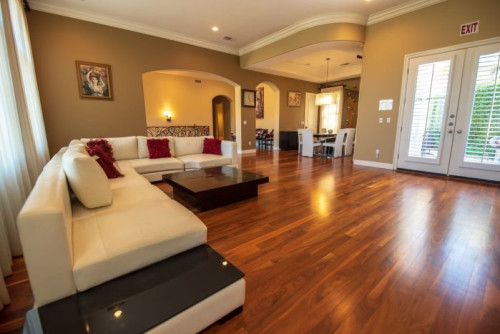
Crosspointe’s Sherman Oaks residence
Crosspointe Recovery operates a coeducational detox and residential addiction program at 14888 Valley Vista Boulevard in Sherman Oaks, California. The official contact page describes a six-bed house with private or semi-private rooms and an individualized program running seven days a week. Its residential focus is alcohol and drug use, including co-occurring mental health concerns. The organization also advertises outpatient services, but those should be distinguished from living in the Sherman Oaks house. A prospective resident should receive a clear description of the proposed level of care, where it is delivered, and which parts of the organization’s wider program are included.
The small residence is an important part of the experience. Residents share treatment time and communal space with a limited group, while bedroom arrangements depend on the option available. This may suit someone looking for a home setting within Los Angeles rather than a large institutional campus. It does not remove the need to assess the clinical program carefully. The relevant match includes medical suitability, the therapies selected for the person, the way family contact is managed, and the plan for continuing care. The residence’s location and amenities can support that decision, but cannot establish it on their own.
Starting treatment and managing withdrawal
Crosspointe’s detox and medication page describes medically supervised, subacute withdrawal care. It combines medication when clinically appropriate with therapy and an individualized treatment plan. “Subacute” is a useful scope detail: a residential detox service should not be assumed to offer the same resources as an acute hospital. The screening conversation needs to cover recent substance use, previous withdrawal complications, current medications, and other health concerns. The receiving clinician can then determine whether the house’s support is appropriate or whether another medical setting is needed first.
The organization advertises admissions availability around the clock and the possibility of starting as soon as the same day. Its described process still includes a discussion of funding and a medical review of fit. Immediate availability is therefore something to confirm, not a promise that anyone who arrives can enter. Before travel, the person should know that a bed has been accepted for the proposed care, what records or medications to bring, and how arrival will be coordinated. The direct number shown in the official contact section is +1 310-871-5270, alongside other marketing numbers elsewhere on the site.
During the early stage, the provider describes attention to withdrawal symptoms and comfort, followed by fuller participation in rehabilitation. Medication decisions are individualized. A person already taking a prescribed medicine should ask how it will be reviewed and who will oversee ongoing prescribing, rather than infer a particular medication policy from the phrase “medication-assisted treatment.” The residential service description includes meetings with a psychiatrist and addiction specialist, medication management, a primary therapist, and private case-management meetings each week. The timing and availability of each professional should be clarified for the planned stay.
Individual treatment and mental health care
Crosspointe presents residents as participants in developing their treatment plans. Its published residential model combines one-to-one counseling, group therapy, family work, relapse prevention, and attention to co-occurring disorders. That gives several routes for addressing a problem: an individual session may focus on a personal history or current concern, while a group provides opportunities to practice discussing difficulties with other people. The plan should connect those activities to the resident’s own priorities. A list of services is most useful when the person also understands how progress will be reviewed and what would lead the team to adjust the approach.
The provider’s dual-diagnosis description says it addresses substance use and associated mental health conditions together. For someone whose anxiety, low mood, or other symptoms have complicated earlier treatment, that creates an important topic for the intake assessment. The discussion should establish what psychiatric evaluation is available, which existing records would help, and how the team distinguishes needs it can manage from those requiring a different service. A broad co-occurring program description does not establish that every psychiatric presentation or degree of medical instability can be supported in a six-bed residential house.
Cognitive behavioral therapy and dialectical behavior therapy are both named in Crosspointe’s published treatment menu. The site describes CBT through connections between thoughts, feelings, and actions, and DBT through mindfulness, distress tolerance, emotional regulation, and interpersonal skills. In practical terms, these approaches give residents ways to examine patterns and practice responses during treatment. Their presence on the menu does not specify an identical course for everyone. The clinician should explain whether the proposed work consists of individual therapy, skills groups, or a combination, and how it fits the person’s other care.
Family involvement with room for individual choice
Crosspointe’s family therapy page recognizes that relatives may have different levels of willingness or readiness to participate. It describes family involvement without requiring every family member to engage at the same time. That is useful for households where relationships have become strained or where one person is more comfortable speaking privately before a joint session. The actual arrangement should be established with the resident and therapist: who participates, what the sessions aim to address, and whether they take place remotely or in person. The page does not publish a fixed universal number of family sessions.
Family therapy also differs from everyday updates, visiting, and the practical administration of an admission. A person helping pay for treatment may need financial information, while the resident may want a different person involved in therapeutic work. Those roles can be discussed separately. When preparing to return home, the useful focus is on specific arrangements the household can carry forward, such as communication, responsibilities, and how to respond when someone needs more support. Crosspointe’s family-oriented description should be translated into an agreed plan, rather than an assumption that family participation guarantees a particular outcome.
Bedrooms, meals, devices, and daily life
The official contact and amenities descriptions offer private and shared room options. A private room is therefore a possible arrangement to confirm, rather than an automatic feature of every admission. The same applies to bathroom occupancy, accessibility, and any difference in price between rooms. The provider describes chef-prepared food and accommodation of dietary needs and preferences; a person with a specific medical diet should discuss that requirement before arrival. Within a six-bed home, communal dining and treatment routines are part of the setting even when the resident has a bedroom of their own.
Crosspointe also lists yoga, mindfulness, meditation, fitness, nutrition, and other wellness activities alongside the clinical program. The residential page mentions breathwork and sound-based sessions. These describe available components of the provider’s model, not a claim that each has the same clinical purpose or evidence as formal psychotherapy or medication treatment. The practical questions are which activities are scheduled during the proposed stay, whether participation is appropriate for the person, and how alternatives are handled. Comfort and recreation can be relevant to daily life in treatment without being presented as independent proof of clinical quality.
Phones, computers, laptops, and internet access are considered individually under the provider’s published policy. Service animals are also considered case by case. Those conditions matter for someone hoping to continue essential work or travel with an animal. The admission agreement should make clear what is permitted, when it can occur, and whether any restrictions apply during detox or treatment sessions. The website’s conditional wording should not be interpreted as unlimited remote-working access or a general pet-friendly guarantee. Resolving these details before arrival helps align the resident’s expectations with the house’s actual arrangements.
Daily rates and the proposed length of stay
Crosspointe publishes a self-pay range of USD 1,000–2,500 per day on its own website, depending on the type of treatment. That was the official stated range when reviewed on October 20, 2026. It is a daily rate, not a quoted monthly package, and the reviewed statement does not assign each price point to a specific room or clinical level. A written estimate should identify the rate that applies to the proposed admission, the expected billable days, what is included, and how changes in level of care or duration affect the total. No monthly multiplication is presented here as a provider quotation.
The residential service page describes possible program lengths from seven to ninety days, contingent on the client’s needs. That broad range should not be read as a promise of recovery within a selected number of days. Detox, residential rehabilitation, and outpatient treatment have different roles, and the proposed sequence should be clear. Crosspointe says it works with private PPO insurance and self-pay arrangements and explicitly states that it does not accept Medi-Cal or Medicaid. Insurance verification can establish the relevant benefits and expected financial responsibility; a general statement about accepted insurance is not confirmation of coverage for every service or day.
Continuing care beyond the residence
The organization’s aftercare page describes PHP and IOP at its outpatient facility, along with opportunities for alumni connection. Its outpatient program page identifies services in Los Angeles and online mental health services across California. These are additional delivery settings, not evidence that outpatient sessions and all housing arrangements take place inside the Sherman Oaks residence. Before discharge, the resident should know the receiving program, its physical or online format, attendance expectations, transportation needs, and separate cost. Crosspointe’s wider menu can support continuity when those details fit the person’s circumstances.
For someone comparing addiction treatment in the United States, the most useful features of this profile are the six-bed coeducational residence, subacute detox scope, psychiatric and therapy involvement, conditional device access, and directly published daily pricing. Those details provide a basis for a focused conversation with admissions. A satisfactory proposal should bring them together into one understandable plan: the room and clinical level being offered, the professionals involved, the expected review points, the family arrangements, and the service that will take over when residence ends. Availability and individual suitability remain matters for Crosspointe’s clinical team to confirm.
Reviewed October 20, 2026 using the linked official Crosspointe pages. The cash range is provider-published daily pricing, with no monthly conversion. Private rooms, device use, service-animal arrangements, and immediate admission remain subject to individual confirmation.
Conditions
Levels of care
Settings
Amenities
Treatment approach
Psychiatric/addiction-specialist involvement, medication management when indicated, primary-therapist sessions, weekly private case-management meetings, CBT, DBT, individual/group and family therapy, relapse prevention, mindfulness, adapted yoga and wellness activities
Fees & admissions
USD 1,000–2,500 / day
Official Crosspointe website publishes USD 1,000–2,500/day depending on treatment, checked October 20, 2026. This is provider-published daily pricing; no quoted month package or automatic multiplication. Confirm the exact level, room, billable duration and exclusions. Private PPO/self-pay accepted; reviewed site explicitly says no Medi-Cal or Medicaid.
Confirm the current program, duration, accommodation and included services directly with the center.
Confirm which level of care and room the daily quote covers, the clinically recommended duration, medication costs and the handoff to PHP, IOP or community care.