About Daylight Recovery Center — West Palm Beach
Daylight’s West Palm Beach residential program
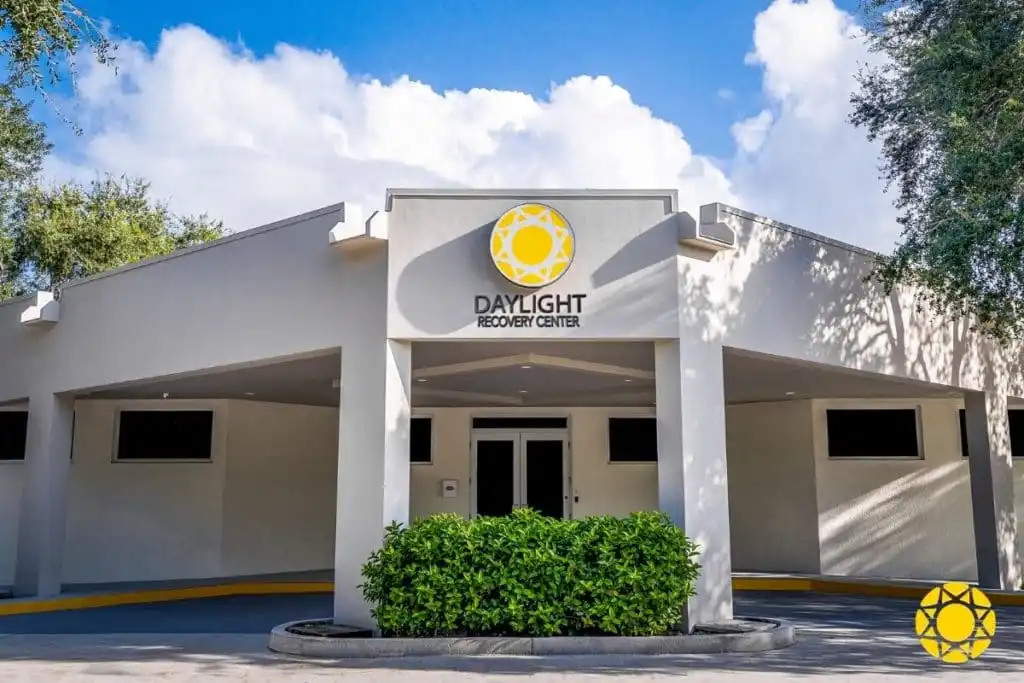
Daylight Recovery Center identifies its facility at 2521 Metrocentre Boulevard, West Palm Beach, Florida 33407. The current contact page lists 888-307-1527 as its support line and describes continuous availability for inquiries. Its program information presents medical detox and residential addiction treatment with support for co-occurring concerns. Before admission, ask which phase is proposed, how the clinical assessment is completed, and whether the receiving unit, room, and financial agreement cover detox, residential care, or both.
The provider uses the phrase residential inpatient for its live-in program. This profile describes the supported residential and detox services without treating that wording as proof of general hospital capabilities. Ask about the actual medical and psychiatric resources available at Metrocentre Boulevard, who is physically present overnight, and what happens if a resident needs care beyond the facility’s scope. The appropriate placement should follow an individual assessment rather than a broad interpretation of a program label.
Detox and residential care are separate clinical decisions
The provider’s medical detox page describes medical-director oversight, individualized monitoring, and medication when clinically indicated. It says withdrawal care varies in duration and severity. Ask which clinicians would manage the proposed admission, how a prescriber is reached, and what medical information is needed before arrival. A published description of supervision should not be interpreted as a promise that every withdrawal presentation or medical complication can be managed in the same setting.
Prepare a current medication list and a clear account of recent substance use, previous withdrawal experiences, relevant physical conditions, and psychiatric history. Ask whether the assessing team needs records or a discussion with an existing clinician, with consent. If another provider has recommended a level of care, request an explanation of how Daylight evaluates that recommendation. The goal is a specific plan for the person’s present needs, not an assumption that everyone follows the same sequence or timetable.
Clarify how the transition from detox to residential treatment is reviewed. Ask whether it involves a new room, treatment team, authorization, or financial arrangement, and what happens if the person needs a different next step. A quote that mentions both services should explain the days and inclusions assigned to each. A successful initial assessment is useful, but the plan should also explain how staff respond if clinical needs or the recommended duration change during the stay.
What to expect from the residential phase
Daylight’s residential program page describes a structured setting with clinical support, counseling, activities, meals, and help moving to continuing care. It gives a general residential duration of approximately three to four weeks, depending on individual needs. That description should not become a fixed 28-day rule or a promise that detox and all subsequent treatment fit within one period. Ask for the expected phases and the review points that guide a change.
Request a sample week that separates individual appointments, group therapy, education, peer support, recreation, medical reviews, and personal time. Ask how the team decides which activities are relevant and how the resident participates in setting goals. Someone with prior treatment experience can discuss what helped, what was difficult, and what support was missing after discharge. A useful comparison concerns the actual schedule and clinical responsibilities, rather than the number of therapies named in a general description.
If a particular approach matters to the person, ask who delivers it, how often it is available, and whether it is included in the standard program. Clarify the difference between clinician-led therapy, a peer activity, and a complementary service. A facility may offer several kinds of support without each having the same role or evidence for a particular need. The treatment team should explain why a service is proposed and how it fits the individual plan.
Co-occurring concerns and medication continuity
The provider describes care for substance-use and co-occurring mental-health needs. Ask how psychiatric review, current prescriptions, therapy, and medical support are coordinated at this facility. A broad reference to co-occurring care does not establish that the program accepts every psychiatric presentation or provides an independent acute psychiatric service. The co-occurring conditions guide can help organize questions, while the receiving clinical team should explain its specific admission criteria and limits.
If the person already has a psychiatrist, therapist, or primary-care clinician, discuss how those professionals can contribute with consent. Ask who obtains relevant records and how changes during the stay are communicated. Before discharge, identify the prescriber responsible for follow-up and whether an appointment is confirmed. A general description of medication during detox should not be treated as a universal policy for ongoing treatment; the clinicians involved should explain the actual options, monitoring, and continuity plan.
Single, double, and triple bedrooms
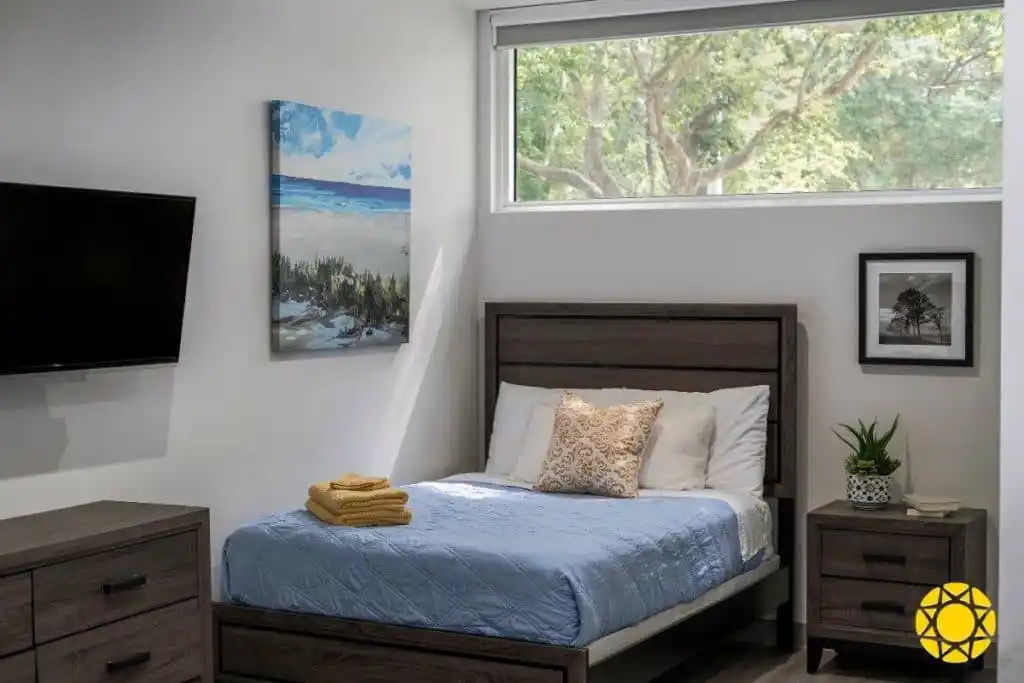
The current facility page describes single, double, and triple bedrooms, with an ensuite bathroom for each room. In a shared bedroom, that bathroom may be shared by the room’s occupants; the wording does not promise an individual bathroom for every resident. Ask which room is offered for the intended dates, whether a single carries a supplement, and whether the arrangement changes when moving between detox and residential care.
The provider also describes a bedside tablet and personal storage. Ask how the device may be used, whether it is different from permission to use a personal phone, and what privacy and communication rules apply. If uninterrupted sleep, room privacy, or accessibility is important, explain the specific requirement during assessment. Request confirmation of the actual room, bathroom access, stairs, and assistance available rather than assuming a photograph establishes suitability for every person.
A room offer should also explain how concerns are handled. Ask whom a resident can approach about noise, another occupant, a maintenance issue, or a need for a different arrangement. Clarify whether room changes affect the price and how availability is managed. The presence of a single-room option is useful information, but it should be treated as an option requiring confirmation rather than a guarantee that every admission can be accommodated privately.
Meals, recreation, and daily routines
The facility page describes meals prepared onsite by a chef, along with recreation space, exercise equipment, books, games, and art materials. Ask how dietary requirements and allergies are reviewed, which activities are scheduled, and what alternatives are available if participation is difficult. Comfort and recreation can influence the experience of a stay, but they should be considered alongside the clinical plan, staffing, and suitability of the level of care.
Discuss practical routines such as laundry, clothing, storage, quiet hours, outdoor access, and time for personal tasks. A person balancing treatment with childcare, employment, education, or another responsibility may need to make arrangements before arrival. Ask when essential calls or documents can be handled and whether staff can provide appropriate attendance information. The aim is to understand how the residential schedule works in practice without assuming that a provided tablet means unrestricted work time or personal internet use.
Family communication and support
Ask what involvement is available for family or other trusted people during the proposed stay. Clarify whether this includes scheduled updates, educational sessions, family appointments, visiting, or remote participation, and whether any part is charged separately. The resident’s consent and preferences should determine what information is shared. Someone may want practical support from a relative without involving them in every clinical discussion, or may rely on a friend rather than a conventional family network.
Agree on a communication plan before enrollment. Identify the contact for routine questions, the way time-sensitive family matters reach the team, and what the program expects from visiting supporters. Ask how it handles situations in which a relationship is unsafe, strained, or unavailable. Family participation should have a purpose that fits the person’s circumstances, such as planning a return home or clarifying practical support, rather than an assumed requirement to repair all relationships during one stay.
The current price does not establish a billing period
The Recovery.com exact-campus listing, checked October 20, 2026, displays USD 20,000 without specifying the period covered by that amount. A separate mention of a 30-day program does not establish a 30-day or monthly fee. No current official numeric tariff was verified in this review. Request a written quotation for the actual clinical phases, dates, and room instead of assuming that an undated directory amount covers the whole proposed stay.
The quote should explain detox and residential charges, individual and psychiatric appointments, medication, laboratory work, outside medical care, transport, and any later services. Ask about deposits, payment dates, extensions, transfers, early departure, and refunds. If insurance is involved, confirm the exact plan, authorized level, approved days, and potential remaining charges. A benefits check or a statement that an insurer is accepted does not establish that every recommended service or private-room supplement will be paid.
Admissions and preparation for arrival
The admissions page provides preparation information and asks prospective clients to clarify required belongings, medication information, identification, and insurance. Request the current instructions that apply to the agreed program. Confirm the receiving address, arrival time, assessment process, transport arrangements, and the contact for delays. An inquiry made outside normal office hours should still lead to a clear explanation of clinical acceptance, room availability, and what must be completed before traveling.
For a transfer from another facility, identify who is responsible for sending records and confirming medication and follow-up needs. Ask whether a support person can accompany the resident and when the clinical team may need a private conversation. Keep the written treatment proposal and financial terms available so that any change can be discussed with the responsible staff member. Those preparations reduce uncertainty without treating a telephone conversation as a completed admission.
Continuing care after the residential stay
Daylight’s residential page describes helping clients move into further care, often including outpatient treatment. Its FAQ also discusses outpatient options, but the reviewed information does not establish a specific onsite outpatient schedule at Metrocentre Boulevard. Ask whether the proposed follow-up is delivered by Daylight, another network service, or a local provider. Confirm the receiving address, appointment times, clinical handoff, housing expectations, and separate financial arrangements.
Compare Daylight with other residential programs and United States treatment listings using the actual assessment, medical resources, appointment schedule, room, complete quote, and continuing-care plan. Before departure, ask which appointments, prescriptions, transport, and housing arrangements are confirmed and who will help with any remaining gap. Those details offer a more useful basis for a decision than a broad promise of recovery or an amount without a defined period.
Destinations
Conditions
Levels of care
Amenities
Program approach
Individual and group counseling, clinical withdrawal support where needed, co-occurring-condition assessment, recovery skills, and discharge planning; ask for the exact weekly clinical schedule
Fees & admissions
Confirm current pricing
No usable current exact-program price was verified. Recovery.com displays USD 20,000 without a defined fee period; its separate 30-day program description does not establish that the amount covers 30 days. Obtain a current written quote separating detoxification, residential care, room charges, medications, laboratory work, and outside services.
Confirm the current program, duration, accommodation and included services directly with the center.
Discuss withdrawal and medical risks, psychiatric needs, medications, prior treatment, insurance, and whether the facility has the required resources. Confirm clinical acceptance, exact room, arrival instructions, all charges, and the receiving outpatient provider if continuing care is arranged elsewhere.