
About EagleCrest Recovery — Bentonville
EagleCrest Recovery provides substance-use treatment in northwest Arkansas, with detoxification and residential services associated with Bentonville and a separate residential option in Springdale. The provider also describes outpatient care in Bentonville. Its facilities page says the receiving residential location can depend on bed availability. Anyone comparing this program should confirm the actual facility, level of care, and accommodation before arranging admission, because a Bentonville inquiry does not automatically establish where every stage of treatment will occur.
Choosing the location and starting service
The official facilities page distinguishes a Bentonville detox service, residential care in Bentonville or Springdale, and an outpatient treatment center. It describes private land at the Bentonville residential property and a lakeside setting for the Springdale option. Those descriptions should not be combined into a single campus. Ask admissions to identify the proposed receiving location and explain any transfer between detoxification, residential care, and later services.
EagleCrest’s contact page supplies Benton and Washington counties as its service area and says exact street addresses are provided through admissions for client privacy. The published contact number is 844-439-7627. Request directions for the confirmed receiving facility, including check-in instructions and a contact for travel delays. A general map result or an address found on another listing may not identify the building assigned to the proposed admission.
Before choosing a location, discuss the person’s main treatment needs, current substance use, medications, medical history, psychiatric symptoms, and previous care. Ask what information supports the recommended starting level and which needs the team cannot manage there. Our residential treatment overview can help frame the conversation. The relevant decision is the fit between the individual’s assessed needs and the actual service, not simply the availability of a bed.
Detoxification and the transition into residential care
The official detox page describes supervised substance withdrawal and an initial assessment that includes discussion of treatment and insurance. Ask who conducts the medical evaluation, what support is present overnight, and how urgent concerns are handled. The public description does not establish that every person needs detox or that every withdrawal presentation can be managed at the same facility. Eligibility and the appropriate setting require an individual clinical decision.
Bring a complete medication list and relevant records, including information about previous withdrawal complications or other recent medical treatment. Ask which prescriptions can continue, who would review proposed changes, and whether outside consultations are needed. A reference to medication-assisted treatment should lead to a specific discussion of the person’s options and follow-up plan. It should not be interpreted as confirmation of every medication, formulation, or service at every EagleCrest location.
Clarify how the next stage is arranged before assuming that detox automatically leads to a particular residential bed. Ask whether a transfer is expected, who organizes transport, and how records and medications move with the client. Find out what happens if the recommended placement is unavailable or if the clinical assessment changes. These details are especially relevant when a person has traveled from outside Arkansas or relies on relatives to coordinate practical arrangements.
What residential treatment is intended to include
The residential program page describes individualized care, individual and group therapy, family work, medication support where appropriate, and preparation for life after the stay. It gives a general duration of thirty to ninety days. This is a provider-described range, not a required or guaranteed length for every client. Ask for the initial recommendation, the points at which progress is reviewed, and the criteria for extending or changing care.
Request a sample week that separates clinical appointments from education, recovery meetings, meals, recreation, and free time. Ask how often the person meets individually with a therapist and how the team decides which groups are relevant. A schedule can look intensive while leaving important questions unanswered about individual attention or psychiatric follow-up. The goal is to understand what the proposed treatment plan means in practice, including how it changes as needs and goals become clearer.
EagleCrest describes treatment for co-occurring concerns alongside substance use. Ask how those needs are assessed, who is responsible for psychiatric care, and whether a separate specialist is involved. For someone with trauma-related symptoms, clarify the difference between a trauma-informed environment and a particular trauma therapy. Our co-occurring conditions guide offers useful comparison questions about coordination, clinical priorities, and the limits of a program’s advertised expertise.
The provider uses inpatient terminology in describing parts of its detox and residential pathway. That wording does not, on its own, establish hospital-level resources at every location. Ask about the medical staff, the availability of specialist assessment, and the circumstances requiring transfer. A clear account of the actual support available is more useful than treating the same label as equivalent across a hospital unit, a detox service, and a home-style residence.
Accommodation, meals, and practical support
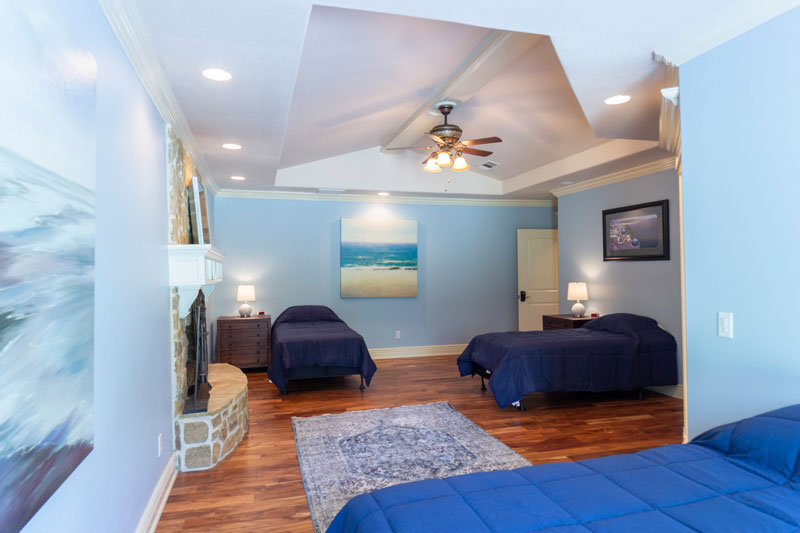
EagleCrest’s facility information describes comfortable living spaces and catered meals, while the Recovery.com listing refers to low occupancy and transportation support. These descriptions do not establish a particular bedroom configuration, a private bathroom, or a fixed staff-to-client ratio. Ask about the actual room available, the number of roommates, storage, laundry, and overnight supervision. A generally private property should not be interpreted as a guarantee of private accommodation.
Discuss allergies, dietary requirements, mobility, sensory needs, and any other accommodation issues before arrival. If outdoor activities or recreational facilities are important to the person, ask which are available at the specific receiving site and how participation is decided. The Bentonville and Springdale settings should be assessed separately. A photograph of one property or a network-wide amenity list cannot confirm what a person will have access to during a stay at another location.
The provider homepage says transportation assistance is available. Confirm the area covered, booking process, eligibility, and any charges rather than assuming that every journey is included. Ask who will meet the person, what happens if travel is delayed, and whether transport between treatment stages is arranged separately. If family members accompany the client, clarify whether their travel and accommodation are entirely independent of the admission package.
Family involvement and communication
The family therapy page describes work on relationships and communication during treatment. Ask how family participation is introduced, how often sessions occur, and whether remote attendance is possible. The program should explain whom the client wants involved and how consent for sharing information is handled. Family education, social visiting, and clinical therapy are different activities, so it is useful to establish the purpose and boundaries of each.
Relatives may have their own concerns about trust, communication, or responsibilities at home. Ask how the team supports those conversations without assuming that one family member is responsible for another person’s substance use or recovery. If some relationships are difficult or unsafe, raise that during planning. A useful approach makes room for appropriate support and boundaries rather than treating participation by every relative as automatically beneficial or required.
Before admission, request the current rules for calls, devices, visitors, and contact with dependents. Explain any essential responsibility that may continue during the stay. A client may need a specific arrangement for a child, an employer, or an important appointment, but that does not establish unrestricted access to phones or work. Agreeing on practical communication expectations beforehand helps the person and supporters understand how treatment will fit with unavoidable commitments.
Fees, insurance, and the cost of changing stages
Recovery.com’s EagleCrest profile, checked October 20, 2026, displays an estimated cash-pay rate of USD 20,000 per month. The period is explicitly stated, but the figure is a third-party estimate, not an official tariff or a confirmed total for every facility and service. The current secondary description covers both Bentonville and Springdale. Obtain a written quotation naming the receiving site, proposed care level, room, expected duration, and all included services.
Ask whether detoxification, consulting clinicians, medication, transport, and outpatient continuation are included in the quoted amount. Clarify how extensions, transfers, or early departure affect the bill. A monthly estimate does not establish the cost of a shorter initial stage or a complete course lasting several months. Request the deposit, cancellation, and refund terms, along with a clear explanation of charges that may be paid to another provider.
The official website lists insurance relationships and distinguishes some accepted plans from in-network arrangements. Ask about the exact policy rather than assuming that an insurer’s name establishes coverage for every service. Confirm authorization, deductibles, coinsurance, and separately billed care with the relevant parties. If more than one facility or level of care is involved, check whether the benefits assessment applies to each stage and how the patient’s financial responsibility might change.
Outpatient care and longer-term follow-through
EagleCrest’s facilities page describes an outpatient center in Bentonville as a distinct treatment setting. Ask for its current address, schedule, and admission requirements rather than assuming sessions take place at the overnight residence. The wider website also describes several forms of continued care. Have the team explain which specific service is proposed, what support is provided outside scheduled hours, and whether accommodation is separate from the outpatient agreement.
A workable continuation plan should take account of where the person will live, travel to appointments, work or school responsibilities, and the support available between sessions. If returning to another state, identify local professionals before discharge and confirm whether any remote service is actually available there. Alumni events can provide useful connection, but ask how they differ from scheduled clinical care and who responds when additional treatment is needed.
Before leaving the residential stage, request confirmed appointments, medication follow-up where relevant, and a written response plan for worsening symptoms or renewed substance use. Compare that pathway with other United States treatment options. EagleCrest’s published admissions number is 844-439-7627. The most useful inquiry identifies the intended Bentonville or Springdale placement and brings together clinical suitability, practical arrangements, continuing care, and a current financial agreement.
Destinations
Conditions
Levels of care
Settings
Program approach
Individual/group/family therapy, co-occurring and trauma-related support, prescribed medication when appropriate, recovery education, alumni and continuing-care planning
Fees & admissions
Estimated USD 20,000 / month
Recovery.com checked 2026-10-20 explicitly USD 20,000/month; current secondary profile covers Bentonville and Springdale. Not provider tariff or guaranteed price at every service/site. Confirm exact location, detox/residential stage, room, medical care, transport, extensions and separate outpatient costs.
Confirm the current program, duration, accommodation and included services directly with the center.
Exact receiving site and stage, clinical/withdrawal and medication assessment, bed availability, room and medical resources, transport, benefits and written site-specific quote