About Enlightened Recovery Michigan — Kalamazoo
Enlightened Recovery Michigan in Kalamazoo
Enlightened Recovery Michigan provides addiction detoxification and residential treatment at 1430 Alamo Avenue in Kalamazoo. Its current residential information describes structured daily care, individual planning, clinical support, and work on substance use alongside associated emotional and practical difficulties. This profile concerns the Michigan campus. When comparing services across the wider Enlightened organization, confirm that the treatment, staff, room, and activities discussed are available at this receiving location for the proposed dates.
The provider describes its residential setting as a place to live onsite while participating in therapy and a consistent daily routine. It uses both residential and inpatient terminology, but the reviewed sources establish a residential addiction program rather than an acute psychiatric hospital. Ask the team to identify the recommended care phase, its actual medical resources, and any needs that require another setting. The choice should follow assessment of the individual rather than the wording used in a directory category.
Substance use and co-occurring mental health concerns
The program describes care for alcohol, opioids, stimulants, sedatives, and other substance-use concerns. The current residential page and family-therapy page explicitly state that mental health is not treated as a primary diagnosis at this location. Instead, relevant mental health concerns are addressed within substance-use treatment. This distinction matters for someone seeking a psychiatric residential placement without a substance-use treatment need. Ask admissions to confirm the clinical fit before relying on a general mental health description.
Assessment should cover current use, previous treatment, medical history, prescriptions, psychiatric symptoms, daily functioning, and the support the person needs. The provider’s discussion of co-occurring care does not establish capacity for every condition or severity. Ask who evaluates psychiatric concerns, how existing clinicians can contribute records, and how the plan will coordinate different needs. If additional stabilization or specialist treatment is required, identify the receiving service and the conditions for a later transition to this campus.
Detoxification and medical support
Enlightened Recovery Michigan’s dedicated detox page describes a medical and psychological evaluation followed by monitoring, symptom management, medication when indicated, nutritional support, and preparation for further treatment. It advertises medical supervision across twenty-four hours, and the staff page identifies a chief medical officer. Ask which clinicians are physically present, which are available by appointment or on call, and what nursing and emergency-transfer arrangements apply to the actual detox admission.
The provider gives different withdrawal-duration examples by substance and emphasizes individualized planning. Those references do not establish the length or price of any one person’s detox course. Discuss current prescriptions, previous withdrawal difficulties, physical health, and the proposed transition into residential care with the treating team. Ask whether the room, monitoring, or fee changes between phases. Medication decisions and any taper belong in the clinical plan; a directory description should not be used as instructions for managing withdrawal independently.
Residential duration and the treatment schedule
The current residential FAQ describes stays commonly ranging from thirty to ninety days, depending on need and progress. The length is discussed with the treatment team rather than presented as a fixed course for every admission. Ask what initial dates are recommended, when the plan will be reviewed, and how additional days are agreed and billed. If funding is involved, distinguish the clinician’s recommendation from the actual period authorized by the insurer or other payer.
Residential care is described as combining individual and group work, recovery education, practical skills, wellness activities, meals, and time for reflection. Request a current weekly timetable, including weekends, and the expected number and length of individual appointments. Ask how the schedule changes during detox or early stabilization and how physical-health or accessibility needs are accommodated. The total time spent in a structured program is different from the number of hours spent in individual psychotherapy.
Clinical methods and recovery pathways
The residential page lists CBT, DBT, motivational interviewing, and solution-focused therapy as core approaches selected for the person’s needs. These are accompanied by work on triggers, routines, emotional responses, goals, and practical recovery skills. Ask who delivers the chosen methods and how progress is discussed. An approach appearing in the provider’s menu does not establish that every resident receives it at the same frequency or that it is appropriate for every clinical presentation.
Enlightened Recovery Michigan also specifically offers SMART Recovery as a non-twelve-step option focused on skills and self-directed change. Secondary descriptions discuss twelve-step participation as well. Ask what the current campus schedule requires, which approaches are optional, and how personal preferences are considered. Yoga, meditation, nature-based activity, and nutritional guidance are described as complementary parts of the program. Clarify which activities are scheduled, how participation is assessed, and whether any optional service has a separate charge.
Family therapy and the chosen support network
The dedicated family-therapy page describes clinician-led work on communication, boundaries, relationships, grief, and understanding substance use and co-occurring concerns. It explicitly includes significant people beyond biological relatives, such as partners, chosen family, close friends, or mentors. The team says it can arrange sessions in person or virtually according to location and availability. Ask who should participate, how the resident’s agreement is handled, and what number of sessions is included in the proposed plan.
The provider describes family participation as encouraged rather than forced, with arrangements adapted to the clinical situation. Family education and support resources are different from a scheduled therapy appointment, so clarify what each person will receive. Agree on ordinary updates, the main contact, and how concerns can be raised. Visits, travel, and accommodation should follow the current campus policy. A broad statement about family involvement should not be read as permission for unrestricted visits or access to private clinical information.
Veterans and funding arrangements
The current Michigan veterans page describes adapting detox and residential addiction treatment to service history, transition to civilian life, family relationships, and individual goals. It discusses veteran eligibility through the VA Community Care Network and says authorization is coordinated before arrival when applicable. This is a provider-described pathway, not proof that every veteran or every proposed service is covered. Confirm the exact referral, approval, receiving location, duration, and personal financial responsibility with the appropriate parties.
The public admissions form also explicitly lists Medicare and Medicaid as not accepted. That location-specific statement should guide the inquiry rather than assuming that a broad insurance list includes those programs. For private insurance, verify the precise policy, network status, required authorization, deductible, coinsurance, and excluded services. If an admissions representative offers help with benefits, ask what has been confirmed in writing and what remains pending before treating the funding arrangement as complete.
Accommodation and everyday practicalities
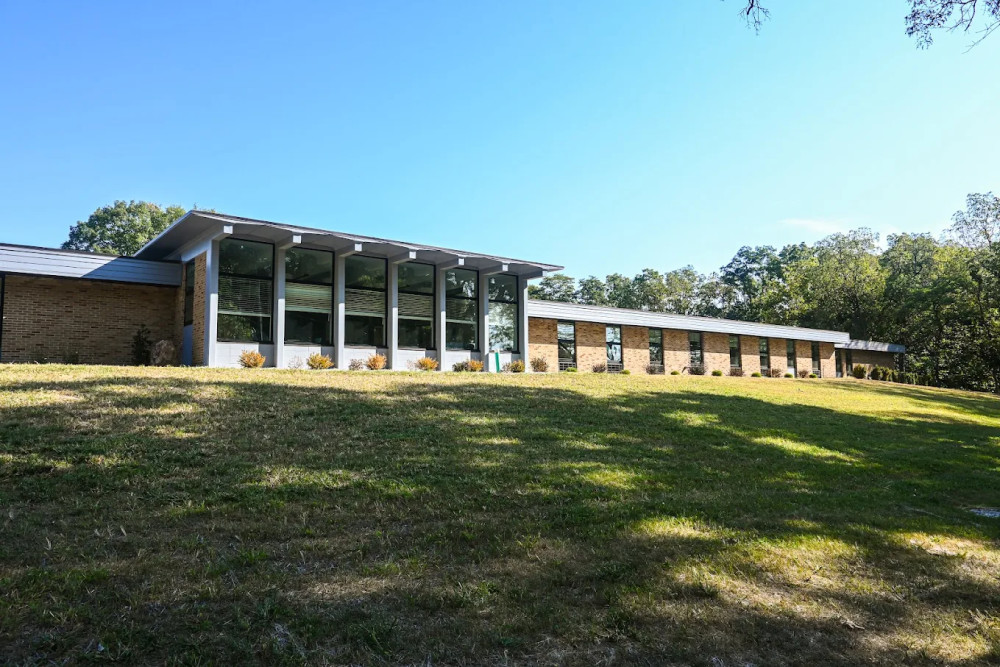
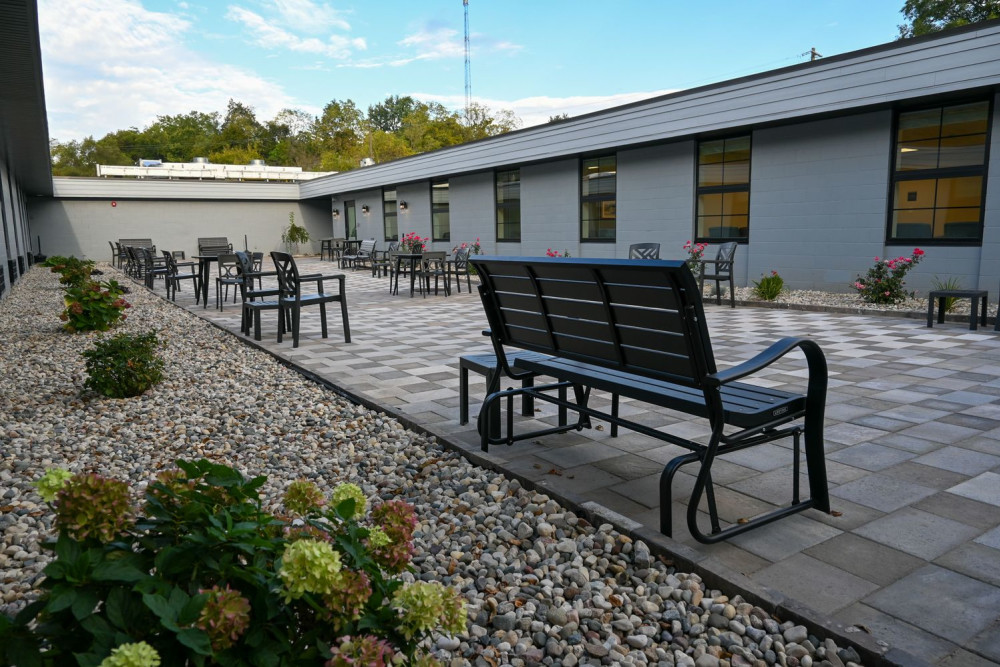
The primary facility page provides a campus gallery and describes a residential environment, but does not publish a detailed room inventory or a guaranteed private-room category. Recovery.com describes private or shared bedrooms, communal recreation areas, lounges, fitness space, meals, and housekeeping. These secondary details should be checked for the actual admission. Ask for the assigned room, number of occupants, bathroom sharing, accessibility, any supplement, and whether the accommodation changes between detox and residential therapy.
Discuss dietary restrictions, allergies, laundry, personal belongings, sleep needs, and the degree of help required with daily activities. The residential FAQ says admissions provides a packing list and current information on family communication and visits. Secondary technology-friendly wording does not establish unrestricted device access, so confirm phone, internet, work, and study arrangements directly. If an activity or amenity is important to the decision, obtain its current schedule and any participation limits for the proposed treatment phase.
Separate daily price references
Recovery.com publishes estimated daily rates of US$1,000 for residential treatment and US$1,500 for detoxification. These are third-party estimates with different service bases, rather than an official combined package. No fixed numerical tariff was verified on the provider pages reviewed. Ask for the assessed sequence and actual dates before comparing total costs. A residential daily rate should not be applied automatically to detox days, and the typical thirty-to-ninety-day duration does not determine one person’s bill.
Request a written offer separating accommodation, meals, therapy, medical and psychiatric appointments, medication, laboratory work, outside care, transport, and optional services. Clarify the rate for additional days, deposits, payment dates, cancellation, early departure, and refunds. Insurance authorization may affect the person’s responsibility without defining the whole clinical plan. If continuing treatment or housing elsewhere is recommended, obtain that receiving service’s fees separately rather than assuming they are included in the residential daily reference.
Admissions and planning the next stage
The current official contact page lists 269-448-0806 and the Alamo Avenue address. Start by discussing the person’s situation, clinical suitability, detox needs, prescriptions, funding, and practical requirements. Before travel, request confirmed acceptance, the arrival building, receiving contact, room arrangements, packing instructions, and the written financial terms. A completed inquiry or benefits form is part of the assessment process rather than a confirmed reservation or a guarantee that the proposed clinical needs can be supported.
The provider says aftercare planning starts before discharge and can involve ongoing therapy, outpatient services, peer support, medication follow-up, or local housing. Ask which services are directly provided and which are referrals, with the next appointments and records transfer clearly arranged. For someone returning outside Michigan, identify suitable local care before departure. Compare this campus using its verified substance-use focus, co-occurring-care limits, assessed medical support, family options, practical living arrangements, and the actual financial and continuing-care plan.
Sources and further comparison
Source review: October 20, 2026. Official residential program and primary mental health limitation; Official detoxification program; Clinical and medical leadership; Campus information and gallery; Family therapy and remote participation; Veterans program and conditional VA pathway; Admissions and funding exclusions; Official address and phone; Recovery.com secondary room and separate daily prices. Provider statements describe the advertised service; they do not establish an individual admission decision, current availability, or treatment outcome. Price evidence is identified separately from the provider’s own fee policy.
For a broader comparison, explore treatment options in the United States and read questions to ask a treatment center. Use the answers from the actual receiving team to compare the clinical plan, practical arrangements, and written financial terms.
Destinations
Conditions
Levels of care
Program approach
Individual/group treatment, CBT, DBT, motivational interviewing and solution-focused work, SMART Recovery option, family therapy in person or virtually, medical support when indicated, complementary wellness and continuing-care planning
Fees & admissions
Estimated USD 1,000 / day
Recovery.com checked October 20, 2026 estimates USD 1,000 per residential day and separately USD 1,500 per detoxification day. No official numerical tariff or combined package was verified. Obtain the assessed phase sequence and actual dates, room, medical and psychiatric care, medication, tests, transport, optional services, extensions and later-care charges in a written offer.
Confirm the current program, duration, accommodation and included services directly with the center.
Confirm substance-use and co-occurring-care suitability, medical and withdrawal needs, prescriptions, room, clinical staffing, family participation, travel, written quote and next-stage arrangements. Current admissions form excludes Medicare/Medicaid; any VA Community Care pathway requires specific eligibility and authorization.