
Care at Hope & Healing — Surprise
Prestige Recovery Retreat in Surprise
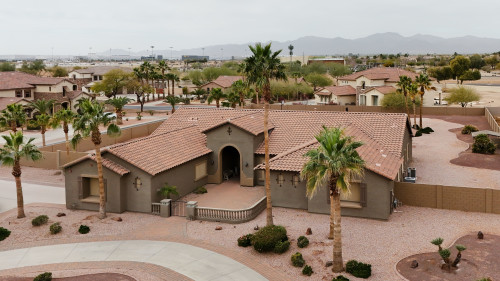
Hope & Healing identifies its Surprise residential location as Prestige Recovery Retreat at 11318 North 145th Lane, Surprise, Arizona 85379. The program addresses addiction, mental health concerns, trauma, and co-occurring conditions within the organization’s Arizona network. This profile concerns that overnight residential setting. Hope & Healing separately identifies locations in Scottsdale and North Phoenix and an outpatient facility in Mesa. Using the exact Surprise address during an inquiry helps ensure that the proposed residence, clinical services, and quotation refer to the same placement rather than to a general description of the network.
The direct number on the official website is 602-449-7999. The Surprise page describes residential stays ranging from fourteen to ninety days, with the actual plan determined by assessment. It also introduces the wider continuum of partial hospitalization, intensive outpatient care, ambulatory detox, medication treatment, and continuing support. Those services should not all be assumed to occur inside the Prestige residence or to be included in a residential fee. Ask the admissions team to identify the address, schedule, and operator for each part of the proposed treatment course before making travel or financial arrangements.
Assessment for addiction and mental health care
The current campus material describes integrated care for substance use and mental health concerns, with trauma-informed principles guiding the approach. A person may be seeking help primarily for addiction, a mood or anxiety condition, trauma-related symptoms, or a combination. The assessment should make that distinction clear and identify the clinical level required. Existing records, medications, previous treatment, and current risks help the team decide whether residential care in Surprise is appropriate. A list of conditions on an organization-wide website does not establish that every severity or complication can be treated safely at this residence.
Residential treatment provides a setting in which daily routines and clinical work can be supported together. The network’s program description includes medical and psychiatric involvement, therapy, medication management when appropriate, and round-the-clock support. Applicants should ask what that means for their actual Surprise placement, including which professionals are on site and how additional medical needs are handled. The word residential should not be treated as interchangeable with acute hospital care. If the assessment identifies a need beyond the residence’s capabilities, the plan should explain the appropriate referral or preliminary treatment.
Withdrawal needs and medication continuity
The Surprise page lists ambulatory detox within the available continuum. Ambulatory withdrawal support is distinct from a promise of hospital-level detox inside the residential home. The person’s substance-use history, medical condition, medications, and previous withdrawal experiences should be reviewed before the sequence of care is agreed. Ask where withdrawal management would occur, what monitoring is provided, and whether transport or an outside medical service is required. An individual should not use a directory’s program description to select a withdrawal timetable or change prescribed treatment without the appropriate clinician’s guidance.
Hope & Healing describes medication-assisted treatment as part of its broader addiction services. Its residential information also expressly says that it supports clients receiving methadone through approved community providers and does not dispense methadone on site. That distinction is important for continuity: someone already in treatment through an opioid treatment program needs an agreed coordination plan, including the responsible prescriber, dosing arrangements, and transport where relevant. The presence of medication support in the network should not be interpreted as permission to assume that every medicine or service can be supplied at the Surprise residence without preparation.
Therapy methods described for Surprise
The current Surprise page names CBT, DBT, EMDR, cognitive processing therapy, motivational interviewing, and trauma-informed work. It also lists SMART Recovery, mindfulness, art, and expressive approaches. These options describe the program’s therapeutic range rather than a fixed set of treatments suitable for every client. CBT and DBT skills may address thoughts, behavior, emotional responses, and relationships, while trauma-focused work requires a plan matched to the person’s needs and readiness. The clinician should explain which approaches are recommended, who delivers them, and how they fit the residential schedule.
Individual therapy creates space for personal concerns and history, while groups provide opportunities to practice communication and coping skills with others. Motivational interviewing can help explore the person’s own reasons for change and areas of uncertainty. The provider’s stated trauma-informed principles emphasize safety, trust, choice, and collaboration, so applicants can discuss what helps them participate and what has been difficult in previous care. An individualized approach should be reflected in clear goals and practical adaptations, rather than inferred solely from the number of therapy names listed on a page.
Trauma care may be relevant for experiences involving military service, family relationships, loss, or other events, but the timing and form of treatment should be clinically assessed. The Surprise page introduces Recovery in Arms for veterans and other specialized support within the network. A veteran or family member should ask which elements are available during the proposed stay and how existing care or benefits are coordinated. A program name does not establish that every specialist is based at the residence or that a particular intervention is included without an individual treatment decision.
Equine work and other experiential activities
Hope & Healing’s equine page describes work through a partner facility, guided by the treatment team and equine professionals. Examples include grooming, groundwork, observation, walking with horses, and reflection after the session. This is different from assuming that Prestige Recovery Retreat has horses on its own property or that horseback riding is a standard daily activity. The location, transport, frequency, and clinical suitability need confirmation. Someone with mobility limitations, allergies, fear of horses, or a preference for another activity can discuss how the plan would be adapted.
Mindfulness, expressive activities, and broader wellness work are also advertised. These can offer ways to engage with treatment beyond conversation, while remaining part of an agreed clinical plan. Their role should be explained without promising that an activity produces a particular result. The relevant questions concern the person’s interests, physical health, and the skills they want to practice. A residential program may combine several methods, but the balance needs to make sense for the individual and leave room for rest, medical appointments, and the core treatment work.
Cultural and family support
The network’s Holistic Cultural Program welcomes referrals from Tribal and Indigenous communities and describes culturally responsive support alongside clinical care. Its published offerings include culturally connected practices, family work, and coordination with Tribal health or community services when requested. These should be discussed in terms of the person’s own identity, preferences, and traditions rather than assuming that one approach represents every community. Applicants can ask which practitioners and activities are available for the Surprise placement, how participation is chosen, and how the clinical team respects practices that the person wants to retain or decline.
Family counseling and support around relationships appear in the Surprise program description. The client and team should agree who is involved, how consent is handled, and which goals are appropriate for joint work. Family members may need education and practical preparation for the return home, while the client may need support setting realistic expectations. If relatives are outside Arizona, clarify remote participation and visiting arrangements. Family involvement is most useful when it connects to the actual household and support network the person will return to, rather than assuming every client has the same family structure.
Living at the residence and planning daily responsibilities
The official location page establishes Prestige as a residential setting, but it does not confirm a universal private-bedroom arrangement, a particular capacity, or every amenity for the available placement. Ask for the current room and bathroom configuration, accessibility, visitor rules, device policy, and dietary arrangements. The location name should not be treated as a guarantee of a private retreat reserved for one person. Daily life may involve shared spaces, groups, and a structured schedule, so practical expectations need to be agreed before admission rather than inferred from photographs.
The Surprise page also lists life-skills development, relapse-prevention support, and prison reentry services among the organization’s specialized offerings. Their relevance depends on the individual. A person returning to employment may need help planning routines and appointments, while someone with a reentry-related referral may need coordination with specific outside agencies. The provider should explain what it can deliver directly and what requires another professional or organization. Clear responsibilities help prevent the residential treatment plan from being asked to solve every housing, legal, financial, or employment concern without the necessary outside support.
Daily pricing and the proposed treatment course
Recovery.com’s exact Surprise listing estimates USD 3,300 per day for residential treatment. It also lists separate estimates for partial hospitalization and intensive outpatient services. These are third-party figures, not official tariffs, and they should not be combined into one package or automatically applied to every site in the network. The former thirty-day multiplication is not a provider quotation. Ask Hope & Healing for the actual residential rate, recommended length, inclusions, and any separate medical, medication, transport, or activity charges, with the specific Prestige placement named in the agreement.
The official page offers insurance verification and describes working with multiple plans. Actual payment depends on the policy, service, authorization, and any personal cost responsibility. A fourteen-to-ninety-day residential range is a description of possible care, not evidence that an insurer will authorize a particular duration. The clinical and financial teams should explain what happens if the recommended course changes. A useful quotation also identifies the next treatment level and its likely costs, so the person can plan for continuing care rather than considering only the first period in the residence.
Continuing care after Surprise
Hope & Healing’s continuing-care description includes individual and group work, telehealth, peer support, relapse-prevention planning, family education, and connections with community resources. It identifies both twelve-step and SMART Recovery support within the broader model. The actual arrangement should specify which services the person will receive, where they occur, and whether they require a separate admission or fee. For someone returning to another state, telehealth availability and coordination with local professionals need confirmation. The existence of a network-wide aftercare page does not guarantee identical access from every location.
Compare Prestige Recovery Retreat with other United States treatment providers and the Arizona treatment guide using the person’s assessed needs and the exact service offered. The Surprise program’s relevant features are residential addiction and mental health care, trauma-focused methods, cultural and family support, and links to the wider Arizona continuum. A sound placement decision brings those features together with the actual room, medical arrangements, clinical schedule, financial agreement, and a continuing-care plan that can work after the residential stay ends.
Sources and verification
Checked October 20, 2026. Primary sources: Prestige Recovery Retreat and Surprise program; separate Arizona locations; residential model and external methadone coordination; partner equine services; cultural program; continuing care. Secondary daily estimate: Recovery.com Surprise listing. Exact delivery address, availability, clinical scope, and price require confirmation.
Conditions
Levels of care
Settings
Treatment approach
Trauma-informed individual/group and family care, CBT, DBT, EMDR, cognitive processing and motivational interviewing, SMART Recovery, psychiatric and medication support, partner equine work, cultural support, life skills, expressive activities and aftercare
Fees & admissions
USD 3,300 / day
Recovery.com exact Surprise listing estimated USD 3,300/day for residential care, checked October 20, 2026. This is third-party pricing, not an official tariff; the former USD 99,000 thirty-day multiplication is not retained as a quoted package. Its PHP/IOP daily estimates concern separate services. Confirm exact residence, duration, medical/medication support, transport and continuing-care costs.
Confirm the current program, duration, accommodation and included services directly with the center.
Confirm the recommended length, whether off-site medical detox is needed, the room arrangement, the exact daily self-pay quote and the continuing-care plan.