Care at Hope Rehab Center Thailand
Hope Rehab Center Thailand is a residential addiction treatment provider in Sri Racha, on Thailand’s eastern seaboard. Its program combines counseling, group work, mindfulness, physical activity, and recovery coaching within a residential community. The main facility has private en-suite accommodation, with later stages potentially involving a separate seaside property or a sober house in Chiang Mai. Those locations represent different phases of support and should be identified clearly in an admission proposal.
Hope describes its core service as a therapeutic substance-use program. It addresses everyday mental health difficulties that can accompany addiction, including stress, anxiety, and depression, but does not retain a full medical team or psychiatrist on site. Medical services are coordinated with a local private hospital. This distinction is central to assessing whether Hope fits a person’s needs, particularly when comparing it with a psychiatric hospital or a residential provider offering continuous on-site medical staffing.
A progressive program rather than one fixed residential stay
The current treatment-timeframe page gives a minimum stay of thirty days and describes a one-month foundation program, a second month of more detailed work, and a ninety-day advanced pathway. Sober-house and community support can follow for suitable clients. These are published options, not a prediction that every person needs the same duration or will move through every stage. The recommendation should follow screening and ongoing review.
Early work may include withdrawal support and establishing enough stability to participate in the daily program. Later stages place more emphasis on practice outside the main facility, greater independence, and planning for ordinary responsibilities. When comparing a thirty-day stay with a longer commitment, ask what changes in the schedule, accommodation, supervision, and goals. The provider’s preference for longer treatment should be considered alongside the individual’s clinical needs, available support, finances, and practical responsibilities.
CBT, twelve-step tools, and mindfulness
The program overview describes cognitive behavioral therapy combined with principles drawn from twelve-step recovery. It also gives a substantial role to mindfulness, meditation, physical activity, and sober coaching. The model is intended to connect reflection with daily action: identifying patterns associated with substance use, practicing different responses, and establishing routines that can continue after the residential stay. It is a shared therapeutic community rather than an exclusively individual retreat.
The published package inclusions specify a personal therapist, two counseling sessions per week, weekly individual mindfulness coaching, and daily group work. Meditation classes and a treatment workbook are also listed. Those details give a practical starting point for understanding intensity. Confirm how sessions are scheduled during detox or illness, who conducts the individual work, and how the therapist reviews the plan when symptoms or priorities change.
Hope presents twelve-step tools in a contemporary framework and incorporates Buddhist-inspired mindfulness activities. A prospective resident should discuss any concern about spiritual language, group disclosure, or previous recovery experiences before arrival. The relevant issue is how the actual program explains and uses those elements. Someone seeking a particular psychotherapy should also establish whether it is routinely included, offered only by a visiting practitioner, or better continued with another clinician after residential treatment.
Medical support through the local hospital
The medical and detox page describes a nurse on the team and a partnership with a nearby private hospital whose clinicians provide medical services, with visits when required. It states that particularly complex or high-risk detox cases are not accepted and may need a specialist medical setting. Distance descriptions vary between pages, so the useful point is the external hospital relationship, not an assumed exact emergency transfer time.
Hope says agreed detox support is included within the first month’s treatment cost, while overnight hospital stays are billed separately to the client. That qualification should remain visible when the program is described as all-inclusive. Before booking, disclose relevant medical history and ask who will assess withdrawal risk, prescribe, monitor progress, and decide whether hospital treatment is necessary. Any proposed medication plan must come from the responsible clinician rather than a general schedule published online.
The program’s requirement that clients become able to participate in group work also affects suitability. A person needing intensive psychiatric stabilization or sustained medical observation should obtain a clear answer about whether that care is available before traveling. If another service is needed first, request a coordinated sequence: the initial setting, the conditions for transfer, and the point at which Hope would reassess admission. Residential comfort does not substitute for the appropriate clinical capability.
Trauma-related work within addiction treatment
The trauma-focused program describes CBT, mindfulness, psychoeducation, expressive activities, and attention to distress and triggers. The page also lists body-based practices and other approaches. Their inclusion in the provider’s model should not be read as evidence that all have the same purpose or that every resident will benefit from the same combination. A clinical plan should identify the intended goals and the professional responsible for each intervention.
EMDR is specifically described as available at an additional cost, which makes it different from the standard included counseling allocation. If trauma treatment is a major reason for considering Hope, establish the clinician’s availability, proposed session frequency, and whether the current stage of recovery supports that work. The discussion should distinguish coping and stabilization from direct processing of traumatic experiences. Residents should be able to discuss pace, consent, and difficulties with a method without having to endorse the provider’s broader promotional explanations.
Women-focused support within a mixed community
The current women’s program describes women-only groups, a dedicated space, access to female therapists, and selected private physical or mindfulness activities within the wider mixed residential setting. It is therefore more precise to describe women-focused support than to call the whole facility women-only. Published group topics include self-worth, relationship boundaries, grief, family dynamics, body image, and the interaction between mental health and addiction.
The page also discusses remote family therapy and maintaining appropriate contact with loved ones. These options may matter to someone balancing treatment with parenting, partnership, or caregiving responsibilities. Ask which groups and individual services would be part of the proposed stay and how privacy is handled in shared settings. The program’s attention to women’s experiences does not mean every participant has the same history, goals, or preferred way of discussing relationships and identity.
Private accommodation and planned room changes
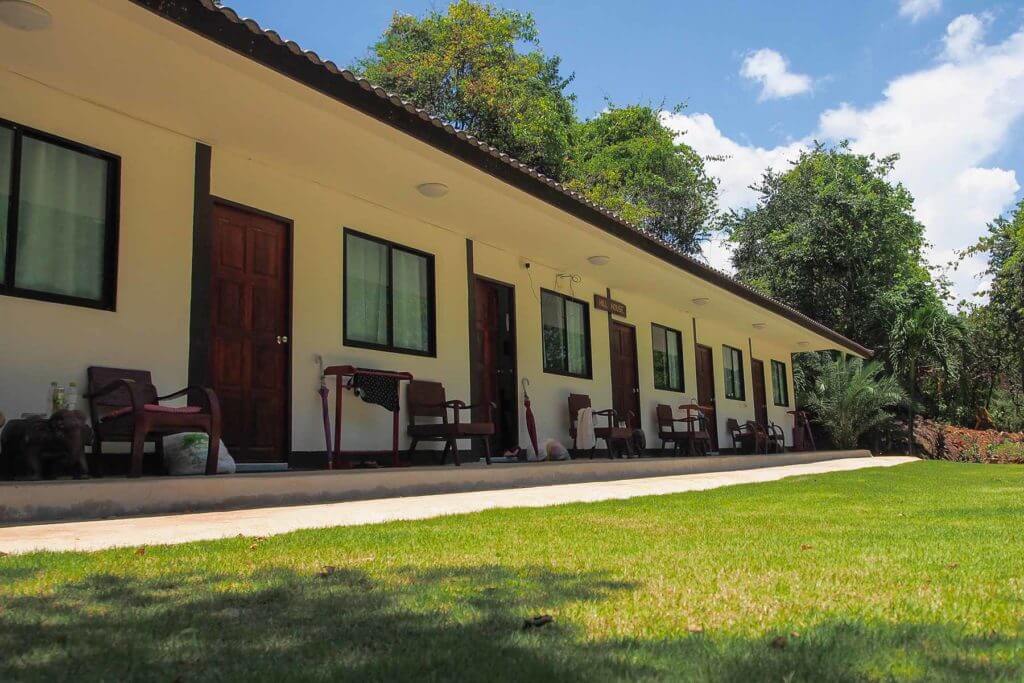
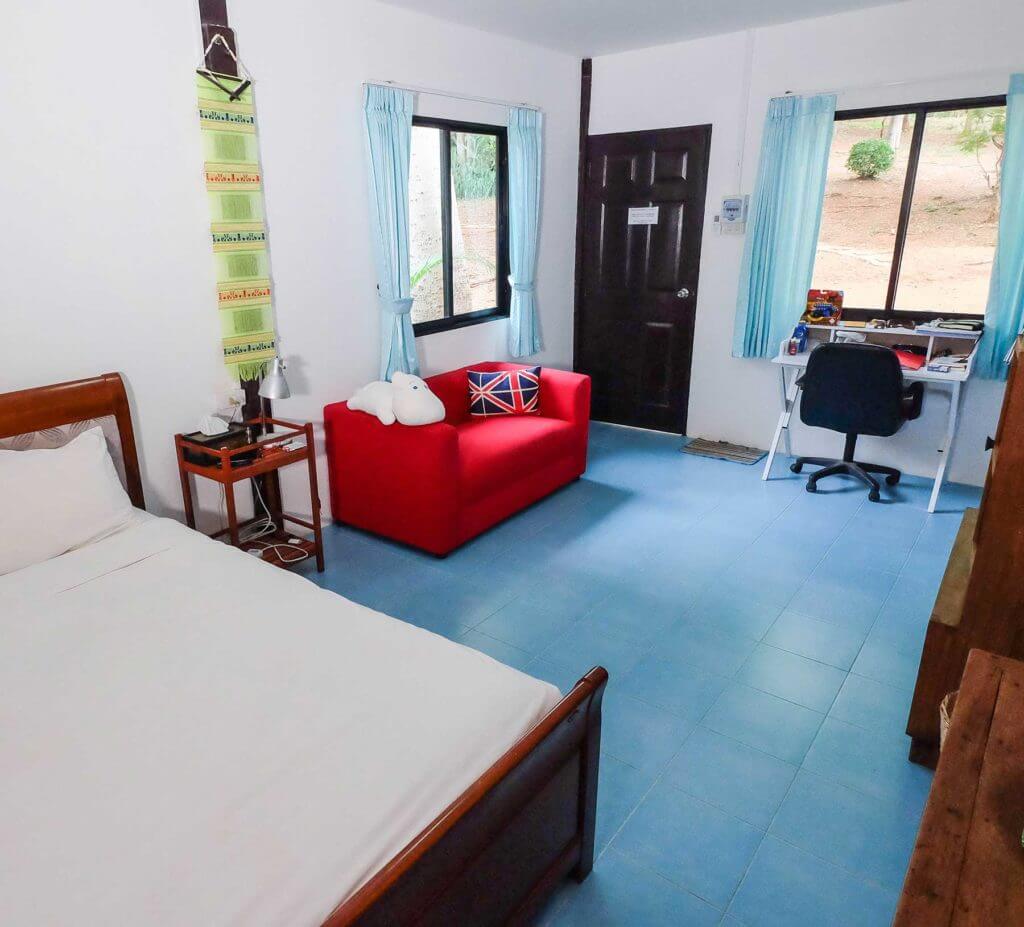
The accommodation page describes thirty en-suite rooms, including rooms in several different buildings and a traditional Thai house. Air conditioning, Wi-Fi, a desk, and daily cleaning are described, with laundry also provided. The sleeping arrangement is single occupancy, while meals, treatment, and many activities are shared. Room layout, accessibility, views, and the exact assigned building should be confirmed for the intended admission.
Hope also publishes a staged room-allocation policy. Clients may begin near the main house for detox support, move to standard accommodation, and later transfer to the seaside advanced facility. The page treats these changes as part of managing treatment stages and incoming admissions, rather than an optional hotel upgrade. Discuss any mobility, sensory, or other clinically significant concern about moving rooms before agreement. A longer booking should identify the likely location changes and what level of support applies at each one.
Fitness, outings, and the practice of ordinary activities
Published activities include gym work, Muay Thai, cycling, yoga, meditation, massage, supervised shopping, restaurant visits, and selected local excursions. Hope describes outings as opportunities to practice social situations and sober routines with support. The useful treatment question is how these activities connect with a resident’s goals and physical capacity. A person recovering from illness or injury should clarify how participation is adapted, rather than assume the standard exercise schedule is compulsory in its original form.
The inclusions page says clients need a small personal allowance for items such as refreshments or meals during some outings. This is another important limit on the all-inclusive description. Devices are also part of daily-life planning: the package information describes a telephone kept in the room and on-site Wi-Fi, but the treatment timetable remains substantial. Discuss essential family or work contact and any restrictions with the team before arranging ongoing professional commitments during the stay.
Costs, payment arrangements, and what requires a separate quote
The official cost page asks prospective clients to request rates rather than publishing one definitive package price. It says the calculation depends on duration, detox and medication needs, and available discounts. The page describes a booking deposit, a period after arrival to settle the balance, and possible month-by-month payment for longer treatment. Those terms should be confirmed in the current contract, including refund and early-departure provisions.
Hope’s published cost information says it is not currently set up for health-insurance coverage. Do not subtract assumed reimbursement from the expected payment. A written estimate should separate residential treatment, optional EMDR, hospital stays, personal spending, flights, and relevant travel or medical cover. Provider assistance with a funding application does not establish that an outside authority or insurer will approve it. Compare the exact quoted period and inclusions with other programs in the Thailand treatment directory.
Aftercare and the distinct Chiang Mai sober-house option
The aftercare page describes weekly online groups, alumni contact, an aftercare manual, and limited contact with the counselor. It specifies brief calls and weekly emails for approximately four weeks as the formal arrangement, while acknowledging that some clients remain in touch longer. It also makes clear that remote support is not continuous worldwide counseling. Confirm how to join, the relevant time zone, and what individual contact is actually included.
For suitable clients remaining in Thailand, Hope describes a separate third-stage sober house in Chiang Mai, potentially including recovery meetings, coaching, education, volunteering, and community activities. This is geographically and clinically distinct from primary treatment in Sri Racha. Before choosing it, clarify eligibility, accommodation, supervision, fees, and the transition plan. Whether returning home or moving to that setting, the discharge arrangements should identify local healthcare, ongoing psychological support, practical responsibilities, and the people involved with the resident’s consent.
Official Hope Rehab pages reviewed October 20, 2026. This profile distinguishes the therapeutic residential program, external medical services, and later sober living. Promotional outcome, funding-approval, and neurochemical recovery claims are not treated as independently verified evidence.
Conditions
Levels of care
Amenities
Treatment approach
CBT, twelve-step recovery tools, individual and group counseling, mindfulness, recovery coaching, trauma-related support, and women-focused groups
Fees & admissions
Confirm current pricing
Current rates are supplied on inquiry and depend on duration, detox, medication, and discounts. Agreed detox support is described as included in the first month, but overnight hospital care is charged separately. EMDR is an additional-cost option. Personal spending, flights, and relevant insurance also require budgeting. The cost page states Hope is not set up for health-insurance coverage; confirm the current payment and refund terms.
Confirm the current program, duration, accommodation and included services directly with the center.
Confirm the Chonburi residence, treatment stage, medical needs and fees.