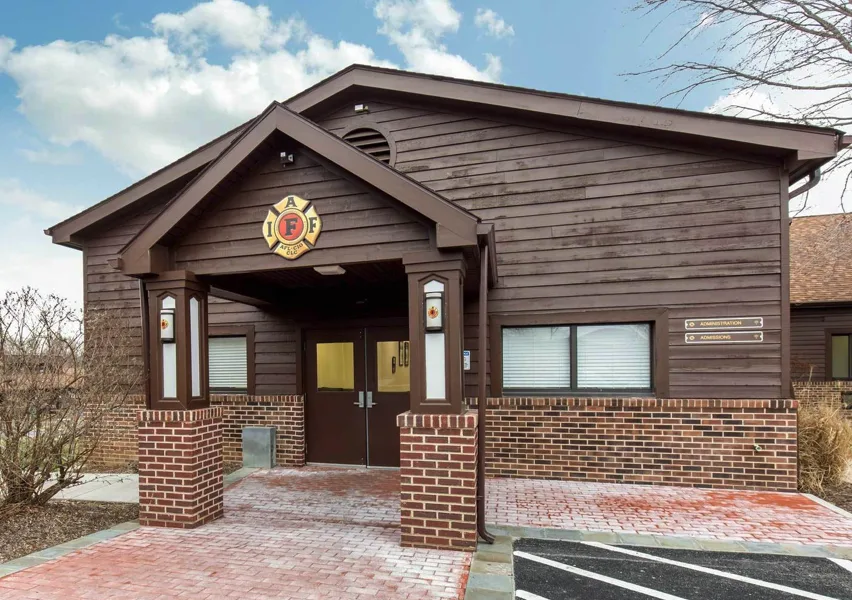

About IAFF Center of Excellence — Upper Marlboro
IAFF Center of Excellence in Upper Marlboro
The IAFF Center of Excellence for Behavioral Health Treatment and Recovery is a specialist program for eligible International Association of Fire Fighters members in Upper Marlboro, Maryland. The official provider website describes treatment for trauma, substance use, and other behavioral health concerns in a setting designed around fire-service experience. The address is 13400 Edgemeade Road, Upper Marlboro, MD 20772. This is a membership-focused service rather than a general admission program for every first responder. Confirm eligibility with admissions before arranging travel or assuming that a professional role alone establishes access.
The center is included in the United States treatment directory. Its relationship with the IAFF and Advanced Recovery Systems is central to the program’s identity. A prospective patient may value a setting where other residents understand aspects of fire-service work, but the clinical fit still requires assessment. Explain the reasons for seeking help, current health needs, previous treatment, and any practical concerns about time away. The decision should reflect what the actual Maryland program can provide, including the care needed before arrival and the support available after leaving.
Eligibility and the first conversation
IAFF information describes the service as available to members and retirees, including eligible people in fire-service and emergency roles. Ask the intake team how membership and current eligibility are confirmed for the individual. A relative, peer-support colleague, or local representative can help make an initial inquiry, but the prospective patient should be involved in the assessment and decisions. If someone is not eligible, ask for appropriate alternatives. The specialist peer setting is a defined admission feature; it should not be interpreted as a general claim that this program is automatically the best choice for every person in an emergency-service occupation.
The IAFF’s what-to-expect information describes a telephone pre-assessment and insurance review before admission. It distinguishes that initial screening from the diagnostic assessment completed after arrival. Prepare a concise account of symptoms, substance use where relevant, medications, physical health, and recent treatment. If another clinician is already involved, discuss consent for sharing records. An initial conversation about eligibility or available beds should lead to a clear explanation of the clinical next step, rather than being treated as a complete assessment on its own.
Trauma and behavioral health care
The official treatment page describes support for PTSD, depression, anxiety, substance use, and co-occurring concerns. It lists individual and group therapy and approaches including cognitive processing therapy, CBT, and EMDR. These are provider-described options, not a promise that every person receives every method. Ask how the clinical team decides which approach is suitable, who delivers it, and how readiness is assessed. A person may need time to clarify goals or stabilize before beginning particular therapeutic work, so the proposed sequence matters as much as the list of available methods.
Fire-service experience can include concerns that a patient finds difficult to explain outside the profession. Ask how the therapist makes room for the person’s own account rather than assuming that everyone has the same exposure, priorities, or response to work. Some people may be focused on a particular event; others may want help with relationships, sleep, grief, substance use, or the cumulative pressures of a career. The assessment should identify the concerns that matter to that individual. A shared occupational background can inform the setting without replacing personal clinical assessment and treatment goals.
Detox and different treatment levels
The center advertises detox, residential care, and less intensive treatment stages. Its program information describes continued onsite living for certain partial-hospitalization and intensive-outpatient arrangements. Ask which stage is recommended and what supervision, appointments, and accommodation apply at each point. The word continuum does not mean that every patient moves through the same sequence or stays for the same duration. A clear plan should identify the criteria for a transition and the responsibilities of the clinical team, the resident, and any services that become involved afterward.
If substance withdrawal is a concern, provide the assessing clinician with accurate information about current use, prescribed medicines, previous withdrawal experiences, and medical conditions. Ask whether the center can manage the person’s needs or whether another service is required first. Do not change prescribed treatment or make a travel decision using a directory description alone. For a patient transferring from a hospital, the services should coordinate the clinical handover. It is useful to establish who has reviewed the information, what records are needed, and whom to contact if health changes before the planned arrival.
A campus designed around shared experience
The official campus description places the center across 15 acres, with treatment, dining, and living areas in several buildings. It describes four station-house residences and shared spaces intended to feel familiar to fire-service members. Facilities include a fitness center, outdoor recreation, trails, and a seasonal pool. These details introduce the environment, but they do not establish the room assigned to a particular admission. Ask about bedroom occupancy, bathroom sharing, accessibility, and the practical support available if an injury or health condition affects movement around the campus.
Consider how communal living will feel during treatment. A familiar occupational environment may be reassuring, while an individual may also want space away from work-related conversation or time to settle into a new group. Ask how staff support those preferences and handle concerns between residents. Request information about quiet time, permitted belongings, laundry, communication, and access to activities. Physical recreation should be discussed in relation to the person’s health and treatment plan, rather than assumed to be appropriate simply because the facility has equipment or outdoor space available.
Privacy, work, and communication
Many prospective residents will want clarity about contact with their department, union, family, or other professionals. Ask the center to explain consent for disclosure, relevant privacy policies, and any applicable exceptions in plain language. Agree who can receive information and what is needed for practical matters such as leave or insurance. Avoid assuming that an inquiry automatically authorizes the treatment team to update everyone involved in a referral. The resident should understand the communication plan and know how to ask questions about records or change an authorization where permitted.
Treatment planning and decisions about employment are related but distinct. Ask what support the program provides with return-to-work planning and which decisions belong to the employer, occupational-health professional, or another authorized party. A completed stay should not be treated as a guarantee of a particular duty status or career outcome. Discuss documentation needs early enough that they can be addressed appropriately. The useful goal is a coordinated plan that supports the person’s health and makes responsibilities clear, without assuming that the treatment team controls every decision made after discharge.
Family and peer support
Ask how family members or chosen supporters can be involved during treatment and in planning the return home. A partner may need help understanding communication or changes to routines, while a peer-support colleague may assist with practical arrangements. Those roles should be agreed with the resident’s consent. Discuss whether the available service consists of education, joint therapy, support resources, or a referral elsewhere. A family member can be helpful without becoming responsible for managing the patient’s clinical care, and the patient may have preferences about which relationships should be included in therapeutic work.
Plan essential communication before admission, especially where children, dependent relatives, or work administration are involved. Ask for the current phone and visiting policy and how urgent practical information can reach the resident. Do not assume that normal availability can continue throughout every treatment stage. Arranging a trusted person to handle agreed tasks at home may help the resident participate more fully. The center’s specialist understanding of fire-service life can inform these discussions, but each household still needs a plan that reflects its own responsibilities and the patient’s wishes.
Duration, insurance, and price evidence
The IAFF’s what-to-expect page reports an average stay of 35 to 45 days, while emphasizing that individual length varies. At the October 20, 2026 review, the Recovery.com listing’s FAQ gave a separate estimated cost of US$30,000 for 30 days. The secondary estimate is not a verified provider tariff or a price for the union’s stated average duration. Do not combine the two into an assumed total. Ask admissions for a written financial explanation tied to the actual treatment sequence and expected length.
The IAFF’s insurance information describes verification of benefits and an explanation of deductibles, coinsurance, and out-of-pocket limits. Confirm the individual’s coverage for the exact program and ask about authorization, separate charges, and changes if care continues longer than first expected. Membership eligibility does not itself establish that every cost is covered. If another person or organization is helping financially, agree what information can be shared and who is responsible for any balance. Keeping these questions separate from clinical assessment helps the patient understand both parts of the decision.
The union also publishes information about financial obligations, including a boarding-fee scholarship route for eligible members in certain later treatment stages. Ask about the current requirements and availability before assuming that housing or other costs will be paid. Travel, accommodation during step-down care, and personal expenses may need separate planning. A useful estimate identifies the treatment level and the cost category, rather than presenting a single figure without explaining what it includes. Confirm the arrangements in writing before making commitments that depend on funding being available.
Aftercare and the return to everyday life
The center describes aftercare planning that can include local behavioral health services, recovery meetings, alumni connections, and support around returning to work. Ask which appointments can be arranged before departure and how records will reach the next clinician with consent. A member returning to another state or to Canada may need a different practical plan from someone living nearby. Identify who will manage prescriptions, how the outpatient schedule fits normal responsibilities, and what contact remains available from the center. Alumni support should be distinguished from ongoing clinical treatment so that expectations are clear.
The published admissions number is (855) 900-8437. A useful first inquiry should clarify eligibility, the proposed care level, current accommodation, financial responsibility, and how the program supports the transition afterward. Explain the concerns that matter to the individual rather than assuming that membership or occupation tells the whole story. The center’s specialized peer environment provides a reason to investigate it; the final decision depends on the assessed clinical needs and the actual arrangements offered. Clear responsibilities at each stage help turn an initial inquiry into an understandable plan for care.
Destinations
Conditions
Levels of care
Program approach
Provider-described trauma-focused and co-occurring care, individual and group therapy, CPT, CBT, EMDR, and clinical assessment
Fees & admissions
Estimated USD 30,000 / program
Recovery.com FAQ estimate checked 2026-10-20: USD 30,000 for 30 days. Not a provider tariff or price for IAFF-reported 35–45-day average stay. Confirm benefits and any boarding/travel costs separately.
Confirm the current program, duration, accommodation and included services directly with the center.
Membership eligibility, telephone pre-assessment, insurance review, and clinical acceptance before travel