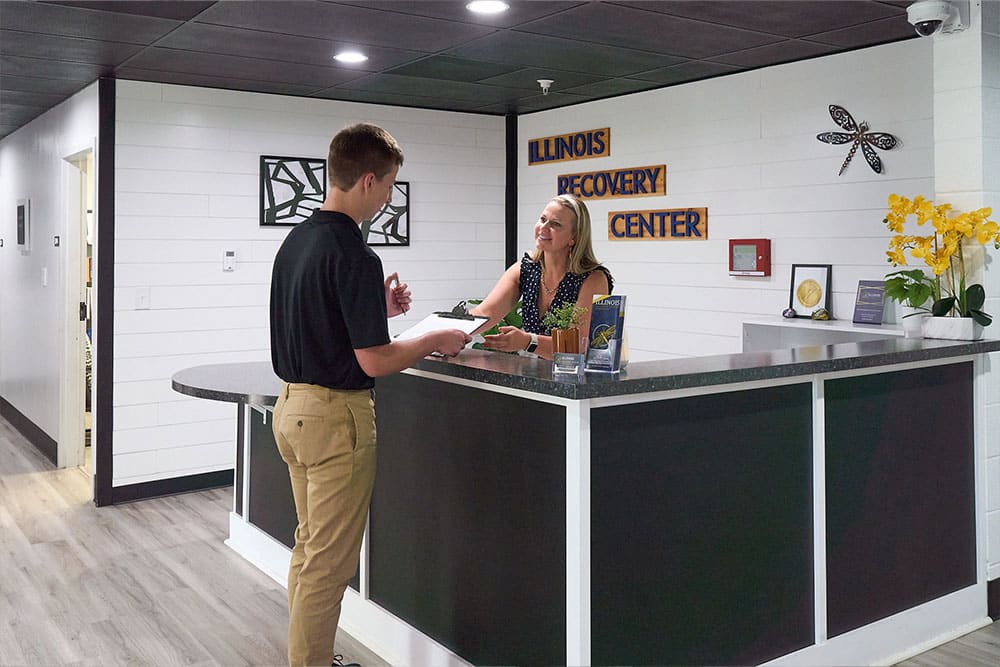

About Illinois Recovery Center — Swansea
Illinois Recovery Center operates an addiction treatment campus at 1450 Caseyville Avenue in Swansea, Illinois. Its services include medical detox, residential treatment, and outpatient care, with treatment planning intended to address substance use and associated mental health needs together. The campus combines residential and clinical space with recreational facilities on a 12-acre property. For someone comparing programs in the Metro East area, the central decision is which level of care is appropriate and what the actual schedule, medical support, and financial arrangement will be. A broad continuum of services does not mean that every person needs to complete every stage.
Where treatment takes place
The provider’s contact page confirms the Swansea address, ZIP code 62226, and the inquiry number (888) 472-5004. References to Belleville, St. Clair County, and the wider St. Louis region describe the area served; they should not be mistaken for additional residential addresses. Ask admissions to confirm the precise entrance and arrival arrangements for the assigned program. This is particularly useful for a family member providing transportation or someone moving directly from another treatment setting with records and medication information to hand over.
The official facility page describes a 12-acre campus with more than 50,000 square feet of indoor space, a fitness center, and a basketball court. The acreage and floor area measure different things; neither establishes how many residents are in a therapy group or how much individual attention someone receives. Ask for the current census and group size in the relevant unit, not simply the total size of the property. A large campus can contain several services with different routines and staffing needs.
Detox, residential treatment, and medical boundaries
Illinois Recovery Center calls its live-in program residential or inpatient treatment. Its detox page describes round-the-clock support, medication when indicated, and psychological care during withdrawal. Those descriptions support asking about a medically supervised admission, but they do not by themselves establish a general hospital or every capability associated with hospital care. Ask which nurses and prescribing professionals are onsite, how coverage changes overnight, and which medical or psychiatric concerns require transfer to another setting.
For the initial clinical conversation, gather the substances recently used, current prescriptions, medical conditions, and any history of difficult withdrawal or emergency treatment. The admissions clinician can then explain whether detox, residential care, or a different setting is proposed. Ask whether there is a separate approval for moving from detox to the residential program, whether a bed is expected to be available, and how billing changes between stages. The advertised availability of both services should not be interpreted as a guaranteed, uninterrupted placement for every applicant.
The residential page gives a general duration of 30 to 90 days or longer, depending on need. Treat this as a description of possible treatment planning, not a requirement or a prediction for one person. Ask when the first review takes place, what progress the team will evaluate, and who participates in decisions about extending or stepping down care. A clinically proposed stay and the number of days an insurer initially authorizes should be discussed separately so that neither becomes an unexplained deadline.
Therapy and support for co-occurring difficulties
The provider describes individual and group therapy, cognitive behavioral approaches, dialectical behavior skills, relapse prevention, and family involvement. Its Swansea overview also discusses coordinated attention to addiction and mental health concerns. Someone seeking help for both should ask how assessment distinguishes a continuing psychiatric condition from symptoms that need further observation during early recovery. Request a clear explanation of psychiatric appointments, medication review, and communication between the therapist and medical team, rather than relying only on the phrase “dual diagnosis.”
A sample timetable can show whether the clinical program matches the person’s priorities. Ask how often individual sessions occur, which groups are mandatory, how therapy is adapted for concentration or learning difficulties, and what happens when a resident misses a session for a medical appointment. If trauma treatment is a major reason for considering the center, ask whether a particular intervention is assessed individually and who is qualified to deliver it. A provider’s therapy menu is not a commitment that every listed approach will be used with every resident.
The public pages name different clinical leaders in different program descriptions. This profile therefore does not assign a particular professional to a prospective resident or promise that a named staff member will provide their care. Ask who currently leads the relevant service, who will be responsible for the treatment plan, and how residents can raise a concern about the therapeutic relationship. Those answers are more useful than choosing solely from a staff biography that may refer to another program or an earlier staffing arrangement.
Outpatient care and a realistic step-down plan
The dedicated outpatient page identifies Illinois Recovery Center at the same Swansea address and describes ongoing counseling for people who do not need to live onsite. The organization also advertises partial hospitalization and intensive outpatient services. Ask which service is being recommended, where sessions occur, and whether the start date can be arranged before residential discharge. Confirm the actual weekly hours rather than assuming all outpatient options offer the same intensity, schedule, or access to medical appointments.
For a local resident, continuity may depend on transportation, work shifts, childcare, and a suitable place to stay between appointments. Map those practical needs against the proposed schedule before committing to it. If the person lives farther away, ask about a handoff to a local clinician and whether any offered virtual appointments are available for their location and clinical needs. Outpatient treatment, supportive housing, and alumni contact are different services; the plan should say which is included and who takes responsibility for each next step.
Rooms, recreation, and everyday life
The Swansea overview describes private or semi-private rooms and communal lounges. That supports considering different accommodation options, but it does not promise a private room for every admission. Ask about availability, any room supplement, bathroom sharing, roommate arrangements, and whether the offered room is in the detox or residential area. Someone who needs an accessible shower, step-free routes, or particular sleep accommodations should obtain a specific answer for their assigned space. General facility photographs do not establish whether an individual access need can be met.
The fitness and basketball facilities may appeal to residents who value movement as part of their routine. Ask when they are available, whether supervision or clinical clearance is required, and what alternatives exist for people who prefer quieter activities. It is also useful to clarify laundry, meals, dietary requests, outdoor access, telephone use, and storage of personal items. Those details can affect day-to-day comfort, but they should be compared alongside the treatment timetable and support available when someone is having a difficult evening.
Family involvement and communication
The residential program describes family participation when clinically appropriate. Before relatives arrange visits, ask whether the first contact is an educational group, a joint therapy session, or a visiting period, and whether there are separate consent requirements. Establish how a resident can choose who receives updates and what general information the center can provide without disclosing private treatment details. A family member can also ask what support is available for their own questions, especially if they will help with housing, transportation, or appointments after discharge.
Discharge conversations should make responsibilities concrete. For example, the treatment team might help the resident identify who will collect prescriptions, who can drive to an appointment, and which household expectations need discussion. Ask how disagreements are handled and whether an alternative plan can be developed when returning to the previous home is unsuitable. Family participation is not a requirement to make every relationship work; the relevant question is how the program helps the resident build a practical, consensual support arrangement that can continue outside the campus.
Published fee estimates and payment questions
On October 20, 2026, the independent Recovery.com profile displayed an estimated $20,000 for 30 days of detox and residential treatment, plus a separate $2,000 estimate for 30 days of intensive outpatient treatment. These are third-party estimates for different services. They should not be combined into a $2,000–$20,000 price range for the same residential stay, treated as a daily tariff, or assumed to represent the amount an insured patient will owe.
Ask for a provider-issued quotation that identifies the proposed program, exact duration covered, room category, and included medical and therapy services. Clarify charges for laboratory work, prescriptions, outside appointments, transportation, and any housing associated with outpatient participation. If detox takes longer than expected or residential care is extended, ask how the new costs will be communicated and approved. The payment agreement should also explain deposits, cancellation, early departure, and refunds. A directory estimate cannot settle those terms or guarantee availability at that price.
The admissions page describes an initial evaluation, benefits verification, and intake assessment. It says the benefits discussion can address network status, deductibles, copays, coinsurance, and coverage across treatment stages. The site mentions several commercial insurers and, in some pages, public insurance, but that is not confirmation that every plan covers this exact program. Verify the precise member plan, receiving service, and authorization with both the center and insurer. Ask for clarification in writing if different pages or representatives give different answers.
Making a useful comparison
Illinois Recovery Center may suit someone looking for assessed addiction treatment with residential and outpatient options in the Swansea area. Compare its answers with other United States treatment providers, focusing on the actual service proposed rather than the largest list of amenities. The residential care guide, outpatient care guide, and co-occurring conditions guide can help frame the discussion. Before making a commitment, seek a clear clinical recommendation, an agreed room and schedule, a written financial explanation, and named arrangements for the next stage of care.
Sources and verification
Reviewed October 20, 2026, using the linked official campus, contact, facility, program, admissions, and insurance pages, together with the dated Recovery.com fee estimates. Provider claims are attributed; individual eligibility, staffing, accommodation, insurance, and current pricing require confirmation.
Destinations
Conditions
Levels of care
Amenities
Program approach
Individual and group therapy, cognitive behavioral and dialectical behavior approaches, family participation, co-occurring care, medication support when indicated, and continuing-care planning
Fees & admissions
Estimated USD 20,000 / program
Recovery.com checked 2026-10-20 estimates USD 20,000/30 days detox and residential, plus separate USD 2,000/30 days IOP. Display residential estimate only; do not turn different care levels into a USD 2,000–20,000 residential range. Obtain current provider-issued quote and exact insurance benefits.
Confirm the current program, duration, accommodation and included services directly with the center.
Initial evaluation, benefits verification and intake assessment. Confirm exact care level, current staff, medical limits, receiving room, authorization and financial terms before arranging admission.