
Care at Indah Recovery — Dana Point
Indah Recovery’s Dana Point program
Indah Recovery is a residential addiction treatment provider in Dana Point, California, offering medically supported detox and an inpatient residential program for alcohol and drug use. Its materials also describe care for co-occurring mental health concerns within substance-use treatment. The official contact page identifies the address as 35492 Del Rey, Dana Point, CA 92624, and gives +1 310-486-2616 as its telephone number. That address anchors this profile. Location-oriented pages elsewhere on the provider’s site discuss surrounding communities, but they should not be interpreted as confirmation of separate Indah campuses in every place named.
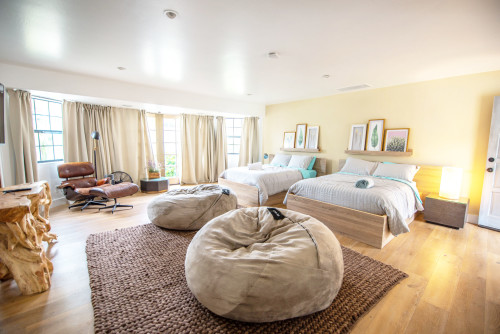
The provider describes its approach as a combination of conventional treatment and holistic or creative activities. Its residential setting is designed around living at the property during treatment, with staff support and a structured program. The what-to-expect page specifically describes semi-private suites, flat-screen televisions, an in-ground pool, and a hot tub. Semi-private accommodation means the prospective resident should expect to discuss a shared arrangement rather than assume the word “luxury” guarantees a bedroom alone. The actual room, bathroom occupancy, accessibility, and current use of amenities should be confirmed before admission.
Assessment before deciding on a stay
Indah offers an initial conversation through its admissions team, including discussion of treatment needs and possible funding. Its detox information describes an intake examination and review of physical health, substance-use history, and mental health concerns. Testing may form part of that assessment depending on the person’s circumstances. A useful first conversation therefore includes current prescriptions, recent use, prior treatment, and any earlier complications during withdrawal. These details help establish the level of support needed; an appealing setting or an available room cannot substitute for that clinical decision.
The program’s addiction focus is also relevant when the main concern is depression, trauma, or another psychiatric difficulty. Indah describes co-occurring care, but its reviewed pages do not set out a comprehensive admission policy for every primary psychiatric condition or level of acuity. Someone seeking treatment without substance use should ask whether the service can meet that need. Similarly, a person requiring complex medical care should have the necessary resources assessed before arrival. The aim of the screening conversation is a specific answer about fit, including an appropriate alternative if residential addiction treatment is not the right setting.
Detox and the beginning of rehabilitation
The official detox page describes medical support, regular monitoring of vital signs, nutritional support, emotional support, and medication when necessary. It says residents have access to medical staff throughout the detox process. Those are the provider’s stated service components, while the exact on-site staffing pattern and prescribing arrangements should be clarified for an individual admission. The plan should also identify how the team responds if a person’s needs exceed what the residence can manage. This makes the practical meaning of medical support clearer than a general reassurance about comfort.
The transition from detox into rehabilitation is a change in emphasis. The initial period involves assessment, stabilization, and managing the person’s immediate needs. As participation becomes possible, the residential program brings more attention to psychological, social, and everyday patterns connected with substance use. Indah’s materials discuss that relationship between the stages, rather than presenting withdrawal support as the complete treatment plan. A prospective resident can ask whether both stages will take place at the same address, how days are counted, and what would lead the clinical team to recommend a longer stay or a different level of care.
Individual, group, and co-occurring treatment
Indah’s residential program description emphasizes individualized psychological and social treatment, support for co-occurring concerns, and family participation when appropriate. Individual sessions provide a setting to examine personal circumstances in more depth, while group work introduces a shared treatment environment. The useful question is how those parts will be combined for this resident: the goals being addressed, the expected contact with the primary clinician, and the way the plan is reviewed. The reviewed page does not publish a single fixed number of individual therapy hours that applies to every person.
For a resident who already has a therapist or psychiatric prescriber, coordination can be an important part of preparing for admission. Existing records may help the receiving team understand previous diagnoses, medication responses, or work already underway. The person can discuss which information they want shared and what follow-up will be needed after discharge. A co-occurring treatment description should become a practical arrangement for addressing both concerns during the stay. It should not be read as a guarantee that every mental health issue will be resolved within one residential episode or that all outside specialist care becomes unnecessary.
Creative therapies within the program
Indah explicitly offers art therapy as one of its additional treatment options. Its description focuses on creative expression and a route for exploring experiences that may be difficult to put into ordinary conversation. That can be a reason to ask about the service for someone who wants more than a schedule of seated discussion. It is still important to establish how the activity is facilitated and how it connects with the clinical plan. An art-based session is not defined only by access to materials, and the provider should be able to explain the form of work being offered.
The music therapy page describes another creative option, including listening, reflection, and music-making as possible ways of engaging. The exact activities depend on the program and person, so musical ability should not be assumed to be an admission requirement. A resident may find it useful to discuss whether a session is individual or shared, who leads it, and how participation is adapted to comfort and preference. The existence of music or art programming does not establish a particular clinical outcome; its relevance comes from the role it plays alongside the rest of the treatment.
Indah also offers yoga and meditation within its holistic model. These activities introduce movement, attention, and periods of quiet into a day that also contains clinical work. Someone with pain, limited mobility, or discomfort with a particular practice should ask how the activity can be adapted or what alternatives are available. The provider’s whole-person language is best understood as a description of the range of activities it organizes. It should not be taken as evidence that one practice is suitable for everyone or can replace individually indicated medical or psychological care.
The broader therapy menu additionally mentions biofeedback and IV therapy. The reviewed material does not establish that every resident receives either service, identify a universal protocol, or provide an individualized reason to choose one. A person considering an optional procedure should receive a clear explanation of its purpose, practitioner, suitability, and cost from the treating team. This distinction keeps a treatment menu useful: it shows topics to discuss without converting every advertised option into a promised inclusion or an established benefit for addiction recovery.
Family participation and the residential environment
Indah’s family therapy description focuses on communication, relationships, and the effects of substance use on the household. It also recognizes that family work may include individual conversations before people meet together. For a resident, the starting point is deciding with the therapist who should be involved and what the sessions are meant to address. For relatives, it is an opportunity to understand the proposed role rather than assume they will receive unrestricted updates. The provider’s public description does not specify a universal visiting schedule or a fixed number of family sessions included in every stay.
The residence’s shared suites and communal setting make daily routines a relevant part of the choice. A person should ask about the balance among therapy, meals, rest, and outdoor activity, including how much personal time is available. The detox page gives examples such as beach outings, hikes, bowling, and game nights across the wider treatment experience. These are examples of activities, not an entitlement to each outing during every admission. The current schedule, health requirements, transport arrangements, device policy, and any limitations during early care should be clear before the person relies on them when choosing a program.
Understanding the quoted cost and duration
When reviewed on October 20, 2026, Recovery.com’s Indah listing placed an estimated USD 45,000 beside a thirty-to-sixty-day program range. The source does not clearly identify which length receives that amount. It is therefore an attributed third-party program estimate, not a verified thirty-day tariff or a price covering every possible sixty-day stay. It should not be divided, extended, or relabeled to create a different package. The current official pages reviewed do not publish a fixed residential cash fee, so a specific written quotation is needed for the proposed episode.
Indah discusses working with private insurance and offers benefits verification through admissions. A form’s list of payment options is not, by itself, proof that every listed insurance product is accepted for residential treatment. The financial discussion should establish the exact plan, the care being authorized, and the expected personal responsibility. It should also separate residential charges from detox if billed differently, medication or outside medical costs, optional services, and later housing or treatment. The advertised thirty-to-sixty-day range is a directory description; the clinical recommendation and funding arrangements for an individual stay need to be established together.
Planning life after the Dana Point stay
Indah’s aftercare page describes an individualized discharge plan built around goals, personal strengths, areas of difficulty, and available community support. It discusses the possibilities of returning home or moving to sober living, along with ongoing therapy and recovery groups. Those options should be translated into named services and practical arrangements before departure. The website’s reference to lifetime aftercare does not specify unlimited clinical appointments or housing at no additional charge. The resident should know what continuing contact Indah itself offers and which parts will be provided and paid for elsewhere.
People comparing treatment centers in the United States can use Indah’s defined Dana Point address, semi-private rooms, detox and residential focus, family work, and creative activities as concrete points of comparison. The most useful next step is a plan that states what will actually happen during the proposed stay. That includes clinical oversight, selected therapies, room arrangements, contact rules, the full cost, and the receiving support after discharge. Confirming those details allows the coastal residential setting to be considered in the context of the person’s treatment needs and everyday life.
Reviewed October 20, 2026. Program details come from the linked official Indah Recovery pages. USD 45,000 is a third-party estimate shown beside a thirty-to-sixty-day range, with the exact price-to-duration relationship unconfirmed. Optional therapies and continuing-care arrangements require individual clarification.
Conditions
Levels of care
Settings
Treatment approach
Individual/group and family therapy, medical assessment and withdrawal monitoring, medication support when indicated, art and music therapy, yoga and meditation, experiential activities, individualized life and discharge planning; optional biofeedback or IV services require clinical explanation
Fees & admissions
USD 45,000 / program
Recovery.com exact Indah listing shows estimated USD 45,000 beside a 30–60-day range, checked October 20, 2026; the exact price-to-duration relationship is unspecified. Third-party guidance, not a verified 30-day tariff or guaranteed 60-day package. No proration or monthly conversion. Request a current quote for detox/residential care, medications, optional services and aftercare/housing.
Confirm the current program, duration, accommodation and included services directly with the center.
Confirm whether the USD 45,000 quote applies to 30 or 60 days, what is included, the assigned room, detox costs and the specific aftercare plan.