
About Invigorate Behavioral Health — Los Angeles
Invigorate Behavioral Health in Los Angeles
Invigorate Behavioral Health describes addiction detoxification and residential treatment in Los Angeles, with care for co-occurring mental health needs. Its official website emphasizes an individualized assessment and publishes 323-900-5041 for inquiries. The address associated with this listing is 553 North Mariposa Avenue. Someone considering admission should ask which residence will be used and which stage of care is being recommended, since the available licensing entry covers several nearby addresses. Neither an organization-wide description nor a photograph establishes the room or staffing arrangement for an individual placement.
Invigorate may be relevant to an adult comparing a supervised residential addiction program with treatment attended from home. The decision should begin with current clinical needs and a discussion of what the residential environment is expected to provide. Ask why overnight care is being recommended, what problems the team can address, and what would require an outside service. If you have already completed detoxification, make that clear so the proposed plan reflects your current situation. If withdrawal support may be needed, ask the clinical team to assess that before travel is arranged.
The Mariposa addresses and licensed capacity
The available California DHCS dataset identifies Arise Treatment Homes LLC, doing business as Invigorate Behavioral Health, under application 191329BP. Its entry names 553 North Mariposa Avenue and seven additional addresses on the same street. The record lists 48 places across those addresses, licensed and certified residential-detox services, and incidental medical services marked “Yes.” It does not describe one 48-bed house. Ask admissions to identify the exact property, its current occupancy, and the accommodation associated with the proposed quote.
The underlying dataset was last edited August 17, 2026, and the entry shows an April 30, 2027 license expiration date. It is useful official evidence about the listed organization and properties, but it is not a live confirmation of every operating detail. Ask for current license information if it matters to your decision and distinguish it from other credentials the provider advertises. A state record, an accreditation, and a clinician’s individual license answer different questions. None independently guarantees a particular outcome or establishes that a service is suitable for every person.
Detoxification and residential programming
The official programs page describes medically assisted detoxification with continuous care and medical guidance, followed by residential addiction treatment. It presents substance use and mental health needs as part of individualized planning. Ask who conducts the first medical assessment, who is present overnight, and how access to a prescriber works. The program description does not replace an explanation of staffing at the assigned house. It should also be clear how the team responds if your needs exceed what that setting can manage.
For someone considering both detox and residential care, ask how the transition is decided and whether it involves a different house, room, schedule, or financial agreement. An estimate of total program length should show which days relate to each stage. A shorter withdrawal-management stay does not mean that later support has been arranged, and a residential booking should not be assumed to include every possible medical service. Request the anticipated sequence in understandable language, together with the person responsible for reviewing it with you after arrival.
The secondary profile describes a residential course of about 30 days, while its general duration field spans seven to 30 days. Those references should not be treated as a fixed clinical requirement. Ask how the team decides whether the proposed time is sufficient and how it discusses extensions, an earlier transition, or a different recommendation. If you have a limited period away from work or family, state that constraint early. The discussion should explain what can reasonably be planned within the available time and what support would need to continue afterward.
Making the therapy description specific
Recovery.com’s Invigorate profile describes individual and group work, CBT, DBT, EMDR, relapse-prevention counseling, twelve-step support, and activities such as yoga and meditation. These are secondary program descriptions. Ask which methods the current team would recommend for you, who delivers them, and how frequently appointments take place. The presence of a method in a directory should not be read as a promise that every resident receives it or that it will be appropriate at every point in treatment.
When co-occurring symptoms are part of the concern, ask how the addiction counselor, therapist, and any prescribing clinician communicate. You can request an explanation of who reviews medication, how an existing diagnosis is assessed, and whether previous records will be useful. If you already have a trusted clinician, discuss possible coordination with your permission. The aim is to understand who holds responsibility for each part of the plan, including what happens between scheduled appointments, rather than assuming that a broad mental health label supplies every type of psychiatric support.
A current sample week can reveal details that a list of therapies leaves open. Ask how much time is spent in groups, how individual sessions are scheduled, and whether appointments are protected when other activities change. Consider how you learn best and whether language, hearing, mobility, or other access needs affect participation. Recovery.com reports English and Spanish services, but ask specifically whether the clinicians and groups relevant to your plan are available in your preferred language. Translation for an admissions call is different from ongoing therapy delivered in that language.
Family participation and personal boundaries
Invigorate’s family therapy information discusses communication, education, relationships, and different approaches to involving a support system. It also describes family counseling as a possible part of continuing support. Ask what is offered during your residential stay, whether sessions can take place remotely, and who can participate with your consent. The page is an overview of family work, so it should not be interpreted as a guarantee of a particular number of sessions or a requirement to include every relative.
It can help to distinguish a clinical family session from a routine update or a conversation about payment. Decide what information you want shared with each person and ask how those preferences are recorded. If a relationship is difficult or contact would be unhelpful, discuss that privately with the treatment team. You can also ask whether a trusted friend or another support person can take part instead. A useful plan makes the purpose of involvement clear and does not assume that all important support comes from the same family structure.
Rooms, packing, and daily practicalities
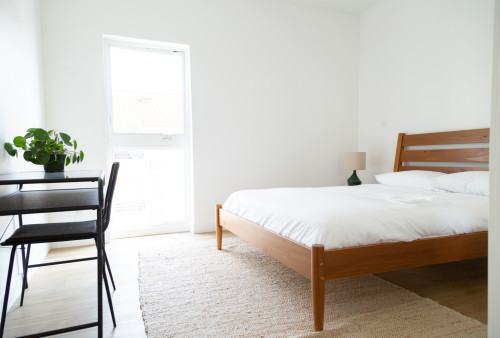
The secondary campus description mentions private or shared rooms, an outdoor lounge, and a fitness area. Confirm which features belong to your assigned residence and whether any room preference is included in the rate. Ask about the number of roommates, bathroom access, storage, laundry, and accessibility before accepting a placement. The multi-address licensing record makes those questions particularly relevant: proximity does not mean that every house has the same layout or amenities. If a photograph influenced your choice, ask whether it shows the house and room category actually being offered.
The official admissions page recommends bringing identification, insurance details, medication information, and relevant records. It describes intake consent forms, a belongings check, testing, and a broader assessment. Its packing guidance limits luggage to one or two bags and notes laundry facilities. Request the latest list before departure, especially for toiletries, glass containers, electronics, or items you use for a health condition. If an item is essential, obtain a clear answer about how it will be managed rather than relying on a general packing suggestion.
Ask separately about telephone access, internet use, visits, and the arrangements for appointments away from the residence. Those details are not established simply by a comfortable-house description. If work, caregiving, or a legal appointment requires contact at a certain time, explain the need during admission planning and ask who can approve an exception. A written schedule can help you arrange backup support for routine responsibilities. It can also prevent relatives from interpreting a planned period without phone access as an unexpected problem.
Daily price and insurance responsibility
Recovery.com, checked October 20, 2026, publishes an estimated cash-pay rate of USD 1,200 per day for this listing. That is a third-party estimate, not a current Invigorate tariff. The figure is preserved as a daily rate without converting it into a quoted monthly package. Ask which care stage and room it covers, whether the rate changes after detoxification, and how physician services, medications, laboratory work, outside appointments, and additional days are billed. The written estimate should match the exact program and address offered.
Invigorate’s admissions information describes insurance verification and says it works in-network with many major providers. Actual participation and coverage must be checked for your policy, the specific service, and the relevant dates. Ask who obtains authorization, how long it lasts, and what happens if the insurer approves fewer days than the clinical team recommends. The estimate should identify any deductible, coinsurance, uncovered services, and payment arrangements. A general claim that treatment is covered by insurance does not establish that your personal cost will be zero.
Arranging the next stage before departure
The official program overview establishes detox and residential care; generic discussion of outpatient recovery elsewhere on the website does not establish an outpatient program at the Mariposa houses. Ask whether continuing care will be delivered by Invigorate, an affiliated organization, or an independent provider. Confirm appointment dates, the transfer of information with consent, and any separate fees. If you will return to another community, ask the discharge team to help identify services that are practical for that location and compatible with the commitments you will resume.
Before the final day, review the plan with the person who will help coordinate the transition. It should cover accommodation, transport, scheduled clinical follow-up, medication arrangements when relevant, and agreed support contacts. Ask what to do if a referral is unavailable or a planned appointment falls through. When comparing Invigorate with other United States treatment options, use the same questions about the exact residence, staffing, schedule, room, cost, and continuing support. Our residential care directory provides a starting point for those comparisons.
Reviewed October 20, 2026. Sources: Invigorate’s official homepage, programs, admissions and family-therapy information; available DHCS facility data last edited August 17, 2026; and Recovery.com for attributed daily-price and accommodation descriptions. Current availability, licenses, clinical suitability and costs require direct confirmation.
Destinations
Conditions
Levels of care
Settings
Amenities
Program approach
Provider-described individualized addiction and mental health planning; specific CBT/DBT/EMDR and wellness methods are secondary descriptions requiring plan-specific confirmation
Fees & admissions
Estimated USD 1,200 / day
Recovery.com estimate checked 2026-10-20: USD 1,200/day. Not a provider tariff or fixed monthly package; exact detox/residential stage, room and inclusions require a current written quote.
Confirm the current program, duration, accommodation and included services directly with the center.
Screening and insurance verification, exact Mariposa house, current clinical coverage, room, written daily price and continuing-care arrangements