
About La Ventana Treatment Programs — Thousand Oaks
La Ventana’s Thousand Oaks programs
La Ventana Treatment Programs offers mental health and substance use services through several residential and outpatient settings in Thousand Oaks, California. The current official website describes residential care, detoxification, partial hospitalization, intensive outpatient treatment and virtual options. It gives 800-560-8518 as the general enquiry number and offers an initial clinical assessment. The appropriate program and actual treatment address need to be established before admission.
This profile covers the provider’s Thousand Oaks services in the United States. It should not be read as a promise that every service, bedroom or amenity is located in one building. La Ventana distinguishes primary mental health treatment, substance use treatment and different levels of attendance. Understanding that distinction is essential when discussing the clinical recommendation, the receiving residence and the price of the proposed course.
The office is different from a residential house
The current locations page gives 155 East Wilbur Road, Thousand Oaks, California 91360 for its corporate office and lists its music laboratory at the same address. It separately identifies 1414 East Thousand Oaks Boulevard, Thousand Oaks, California 91362 for the mental health outpatient program. The older address on the current secondary listing, 1408 East Thousand Oaks Boulevard, Suite 100, should not be assumed to be the admission address.
The California Department of Health Care Services dataset updated August 17, 2026 identifies 155 East Wilbur Road, Suite B as La Ventana’s certified nonresidential service, application 560038BP. It separately lists residential and detoxification records at 385 North Conejo School Road, application 560038DP, and 395 North Conejo School Road, application 560038FP. Each residential record gives six treatment and total places.
The state records list September 30, 2028 and April 30, 2028 expirations for those respective residences. Those dates differ from the older 2026 dates still displayed on La Ventana’s licensing page. The newer dated records do not justify an assumption of closure or expired authorization based on the footer. Ask for the exact residence and current applicable license; these substance use records do not establish the license or capacity of every separate mental health house.
Choosing the clinical program
La Ventana describes care for mental health concerns, substance use and their overlap. An assessment should clarify the main reason for admission, what the team can address together and which conditions require additional resources. For someone seeking mental health treatment, ask whether the proposed placement is a primary mental health residence or a substance use program with co-occurring support. Those descriptions should not be treated as interchangeable.
The residential page describes small, home-like settings, individual and group therapy, psychiatric assessment, practical skills and discharge planning. It includes approaches such as cognitive behavioral therapy, dialectical behavior therapy, mindfulness and recovery education. Ask which methods are proposed for the individual, the actual appointment frequency and who coordinates the plan. A long service list does not establish that every participant receives every method.
Its women’s mental health program specifically describes assessment-led psychotherapy, medication management, trauma-related work, experiential approaches and Music in Recovery. Ask how the women’s program differs in residence, group composition, staffing and clinical goals. If a particular trauma approach matters, clarify what the provider means by it, who delivers it and how readiness is assessed; a named modality is not a promise of a particular course or result.
Detoxification and medical resources
The current primary FAQ and dedicated detoxification page explicitly describe La Ventana detox services. This differs from the current secondary listing’s service filter, which marks detoxification unavailable even while quoting a detox price. Use the current primary description as the starting point, then confirm the exact receiving house, whether detoxification is recommended and how it connects with the subsequent residential plan.
The state record marks incidental medical services available at 385 North Conejo School Road but not at the separately recorded 395 North Conejo School Road house. Do not assume identical medical resources at both residences. Ask about actual nursing and prescriber arrangements, overnight availability, medication handling and transfer procedures for the proposed address. A residential detoxification license does not independently establish hospital admission, and this profile does not treat these houses as hospitals.
Share current prescriptions, relevant medical history and existing clinical contacts during assessment. Ask which medicines or consultations are supplied within the program and which involve a separate provider or charge. The team should explain the proposed starting service and what would trigger a reassessment. A complimentary assessment or tour is a useful opportunity to ask these questions, but it does not by itself confirm clinical acceptance or a reserved bed.
Outpatient and virtual arrangements
La Ventana also offers outpatient treatment, including day programming and intensive outpatient services. The current FAQ describes weekday in-person and virtual IOP availability and weekday PHP attendance. Another detox page refers more generally to six-day counseling. Request the actual timetable for the recommended track rather than treating either broad schedule as a guaranteed attendance pattern for every patient.
Clarify the outpatient address, weekly hours, delivery format, eligibility and support outside sessions. Ask whether any housing arrangement is separate from the clinical program and how transport is organized. The secondary profile refers to a teen outpatient option, but that does not establish adolescent admission to the adult residential houses. Age, consent arrangements and the specific receiving service should be confirmed directly instead of transferring eligibility from one program to another.
Music, family involvement and daily structure
Music in Recovery is a distinctive part of La Ventana’s public program description, and the locations page identifies a dedicated music laboratory at the Wilbur Road address. Ask how music activities fit the clinical week, whether travel between sites is involved and what participation requires. A music-based activity may appeal to someone who finds other forms of expression difficult, but its presence should not be treated as a substitute for the agreed clinical appointments.
The provider describes family immersion work intended to improve communication and understanding. Its FAQ refers to weekly family sessions and later opportunities after discharge. Confirm the current format, dates, eligibility, fees and how the patient’s consent is handled. Family education, a clinical family session and routine progress updates are different forms of involvement. Relatives should also clarify their own travel and accommodation needs rather than assuming they can stay at the residence.
Ask for a sample weekly plan showing individual work, groups, psychiatric review, recreation and practical tasks. The residential description includes meal preparation, resume building and other everyday skills alongside clinical work. Discuss which activities are relevant to the person’s goals and what alternatives exist when health, disability or personal circumstances limit participation. Useful planning connects the residential schedule with the tasks the person will face after returning home.
Bedrooms, meals and accessibility
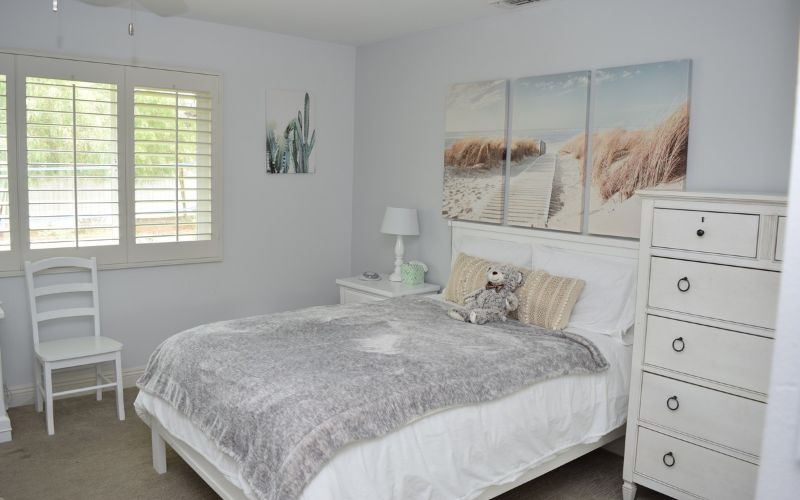
The primary residential page describes six-bed houses, while the current Recovery.com profile broadly describes private and semi-private rooms across La Ventana’s residences. That does not assign a particular bedroom type to the proposed house or clinical track. Request the actual address, bedroom and bathroom occupancy, accessibility and any supplement. A small or privately operated house is not sufficient evidence that an individual resident will receive a private bedroom.
The current FAQ describes professionally prepared meals, shared dining and dietary needs discussed during admission. Explain allergies, food restrictions and any assistance required before accepting the placement. Ask what personal purchases remain the resident’s responsibility and whether arrangements vary between residential and outpatient housing. Similarly, pool, gym or garden descriptions on a broad provider listing should be checked against the exact residence and the current clinical permission to use them.
Phone use and preparing for arrival
The FAQ and packing guidance say residential patients surrender phones for secure storage, with an initial twenty-four-hour period without phone use and subsequent access at clinical discretion. Bring the device only under the agreed policy and arrange essential responsibilities beforehand. Permission to have a phone returned later does not establish unrestricted remote working, photography or communication during treatment.
The packing page asks for treatment records, provider contacts and medication information and says the residence supplies bedding, towels and laundry facilities. Request the current instructions for the actual house, especially for medical equipment, items requiring staff review or additional storage. Ask who to contact on the day of arrival and whether identification, insurance information or other documents need to be provided in advance. Practical preparation should follow the confirmed placement rather than a generic checklist.
Separate fee references for different services
Recovery.com checked October 20, 2026 gives three distinct estimates: USD 20,000 per month for residential substance use treatment, USD 36,000 per month for residential mental health treatment and USD 1,200 per day for detoxification. These are third-party service-specific references, not an official tariff or one interchangeable price range. The lower residential figure cannot be assumed to purchase the mental health course, and the daily detox estimate does not define a combined residential package.
The provider’s FAQ says treatment length is individualized rather than fixed to a deadline. Ask for the recommended service and duration, how a billed month is defined and what happens if the plan changes. Obtain an itemized written offer covering the residence, room, clinical appointments, medication, tests, meals, transport, family services and continuing care. Confirm deposits, cancellation, early departure, transfers and extensions so that a change of level does not leave the financial arrangement unclear.
La Ventana describes relationships with major insurance companies and offers a benefits check. Confirm the exact policy, clinical service, receiving address, authorization and personal costs before relying on a carrier name or network statement. The agreement should explain who communicates a funding change and when a new approval is required. Retain the written estimate and ask how additional services are discussed before they are charged.
Continuity after the residential stage
The next stage may involve La Ventana outpatient care, virtual appointments or another provider closer to home. Before a transition, ask for the location, timetable, medication responsibilities and any separate housing agreement. Alumni and family resources can support that plan, but they do not establish booked clinical appointments. A sound decision identifies the correct track and residence, practical daily arrangements, transparent service-specific costs and a clear handover to the next stage.
Sources checked October 20, 2026: La Ventana’s program, locations, FAQ, packing and licensing pages; DHCS records updated August 17, 2026; Recovery.com for separately attributed room and service-specific price descriptions. Office, outpatient and residential addresses are distinguished, and older footer expiry dates are not treated as current closure evidence.
Destinations
Conditions
Levels of care
Settings
Program approach
Individual/group psychotherapy, cognitive and dialectical behavior therapies, psychiatric assessment and medication management, women-focused trauma support, Music in Recovery, family immersion, practical skills and discharge planning
Fees & admissions
Estimated USD 20,000 / month
Recovery.com checked October 20, 2026 separately estimates residential substance use treatment at USD 20,000 per month, residential mental health treatment at USD 36,000 per month and detoxification at USD 1,200 per day. The displayed numeric reference is the substance use residential estimate only. These are distinct third-party prices, not one interchangeable range or an official combined package. Confirm exact service, address, room, billed period and all inclusions in a written offer.
Confirm the current program, duration, accommodation and included services directly with the center.
Confirm primary mental health versus substance use track, actual residence and applicable license, detoxification provider/address and medical resources, age/clinical fit, bedroom/bathroom, diet/access needs, initial phone restriction and later clinical permission, actual timetable/duration, service-specific written fees and policy benefits, and the next-stage provider/housing.