Care at Laguna Treatment Center — Aliso Viejo
Addiction treatment at the Aliso Viejo location
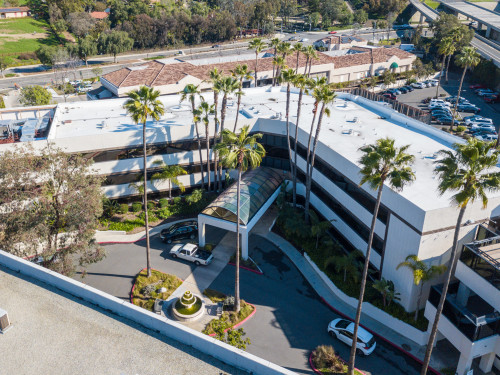
Laguna Treatment Center is at 24552 Pacific Park Drive in Aliso Viejo, California. The official American Addiction Centers overview describes medically managed withdrawal support and residential addiction treatment, with care for associated mental health concerns. It also identifies specialty support for veterans, young adults, and people who have experienced repeated returns to substance use. The exact treatment plan depends on assessment. This profile concerns the Aliso Viejo facility and distinguishes its on-site care from outpatient services or recovery housing arranged elsewhere after discharge.
A person considering Laguna should understand both the medical stage and the therapeutic work that follows it. Withdrawal management may be an essential first step, but the wider plan also needs to address coping, relationships, medication, and the conditions to which someone will return. Travel to a treatment center is most useful when the proposed care level matches the person’s needs and there is a practical plan for continuity. The admission decision should therefore be based on the actual services, clinical capabilities, and personal circumstances.
Independent confirmation of the hospital license
California’s official healthcare facility dataset, with data dated October 16, 2026, lists Laguna Treatment Center, LLC at this address as an open Chemical Dependency Recovery Hospital. It records active license 550003560 through June 14, 2027, with a licensed capacity of 93. This is independent confirmation of a specialized hospital classification. It does not mean that the facility provides every service of a general acute hospital, and licensed capacity is not a measure of current vacancies, group size, or the number of available private rooms.
The provider describes daily medical rounds, twenty-four-hour nursing, medication administration, and withdrawal management within this setting. The clinical assessment should still address previous withdrawal complications, physical illness, psychiatric symptoms, and current prescriptions. Someone with significant medical needs should establish the relevant capabilities and transfer arrangements directly with the clinical team. Hospital classification explains the type of regulated service; it does not determine suitability for every possible condition. The proposed care plan should describe what happens if a person’s needs change while they are at Laguna.
Medical and psychological treatment together
The current service description combines medical detox, inpatient or residential addiction care, and co-occurring mental health support. Medication may be part of treatment when indicated, alongside therapy and recovery planning. A patient already taking prescribed medication should provide the current regimen and contact details for existing clinicians. The useful discussion is how those treatments will be continued, reviewed, or adjusted and who will take responsibility after discharge. There is no basis for assuming that every patient receives the same medication plan or must finish it within a residential stay.
Laguna’s therapy description lists cognitive behavioral therapy, dialectical behavior therapy, motivational interviewing, and psychodynamic work. These approaches address different aspects of change. CBT can connect situations, thoughts, and behavior; DBT-related skills can support emotional regulation and communication; motivational work can explore the person’s own reasons for changing substance use. Psychodynamic work can examine how past experiences affect present patterns. The assigned therapist should explain which methods fit the current goals and how they are delivered in individual or group sessions.
The campus overview also names Seeking Safety and recovery groups such as Recovery Dharma, alongside individual counseling, groups, and other clinical activities. Those options provide different ways to work on coping, awareness, and connection. Their presence on a program list does not establish that every person receives all of them or a fixed number of private therapy hours. Ask how the schedule is individualized and how changes are made when a method is not helping. The plan should connect the therapy being used with a recognizable difficulty in the person’s life.
Co-occurring care is particularly relevant when anxiety, low mood, trauma symptoms, or another psychiatric concern interacts with substance use. The team needs an accurate account of earlier diagnoses, treatment, medication responses, and recent difficulties. The clinical question is how those needs can be addressed alongside addiction treatment at Laguna and whether another specialist service is also required. A general statement that a center treats mental health concerns should not be read as evidence that it provides every type of standalone psychiatric admission or specialist therapy.
Veteran and first responder treatment
Salute to Recovery is Laguna’s pathway for veterans and first responders, with the provider also describing access for active-duty personnel subject to the relevant arrangements. It combines addiction and co-occurring care with work that considers military or emergency-service experience. Published group topics include stress, anger, emotional regulation, trauma, relationships, and the transition into civilian life. These topics may help make care more relevant to the person’s background, while the treatment plan still needs to reflect individual experiences and goals.
The program page names Richard Arias as its lead and describes veteran-informed clinical groups, peer connection, and planning for support after treatment. It also identifies VA Community Care as a possible funding route. Eligibility and authorization should be confirmed with the person’s VA team before relying on that route. A specialty program description is separate from an individual benefit decision. For someone with employment or service obligations, the care plan should also address consent, communication, and the practical arrangements for returning to those responsibilities.
Daily structure and the pace of care
The published sample day includes a patient meeting, morning recovery groups, meals and medication review, afternoon individual or specialty activities, evening meetings, and reflection. It illustrates a structured program with a substantial group component. The schedule can change according to the treatment stage, clinical needs, and availability. A person who is newly stabilizing may not initially participate in the same way as someone further along in residential care. Ask how individual therapy and medical appointments are fitted into the program and how progress is reviewed before moving to another stage.
The provider does not establish one universal length of stay for the whole service. Detox, rehabilitation, and any later care have different purposes and may require different amounts of time. Practical planning should include the expected review points, possible extensions, and the financial implications of a changed plan. Someone who has completed treatment elsewhere before should discuss what additional work is proposed now, including any changes in medication, therapy focus, living environment, or continuing support. A repeated admission should have an individualized rationale rather than simply repeat an earlier timetable.
Private and shared rooms, meals, and activities
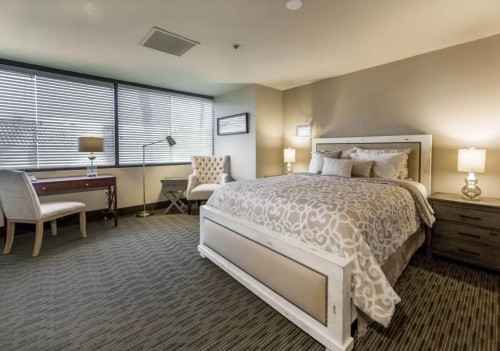
The facility page explicitly describes both private and shared bedrooms. Its inpatient information says a private room is available at an additional cost. Confirm the allocation and supplement in writing, including bathroom arrangements and accessibility. A room photograph does not guarantee a particular booking. The program’s clinical work and group participation continue regardless of room category, so privacy should be assessed alongside the actual amount and type of treatment contact.
Laguna describes a gym, pool, outdoor areas, dining, and meals with snacks between them. The provider also lists off-site activities such as beach or hiking outings, with participation dependent on eligibility and medical clearance. These are activities arranged from the Aliso Viejo treatment location, rather than a promise of accommodation on a beach. Exercise, outings, or equine activities should fit the person’s stage of care and any restrictions. Ask what is currently available and how the schedule balances recreation with therapy, rest, and medical appointments.
Family communication and support
The campus’s family guidance describes contact with relatives after admission when the patient has authorized release of information. Family therapy may take place in person or remotely when appropriate, and staff can help relatives identify community support groups. Discuss who should be involved and what information can be shared rather than assuming family access is automatic. Visiting arrangements are coordinated through the treatment team. Relatives may also benefit from support focused on their own needs, distinct from a joint session about the patient’s treatment or discharge.
Aftercare may involve a different location
Laguna’s aftercare information describes planning before discharge, including outpatient appointments, medication follow-up, recovery meetings, and housing when needed. It specifically says Laguna does not operate its own sober living program and identifies its sister facility, Desert Hope in Las Vegas, as an option for outpatient care and recovery housing. This is an important geographic distinction. A suggested placement in Nevada is not an on-site California outpatient service, and relocation should be considered explicitly with the clinical and practical plan.
If Desert Hope’s services are proposed, ask for the receiving program, address, housing arrangement, and costs. Local California or home-area providers may be more appropriate for some people. The choice should reflect the level of care, support network, travel, work, and personal responsibilities. Before discharge, confirm that appointments have been arranged, prescriptions can be obtained, and the receiving team has the information needed to continue care. Sharing a parent organization does not remove the need for a clear handover.
AAC describes in-person and remote alumni opportunities at Laguna, with eligibility conditions in its campus information for graduates in good standing. Confirm the current rules rather than assuming every former participant receives identical access. Peer connection can support recovery, but it has a different role from scheduled therapy, medical review, or supervised housing. The continuing plan should state which services are included, which need a new referral or payment, and how the person can seek additional clinical support if difficulties arise.
Costs, insurance, and deciding whether to proceed
No current defined all-inclusive private-pay tariff was verified for Laguna. The provider describes insurance verification and payment options, while private room charges and later services may be separate. Ask for a written estimate covering the proposed care stage, accommodation, medication, relevant clinical services, and any extension terms. Insurance participation does not establish the benefits of an individual policy. Confirm authorization, the network status of the service, deductibles, coinsurance, and noncovered items before using an estimate to make travel or financial plans.
Laguna provides a verified chemical dependency hospital setting for medical withdrawal management and residential addiction care, with several therapy approaches and a veteran-focused pathway. Its room options, medical capability, and discharge arrangements should be considered together. Compare the proposed plan with other programs in the United States treatment directory, then confirm the actual room, clinical schedule, duration, and personal cost. Sources were checked on October 20, 2026; current availability and program conditions should be reconfirmed before an admission is arranged.
Conditions
Levels of care
Settings
Amenities
Treatment approach
Integrated addiction and co-occurring care, individual/group counseling, CBT, DBT-related work, motivational interviewing, psychodynamic therapy, Seeking Safety, recovery meetings, medication when indicated, and veteran/first responder pathway
Fees & admissions
Confirm current pricing
No defined current all-inclusive official tariff verified. Written estimate should identify clinical stage, duration, room and private-room supplement, medication, authorization, and patient share. Outpatient care and recovery housing may be separate providers, locations, and charges.
Confirm the current program, duration, accommodation and included services directly with the center.
Clinical assessment establishes medical and psychiatric suitability. Provider describes daily medical rounds and 24-hour nursing. Confirm current care plan, prescribed medication, room supplement, insurer authorization, and any separate post-discharge service.