Care at Life Works House — Old Woking
A therapy-led residential service in Old Woking
Life Works House is a Priory residential addiction service on High Street in Old Woking, Surrey. Its current location page describes a 17-bed house delivering Flourish, a program built around psychological therapy, a recovery community, and practical preparation for everyday life. The service supports people with substance use and behavioral addiction concerns who can take part in a nonmedical residential setting. It should be considered separately from Priory Hospital Woking, which provides medical and psychiatric services at a different address.
The distinction matters when choosing a placement. Life Works describes itself as suitable for people who do not need medical detox or ongoing medical care. Accommodation and therapist availability do not make the house a hospital. An assessment needs to establish whether someone is sufficiently stable to participate in the program and whether other services are needed first. The proposed plan should name the actual provider for withdrawal management, prescribing, or any continuing medical needs, rather than implying that these functions are all available within the house.
Detox takes place at a separate service
The Life Works overview says that people who need a detox can receive it at nearby Priory Hospital Woking before beginning Flourish, with transport arranged between the services when appropriate. That is a planned transition between two care settings. It is not on-site detox at Life Works. The assessment should clarify the required level of medical observation, the expected transition criteria, any medication that will continue, and who is responsible for follow-up once the residential therapy stage begins.
Priory’s Reset program provides a separate seven- or ten-day medically assisted detox option, with clinical assessment determining the recommended duration. A detox charge should be distinguished from the Life Works residential fee. If both stages are proposed, request the complete itinerary and written costs, including any transport or additional medical appointments. A person who does not require detox may enter the therapeutic program directly following assessment; needing a particular service should be determined clinically rather than by the name of a package.
Flourish’s approach to addiction
The Flourish program description identifies a flexible, non-Twelve Step model that can support abstinence or harm-reduction goals. Attendance at AA or other Twelve Step groups is optional for people who find it useful. This is a material feature for someone comparing programs with different recovery philosophies. A useful treatment plan makes the individual’s goals explicit and explains how progress will be evaluated. Different goals do not remove the need for a safe, workable plan or a clear understanding of the risks associated with the person’s circumstances.
Life Works lists alcohol and drug problems alongside concerns involving gambling, gaming, internet use, shopping, sexual behavior, and other activities. These labels should lead to an individual assessment of harm, loss of control, and the effect on daily life, rather than assumptions based on an activity alone. The program aims to understand how the behavior fits into the person’s emotional and social circumstances. For someone with an existing psychiatric diagnosis, discuss the relationship between those needs and the addiction work, including whether a separate medical or mental health service will remain involved.
The actual therapy structure
The Flourish information leaflet describes daily process groups, twice-weekly individual therapy, psychoeducation, cognitive behavioral techniques, emotional regulation work, therapeutic outings, and reflection exercises. The main program page describes at least four therapeutic groups daily, beginning with a ninety-minute process group. This is a substantial communal program with individual support built into it. Someone seeking a predominantly one-to-one placement should understand that balance before booking. Confirm the current timetable and any adaptations needed for concentration, communication, sensory needs, or previous experiences of group treatment.
Cognitive behavioral work can help a participant connect a situation with the thoughts, emotions, and behavior that follow it. Interpersonal groups provide a different opportunity to notice relationship patterns and practice communicating with others. Life Works also names trauma-informed work, DBT-related approaches, psychoeducation, and dramatherapy among the methods used. These descriptions indicate tools within individualized treatment rather than a guarantee of every therapy or a full specialist DBT course. Ask how the chosen methods connect with the person’s particular difficulties and how the therapist will review their usefulness.
The provider describes virtual reality exposure work and supervised experiences outside the house as ways to rehearse responses to everyday triggers. The practical purpose is to apply coping skills in a planned setting before relying on them independently. A therapist should explain what scenario is proposed, why it is relevant, and how the experience will be reviewed afterward. The presence of VR equipment is not evidence that a particular outcome is guaranteed. Suitability, pacing, and the relationship to the wider treatment plan are more meaningful than the novelty of the technology.
Stages, duration, and increasing independence
Flourish begins with a minimum fourteen-day first stage focused on understanding addiction, developing routines, and establishing practical ways to manage cravings or triggers. Later stages are optional and based on individual needs. The second stage puts greater attention on identity, relationships, and building a life beyond the addictive pattern. The third emphasizes return to everyday responsibilities and an individualized discharge plan. These stages describe a progression of therapeutic work; they should not be converted into an automatic six-week requirement for every person admitted.
As the plan develops, the program may include more community participation, planned leave, and practice with ordinary responsibilities. Those opportunities should be agreed through assessment rather than treated as unrestricted freedom from the first day. Someone planning a return to work or family life can use them to identify difficulties while support is still available. Before extending a stay, establish the clinical goals for the additional time, what will change in the schedule, and the expected cost. Each stage should add a clear purpose to the overall plan.
Family participation and continuing support
The Flourish model includes weekly online support for relatives, with their involvement in direct clinical conversations subject to the patient’s consent. More involved family work may be available during a longer stay, depending on the program and group size. The newer Flourish leaflet describes an optional one-day family experience, while an older Life Works brochure describes a different arrangement. Confirm what will be offered for the actual booking. Family education, joint therapy, visiting, and ongoing support are different activities, each with its own purpose and practical requirements.
The current Life Works page states that someone completing a minimum fourteen-day residential stay receives twelve months of free online aftercare, including a weekly Zoom session. A linked older brochure still refers to a twenty-eight-day qualifying stay, so the admission agreement should state the current eligibility clearly. Continuing group support can help people review difficulties and retain a connection with others in recovery. It should not be interpreted as unlimited individual psychotherapy or medical follow-up. Establish which services are included and how separate appointments can be arranged if needed.
Recovery 360 is Priory’s digital alcohol recovery service, using a Bluetooth breathalyzer, an app, clinician review, and optional sharing with a chosen supporter. The published integrated pathway offers access following qualifying programs, with an initial three-month period and possible extension. Review is described for weekdays, so this is not continuous emergency monitoring. Confirm the individual’s eligibility and the period included in the Life Works package, particularly for someone whose primary difficulty is not alcohol. Agree who can see information and how support will be accessed.
The house, bedrooms, and daily practicalities
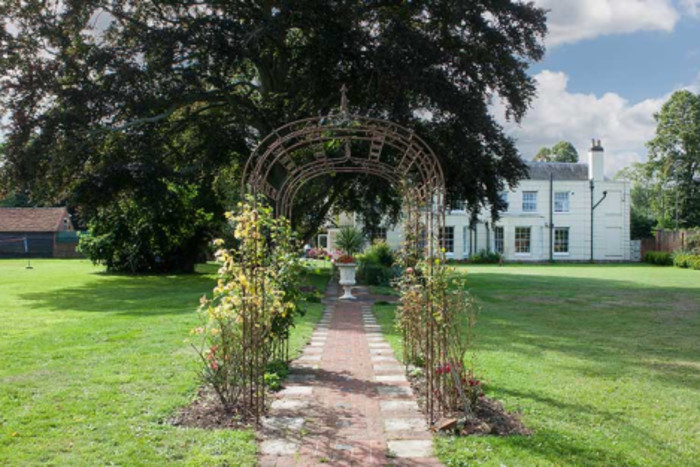
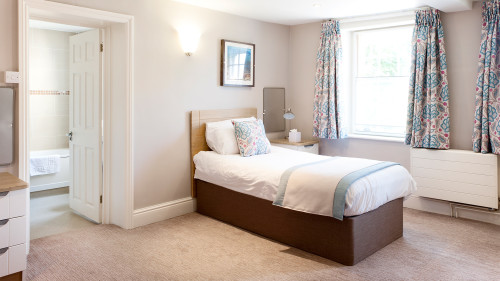
The provider describes a Grade II listed Georgian house with en-suite bedrooms, a shared lounge, library, kitchen, basic fitness equipment, and landscaped gardens. Meals are included, with dietary needs discussed individually. The Flourish price information says Life Works has a single room category; that phrase does not by itself confirm single occupancy. Obtain the exact bedroom and bathroom arrangement, accessibility information, and any room conditions in writing. A comfortable building supports daily living, while the therapeutic program and suitability of care remain the central considerations.
Fitness, relaxation, community outings, and recreational activities are described as part of wellbeing support. These activities give structure outside formal sessions and opportunities to rebuild ordinary routines. The service may also permit a pet following a risk assessment that considers the animal and other residents, including allergies or fears. Permission should be agreed before arrival rather than assumed from a general pet-friendly description. Similarly, visiting opportunities and contact with relatives need to fit around the program and the arrangements agreed for the individual stay.
Regulatory context and current pricing
The CQC listing for Life Works House identifies Life Works Community Limited as the provider and gives a Good overall rating from a report published November 27, 2018. The registration conditions allow a maximum of eighteen service users, while the current provider describes a seventeen-bed service. Those figures concern registered capacity and the service as currently advertised, respectively. An older inspection should not be presented as a recent assessment of the present Flourish program or used to override its stated nonmedical scope.
The current Life Works rate is £495 per night, with £6,930 quoted for fourteen nights, including meals. The lower £4,410 Flourish starting price shown in network comparisons applies to Eden House, not this location. Priory’s funding guidance describes self-payment and private insurance, but coverage for a particular residential program must be checked. Ask for a written quote identifying the stay, therapy, meals, any separate detox, additional clinical appointments, transport, extensions, and cancellation terms. The published rate is a useful starting point rather than a complete estimate of every possible expense.
Life Works House may be relevant for someone who can safely participate in a nonmedical residential setting and wants a flexible addiction therapy program with individual sessions and a substantial peer component. Compare it with the distinct care available at Priory Hospital Woking when withdrawal or continuing medical support is needed. Sources were checked on October 20, 2026. The most useful final document is a clear admission plan confirming the actual care setting, therapy schedule, room, aftercare eligibility, and complete cost.
Conditions
Levels of care
Settings
Treatment approach
Flourish: flexible non-Twelve Step model supporting agreed abstinence or harm-reduction goals; daily groups, twice-weekly individual therapy, CBT, trauma-informed work, emotional regulation, VR/real-world exposure when appropriate, family support, and practical reintegration
Fees & admissions
GBP 6,930 / program
Current location-specific published price: £495 per night, £6,930 for 14 nights including meals. Minimum Stage 1 is 14 days. Lower £4,410 Flourish network price belongs to Eden House. Separate detox, additional clinical care, transport, extensions and funding require a written quote.
Confirm the current program, duration, accommodation and included services directly with the center.
Free addiction assessment determines suitability and any preceding medical detox needs. Establish medication and physical/psychiatric stability arrangements. Any hospital detox is a separate service and cost, with transfer arrangements agreed in advance.