
About LifeHouse Vista Taos — El Prado
LifeHouse Vista Taos in El Prado
LifeHouse currently lists residential addiction treatment and medically managed detoxification at 259 Blueberry Hill Road in El Prado, New Mexico, near Taos. The program is also known through older Vista Taos descriptions. The current LifeHouse pages are the starting point for admissions, service scope, and coverage; older directory material should be checked against those pages before relying on a room, activity, staffing, or fee claim. This profile keeps the familiar Vista Taos identity while distinguishing current program information from secondary descriptions.
LifeHouse’s current Get Help page directs enquiries to its central Client Connections Team at 575-725-5552, available around the clock. It also provides an online referral route and says the team aims to respond by the next business day. Tell the team specifically that the enquiry concerns the Taos residential or detoxification service at Blueberry Hill Road. A central admissions contact serves more than one location, so the proposed program, receiving address, and start date should be confirmed explicitly.
Residential treatment and the individual plan
The current Taos residential page describes an adult program for persistent substance use, with an individualized action plan, individual and group counseling, and access to primary medical services. Ask how the initial assessment is completed, which clinicians participate, and how the plan reflects the person’s goals and health needs. The program description does not establish that every applicant needs the same course or is eligible for the same services. Confirm the exact minimum age and other admission criteria directly.
Discuss recent substance use, prescribed medicines, previous treatment, withdrawal experiences, medical conditions, and mental health concerns. Include practical needs such as mobility, sleep, diet, communication, or sensory preferences that could affect living in a shared program. Ask what information is needed from an existing clinician and how it can be transferred with consent. The receiving team should explain which needs it can manage at the residence and when additional assessment or care elsewhere would be necessary.
LifeHouse describes residential care as a structured environment with clinical work and recovery activities. This directory treats that as residential treatment; the evidence reviewed here does not independently establish hospital admission. Ask about staff present during the day and overnight, nursing arrangements, scheduled medical appointments, and access to a prescriber. A program’s name or description of medical access should not be used to infer continuous hospital-level resources at the residence.
The separate detoxification service at the same published address
The current Taos detoxification page uses the same Blueberry Hill Road address as the residential page and describes medical supervision of withdrawal care. It says each resident is paired with a peer worker and can participate in peer-led groups and quiet activities. Those are different roles within the program: peer support should be distinguished from nursing, prescribing, and medical assessment. Ask where the proposed detoxification stay occurs within the property and how its clinical staffing and daily routine differ from residential treatment.
If withdrawal management is recommended, obtain a plan based on the person’s clinical assessment rather than a duration taken from an older directory. Ask who makes the admission decision, what monitoring is available, which medicines may be used, and how transfer is handled when a higher medical level is needed. Confirm whether a subsequent residential place is already arranged or requires another assessment. Sharing a street address does not necessarily mean one agreement, one room, or identical financial coverage for both stages.
For medication continuity, identify the receiving prescriber, pharmacy, existing prescriptions, monitoring schedule, and any additional charges. Include medicines for physical health and mental health as well as recovery treatment. Someone changing programs should know which team is responsible for prescriptions during the transition. Discuss the plan with the relevant clinicians before making changes, and ask how medication is supplied or transferred when the person later returns home or enters another level of care.
Counseling, community activity, and co-occurring needs
LifeHouse’s residential page describes individual and group counseling and transportation to outside recovery meetings, including AA or NA. Ask for the current weekly schedule and how the team matches clinical work and community participation to the individual’s goals. A recovery meeting, a peer-led group, and an individual clinical appointment serve different functions. The program should explain which activities are expected, which are optional, and how alternatives are considered when a format does not fit the person’s needs or preferences.
Older Vista Taos directory material describes additional approaches, including trauma-related work, grief support, creative activities, and other experiential therapies. Those descriptions can guide questions, but they are not confirmation of the current LifeHouse timetable or staff. If a particular therapy is essential to the choice of provider, ask whether it is currently delivered at Taos, by whom, how often, and at what cost. The current primary page is less detailed than the older directory description, so specific services require direct confirmation.
For co-occurring mental health concerns, ask how assessment and psychiatric follow-up are coordinated with residential addiction treatment. Clarify whether care is provided directly, through primary medical access, or by an outside clinician. A secondary list of diagnoses does not establish specialist resources for every presentation. The directory’s guide to co-occurring conditions can help frame the conversation, while suitability must reflect current symptoms, the person’s preferences, and the actual capabilities of the receiving program.
Accommodation and life at Blueberry Hill Road
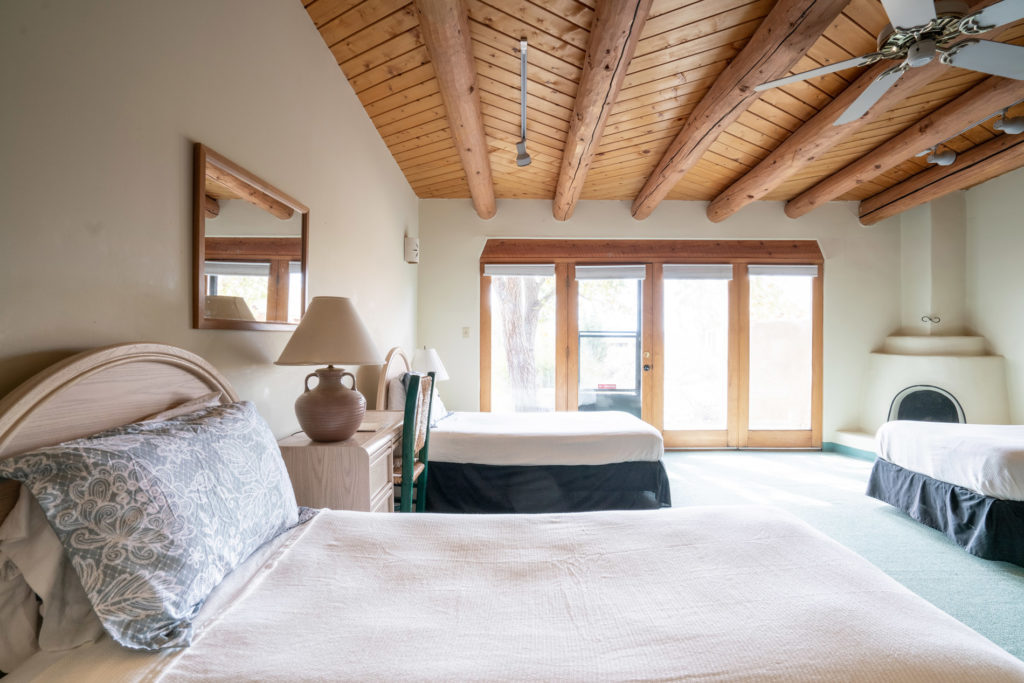
Recovery.com describes an eighteen-bed property with gender-specific shared rooms, while other labels on the same listing refer more broadly to private-or-shared accommodation. These secondary descriptions do not resolve a current private-bedroom offer. Ask for the actual room, number of occupants, bathroom sharing, stairs, accessible features, storage, and outdoor access. A private bathroom can be attached to a shared bedroom; it does not automatically mean the whole accommodation is private. Confirm whether room arrangements change between detoxification and residential care.
The current detoxification page describes meals and activities such as walking, reading, stretching, and board games. Ask what is available during the proposed stay and how dietary restrictions, allergies, mobility needs, and weather are accommodated. Older descriptions of a chef, patios, or particular wellness amenities should be confirmed rather than assumed. The useful practical information is what the assigned setting provides now, what the person should bring, and whether an accommodation or optional service creates an additional charge.
Discuss phones, internet, visitors, laundry, deliveries, smoking rules, and any restrictions on time away from the property. Someone with family, employment, or education responsibilities should agree on communication arrangements before admission. Ask whether a trusted person can assist with practical matters and how consent for contact is recorded. For anyone traveling to El Prado, confirm the arrival point, who provides transportation, its cost, and the contact process if an itinerary changes. A referral submission does not by itself confirm a bed.
Telehealth IOP is a separate option
LifeHouse’s current Taos program list includes telehealth intensive outpatient treatment. Its IOP page describes a typical sixteen-week course with nine hours of group and individual therapy per week and several possible morning or evening group schedules. These are outpatient sessions attended while living outside the residential program, not sixteen weeks of accommodation at Blueberry Hill Road. Ask which group is currently accepting clients, the relevant time zone, individual-session arrangements, and how the timetable is adapted to the person’s needs.
For remote participation, confirm eligibility based on where the person will be physically located, the technology required, a private place for sessions, and the plan if a connection fails. Ask who handles medication and other clinical needs alongside the online groups. If IOP is proposed after residential treatment, obtain the start date, receiving clinician, coverage decision, and living arrangements before discharge. The directory’s overview of outpatient treatment can help distinguish session intensity from the support needed during the rest of the week.
Insurance and financial assistance
The current Taos residential page describes Medicaid, many commercial insurance arrangements, and possible state funding for many uninsured clients. The detoxification page also describes Medicaid and commercial coverage. Those statements are not an individual eligibility decision. LifeHouse’s coverage page separates accepted plans by location, and some items are marked as forthcoming. Ask specifically about the Taos service, the exact plan, assessment requirements, authorization, and personal costs instead of applying a plan listed under another LifeHouse city to this admission.
LifeHouse also publishes an income-based sliding-fee discount program. Ask how to apply, what documents are needed, which services the assistance covers, and how any remaining contribution is calculated. Financial assistance is separate from clinical suitability and current space. A person considering treatment should receive a clear explanation of the approved arrangement before travel. If withdrawal care, residential treatment, outpatient sessions, or outside professional services have different coverage or funding rules, ask for those differences in writing.
Older private-pay references and the current offer
Recovery.com, reviewed October 20, 2026, displays a starting estimate of USD 24,000 without a defined billing period. Its separate references to a four-week-or-longer program and a typical stay of roughly a month do not establish exactly what the amount purchases. No current official numeric tariff was verified here. Ask for a dated offer identifying the assessed course, clinical services, detoxification, housing nights, room, medication, tests, outside appointments, transport, and any later care, including extension and early-departure terms.
Before choosing the program, bring the clinical, practical, and financial decisions together: confirmed receiving service and address, admission date, approved medicines, room, travel, coverage or assistance, family contact, and the next clinical appointment after discharge. Compare that plan with other United States treatment options based on current services and individual fit. For this listing, the most useful approach is to confirm today’s LifeHouse arrangements while treating older Vista Taos detail as a source of questions rather than a guaranteed package.
Sources and verification
Reviewed October 20, 2026: current LifeHouse Taos residential program, Taos detoxification, telehealth IOP, Client Connections contact, location-specific coverage, financial assistance, and Recovery.com Vista Taos description and price reference. Secondary accommodation and older program detail require confirmation against current LifeHouse services.
Destinations
Conditions
Levels of care
Settings
Program approach
Individualized action planning, individual/group counseling, access to primary medical services, peer support, recovery-community participation and activities; current psychiatric and specialty-therapy scope needs direct confirmation
Fees & admissions
Confirm current pricing
Recovery.com checked October 20, 2026 displays a starting USD 24,000 estimate without a defined billing period. Its separate four-week-plus and roughly-month-long stay descriptions do not establish what that amount covers. Ask LifeHouse for the assessed course, housing, detoxification, professional care, medicines, tests and transport, and for the exact approved insurance, state-funding or income-based assistance arrangement.
Confirm the current program, duration, accommodation and included services directly with the center.
Contact the central Client Connections Team and specify Taos. Confirm exact adult age criteria, receiving detoxification/residential service and building, medical/psychiatric suitability, prescriptions, room/bathrooms, accessibility, travel, actual therapy schedule, insurance or funding eligibility, written charges and receiving care after discharge.