
Care at Lincoln Recovery — Raymond
Lincoln Recovery in Raymond, Illinois
Lincoln Recovery is an addiction treatment program in Raymond, Illinois, at 19067 West Frontage Road. The provider is part of Sunshine Behavioral Health and offers medically supervised detoxification and residential care for alcohol and drug concerns, including co-occurring mental health needs. Its current website emphasizes individualized treatment, private-room accommodation, and access to phones and laptops. The Raymond setting is in central Illinois, so references to Chicago and other cities describe the wider population served rather than separate Lincoln residential campuses.
The program’s most distinctive practical features are its choice of recovery approaches and its technology policy. Lincoln offers twelve-step care as well as non-twelve-step options, including SMART Recovery, and says clients can use personal phones and laptops during treatment. These features may matter to someone who wants a clinical approach aligned with their beliefs or needs to maintain essential contact with home. The actual treatment schedule, medical needs, and communication arrangements still need to be discussed as part of the individual admission plan.
Detoxification and residential treatment
Lincoln describes medically managed withdrawal support followed, when appropriate, by a residential phase focused on therapy and recovery planning. The assessment considers the substance use history, current health, medications, previous treatment, and co-occurring concerns. The provider’s broad service list includes alcohol, opioids, benzodiazepines, stimulants, and prescription drugs, but an individual clinical review is necessary to determine whether the facility is suitable. A person with recent hospital treatment or significant medical complications should clarify the required care before arranging arrival.
Residential treatment provides overnight accommodation and a structured routine with clinical and emotional support. The current official website deliberately avoids a universal fixed length of stay, stating that duration depends on clinical needs, progress, goals, and the recommended level of care. That is a useful correction to an assumption that the program is always thirty days. A treatment proposal should identify the initial recommendation, the review process, and what happens if the person needs a shorter, longer, or different course of care.
Personalized therapy and behavioral treatment
Cognitive behavioral therapy is part of Lincoln’s published inpatient approach, and its non-twelve-step material also names dialectical behavior therapy. Individual sessions can address personal concerns, while group counseling provides shared discussion and peer contact. The provider describes tailoring treatment to the person’s history and circumstances. That should translate into a plan with clear goals and an understandable schedule, rather than simply a general promise that treatment is individualized.
The current inpatient description includes work on coping, relationships, substance use patterns, and the practical circumstances a person will face after discharge. The public pages do not establish one guaranteed number of private therapy sessions for every resident. Someone comparing programs can ask about the expected balance of individual therapy, groups, psychiatric review, and other activities. The presence of a private bedroom should be considered separately from the amount and type of clinical contact included in the proposed stay.
Twelve-step, SMART Recovery, and alternatives
Lincoln explicitly recognizes that a twelve-step framework does not suit everyone. Its current non-twelve-step page describes a secular, clinical, and individualized alternative, while the homepage identifies SMART Recovery among the available choices. The provider says treatment can include twelve-step elements, alternatives, or a combination. This gives a prospective resident a concrete basis for discussing preferences rather than assuming that the same recovery philosophy is required for everyone admitted to the program.
The practical issue is how those options appear in the daily schedule. A resident can clarify which groups and meetings are available, how the clinical team helps select an approach, and whether a previous recovery practice can continue during residence. The program’s flexibility should be understood alongside its therapeutic and medical structure. A peer-support framework is one component of a broader plan, with individual counseling, clinical assessment, and medication support where appropriate serving different purposes.
Mental health and medication support
Lincoln publishes a dual-diagnosis program and a separate mental health overview. The latter names anxiety, bipolar disorder, depression and other mood concerns, trauma-related difficulties, and co-occurring conditions. These pages indicate that mental health concerns are part of the provider’s advertised scope. Someone seeking admission primarily for a psychiatric condition without a substance use concern should confirm the appropriate program and admission criteria, rather than assume that the residential addiction pathway is automatically the right service.
The non-twelve-step description includes medication-assisted treatment when clinically appropriate, and the mental health page refers to medication management. A person already taking medication can discuss the prescriber arrangements, how existing records will be reviewed, and what follow-up will be needed. The directory does not interpret a medication-service listing as a promise that a particular prescription will be started, stopped, or continued unchanged. Those decisions depend on assessment and the person’s clinical circumstances.
Family involvement and communication
Family therapy and family support are named in Lincoln’s current program materials. These services can connect the resident’s treatment with relationships and practical support outside the facility, subject to the person’s consent and individual plan. The reviewed pages do not publish a single family-weekend schedule or a universal number of joint sessions. Relatives can ask about the format, timing, remote participation, and the distinction between general education and access to private clinical information.
The phone and laptop policy may help residents stay in contact with people important to them, but it should be discussed in practical terms. A person may need to coordinate childcare, medical appointments, or documentation for work while still setting aside time for treatment. The admission team can explain any restrictions during medical stabilization, groups, or other scheduled activities. Device access does not itself establish that a resident can continue a full working day alongside the residential program.
Private rooms and the rural campus
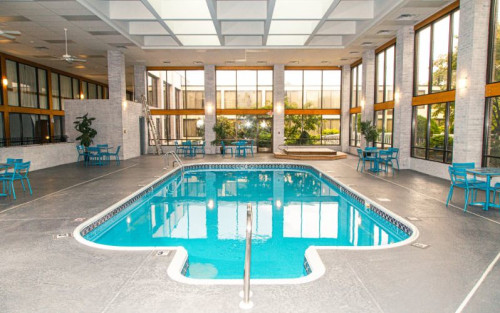
The official homepage promotes private-room accommodation, and Recovery.com describes clients staying in private rooms with three prepared meals daily. The secondary campus description also identifies a pond, garden paths, a fire pit, a volleyball area, an indoor swimming pool, a gym, and shared recreation or library spaces. These details describe the environment, while the actual room, accessibility, and currently available amenities should be confirmed for the admission. A private bedroom does not establish every bathroom or support arrangement without further detail.
The rural Raymond location may appeal to someone seeking distance from a busy urban routine while remaining within Illinois. It also makes transport planning important, particularly for family visits or arrival from another state. The provider’s current site says it serves people from across the country, but that does not establish an automatic transport package. The admission plan should specify the arrival address, travel assistance if available, and any costs or conditions before independent bookings are made.
A daily routine that includes treatment and rest
Recovery.com describes a structured day with meals, prescribed medication routines where applicable, classes, support groups, individual therapy, and time for recreation or reflection. The official pages also discuss yoga, mindfulness, and other holistic activities within the broader approach. These features should be understood as part of the available program rather than a fixed identical timetable for every resident. Health, mobility, stage of care, and treatment goals can affect which activities are appropriate.
The purpose of daily structure is to make room for treatment while practicing routines that may remain useful after discharge. A resident can work with the team on how those routines relate to life at home, including sleep, appointments, relationships, work, and continuing support. The provider’s general claims about the benefits of inpatient treatment should not be used to assume that residence is always preferable to outpatient care. The appropriate level depends on the individual assessment and circumstances.
Aftercare and the next treatment setting
Lincoln states that aftercare planning occurs during treatment. Its current inpatient description refers to check-ins, recommendations for therapists or counselors closer to home, and continuing peer support. The website also lists an intensive outpatient program, which should be assessed as a separate service with its own schedule and arrangements. The discharge discussion should identify the actual next provider or program, rather than rely only on the fact that outpatient care appears in the wider service list.
For someone returning outside Raymond or outside Illinois, local access and clinical continuity are especially relevant. A practical handover identifies appointments, medication follow-up, living arrangements, and the chosen support network. Family involvement can assist where appropriate, while the adult resident’s own goals and consent remain central. The directory does not treat completion of a residential stay as the end of all treatment needs or assume that every person should follow the same aftercare pathway.
Estimated fees and insurance
Recovery.com lists an estimated cash-pay range of $25,000 to $35,000 alongside a program duration of thirty days or more. This is a third-party estimate, and the visible listing does not map each price to an exact number of days or a particular package. The directory therefore retains the original program basis rather than presenting the range as a verified monthly tariff. The proposal should clarify detox, residential days, room arrangements, clinical services, and any separately billed care.
The current official program pages publish +1 833-631-1294 as an admissions contact. Lincoln offers insurance verification and an individualized financial discussion. Before arranging arrival, confirm the recommended level of care, anticipated review points, device arrangements, accommodation, and financial responsibility after benefits review. For broader comparisons, explore the directory’s United States treatment destinations and Illinois treatment guide. Lincoln’s recovery-model choices and practical communication policy are useful features to consider alongside the actual clinical plan.
Sources and verification
Reviewed October 20, 2026: Lincoln Recovery’s current overview and location; inpatient program; non-twelve-step options; mental health services; and Recovery.com’s accommodation details and estimated price. Current official duration is individualized; no fixed thirty-day tariff or universal admission outcome is asserted.
Conditions
Levels of care
Settings
Amenities
Treatment approach
Individual and group care, CBT, DBT, twelve-step or secular/non-twelve-step options including SMART Recovery, family support, medication management when indicated and aftercare planning
Fees & admissions
USD 25,000–35,000 / program
Recovery.com estimated USD 25,000–35,000 beside a 30+ day program description, checked October 20, 2026. Exact duration-to-price mapping is not supplied; this is a third-party program estimate, not an official monthly tariff. Confirm detox, room, included care and insurance responsibility.
Confirm the current program, duration, accommodation and included services directly with the center.
Confirm the exact stay length attached to the quoted range, private-room availability, device rules, detox and medication charges, transportation and discharge planning.