
About Lumiere Healing Centers — West Chester
Lumiere Healing Centers in West Chester
Lumiere Healing Centers provides addiction treatment at 7593 Tylers Place Boulevard, West Chester Township, Ohio 45069, outside Cincinnati. The current official website identifies medical detoxification, residential treatment, intensive outpatient and outpatient programs, and aftercare support. Its main published enquiry number is 513-714-3400. The appropriate starting service depends on assessment, with residential accommodation and nonresidential attendance requiring different practical arrangements.
The campus is one option for people comparing care in the United States. Its setting beside a private golf course, room choices and structured daily program may influence personal preference, but the decision should begin with clinical fit. Ask which service is recommended, the medical resources available and the actual room or attendance schedule before relying on the accommodation photographs or a general description of luxury treatment.
Admission and the initial clinical decision
The admissions page describes assessment, insurance review and travel planning, with staff available for enquiries around the clock. Prepare a current medication list, relevant physical and mental health information, previous treatment history and contact details for existing clinicians. Ask what records are needed and how the clinical team will decide whether the program is suitable. An initial telephone enquiry does not itself confirm acceptance or a reserved place.
Lumiere describes care for substance use and support for co-occurring mental health concerns. Someone seeking co-occurring-condition treatment should ask how those concerns are assessed together and who coordinates the plan. Clarify the availability of psychiatric review and any limits on what can be managed at the campus. A condition appearing in a general overview does not establish suitability for every presentation or severity.
Detoxification and residential treatment are separate phases
The current FAQ describes detoxification when needed, followed by residential programming after clinical clearance. It gives five to ten days as an average detoxification range, with duration influenced by the individual’s health and circumstances. That is provider guidance rather than a personal withdrawal timetable. Ask whether detoxification is recommended, what monitoring is provided and how the transition into the next phase is decided.
The overnight service is presented here as residential treatment. Lumiere also uses inpatient terminology, but the reviewed material does not independently establish hospital admission. Ask which medical and nursing professionals are onsite at different times, how prescriber review is arranged and what circumstances require transfer. A staffed residence and a medical detoxification program do not automatically provide every resource available in a hospital.
Discuss prescriptions and other health needs directly with the admitting team. Ask who will review medication, how supplies and refills are managed, and which tests or outside consultations might be separately charged. Clarify how staff communicate with existing clinicians, with the patient’s consent. The actual clinical recommendation should explain the starting level and the arrangements needed if physical or mental health needs change during the stay.
The residential week
Lumiere’s published schedule overview describes morning goal-setting, clinical and educational groups, individual work, recreation and evening recovery activities. It also includes time for reflection and family involvement. Ask for the current timetable for the recommended phase, including actual individual appointment frequency and session lengths. A sample schedule illustrates the model but does not guarantee that every activity happens at the same time for every resident.
The primary residential overview emphasizes counseling, relapse-prevention work, stress management and conflict-resolution skills. Discuss which goals matter most to the individual and how the therapist will review progress. Ask how group participation, personal assignments and clinical appointments connect. If previous treatment was unhelpful, explain the specific difficulties so the team can describe what would be different within the proposed plan.
The FAQ describes twelve-step meetings, family groups and equine activities, with the latter listed twice monthly. Confirm the current schedule, clinician involvement and any additional costs or eligibility requirements. An activity named in the program does not have to suit every person. Ask what alternatives are available for someone who cannot participate because of health, accessibility or personal preferences, and how those choices fit the main treatment goals.
Private and shared bedroom choices
The current facility page expressly describes both single and double bedrooms, each with a bathroom attached to the room. This supports a private-bedroom option, subject to actual availability and agreement. Ask which room is offered and whether a supplement applies. In a double room, an ensuite bathroom serves the occupants of that room; it is not a separate private bathroom for each person.
The provider describes distinct detoxification and residential areas. Ask whether the person will move rooms when the clinical phase changes, what type of accommodation is available in each area and how any belongings are transferred. Clarify roommate arrangements, storage, laundry and accessibility for the actual room. A photograph of one part of the building should not be assumed to show the accommodation available for every service or date.
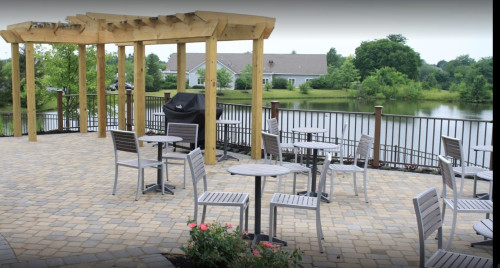
The setting includes outdoor paths, patios and a basketball court, with golf-course views described by the provider and secondary listing. Being beside a private golf course does not establish a right to play there or unrestricted access to the grounds. Ask which outdoor areas and activities are available to residents, what supervision is required and how participation changes during the initial clinical phase.
Meals, daily comfort and practical support
The schedule overview describes three meals and snacks, with chef-prepared food and dietary planning. Discuss allergies, food restrictions and any assistance required before arrival. Ask whether the current menu and meal arrangements can accommodate those needs and what personal purchases remain the resident’s responsibility. A general willingness to consider preferences is different from a confirmed arrangement for a specific dietary or medical requirement.
Explain any mobility equipment, personal-care assistance or sensory needs during assessment. Ask who can help with the actual daily tasks involved and whether extra arrangements are available. A bedroom, bathroom or quiet setting may look suitable in photographs while still presenting practical difficulties. The provider should confirm access through the parts of the building used for appointments, dining, recreation and the assigned accommodation.
Family visits and communication
The facility page says people in the detoxification phase generally do not receive visitors, while residential patients may have visits during designated periods and participate in scheduled family groups. Confirm the current policy and the stage it applies to before relatives travel. Visiting, family education and a clinical family session are separate arrangements. The resident’s wishes and consent should guide what information is shared and with whom.
The FAQ describes a limited essential-needs call during the first week in its detoxification guidance. Ask staff to explain current phone, computer and internet access for the actual phase, including how urgent responsibilities can be handled. A television or desk listed as a room amenity does not establish unrestricted personal-device use or remote working. Arrange important obligations around the clinical program rather than assuming the rules will match ordinary life at home.
Transport and preparation
The facility description says Lumiere has vehicles for admission and discharge journeys, appointments and group outings. Confirm the route, pickup arrangements, staff responsibilities and any charges before relying on transport. Availability does not establish a free airport transfer or coverage of every personal obligation. An outside medical appointment may also involve separate clinical and financial arrangements that should be agreed in advance.
The admissions team can supply a current packing list. Request instructions for medication, approved personal items, valuables and belongings requiring staff review. Confirm the arrival contact and which documents need to be supplied before the journey. If a family member is helping, make sure they understand the receiving service and visiting policy so travel plans do not rely on access that is unavailable during the initial phase.
Outpatient care and the next living arrangement
Lumiere’s outpatient program page describes individual and group support with a less intensive attendance pattern than residential treatment. The website also identifies intensive outpatient programming. When comparing outpatient care, request the actual weekly hours, days, clinical location and criteria for admission. A general statement about flexibility does not determine whether a particular work, school or transport schedule will fit.
Ask where the person will live during outpatient care and whether any proposed housing is supplied by Lumiere or another organization. The secondary narrative mentions sober living, but its care-options section does not list sober living as offered at this center. A housing referral should therefore be clarified by named provider, address and agreement. Residential accommodation should not be assumed to continue automatically after the clinical level changes.
The starting price and what it covers
The current Recovery.com listing, checked October 20, 2026, gives a starting estimate of USD 26,000 or more for thirty days or more. This is a third-party program reference with an open-ended price and duration, not an official monthly tariff. It does not define an upper price or establish the charge for every additional day. Request the actual recommended duration and a written offer for that course.
The offer should identify detoxification, residential days, private or shared accommodation, clinical appointments, medication, tests, meals, transport, activities and continuing care. Confirm deposits, cancellation, early departure and extension terms. Ask how a change of phase or room affects the charges. An estimated headline amount is not enough to compare options unless the clinical service, accommodation and financial exclusions are understood.
Insurance and continuing care
Lumiere offers benefits checks and discusses private payment and financing. Its dedicated coverage page says it does not accept Medicare or Medicaid, even though a contact form includes a Medicaid option. That form choice does not establish acceptance. Confirm the current policy and service directly, including network status, authorization and personal costs; no insurer name or initial benefits check guarantees payment for the entire recommended plan.
Before discharge, request follow-up appointments, a prescribing plan, suitable accommodation and agreed communication with the next clinician. Alumni activities and peer contacts can complement that arrangement without replacing booked care. Lumiere’s setting and room options may support personal comfort, but the decision should connect an appropriate clinical plan with understood daily policies, transparent financial terms and a practical transition into ordinary life.
Sources checked October 20, 2026: Lumiere’s current website, facility, FAQ, admissions, schedule, residential, outpatient and coverage pages; Recovery.com for the attributed starting-price reference and accommodation cross-check. Residential and hospital terminology, room occupancy and housing referrals are distinguished.
Destinations
Conditions
Levels of care
Settings
Amenities
Program approach
Individual/group counseling, recovery education, relapse prevention, stress and conflict-management work, twelve-step and family groups, assessed experiential/equine activities, medication support and aftercare planning
Fees & admissions
Estimated USD 26,000 / program
Recovery.com checked October 20, 2026 gives an estimated starting price of USD 26,000 or more for thirty days or more, without a defined upper price or price for extra days. This is a third-party program reference, not an official monthly tariff. Request the actual duration, detoxification/residential stages, single or double room, clinical appointments, medication, tests, meals, activities, transport and continuing care in a written offer.
Confirm the current program, duration, accommodation and included services directly with the center.
Confirm clinical fit, initial detoxification needs and medical resources, medication and psychiatric arrangements, actual single/double room and ensuite occupancy, possible room move between phases, diet/access needs, current phone and phase-specific visit policies, transport terms, proposed duration, itemized fees and current policy benefits, and named outpatient/housing follow-up.