Care at The Northern Lights – Muskoka Lakes
Residential treatment in Muskoka Lakes
The Northern Lights describes a private residential treatment service in Muskoka Lakes, Ontario, for people seeking help with substance use and mental health concerns. Its current official pages emphasize individualized assessment, clinical support, and the development of practical habits for life after treatment. A current third-party profile describes a small residential program with private accommodation and nature-based surroundings. The relevant decision is whether the proposed clinical plan and living arrangements match the person’s needs. A quiet setting and a small group can be useful features, but they do not by themselves establish the appropriate level of medical or psychological care.
The official about page is accessible and describes the program’s approach, while the homepage returned no content in the checks made for this profile on October 20, 2026. That website behavior does not establish that the service has closed. The working program and referral pages provide a route to current information, including the published number +1 705-204-4325. Before making arrangements, a prospective resident should confirm the exact admitting location, current availability, and the service that will be included in the proposed stay.
Assessment before choosing a treatment pathway
The provider’s referral information describes an assessment of the person’s condition and challenges before a tailored treatment plan is developed. It also refers to communication with existing medical practitioners and progress updates during care. This can be particularly relevant when several professionals have been involved or when symptoms and substance use overlap. The assessment should bring together recent treatment, current medication, physical health, and the person’s own goals rather than relying only on a short description of a diagnosis.
The same referral page mentions residential, outpatient, and online settings. Those references should not be treated as interchangeable services with identical staff, schedules, or prices. This listing focuses on the Muskoka residential offer. Someone seeking virtual appointments or direct outpatient care should establish what is currently available and whether a separate assessment or agreement is required. Similarly, a plan for a family member should distinguish the practical help a relative can provide from the prospective resident’s own participation in treatment decisions.
Alcohol treatment and medical support
The official alcohol-treatment page describes clinically supervised detoxification, individual and group counseling, and work on continuing recovery. It identifies cognitive behavioral therapy and dialectical behavior therapy as part of its therapeutic framework. The medical stage and the longer residential program should be considered separately when discussing admission. The person needs to know whether withdrawal support is required, what resources are available at the residence, and how the team decides when they are ready to take part in the wider schedule.
The provider advertises around-the-clock access to medical and mental health professionals. That statement should be clarified for the actual admission, including which staff are on site, which are available by arrangement, and who makes medical decisions. It does not establish that the residence is a hospital or that every degree of medical complexity can be managed there. A person with significant withdrawal concerns or other health needs should have those assessed before travel, with a clear plan for any care that must occur in another setting.
Substance use and overlapping mental health concerns
The current treatment overview includes opioid and other prescription-drug concerns, cocaine, methamphetamine, inhalants, and ketamine. Its approach is described as combining clinical care, therapy, and continuing recovery support. These categories identify the problems the provider advertises treating; they do not establish one standard protocol for every substance or person. The assessment should explain how current use, prescribed medication, mental health symptoms, and previous attempts at treatment affect the proposed plan.
The about page also describes concurrent work on trauma, depression, anxiety, and substance use. For a resident with more than one concern, the plan should make clear how the different clinicians communicate and which needs receive attention first. It is possible for several difficulties to influence daily functioning without one being the sole cause of the others. A useful program therefore needs specific goals and review points, rather than an assurance that a general holistic approach will resolve every problem simultaneously.
Therapy and developing routines that can continue at home
Cognitive behavioral and dialectical behavior approaches are named directly on the provider’s alcohol page. In the context of an individual plan, therapy may examine recurring patterns and help the resident practice ways to respond to distress and interpersonal difficulties. The useful questions concern how often sessions occur, who provides them, and how they connect with the person’s priorities. A method appearing on a website does not establish that every resident receives it at the same frequency or that all listed approaches are needed during a single stay.
The official pages also describe educational sessions, exercise, mindfulness, and other lifestyle tools. These activities can help create a daily structure around the clinical work. Their purpose should be connected to the person’s circumstances: maintaining a sleep routine, organizing responsibilities, or finding practical ways to manage stressful situations. A residential schedule provides an opportunity to practice, but the eventual plan needs to work outside that protected setting. The team can help identify which routines can realistically continue after the person returns home.
Individual and group formats offer different opportunities. Private appointments allow discussion of personal history and goals, while group work introduces the experience of communicating and practicing skills with others. The current secondary listing also names additional therapies and activities, but these should be confirmed against the actual program offered. The resident should receive a comprehensible schedule that distinguishes psychotherapy, medical contact, educational work, wellness activities, and unstructured time, rather than treating every hour in the residence as an hour of therapy.
Eating-disorder support has its own requirements
The provider’s eating-disorder support page advertises a residential, person-centered approach with clinical therapies and access to medical and mental health professionals. It describes work on physical health, coping, and the person’s relationship with food and body image. The page does not specify a complete medical monitoring protocol, the qualifications of the nutrition team, or thresholds for medical admission elsewhere. Those details matter when considering this particular service and should be obtained directly rather than inferred from a general description of residential support.
A person considering care for an eating disorder should have the proposed level of support reviewed by an appropriately qualified clinician familiar with their needs. The admission plan should identify who monitors physical health, how meals and nutritional work are organized, and what happens if the resident needs more intensive care. The public description does not establish hospital-level treatment. It also should not be assumed that the same schedule, staff, or fee applies to every eating-disorder presentation simply because the service appears alongside addiction and mental health programs on the website.
Private accommodation and the size of the program
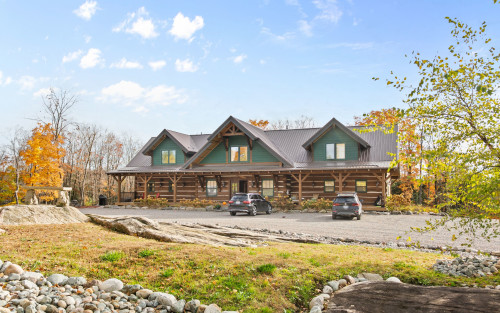
The current Recovery.com listing describes up to six clients, private rooms with en-suite bathrooms, prepared meals, and shared areas for treatment and relaxation. Its general occupancy field uses a broader category, so the exact number of residents should be confirmed. The official about page supports the availability of private rooms but does not provide a detailed room inventory. The agreement should identify the bedroom and bathroom included in the stay, as well as any arrangements needed for accessibility or other individual requirements.
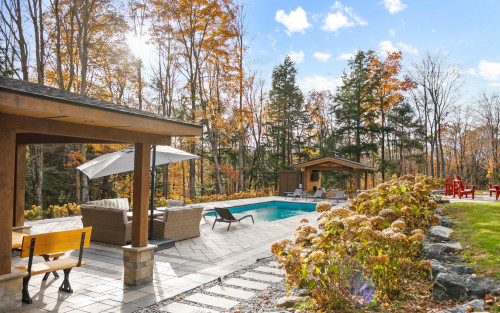
The published location is Muskoka Lakes rather than a complete current street address on the reviewed official pages. That is enough to identify the advertised region, but it does not establish that every residence is lakefront or has a particular outdoor amenity. Travel plans should follow confirmation of the actual address and arrival arrangements. A prospective resident may also need to discuss transport to outside appointments and how physical activities are adapted. The setting should be evaluated through those practical details rather than through assumptions about the wider Muskoka area.
Devices, family contact, and outside responsibilities
The secondary profile says phones, laptops, and other devices may be permitted when consistent with the care plan. This describes conditional access, not an unrestricted work or social-media policy. Someone who must remain in contact with family or manage essential responsibilities should establish the arrangements before arrival. The clinical schedule needs protected time, and device use may need to change during different parts of treatment. A written explanation is more useful than assuming that an executive-friendly or private setting automatically allows continuous connection.
The official referral material emphasizes coordination with other professionals, and its wider service descriptions mention family support. The actual plan should explain how relatives or other support people will be involved and what information can be shared with consent. Family participation can help prepare for changes at home, but it should not be mistaken for a separate family-residential package. The resident and team can agree which relationships are relevant, whether remote meetings are available, and what practical support will be needed after the stay.
Current price reference and payment questions
Recovery.com currently lists a starting cash-pay estimate of C$30,000 for thirty days, checked October 20, 2026. The currency is Canadian dollars. This is a third-party estimate, not a numerical tariff confirmed on the reviewed official pages, and it should not be relabeled as a U.S.-dollar price. The official pages do not establish a fixed thirty-day clinical requirement. A dated quotation should connect the price with the actual duration, room, clinical services, and any separate medical or continuing-care charges.
The current secondary listing describes private payment. Insurance or reimbursement should be confirmed for the exact services rather than assumed from a general reference to clinical care. The financial agreement should explain deposits, extensions, interruptions, and which costs remain the resident’s responsibility. This is particularly relevant when the proposed stay may include a preliminary medical phase or a different specialty service. A single residential starting estimate cannot establish the total cost of every possible combination of treatment.
Planning the return from Muskoka
The provider describes monitoring progress and adjusting treatment during the program. That review should also prepare for the period after departure: continuing appointments, medication responsibility, recovery support, and the practical demands of home or work. Any remote or outpatient follow-up should be specifically arranged, including its frequency and cost. Readers comparing other options can explore treatment providers in Canada. For Northern Lights, the key details to confirm are the actual residential location, clinical staffing, individual schedule, and written Canadian-dollar fee for the proposed stay.
Conditions
Levels of care
Settings
Amenities
Treatment approach
Provider-described medically supervised withdrawal support, individual and group counseling, CBT, DBT, concurrent mental health work, education, exercise, mindfulness and coordination with existing clinicians
Fees & admissions
CAD 30,000 / program
Recovery.com estimated a starting CAD 30,000 for thirty days, checked October 20, 2026. This is a third-party Canadian-dollar estimate, not an official numerical tariff or a fixed clinical duration. It is not a USD quotation. Confirm the actual residence, program, medical services, taxes, exclusions, extensions and follow-up costs in a dated agreement; insurance or reimbursement is not established by the reviewed official pages.
Confirm the current program, duration, accommodation and included services directly with the center.
Discuss current clinical needs and records, the actual admitting residence, medical supervision, room arrangement, expected duration and written Canadian-dollar quotation. Confirm the responsibilities of current clinicians and any separately arranged follow-up before travel.