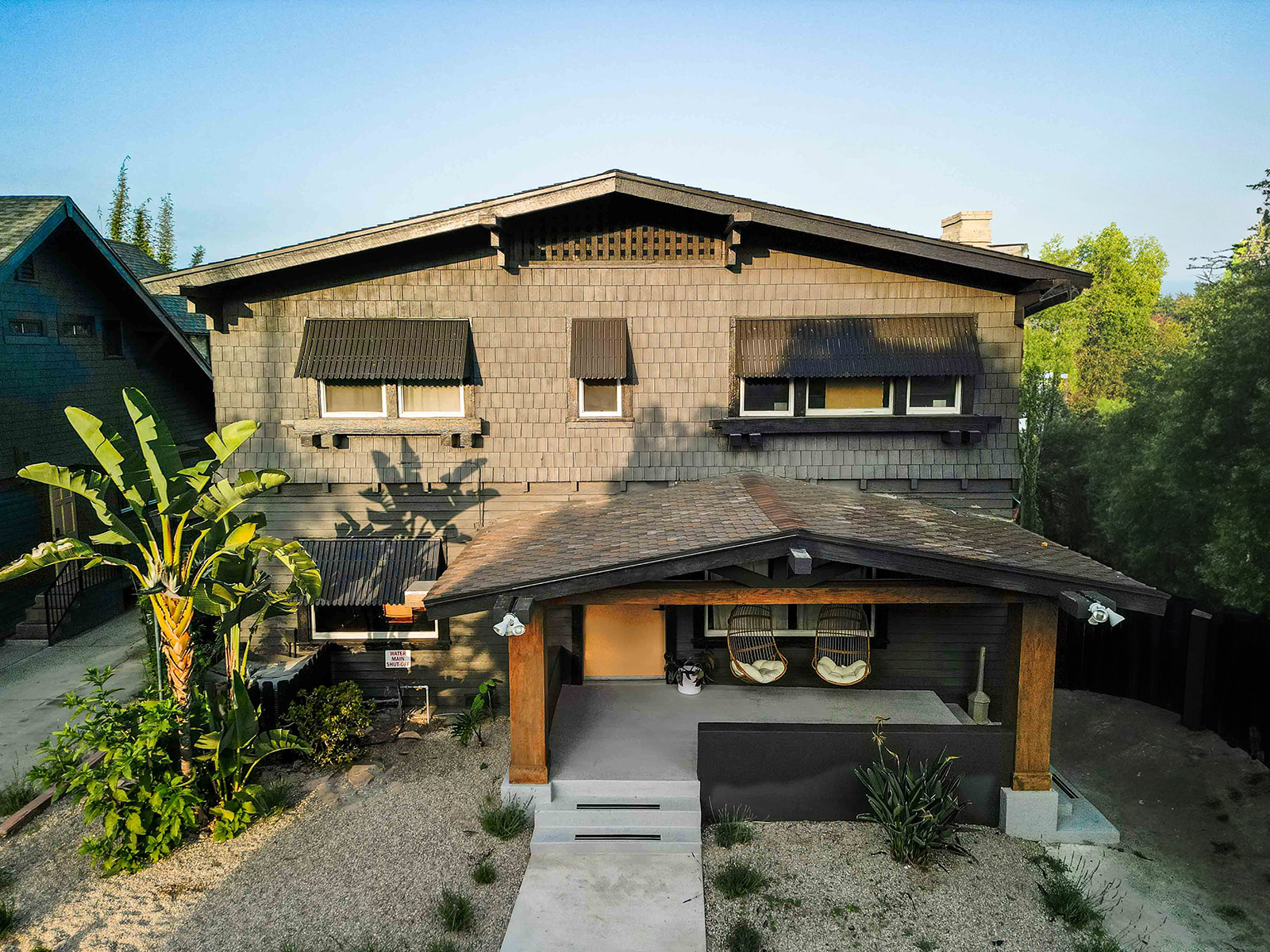

About Numa Recovery Center — Los Angeles
Numa Recovery Center in Los Angeles
Numa Recovery Center provides addiction treatment at 826 North Mariposa Avenue, Los Angeles, CA 90029. The official website describes an eighteen-bed setting across three California Craftsman homes, offering medically supervised detox and residential care. It presents treatment as a progression through detox, rehabilitation, and stabilization, with support for substance use and co-occurring mental health concerns. This profile is part of the United States treatment directory. The relevant decision is how the proposed Numa plan matches the person’s needs at admission and during the transition home.
The residential scale and urban location are both useful context. Three homes can offer a small peer community while still involving shared living and movement between different parts of a program. Ask which house and room apply to the proposed stay, whether a change of treatment stage involves a move, and how staff coordinate care across the property. The Los Angeles address should be used for practical planning rather than assuming that every activity or appointment takes place in the same building.
Three named stages, one individual plan
Numa’s treatment information uses the names Detox, Rehab, and Stabilization. Those names help explain its intended progression, but they do not mean every resident follows a fixed sequence or spends the same time in each stage. Ask the clinician to describe the proposed starting point, the criteria for moving forward, and what supervision and therapy are included throughout. If a person has already completed treatment elsewhere, clarify how that history affects the recommended plan rather than assuming they must begin again at the first stage.
The stabilization description focuses on gradually resuming responsibilities while continuing therapeutic support. That should not automatically be relabeled as a specific licensed outpatient program at this address. Ask for the formal level of care, appointment frequency, living arrangements, and responsible clinical team. If another provider delivers part of the next stage, identify that service by name and location. This distinction matters for both practical planning and insurance, since a marketing label alone does not establish how the service is supervised, authorized, or billed.
Detox assessment and medical coordination
The provider describes supervised detox with access to nursing or medical care, followed by a review of ongoing treatment needs. For someone concerned about withdrawal, the first conversation should include accurate information about substances, prescribed medicines, physical health, and previous withdrawal experiences. Ask which clinician reviews that information before admission and what is assessed after arrival. A short published example of detox duration is not a prediction for an individual. The clinical team should explain the appropriate setting and how the plan is reviewed if needs change.
Clarify the practical meaning of medical supervision: which professionals are onsite, how overnight contact works, and what arrangements apply if another medical service becomes necessary. These questions are especially useful when a person has an existing health condition or is transferring from a hospital. Agree how records and medication information will reach the receiving team with consent. Do not change a prescription or attempt to plan withdrawal around a flight or check-in time. The person responsible for clinical assessment should provide the preparation instructions for the actual admission.
Residential therapy and co-occurring care
Numa advertises individual and group therapy, relapse-prevention work, and support for concerns such as anxiety, depression, and trauma alongside substance use. Ask what the proposed weekly schedule includes and who delivers each part. The number of therapy appointments, the size and purpose of groups, and access to psychiatric review are more informative than a broad list of methods. A resident should understand which goals are being addressed and how progress is discussed, including how to request a review if a part of the plan is not helpful.
Describe mental health concerns in terms of current needs and previous care. Bring relevant records, explain what has or has not been useful, and identify any existing clinician who should remain involved. Ask how Numa determines whether the residence can meet those needs and which situations require a different service. Co-occurring care does not establish suitability for every psychiatric diagnosis or level of acuity. The assessment should make the proposed scope clear and explain how any care outside that scope will be coordinated.
The three-home environment
The provider describes private and semi-private bedrooms, shared common areas, and chef-prepared meals. A private-room option should not be read as a guarantee that every admission includes one. Confirm the room type, bathroom arrangement, and any price difference in writing. If sleep, mobility, or personal privacy is likely to affect treatment participation, raise the issue before arrival. Ask whether room assignments can change during the stay and what choices are available if an arrangement is difficult for the resident.
Consider how the household operates beyond the bedroom. Ask about meals, dietary needs, laundry, quiet hours, access to outdoor space, and the current phone or computer policy. Living with peers can create opportunities for connection, but residents may also need time alone or help managing a disagreement. Clarify whom to approach about practical concerns and how staff handle shared-space issues. A homelike setting still has program rules, and understanding them in advance can make the transition into residential care less uncertain.
Activities and daily routines
Numa’s facility information introduces recreation in and around Los Angeles, including outdoor activities and local places of interest. Treat that material as context for the environment rather than a guaranteed itinerary. Ask which activities are part of the current treatment schedule, whether participation is optional, and how health or accessibility needs are considered. An attraction appearing on a website does not establish that transport, tickets, or a visit are included in the cost of the stay.
The practical value of an activity depends on how it fits the person’s plan. Someone may want to rebuild an ordinary routine around meals, rest, movement, and appointments before adding unfamiliar experiences. Another person may find a group activity useful but need clear expectations about participation. Discuss those preferences with the team. The schedule should leave room to understand the purpose of each component, rather than treating every amenity as a clinical intervention or assuming that a busy calendar automatically produces better results.
Admissions and expected duration
The official admissions page describes an initial contact, insurance review, clinical assessment, and an individualized treatment plan. It gives a general treatment range of 30 to 90 days, while stating that timelines vary. Ask what duration is initially recommended, when it will be reviewed, and how a change affects accommodation and costs. A general range should not be turned into a minimum stay, a fixed discharge date, or a prediction of the time required for a particular person.
Prepare questions about both the clinical and practical parts of admission. Confirm when acceptance is final, what information must be provided, and the agreed arrival arrangements. If a family member is helping, clarify which conversations include the resident and what consent is needed to share information. The admissions process should give the person an opportunity to understand the proposal rather than simply collect payment and travel details. If Numa is not suitable for the current needs, ask what type of service the team recommends considering next.
Published price estimates and room choices
At the October 20, 2026 review, Recovery.com listed estimated thirty-day prices of US$30,000 for a shared room and US$45,000 to US$50,000 for a single room. These are secondary figures, not independently confirmed Numa tariffs. The difference is tied to room type in that listing, so it should remain visible when comparing costs. Ask the provider for a current quote identifying the exact accommodation, care level, duration, and included services. Do not assume that a listed daily rate elsewhere has the same terms as either thirty-day package.
Numa’s admissions information describes work with major insurers and private-pay arrangements. Ask which parts of the individual’s plan have been verified, whether authorization is required, and what the resident may owe for deductibles, coinsurance, or excluded services. Separate the room preference from the clinically recommended level of care. Insurance may address treatment and accommodation differently, so a general statement that coverage is accepted is not enough to establish the cost of a particular private room or extended stay.
A written financial plan should explain deposits, cancellation, extensions, and changes between stages. Ask whether professional appointments, medication, transport, or continuing care are included in the quoted amount. Someone considering a stay toward the longer end of the advertised range should request an estimate for that actual proposal rather than multiplying a shorter package without confirmation. If another person is paying, agree who receives invoices and how financial communication is handled without assuming permission to share unrelated clinical details.
Privacy and support from others
Ask for Numa’s current privacy notice and an explanation of consent for sharing records. The resident may want an existing clinician, relative, or supporter involved, but the scope of that involvement should be clear. Discuss who can receive updates and how authorizations are recorded or changed where permitted. Avoid relying on absolute promises that information will never leave an organization. Treatment coordination, insurance administration, and other situations have specific processes that the provider should explain in understandable language.
Before arrival, identify responsibilities that need temporary cover, such as childcare, household administration, or essential work communication. Ask what contact is possible during each stage of treatment and how an urgent practical message can reach the resident. The stabilization stage may include gradually taking responsibilities back, but the timing should be agreed with the team. A realistic plan helps supporters know what they can handle and allows the resident to focus on the work recommended for the current stage.
Stabilization and the return home
Discuss continuing care early enough to arrange appointments before discharge. Numa describes ongoing sessions and support as residents resume everyday activities, but ask which services remain with Numa and which are referrals. Confirm the next clinician, medication follow-up where relevant, and a schedule that is practical where the person will live. Alumni or peer connections can be distinguished from ongoing clinical treatment so that neither is expected to provide a service it does not actually offer.
The published main number is (888) 991-6862. A useful inquiry can begin with the person’s current needs, the recommended entry stage, and the accommodation available in the three-home setting. Follow that with a written explanation of costs and the transition after residential care. Numa’s named stages provide a structure for asking those questions; the final plan should explain what each stage means for the individual, including the professionals involved, the expected commitments, and the next review point.
Destinations
Conditions
Levels of care
Settings
Amenities
Program approach
Individual and group therapy, dual-diagnosis support, relapse-prevention work, supervised detox, and gradual return to responsibilities
Fees & admissions
Estimated USD 30,000 / program
Recovery.com estimates checked 2026-10-20: USD 30,000 for 30 days shared room; USD 45,000–50,000 for 30 days single room. Not provider-confirmed tariffs. A separately listed daily rate has unclear relation and is not blended into these package figures.
Confirm the current program, duration, accommodation and included services directly with the center.
Benefits/payment review, clinical assessment, individualized plan, and confirmed stage/room arrangements