
About Paracelsus Recovery
Paracelsus Recovery provides individualized residential treatment in Zurich, Switzerland, for people seeking support with mental health, addiction and related concerns. Clients stay in private accommodation rather than joining a conventional treatment cohort. A multidisciplinary team coordinates the program, and a live-in therapist provides support beyond scheduled appointments. The residential setting, the team structure and the availability of extensive individual care are central features of the provider’s published model.
The residential rehabilitation program is described as four weeks or longer, with its FAQ identifying four to six weeks as typical and allowing individual adjustment. This profile concerns that residential service. Shorter detoxification and health-assessment programs are separate offers and should not be assumed to contain the same course of mental health or addiction treatment.
Who the individualized model is intended to support
The provider overview describes work with mental health conditions, substance-related and behavioral dependencies, eating disorders and overlapping physical-health concerns. It particularly addresses people whose privacy requirements or responsibilities make a shared program difficult. These categories indicate the scope the provider markets; they do not establish that every presentation can be safely managed in a private residence.
Paracelsus describes a dedicated team of more than fifteen professionals, including medical and psychiatric input, psychotherapists and client coordination. The useful clinical question is how those roles relate to the particular person’s needs. Someone managing both substance use and a physical illness needs clarity about which professional leads each area and how decisions are shared. A large team should produce an understandable plan, rather than require the client to reconcile competing recommendations.
Assessment and the initial treatment plan
The provider’s assessment information describes medical and psychiatric review, laboratory work, sleep assessment and other investigations selected within its approach. Its published menu extends to genetic, imaging and functional-health assessments. The presence of a test on that menu does not mean every client needs it, or that the test necessarily explains a mental health condition.
Ask the responsible clinician what question each proposed investigation addresses, how results would change care and which findings require follow-up with a specialist. Bring previous results so that the team can identify useful information and avoid unnecessary duplication. It is also helpful to distinguish an established diagnosis from a hypothesis being explored. The resulting plan should connect the assessment to practical priorities such as symptoms, medication, sleep, substance use, nutrition and the ability to function at home.
Cognitive and behavioral therapy
Paracelsus identifies cognitive behavioral therapy as part of its psychotherapy offering. Its description focuses on recognizing patterns in thoughts and behavior, examining unhelpful assumptions and practicing different responses. Work between appointments may include exercises or written reflection. This gives a prospective client a more concrete picture of the proposed therapy than the general description of a personalized program.
The provider also describes dialectical behavior therapy when indicated, with attention to mindfulness, distress tolerance, emotion regulation and interpersonal skills. It says these sessions are delivered individually, without group sessions. Someone familiar with group-based DBT should therefore ask which components are offered in this format and how skills practice is supported. The clinician can explain whether a DBT-informed approach or a more comprehensive course is being proposed, rather than leaving the label to carry that meaning.
Trauma-focused work and treatment integration
The trauma-focused therapy page lists approaches including EMDR, cognitive processing therapy, trauma-focused cognitive behavioral work and prolonged exposure among methods its team may draw on. It describes tailoring the work to the individual and taking prior trauma into account when treating mental health and substance-use concerns. This is a list of possible approaches, not a promise that all will be used during one admission.
For a client whose symptoms overlap, the plan should explain how trauma work relates to immediate stabilization, addiction treatment and everyday coping. Clarify the proposed therapist’s role, the pacing of sessions and how response is reviewed. It is reasonable to discuss previous treatment that was helpful or overwhelming. The goal of that discussion is a coherent sequence, not the largest possible collection of named methods.
The role of the live-in therapist
A distinctive part of the service is the live-in therapist. The provider describes a psychotherapist or counselor staying in separate space within the residence, or in an adjacent hotel room when a hotel arrangement is selected. The role includes emotional support outside scheduled sessions and communication with the wider clinical team about the client’s experience and needs.
This support is different from having a physician continuously present. Ask how the therapist’s availability, professional responsibilities, privacy boundaries and time off are organized, and who responds to medical concerns. The residential page describes eight to twelve hours of individual care daily; “care” may encompass several kinds of clinical and supportive contact and should not automatically be read as that many hours of formal psychotherapy. Request a schedule that identifies each component and includes time for meals, rest and reflection.
Medical care, detoxification and outside specialists
The residential program describes medically supported detoxification when needed. Separately, the provider’s hospital-coordination information explains that diagnostics and specialist physical-health treatment may involve outside clinics or hospitals. A residence supported by clinicians and a hospital providing inpatient treatment have different capabilities and responsibilities.
Before admission, explain any recent withdrawal complications, major physical illness or hospital treatment. Ask where a proposed detox would occur, what supervision is available and how an escalation would be managed. For outside appointments, establish who holds the medical record, who reviews results and whether charges fall within the program. Hospital admission and specialist availability remain decisions for the relevant service; they should not be inferred from a general statement that the provider works with Zurich hospitals.
Complementary services and everyday routines
Paracelsus describes nutrition, movement, sleep-related work and complementary options alongside medical and psychological treatment. Its residential information mentions activities such as yoga, massage and animal-assisted experiences. It also uses the term “biochemical restoration” for part of its approach. That is the provider’s terminology; it should not be treated as proof that a supplement or complementary intervention resolves the underlying condition.
Ask the clinical team to distinguish established treatment, supportive wellness activities and any optional intervention with a less certain benefit. Medication, supplements and other products should be reviewed together by the responsible professionals. The practical schedule matters as much as the menu: identify what happens daily, what is arranged only when indicated, and what the client can decline. This allows the person to understand how comfort and wellness services support, rather than obscure, the main treatment priorities.
Accommodation, privacy and professional commitments
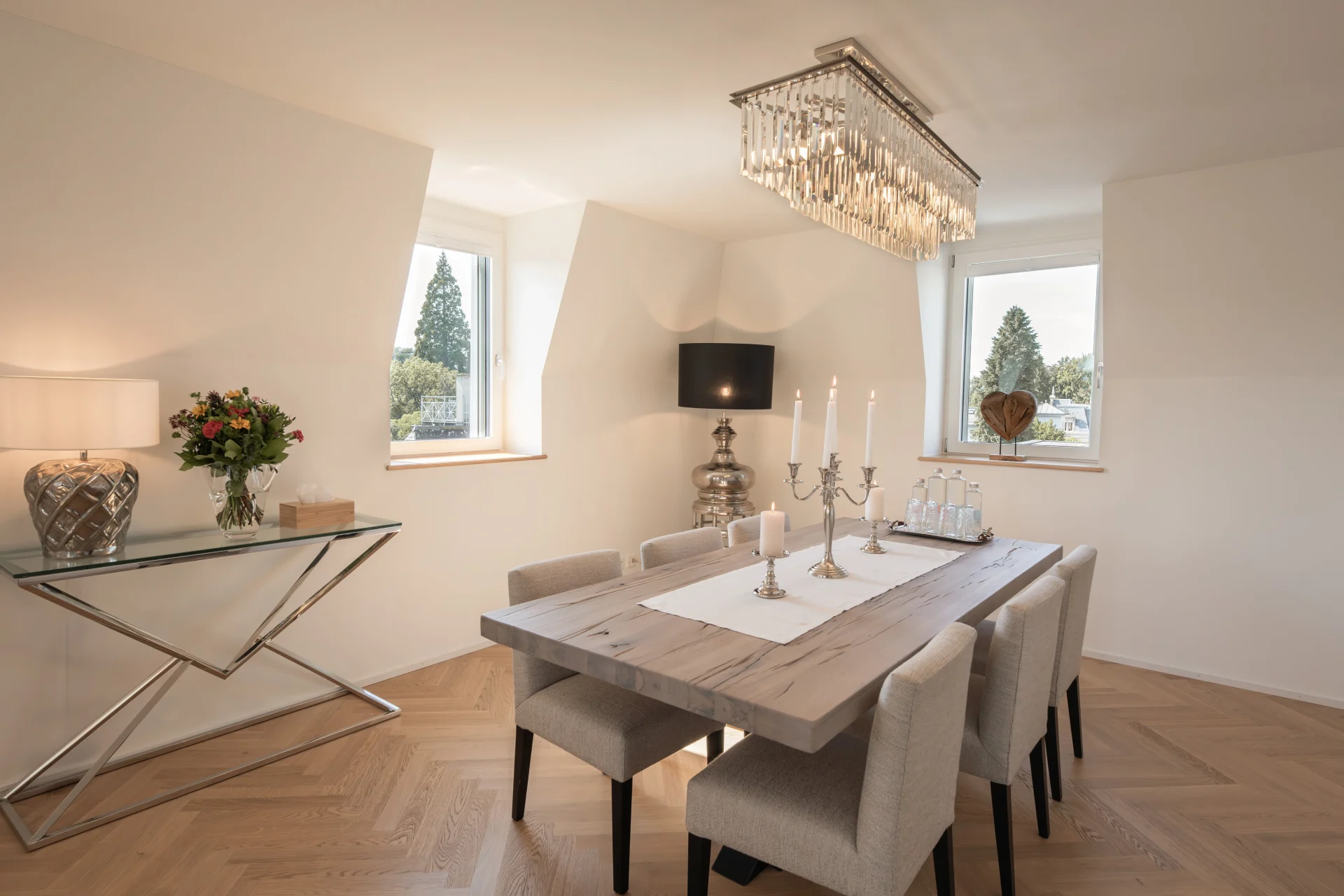
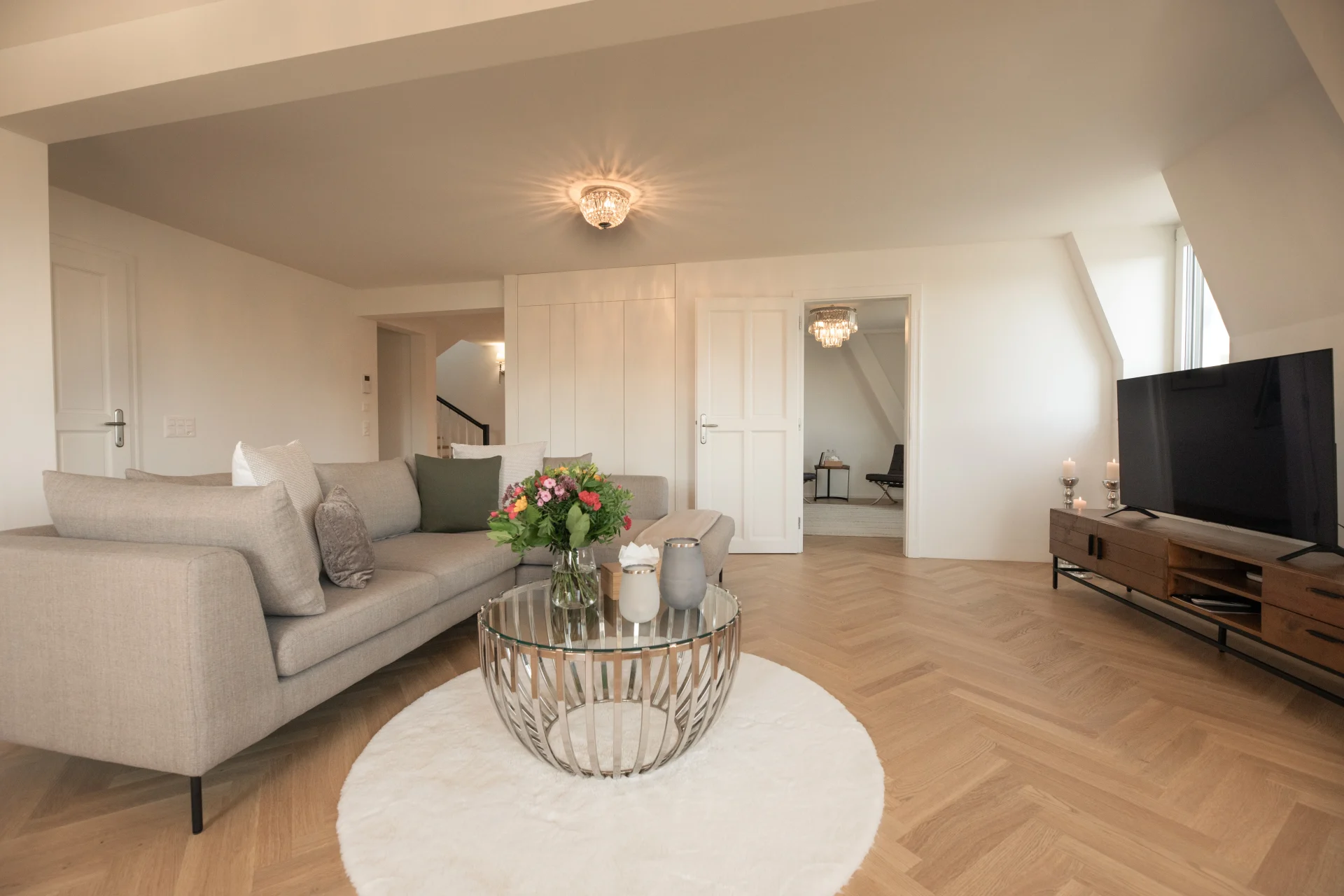
The residential service uses private penthouse accommodation around Lake Zurich, with a chef, transport and practical support described in the package. The provider also discusses hotel arrangements by request. Confirm the exact residence, access requirements and any separate hotel or companion charges. A location photograph does not establish that a particular property is available for the proposed dates.
The residential FAQ says schedules can accommodate work responsibilities. Establish the practical limits before relying on that flexibility: protected appointment times, private workspace, travel requests and communication with colleagues may all affect the plan. Similarly, review confidentiality in concrete terms, including who can receive updates and how information passes to existing clinicians. A discreet service still needs appropriate consent and clear professional responsibilities when coordinating care.
Family psychoeducation and the return home
The family psychoeducation page describes up to three recommended sessions during treatment. It uses “family” broadly enough to include a partner, friend or other long-term support person. The focus is helping participants understand the condition, treatment and preparation for the client’s return. The provider distinguishes this from traditional family or couples therapy, which may have an additional charge.
This distinction is useful when relatives expect the residential fee to include extensive relationship work. Ask which sessions are proposed, who will participate and what information the client authorizes for discussion. If there are several households, employers or support people involved, identify the purpose of each person’s role. Education about the care plan and separate therapy for a strained relationship may require different arrangements.
Residential fees and separately priced aftercare
The official price page publishes CHF 110,000 per week for the four-week residential program, equivalent to CHF 440,000 for those four residential weeks. Listed inclusions cover the agreed clinical program, private accommodation, chef, live-in therapist, transport and associated support. The provider identifies potential extras for out-of-scope requests, entourage arrangements, travel, unrelated medical emergencies and substantial additional clinical resources.
The published possibility of a longer stay matters financially. At the same weekly rate, six residential weeks would total CHF 660,000 before extras; this is an arithmetic illustration, not a quoted package. Ask how an extension is recommended, when that decision is reviewed and whether the original rate and accommodation remain available. Keep the clinical duration and the contracted number of weeks aligned.
The aftercare service is tailored separately. Options described include remote psychiatry or therapy, coordination with clinicians at home, family work and a therapist accompanying the client home. The published starting guideline for a live-in therapist is CHF 2,500 per day; it should not be assumed to cover every additional aftercare service. Confirm duration, travel costs, appointment availability and which professionals can practice in the client’s home jurisdiction.
Before committing, obtain a proposal separating residential weeks, clinical inclusions, accommodation exceptions and continuing-care costs. Compare it with other Swiss treatment options using the same billing periods and an equivalent level of support. A four-week residential fee and a daily home-support fee describe different stages of care, and both can materially affect the complete plan.
Official provider information reviewed October 20, 2026. Fees retain their published Swiss-franc billing units. Treatment methods and complementary services are attributed to the provider; no outcome guarantee or independent validation of its marketing claims is implied.
Destinations
Conditions
Levels of care
Settings
Amenities
Program approach
Medical and psychiatric assessment, individual CBT and DBT-informed work, trauma-focused psychotherapy when indicated, and coordinated clinical support
Fees & admissions
From CHF 110,000 / week
Official residential tariff CHF110,000 per week, published in a four-week program context. Four weeks total CHF440,000 before excluded costs; longer stays and substantial extra clinical resources require a quotation. A separately published live-in continuing-care therapist service starts at CHF2,500 per day and is not the residential tariff.
Confirm the current program, duration, accommodation and included services directly with the center.
Ask admissions to confirm the proposed scope, any detox or hospital needs, included services, accommodation and additional costs before payment.