
Care at Pasadena Villa — Smoky Mountain Lodge
Adult mental health treatment in East Tennessee
Pasadena Villa Smoky Mountain Lodge provides residential mental health treatment at 3889 Wonderland Lane in Sevierville, Tennessee. It serves adults eighteen and older in a mountain setting near Great Smoky Mountains National Park. The program’s focus is complex mental health needs, with support for co-occurring substance use where appropriate. It should not be presented as a primary addiction detox center or an acute psychiatric hospital simply because residents receive structured care throughout the day and night.
The site identifies residential treatment and a partial hospitalization program, or PHP, at this location. These are distinct levels of support. Residents live on site during the more intensive program; PHP provides a less restrictive stage with optional housing. The setting is part of the service, but its clinical identity rests on psychiatric assessment, therapy, practical skill development, and preparation for daily life. Scenic grounds and comfortable communal areas do not establish suitability for a person’s current symptoms on their own.
Conditions and admission requirements
The published condition list includes depressive and bipolar disorders, anxiety, obsessive-compulsive disorder, PTSD and trauma, schizophrenia and other psychotic disorders, autism spectrum disorder, and co-occurring substance use. These descriptions are subject to assessment. Someone experiencing an unstable episode should not assume that a condition appearing on the website means immediate residential admission is appropriate. Pasadena Villa’s stated requirements include medical and psychiatric stability and the ability to participate in a structured, community-based treatment program.
The admissions criteria also require clients to be ambulatory or able to transfer themselves, manage medication with staff supervision, maintain hygiene with support, and participate in social interaction and household tasks. The program excludes major medical conditions requiring continuous nursing care. This does not contradict having nursing support for the mental health program; it defines a limit on medical complexity. Staff also assess a person’s ability to respond safely in an emergency and engage with the proposed services.
Residential treatment and PHP are different
The current program brochure describes residential care with continuous support and twenty-four-hour nursing. Individualized therapy and education form part of the live-in routine. The broader residential program guidance gives typical stays averaging thirty to forty-five days, while emphasizing that length is individualized. This is a network planning range, not a fixed discharge date or a guarantee that an insurer authorizes the entire stay at Smoky Mountain Lodge.
The same campus brochure describes PHP five days weekly without housing and seven days weekly when combined with mountain-cabin accommodation. It identifies on-call support staff day and night for that pathway. This should not be restated as the same continuously staffed residential nursing model. The PHP explanation explicitly says treatment occurs outside a hospital setting. Housing, staffing, daytime treatment, transport, and the criteria for stepping down therefore need to be understood as separate parts of the plan.
Assessment and medication management
Pasadena Villa’s psychiatric care description calls for an evaluation at the beginning of treatment. It considers current symptoms, the reasons for seeking care, personal and family history, mental status, and existing medications. Psychiatrists or psychiatric nurse practitioners develop recommendations with the client, with collaboration involving previous providers and relatives where appropriate. This process is especially relevant for someone arriving after hospitalization or after a period in which several clinicians have prescribed different medications.
Medication management continues during treatment, with psychiatric review and nursing support. The provider does not publish a universal appointment frequency for every resident on this page. The individual plan should identify who prescribes, how effects and side effects are monitored, and who takes responsibility after discharge. Staff-supported medication use also forms part of the admission criteria. A residential program can help practice a workable routine, but any later reduction in support should follow demonstrated ability and a safe handover.
The Social Integration Model
Pasadena Villa’s Social Integration Model gives this program a particular practical emphasis. Clients work toward goals such as living more independently, resuming work, improving relationships, or participating in community life. Clinicians observe and coach behavior in everyday settings as well as during formal sessions. The idea is to connect what happens in therapy with what the person needs to do after leaving, rather than assess progress only through conversations inside a treatment room.
Published examples include community outings, social interaction, independent-living tasks, and opportunities to volunteer, study, or work when appropriate. These should be understood as possible elements of an individualized plan, not guaranteed activities or placements. The team uses observations and discussion to refine goals and support. A person comparing programs can ask how a relevant difficulty, such as navigating a busy public space or sustaining a daily routine, would be practiced and reviewed within the proposed schedule.
Psychotherapy and trauma-related work
The campus lists CBT, DBT, acceptance and commitment therapy, individual and group work, experiential treatment, and family therapy. These methods address different aspects of thoughts, behavior, emotions, relationships, and everyday functioning. Listen-Empathize-Agree-Partner, or LEAP, also appears in the brochure. The public material provides a treatment menu rather than a fixed dose of each method. The assigned clinician should explain which approaches fit the person’s diagnosis, communication needs, readiness, and goals, and how progress will influence the timetable.
Seeking Safety is explicitly available at Smoky Mountain Lodge. The provider describes it as a coping and stabilization approach for difficulties involving trauma and substance use. Its four published areas are cognitive work, behavioral choices, interpersonal skills, and case management. This supports the program’s stated capacity for co-occurring concerns without making the whole campus a primary addiction service. It also helps distinguish a structured trauma-related intervention from a broad claim that the environment is simply trauma informed.
Beyond Trauma: A Healing Journey for Women is another named option at this campus. It uses a clinician-led group curriculum incorporating relational work, CBT, mindfulness, expressive arts, and movement. Its availability does not mean Smoky Mountain Lodge admits only women; the main program welcomes adults of all genders. Participation depends on whether that intervention is appropriate for the individual’s experience and goals. The current group schedule and any alternative format should be discussed with the treatment team.
Autism support and the separate Stables program
Smoky Mountain Lodge lists autism spectrum disorder among the conditions it can support. It also describes access to animal-assisted therapy at The Stables Autism Program, a dedicated sister facility. The two should not be merged into one interchangeable admission. A person whose primary need concerns autism, sensory differences, communication, or independence skills should understand which program is proposed and why. Access to an activity at a sister facility is not the same as receiving that facility’s complete specialized residential pathway.
The campus team
The current campus roster names Brenda Keller, LPC, as chief executive officer; John Kupfner, MD, as medical director; Doug Bates, LCSW, as clinical services director; and Michael McKerrocher, RN, as director of nursing. Erica Burnette, LCSW, is listed as assistant director of clinical services. The page also identifies therapists, therapeutic recreation staff, and a life-skills coach. These are provider-published appointments and credentials, not an independent verification of every license or a promise that every named professional treats each resident.
The range of roles fits the program’s combined focus on psychiatric care, psychotherapy, recreation, and daily functioning. It does not establish a continuously present psychiatrist, which is different from the residential nursing support described in the brochure. Before admission, the person should know the assigned clinician, the method for contacting nursing staff, the arrangements for urgent psychiatric advice, and how outside medical needs are handled. Those practical details help assess whether the offered support matches the person’s current level of independence.
Family involvement
Family therapy can take place by telephone, video, or in person when appropriate in treatment. The provider describes education, coaching, advocacy, individual family sessions, and a Family Dynamics Group. Work may include communication, expectations, and the effects a mental health condition has on relationships. Participation should follow consent and clinical goals. For relatives traveling from another state, the important arrangements are the schedule, format, expected participants, and how family sessions connect with the eventual return home.
Meals, accommodation, and everyday routines
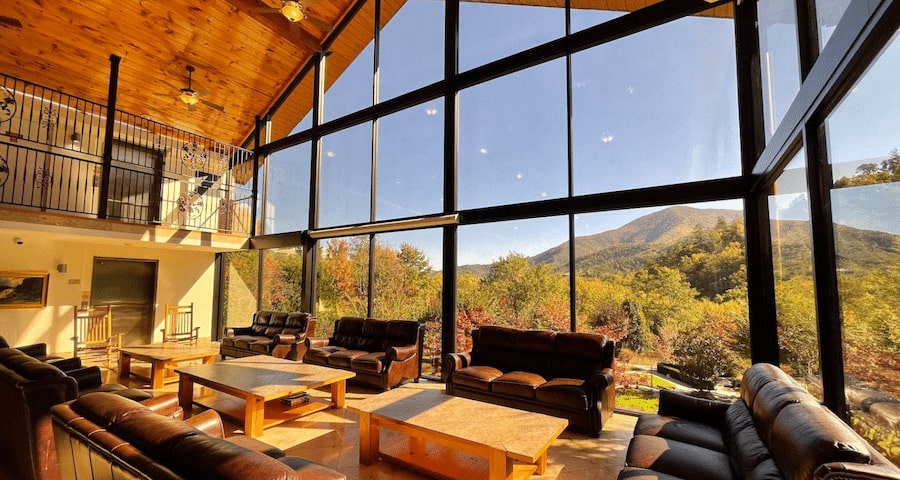
The setting combines a lodge-style residence, mountain views, communal areas, and access to outdoor activities. Current primary material does not establish that every residential bedroom is private or en suite, so private accommodation is not promised here. The room, bathroom arrangement, accessibility, and any available upgrade should be confirmed directly. The optional PHP cabins are also a different accommodation pathway. A photograph of the grounds or shared living room does not resolve either the residential room assignment or the supervision attached to PHP housing.
The Care Through Culinary program combines meal preparation, nutrition, and shared dining with the wider treatment routine. The provider discusses accommodating gluten-free, vegetarian, vegan, and kosher needs. This should be confirmed for the individual’s actual dietary or medical requirements. Shared meals are also presented as opportunities for connection and routine, consistent with social integration. These food services do not establish a dedicated eating-disorder program at Smoky Mountain Lodge simply because another Pasadena Villa location advertises that specialty.
Estimated fees and insurance
Checked October 20, 2026, Recovery.com lists an estimated cash-pay rate from US$30,000 per month and a program length of thirty days or longer. This is a third-party estimate, not a current provider tariff or a quote for a specific room. A written proposal should separate residential treatment, accommodation, psychiatric services, medications, tests, outside medical care, transport, extensions, and any later PHP stage. The monthly estimate should not be treated as one inclusive price for the entire continuum.
The campus lists in-network relationships with Aetna, Beacon, BlueCross BlueShield, Cigna, Optum, and Quest, alongside out-of-network insurance and private pay. It also identifies itself as a VA Community Care Network provider. Each arrangement still depends on eligibility, referral or authorization, and the proposed services; veteran status alone does not approve payment. Medicare and Medicaid are not accepted according to the official admissions page. Insurance verification should establish the authorized care level, approved dates, and expected personal financial responsibility.
Preparing for discharge
The campus alumni program includes a discharge group during treatment, a weekly alumni support group, and a weekly family support group. These provide connection and shared experience as clients and relatives adjust after residential care. They are different from ongoing individual psychotherapy or psychiatric prescribing. Before leaving, the team should help establish the relevant next stage, local clinical appointments, medication responsibility, and a practical daily routine that uses the skills practiced during treatment.
Conditions
Levels of care
Settings
Treatment approach
Social Integration Model with real-world skill practice, psychiatric evaluation and medication management, CBT, DBT, ACT, individual/group/family therapy, Seeking Safety, selected Beyond Trauma groups for women, recreation and access to animal-assisted therapy at the separate Stables program
Fees & admissions
USD 30,000 / month
Recovery.com estimate rechecked October 20, 2026: from US$30,000 per month, with thirty days or longer listed as program length. Not a provider tariff or guaranteed room/package. Confirm residential treatment, room, psychiatric services, medications, tests, outside care, transport, extensions and separate PHP/housing costs in a current quote. Insurance and VA Community Care Network access require individual authorization; Medicare and Medicaid not accepted.
Confirm the current program, duration, accommodation and included services directly with the center.
Adults eighteen or older, medically and psychiatrically stable, able to engage in treatment, ambulatory or self-transferring, and able to manage medication, hygiene and tasks with supervision. No major medical needs requiring continuous nursing care. Confirm residential versus PHP supervision, assigned clinicians, exact room, clinical fit and insurance authorization.