
About Pinnacle Detox & Recovery — Arcadia
Pinnacle Detox & Recovery in Arcadia
Pinnacle Detox & Recovery offers residential addiction treatment and assessed detoxification at 202 West Lemon Avenue in Arcadia, California. The current official residential page describes a ten-bed program with individual clinical planning, shared therapeutic activities, and support for co-occurring mental health concerns. This is the Arcadia program, even though some secondary descriptions use the wider Pasadena area. Confirm the actual receiving address and care phase when comparing the program with similarly named providers elsewhere.
The California Department of Health Care Services record identifies Pinnacle Detox & Recovery Inc. under application 191391AP at the same West Lemon Avenue address. It lists ten treatment places, residential and detoxification services, and incidental medical services, with an expiration date of September 30, 2028. The state record supports the location and licensed service category. It does not establish current availability, a specific therapy schedule, or an individual admission decision, which must come from the receiving team.
Who the residential program is designed to support
The provider describes treatment for alcohol, opioid, stimulant, and polysubstance concerns, alongside mental health difficulties that occur with substance use. Care begins with an assessment of the person’s history, medical considerations, current symptoms, and goals. A named condition in a directory is not proof that the residence can safely manage every severity or presentation. Ask which clinical needs the program can support and what would require a hospital, specialist service, or a different treatment setting.
Pinnacle uses the term inpatient residential rehab, but its verified California service category is residential treatment and detoxification. The home should not be treated as an acute psychiatric hospital. Before admission, discuss current prescriptions, previous treatment, physical health, withdrawal risks, and the level of observation needed. If more than one condition is involved, request a coordinated plan identifying who will oversee the whole case and how external clinicians or medical records will be included.
Detoxification and clinical support
The official detox page describes medical and psychological assessment, monitoring, medication when indicated, and a transition into continuing treatment. Its residential information states that nursing and clinical staff are onsite around the clock. These are descriptions of the advertised service rather than a guarantee that every medical circumstance can be managed at this address. Ask the clinical team to assess the person’s needs before travel and specify which professionals are present, which are on call, and how urgent care is arranged.
Detox and residential rehabilitation have different clinical purposes and may be priced differently within an individual offer. Confirm whether both are proposed, how the transition is decided, and whether the room or staffing arrangements change. Medication decisions should be discussed with the treating professionals, including how existing prescriptions are reviewed, who prescribes, and what happens after discharge. An advertised detox service does not establish that every resident requires detoxification or that a fixed withdrawal timetable applies to everyone.
Individual therapy and the wider treatment schedule
Pinnacle’s residential page lists individual and group therapy, CBT and DBT work, motivational interviewing, trauma-informed care, family involvement, and relapse-prevention education. The exact plan depends on clinical assessment. Ask for the expected number and length of individual appointments, the size of groups, and the qualifications and roles of the people delivering them. A list of available approaches is useful for comparison, but it does not establish that each resident receives every method at the same frequency.
The provider also describes selected wellness activities such as yoga, mindfulness, breathing exercises, fitness, and recreation alongside the clinical program. Its FAQ mentions visiting contracted professionals for additional services. Clarify which activities are part of the core schedule, which require a separate assessment, and whether any create extra charges. The proposed timetable should distinguish psychotherapy, medical review, skills education, complementary services, and recreation so the person can understand how the week is organized.
Family therapy and planning for relationships
The dedicated family-therapy page describes clinician-led work on communication, boundaries, family roles, conflict, and practical support after treatment. Participation is adapted to the individual situation rather than guaranteed as one fixed package for every admission. Ask who can attend, how the resident’s agreement is handled, whether remote sessions are possible, and how often the team expects family work to take place. A general family update is different from a structured therapy appointment.
Families can use the admission discussion to clarify how they will be involved without assuming unrestricted access to clinical information. Agree on a contact person, ordinary communication times, and what to do if concerns arise during the stay. Where relatives live far away, discuss travel and accommodation separately. Continuing family support may be useful after discharge, but it should have its own schedule, clinician, and cost rather than being assumed to continue indefinitely within the residential fee.
Shared rooms and everyday arrangements
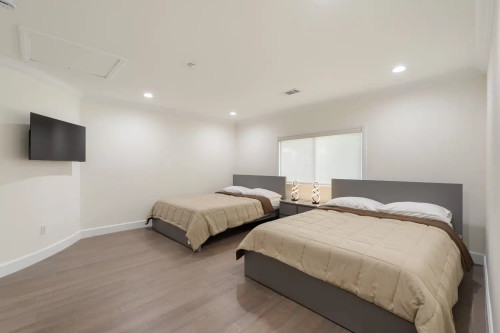
Pinnacle’s official FAQ states that there are two beds per room, and its detox page describes semi-private accommodation. Those current primary descriptions are more specific than generic private-or-shared wording in a directory. Confirm the assigned room, bathroom sharing, accessibility, and any relevant sleep or sensory needs before signing. The ten-bed size describes capacity, not the number of vacancies on the arrival date. A photograph should not be treated as a reservation of that particular room.
The provider describes rooms with televisions, an indoor gym, a pool, basketball space, a game room, and chef-prepared meals. Dietary preferences and restrictions can be discussed with admissions. Ask how amenities are used during different care phases and whether activity restrictions apply during stabilization. Practical questions about laundry, personal belongings, phones, internet access, visitors, smoking areas, and quiet time should be settled in advance so that the person understands the shared living environment.
Duration, outings, and the next level of care
The current residential page describes stays commonly ranging from thirty to ninety days, while the FAQ discusses a comprehensive program of around thirty days. These references do not establish a single mandatory duration or one price for every stay. Ask what is initially recommended, when progress is reviewed, and how additional days would be authorized and billed. The clinical recommendation, available accommodation, and insurer’s funding decision may need to be resolved separately.
The provider describes supervised or specifically approved outings and participation in community AA meetings. Ask about the actual expectations, transport, alternatives where appropriate, and how these activities fit the clinical plan. Its FAQ also describes placement into IOP and sober living after residential treatment. Placement assistance should not be interpreted as proof that Pinnacle operates every later service itself or includes all future housing. Request the receiving organization, address, enrollment requirements, and financial terms for each proposed next step.
Published prices and what the quote must clarify
Pinnacle’s official FAQ publishes a private-pay range of US$40,000–80,000 for a complete program tailored to the individual. It does not attach that range to one clearly defined duration or a single list of inclusions. The amount should therefore be read as a provider-published program range requiring a personal quote, not as a thirty-day or calendar-month tariff. Ask which phases, dates, accommodation, professional services, and additional clinical needs are included in the actual offer.
Recovery.com separately lists an estimated US$1,500 daily rate. That is secondary evidence with a different billing basis and should not be multiplied into an assumed official package or used to explain the provider’s entire range. Request itemized treatment, medication, testing, outside appointments, transport, optional services, and aftercare charges. The provider advertises complimentary car transport, but confirm the route, timing, eligibility, and any limits rather than assuming all travel costs are covered.
Insurance, financial assistance, and admission
The admissions pages invite a benefits review and describe working with major insurance carriers, particularly PPO plans. They also say that financial assistance or scholarships may be considered in some circumstances. Neither statement guarantees coverage or an award. Confirm the exact policy, program, network status, required authorization, deductible, coinsurance, and separately billed professionals. If assistance is offered, request its amount, eligibility conditions, covered services, and any remaining personal responsibility in writing.
The current site header and footer publish 626-323-8629 as the contact number. Admission involves an inquiry, further information, clinical review, and coordinated arrival once the placement is accepted. Request the arrival instructions, packing list, medication-documentation requirements, and the name of the receiving contact. Before committing, review deposits, payment dates, extension rates, cancellation, early departure, and refund terms. A benefits request or conversation with admissions should not be mistaken for a confirmed bed or finalized treatment agreement.
Discharge planning and comparing the offer
Pinnacle describes discharge and continuing-care planning within the residential program, including practical recovery skills, therapy recommendations, support groups, and possible housing arrangements. Ask when planning begins and who coordinates the transition. The plan should identify the next appointments, medication follow-up, records to be transferred, and what the resident and family need to arrange themselves. For someone returning outside California, local care and travel should be planned before the residential stay ends.
The most useful comparison is between the actual offers received from appropriate providers. At Pinnacle, the distinguishing details are the ten-place Arcadia setting, shared bedrooms, assessed detoxification, published nursing support, family involvement, and a provider-published price range that still needs a defined personal scope. Confirm those details for the proposed admission. Comfort features can support everyday life during treatment, while clinical suitability, a clear financial agreement, and a workable continuing-care plan remain central to the decision.
Sources and further comparison
Source review: October 20, 2026. Official residential program; Official detoxification and room description; Official FAQ, program price range, and shared rooms; Admissions and benefits review; Family therapy and continuing support; DHCS public facility record; Recovery.com secondary daily fee reference. Provider statements describe the advertised service; they do not establish an individual admission decision, current availability, or treatment outcome. Price evidence is identified separately from the provider’s own fee policy.
For a broader comparison, explore treatment options in the United States and read questions to ask a treatment center. Use the answers from the actual receiving team to compare the clinical plan, practical arrangements, and written financial terms.
Destinations
Conditions
Levels of care
Settings
Program approach
Individual/group therapy, CBT/DBT, motivational interviewing, trauma-informed care, medical and nursing support, family work, selected wellness activities and discharge planning
Fees & admissions
USD 40,000–80,000 / program
Official FAQ reviewed October 20, 2026 publishes USD 40,000–80,000 for a complete individually tailored program, without linking the range to one fixed duration or inclusion list. This is not a thirty-day or calendar-month tariff. Obtain the exact dates, care phases, room, clinical services and exclusions in the written offer. Recovery.com separately estimates USD 1,500/day on a different secondary basis.
Confirm the current program, duration, accommodation and included services directly with the center.
Clinical and financial review must establish suitability, detox needs, current staffing/prescribers, shared room, actual schedule and duration, family participation, insurance or private-pay terms, and receiving services after discharge.