
Care at Priory Hospital Hayes Grove
Priory Hospital Hayes Grove is an independent hospital on Prestons Road in Hayes, Bromley, offering adult mental health, addiction, and eating disorder care. Its private services include inpatient treatment, day care, and outpatient appointments. It also describes outpatient services and assessments for young people, which should not be confused with its adult inpatient beds. The current hospital page presents several pathways with different clinical aims and attendance requirements. An applicant should establish the relevant service before comparing a room, course length, or advertised price.
The latest CQC report describes forty-six inpatient beds across the hospital and a seventeen-bed Lower Court ward serving private mental health and addiction patients. These figures describe different parts of the service, rather than forty-six interchangeable private addiction places. The hospital also works with the NHS through separately arranged services. A private enquiry, an insurer-funded admission, and an NHS referral involve different pathways and funding decisions, even when care takes place under the same registered hospital name.
Current regulatory findings
The Care Quality Commission record identifies Priory Healthcare Limited as the operator and displays an overall Good rating. The latest residential substance misuse report was published October 19, 2026, with all five categories shown as Good. The record also lists separate 2026 reports for the adult acute and eating disorder services. These dates matter: an older inspection finding should not be presented as the current rating without checking the service and the later assessment.
The October assessment was a focused inspection of Safe and Well-led. It describes individualized care planning and multidisciplinary discussions, while also noting that mandatory training completion required further improvement. Its findings are a useful independent source about the service at the time inspected. They are not a guarantee of a particular outcome, a permanent staffing level, or the suitability of every ward for every referral. Prospective patients can use the report to ask focused questions about current practice.
Adult mental health care and clinical contact
Hayes Grove describes treatment for depression, anxiety, stress, OCD, trauma-related conditions, and other assessed mental health needs. The inpatient framework includes twenty-four-hour support, group and individual therapy, and access to medical treatment when appropriate. The provider says patients are under a consultant psychiatrist’s care, with twice-weekly consultant contact, and have a named nurse who provides daily support and a formal weekly individual meeting. Those contacts serve different purposes and should not all be counted as private psychotherapy hours.
The hospital lists several therapeutic approaches, including CBT, EMDR, interpersonal therapy, cognitive analytic therapy, psychodynamic counseling, compassion-focused therapy, ACT, and integrative work. The appropriate combination depends on assessment and the clinicians assigned to the case. A person seeking a specific trauma intervention or a particular therapy model should ask how that method will fit into the planned admission, who delivers it, and how progress is reviewed. A broad menu gives options, but it does not establish that every method will be delivered within a short stay.
Addiction pathways have different structures
Hayes Grove offers Transform 28, Priory’s twenty-eight-day inpatient addiction program. The published model includes medically assisted detox when needed, regular individual and group therapy, consultant psychiatric support, and family involvement. Priory lists twelve months of weekly aftercare following completion. This is a defined addiction pathway rather than a universal duration for psychiatric or eating disorder treatment. The intake process should establish whether the person’s withdrawal, physical health, and co-occurring needs can be managed within the proposed admission.
Foundations 16 combines an initial inpatient detox episode with nine day-care sessions. Hayes Grove’s own page describes seven to ten days of detox followed by day care on Mondays, Tuesdays, and Wednesdays over three weeks. Despite the program name, this should not be described as sixteen uninterrupted residential days. Someone choosing it needs a workable plan for accommodation, travel, medication, and support between the day sessions. The exact detox duration and transition date remain individual clinical decisions.
Reset 7/10 is the shorter medically assisted detox pathway, with a proposed seven- or ten-day duration according to need. It focuses on withdrawal and stabilization rather than providing the full content of a longer rehabilitation course. The subsequent plan should identify whether therapy continues through residential treatment, day care, outpatient appointments, or another service. A completed detox episode is therefore one part of the treatment pathway, not an assurance that all ongoing addiction or mental health needs have been addressed.
Eating disorder treatment is a separate specialist service
The hospital’s current eating disorder description covers adults with anorexia nervosa, bulimia nervosa, binge-eating disorder, OSFED, and ARFID, subject to assessment. It offers inpatient, day-care, and outpatient pathways, with an inpatient stay commonly planned for at least four to six weeks. The multidisciplinary team includes psychiatrists, doctors, psychologists, therapists, dietitians, occupational therapists, nurses, and healthcare assistants. That specialist framework should not be conflated with the addiction timetable or assigned the same twenty-eight-day package price.
The published program includes meal planning, supported outings, shopping and cooking groups, psychoeducation, and exposure-based work around food and eating situations. It also names the Maudsley Model of Anorexia Nervosa Treatment for Adults, known as MANTRA, body-image work, and CBT- and DBT-informed groups. These details describe practical and psychological components of treatment. A proposed plan should explain how nutrition, physical monitoring, individual therapy, and everyday skills are coordinated for the person’s actual eating disorder and associated needs.
Hayes Grove currently publishes a BMI criterion of 14.5 and above for this program. That is a stated service criterion, not a way to decide alone whether someone needs eating disorder treatment or hospital care. NICE guidance advises against using a single measure such as BMI to determine whether to offer treatment. The receiving clinicians need to assess physical health, recent changes, mental health, and the appropriate care setting. Someone outside a particular program’s criteria may need a different pathway rather than no care.
The two DBT courses should not be confused
Hayes Grove’s DBT-informed course brochure describes a twenty-six-week framework with a weekly two-and-a-half-hour skills group, assessment and commitment work, individual or key-worker contact, and coordination between therapists. The four skills areas are mindfulness, interpersonal effectiveness, emotional regulation, and distress tolerance. The linked brochure lists £8,995 for the course, with the initial consultant mental health assessment priced separately. Confirm the current quote and exact individual-contact arrangements; the published description should not be expanded into unlisted telephone coaching or round-the-clock therapy access.
A different low-intensity DBT skills group runs over six weeks, with ninety-minute weekly sessions at a published £125 per group. It focuses on practical coping and relationship skills through teaching, guided practice, reflection, and home practice. Although the brochure describes a rolling format, it says participants enroll for the course rather than attend casually whenever they choose. This shorter skills group is distinct from the twenty-six-week pathway and from DBT-informed elements within an inpatient timetable.
Outpatient options and family support
Anchor 1:1 offers outpatient addiction therapy online or face to face, generally through weekly individual appointments. Its current page gives £124 per session in the headline and FAQ but £155 in the comparison table, so the applicable fee requires confirmation. Elevate 12 is a separate twelve-week online program with two evening groups and an individual session each week. These services can provide ongoing therapeutic contact without an overnight stay, subject to assessment.
Hayes Grove also describes outpatient appointments for young people, adult autism assessments, and a six-session online support group for parents of children aged five to fourteen with ADHD. The parent group focuses on understanding needs and communication; it is not an inpatient program for the child. Families should confirm the age range, purpose, clinician, consent arrangements, and funding for the exact service requested. Family participation within an adult admission should likewise be agreed with the patient and treating team rather than treated as unrestricted access to clinical information.
Rooms, meals, and the setting in Hayes
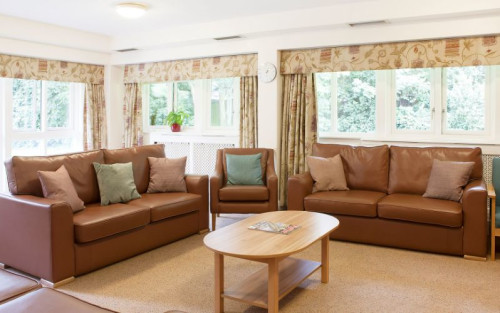
The provider explicitly describes single-occupancy en-suite rooms for its private inpatient service. It also lists gardens, consulting and therapy rooms, communal living areas, female-only lounges, housekeeping, and an on-site restaurant. These support the private-room feature in this directory. They do not imply exclusive use of the whole hospital or freedom from group-based treatment. Room accessibility, clinical observation requirements, and any restrictions affecting the person’s stay should be discussed before arrival.
Meals follow a planned daily schedule, and the restaurant describes catering for dietary requirements. Eating disorder care may involve specific supported-meal arrangements determined by the specialist team, rather than simply choosing from the general restaurant menu. Visits are permitted by arrangement with the clinical team on weekdays and weekends. The hospital is near Hayes station and describes links to central London and the wider South East, but travel and visitor plans should follow the current treatment timetable and the patient’s needs.
Prices and arranging an appropriate admission
Priory’s published starting price for Transform 28 is £21,813 for the twenty-eight-day addiction program. That figure is not a general mental health or eating disorder tariff. The current Elevate page advertises a £3,302 self-pay offer against the standard £4,128 price, subject to its discount conditions and full payment at the start. Offers can change, and separate outpatient course prices have different inclusions. Obtain a written estimate naming the program, clinician fees, medical treatment, accommodation where relevant, and any follow-up or additional charges.
Hayes Grove accepts direct enquiries and GP referrals and describes self-pay and private insurance routes. Insurer recognition does not guarantee authorization for a particular clinician, diagnosis, number of days, or therapy course. The most useful first conversation identifies the intended pathway and turns the published options into a specific proposal. Before an inpatient discharge, agree the next appointments, medication review, any family role, and the care coordinator so that the transition to day care, outpatient support, or local services has a clear clinical handover.
Primary provider pages, course brochures, NICE guidance, and the CQC record checked October 20, 2026. Course prices and offers are provider statements; individual suitability and funding require confirmation.
Conditions
Levels of care
Settings
Amenities
Treatment approach
Consultant-led multidisciplinary care, medication when appropriate, individual/group/family therapy, CBT, EMDR and other assessed methods; specialist eating disorder nutrition, MANTRA and supported meal work; separate DBT-informed courses
Fees & admissions
GBP 21,813 / program
Official starting price is for Transform 28 addiction treatment only: £21,813 for twenty-eight days. It is not an all-service hospital tariff. Mental health/eating disorder admissions need individual quotes; separate detox, DBT and online services have different prices and current offer conditions.
Confirm the current program, duration, accommodation and included services directly with the center.
Direct enquiry or GP referral with clinical assessment and funding authorization. Confirm exact ward and pathway. Eating disorder service publishes BMI 14.5+ but suitability requires full clinical assessment; the number alone does not determine a person's need for care.