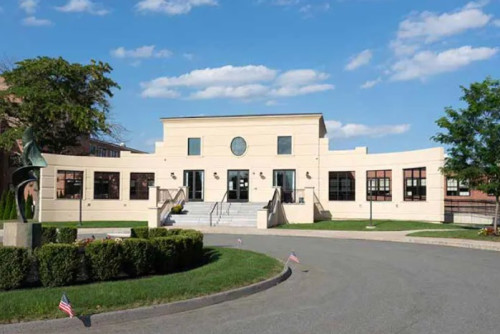

About Recovery Centers of America — Danvers
Addiction treatment on the North Shore
Recovery Centers of America at Danvers is a residential addiction treatment campus on Boston’s North Shore. Its published services include medical detoxification, inpatient addiction care, Extended Day Treatment, and Day Treatment, with support for co-occurring mental health needs. The campus is relevant to adults who need substantial structure at the beginning of treatment and to people who need a less intensive service as their situation changes. The admission assessment determines where a person enters this continuum; a residential stay is not the only possible starting point.
The official campus page describes a large treatment facility with 239 beds, serving communities including Danvers, Salem, Peabody, Beverly, Lynn, Gloucester, and Lawrence. It also receives people from Greater Boston and beyond. Its scale makes it a different proposition from a small residential house. A prospective resident should consider the actual unit, daily schedule, staff access, and living arrangements rather than infer a personal experience from the total campus capacity. Those details matter more than the size of the organization alone.
A plan shaped by previous treatment and current needs
RCA Danvers describes separate pathways for people new to treatment, people returning after a recurrence of substance use, and people with addiction alongside mental health difficulties. The first conversation should establish which of these circumstances best describes the person seeking care. Someone returning to treatment may have a clear view of methods that helped before, as well as parts of the earlier plan that were difficult to maintain. That information can be useful in designing a more practical next stage.
For a first admission, the initial task may be different: understanding the assessment, learning what residential treatment involves, and adjusting to a structured community. The provider’s pathway model is intended to recognize those different starting points. Its value depends on how that distinction affects the actual care plan. A program should be able to explain the resident’s priorities, the role of individual and group sessions, and how the team will review whether the plan is addressing the issues identified at admission.
The Danvers information describes mental health support in the context of addiction and co-occurring conditions. It should not be assumed to offer every mental health service available elsewhere in the RCA network. Someone whose main need is treatment for a mental health condition without active substance use should have that situation assessed explicitly. The relevant question is whether this particular campus and program can provide the required care, including the needed medical and psychiatric support, rather than whether the wider organization treats the diagnosis somewhere.
Medical detoxification and inpatient care
When detoxification is needed, RCA Danvers describes round-the-clock nursing, monitoring, and medication when clinically appropriate. The provider gives three to seven days as a common detox period, with duration depending on the individual. This is not a fixed timetable or a basis for managing withdrawal independently. The clinical assessment needs an accurate account of substance use, prescribed medications, medical conditions, and earlier withdrawal experiences so that the receiving team can recommend an appropriate setting and plan.
Detoxification and ongoing addiction treatment have different immediate purposes. The first addresses stabilization and withdrawal-related needs; the next phase provides continued clinical work and a structured environment for recovery. RCA says planning for that next phase starts during detox. For someone arranging admission, the useful detail is whether the intended transition is to the Danvers inpatient program, an outpatient service, or another placement. The sequence should remain clear even when clinicians need to adjust it as the person’s needs become better understood.
During inpatient care, residents live at the campus and take part in scheduled treatment. The provider describes individual therapy, group work, psychiatric consultation when applicable, medication management, fitness, nutrition, and evening meetings or activities. Length of stay depends on the person’s needs and progress. The campus should explain how it reviews readiness for the next stage and how any change affects the financial arrangements. An estimated duration is most useful when it accompanies a description of what the stay is intended to accomplish.
The treatment methods described by the provider
The Danvers clinical framework includes cognitive behavioral therapy, dialectical behavior therapy skills, motivational interviewing, trauma-informed care, and 12-Step programming. Individual sessions and daily group work sit alongside psychiatric support and case management. These components address different aspects of treatment, so their presence in a program description should lead to a discussion of how they will be used for a particular resident. A person may need help with patterns surrounding substance use, managing difficult emotions, rebuilding daily routines, or several concerns together.
The provider’s description of cognitive behavioral work concerns the relationship between thoughts, behavior, and situations. DBT skills focus on coping with distress, managing emotions, and interpersonal difficulties. Motivational interviewing provides a collaborative approach to exploring reasons for change. A useful care plan connects those methods to recognizable situations in the resident’s life. It might identify the kinds of situations to examine in therapy and how newly learned skills will be practiced, without implying that one technique will resolve every difficulty.
Trauma-informed care is also part of the published model. A prospective resident with a trauma history should establish what that means in the proposed program and whether more specific trauma treatment is available or recommended. The term alone does not identify the frequency, depth, or format of trauma-focused work. Similarly, the role of 12-Step activities should be clear alongside clinical sessions. Understanding the balance helps someone assess whether the overall approach fits their preferences and treatment needs.
RCA Danvers describes medication-assisted treatment for opioid and alcohol use disorders, with evaluation and prescribing based on clinical circumstances. It publishes several medication options, but the list should not be treated as a recommendation for an individual. The relevant matters are how existing prescriptions are reviewed, how the person participates in decisions, and who will provide ongoing care after discharge. If treatment includes a medication that needs continuing access, that access should be part of the transition plan from the outset.
Extended Day Treatment and Day Treatment
Danvers uses the names Extended Day Treatment and Day Treatment for its outpatient services. In the provider’s explanation, Extended Day Treatment is the more intensive daytime option and is comparable to what many programs call partial hospitalization. Participants attend substantial daytime programming and return to their accommodation afterward. The current campus page describes this service as in person. A person moving from inpatient care should therefore have a suitable living arrangement and a reliable way to attend the scheduled sessions.
Day Treatment is the less intensive outpatient option, comparable in the provider’s terminology to intensive outpatient care. It includes group work with individual and medication services as appropriate. Danvers describes daytime and evening schedules and offers in-person, virtual, and hybrid formats for eligible adults in Massachusetts. The official page gives more than one description of weekly session frequency, so the actual timetable should be confirmed for the assigned track. It is better to plan around a current schedule than a general estimate from a website.
The difference between those levels is practical as well as clinical. A person attending daytime care has more responsibility for evenings, weekends, transport, and the home environment than someone living in inpatient treatment. The decision to step down should account for those hours outside the program. A less intensive schedule is useful only if it fits the person’s support needs and circumstances. It should not be selected solely because it is easier to combine with work or family commitments.
Residential arrangements and support around treatment
The existing directory information describes residential rooms and shared clinical, recreation, and wellness spaces at Danvers. Specific room types should be verified for the intended admission, including any request for private accommodation. In a larger campus, it is particularly useful to understand where the resident will sleep, where treatment takes place, and how the daily community is organized. Accessibility needs, dietary requirements, and important medication arrangements should be discussed before travel rather than left to arrival.
Family services run alongside treatment and include educational resources and support opportunities. RCA describes family participation and visiting with the resident’s consent. The purpose of involvement should be defined: understanding the program, discussing communication, planning practical support, or preparing for discharge. Some residents will want substantial family participation, while others need limits around it. A clear agreement helps distinguish support for the resident from the separate needs and concerns of relatives.
The campus also describes case management and access to RCA’s alumni community. A case manager can help coordinate the practical pieces surrounding the clinical plan, while alumni activities provide a way to maintain connection after treatment. Those functions should not be confused with ongoing therapy or prescribing. A complete plan identifies the clinical appointments, the community supports, and the person’s own daily responsibilities, so that none is assumed to replace another.
Costs and comparing the Danvers option
The directory’s prior pricing evidence records a Recovery.com estimate of $750 per day, checked September 17, 2026. The arithmetic equivalent for 30 days is $22,500. This remains a dated third-party estimate, not a current quote from RCA or a guaranteed package. It does not establish whether a specific admission includes detoxification, the full residential period, medications, or later outpatient services. The financial proposal should describe the actual care recommended for the person.
RCA Danvers states that it accepts major insurance plans, including certain MassHealth plans, subject to verification. The important step is checking the particular policy, service, and authorization rather than relying on a general list of accepted insurers. The provider should explain expected patient responsibility, any services outside the authorization, and the process if the clinical recommendation changes. For self-pay care, request the same clarity about included services, rate periods, and additional charges.
When comparing treatment centers in the United States, Danvers is best understood as a North Shore addiction treatment campus with medical stabilization, inpatient care, and several outpatient formats. The Massachusetts treatment guide provides additional programs to consider. A useful comparison should match the same level of care and clinical needs, while paying particular attention to campus scale, the outpatient schedule, and where the person will live during each stage.
Sources: RCA Danvers official campus information, reviewed October 20, 2026; Recovery.com Danvers pricing profile, cited for the directory’s dated September 17, 2026 estimate. Current admission criteria, schedules, and availability require confirmation with the provider.
Destinations
Conditions
Levels of care
Amenities
Program approach
Individual and group therapy, CBT, DBT skills, motivational interviewing, trauma-informed care, medication support, family education and continuing-care planning
Fees & admissions
Estimated USD 750 / day
The directory recorded a Recovery.com estimate of USD 750/day on September 17, 2026. This dated third-party rate is not a current RCA quotation or a fixed monthly package. Confirm the assessed level, duration, inclusions and current written total; clinical information was reviewed October 20, 2026.
Confirm the current program, duration, accommodation and included services directly with the center.
Confirm detox needs, clinical pathway, room type, insurance or self-pay terms, medication and medical charges, and continuing-care plan.