
About Recovery Centers of America — Devon
RCA Devon on Philadelphia’s Main Line
Recovery Centers of America at Devon provides residential addiction and mental health treatment on Philadelphia’s Main Line. The campus at 235 West Lancaster Avenue brings together medical detoxification, inpatient addiction care, a primary mental health pathway, and outpatient services. It also offers recovery housing for eligible outpatient participants. This range matters when someone needs a place to begin treatment and a realistic route into less intensive care afterward. Each stage has its own clinical purpose, living arrangements, and admission requirements.
Devon’s location serves people in the Greater Philadelphia area, including Main Line communities and Chester and Montgomery counties, while also accepting people who travel for care. For local families, proximity can make consented family participation and later appointments more practical. For someone coming from farther away, the same campus needs to be assessed alongside a plan for returning home. A residential admission should therefore be considered in the context of the person’s support network and future treatment, as well as the immediate need for care.
Addiction treatment and primary mental health care
The official Devon information distinguishes four pathways: Foundations of Recovery for people new to addiction treatment, Fresh Start for people returning to treatment, Balance for addiction with co-occurring mental health needs, and Restore for a primary mental health condition without active substance use disorder. These are meaningful distinctions within the provider’s model. They allow an admission conversation to begin with the person’s history and priorities, rather than treating every residential stay as the same experience.
Someone entering care after an earlier treatment episode may want the team to examine what was useful previously and what did not translate into life afterward. That is a different task from introducing a first-time resident to addiction treatment and its routines. Similarly, a person seeking help for depression or another primary mental health condition should establish that the proposed placement is the Restore pathway. The existence of addiction services on the same campus does not mean that an addiction-focused schedule is the appropriate choice for every applicant.
RCA describes Restore at Devon as voluntary residential care for adults. Its published information names psychiatric evaluation, therapeutic programming, individual and group sessions, and medication management when needed. Admission still depends on current clinical circumstances. The essential assessment is whether the campus can support the person’s symptoms, medical needs, and level of functioning. A diagnosis alone does not determine whether residential treatment, another setting, or a different service is suitable.
Moving from stabilization into active treatment
For addiction admissions, medical detoxification may be the first step. The Devon program describes nursing care, monitoring, and medication when clinically indicated, with planning for subsequent treatment beginning during detox. The published time estimates are useful for orientation but should not be treated as a fixed schedule for an individual. The first assessment needs to account for the substances involved, recent use, existing prescriptions, medical history, and any previous withdrawal difficulties.
Residential addiction treatment then provides a place to live within a structured clinical program. RCA describes individual therapy, daily groups, psychiatric consultation, medication support where appropriate, recovery skills, and time for recreation. Its campus information allows for stays of approximately 30 days or longer, depending on need. The more useful admission document is a staged plan that explains the starting level of care, how progress will be reviewed, and what would prompt a transition or an extension.
The distinction between medical stabilization and continuing treatment is especially important when a family is arranging admission quickly. Securing a detox bed does not by itself establish the complete plan. The receiving team should explain whether the person will remain at Devon for residential care, what needs to be approved before that transition, and how the next service will be organized. This makes the intended sequence visible while allowing clinicians to adjust it after assessment.
Clinical methods and a first responder program
Devon’s published clinical framework includes cognitive behavioral therapy, dialectical behavior therapy skills, motivational interviewing, trauma-informed care, and individual and group work. The provider also describes psychiatric support and measurement-based review of progress. These components can address different parts of a resident’s difficulties: the situations surrounding substance use, patterns of thought and behavior, emotional regulation, and the practical use of coping skills. The selected methods should be connected to the resident’s goals rather than presented as a list that automatically applies in full.
The campus also offers RESCU, a dedicated program for first responders, military personnel, and their families. RCA’s Devon page specifically identifies police officers, firefighters, corrections officers, emergency medical personnel, nurses, and active-duty or retired military members among the populations welcomed. The stated focus includes occupational trauma and the pressures associated with professional identity, benefits, and returning to duty. Those service descriptions make RESCU a distinct consideration within the wider Devon program, rather than a generic label for any resident with a stressful job.
RCA says RESCU draws on approaches including CBT, DBT, Seeking Safety, and 12-Step programming, with medication-assisted treatment when appropriate. For someone considering that track, the practical detail is how the specialty work is organized alongside the rest of the residential schedule. Participation by family or an employer-related contact should be governed by the resident’s consent and a clear explanation of information sharing. A specialist program can be relevant without making a promise about employment, professional clearance, or an eventual return to duty.
The provider describes on-site evaluation for medications used in treating opioid or alcohol use disorder. Medication decisions depend on the person’s history and current clinical assessment; the presence of a particular medicine in a service list is not a recommendation for an individual. Continuity also matters. If a resident begins or continues medication at Devon, the discharge plan should identify the next prescriber, the appointment date, and how the treatment will remain accessible after the residential stay ends.
Living at the Devon campus
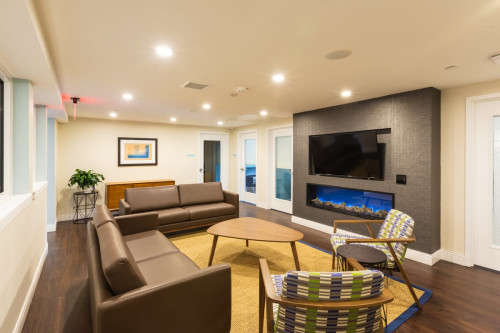
The residential environment includes shared common areas, dining facilities, fitness space, on-site laundry, and outdoor areas. The provider describes activities such as yoga, creative sessions, trivia, and movie nights. Existing campus information includes semi-private rooms, while the current official page states that private rooms may be requested subject to availability. A room request should be confirmed for the particular admission. It should not be assumed that a private room is included simply because one appears in promotional material.
The day-to-day setting is part of the experience of treatment. Shared spaces involve interaction with other residents, while a scheduled program creates a different routine from living independently. The right comparison is between the person’s needs and the actual arrangements: sleeping space, quiet time, meals, movement around the campus, and access to staff. Recreation and comfortable surroundings can support daily life, but they do not establish how much individual therapy or psychiatric contact a resident will receive.
Devon describes a WorkFlex option that allows structured access to a phone and laptop for essential work or school tasks, with a published allowance of up to three hours a day. That is a defined accommodation within treatment, not unrestricted remote working. Anyone relying on it should confirm eligibility, available times, privacy, and whether it fits the recommended pathway. The provider also describes pet accommodation under campus guidelines. Both arrangements should be settled before arrival so that expectations match what the program can actually support.
Outpatient care without losing the plan
Partial hospitalization at Devon is described as intensive daytime treatment without an overnight clinical stay. Intensive outpatient care uses a smaller weekly commitment and is offered in person, virtually, or through a hybrid format. The current page describes morning and evening options for IOP. These services can support a transition from residential care, but they may also be an entry point for someone whose assessment supports outpatient treatment from the beginning. Housing stability and the support available outside scheduled sessions are part of that decision.
Devon’s sober living option provides recovery housing for people taking part in outpatient programming. This should be distinguished from remaining in residential clinical treatment. The person lives in a structured recovery environment while receiving care through PHP or IOP, and the requirements of both need to be understood. Confirm the housing arrangement, included meals, expected length, costs, transportation, and the circumstances in which a resident might need a different level of support.
The official campus information places considerable emphasis on case management. Practical work may involve discharge appointments, benefits paperwork, employment-related documentation, and connections to community services. Those tasks are useful because the end of a residential stay often coincides with several changes at once. A workable transition should identify who is responsible for each arrangement and which appointments are actually booked. For someone returning outside Pennsylvania, the plan needs to fit the resources and travel distances in the home community.
Family education, support groups, webinars, and alumni activities are also part of RCA’s published continuing-care offer. Their role is different from formal treatment appointments. A resident may use them for connection and education while continuing therapy or medication care elsewhere. The most useful discharge plan explains that combination clearly and reflects the person’s preferences about family involvement. It should also be possible to identify the appropriate clinical contact when a concern needs professional attention rather than peer support alone.
Understanding the financial proposal
The directory’s September 17, 2026 pricing record cites a Recovery.com estimated cash-pay rate of $750 per day for RCA Devon. A 30-day arithmetic comparison is $22,500. This is an attributed third-party estimate, not a provider-published monthly package or a new quotation for the reader. The figure does not establish the cost of a particular sequence of detoxification, residential care, outpatient treatment, and sober living. Those services need to be itemized for the actual proposed admission.
RCA states that its team can check insurance benefits and explain payment arrangements. Before committing, obtain a written account of what the plan covers, what remains payable by the patient, and what happens if the recommended stay changes. A useful comparison also separates clinical costs from accommodation or other charges where applicable. The goal is to understand the same defined services across providers, rather than compare a daily estimate from one program with an inclusive package from another.
Devon can be compared with other U.S. treatment centers and the programs in the Pennsylvania residential treatment guide. Its distinctive considerations include the Main Line location, separate addiction and primary mental health pathways, RESCU specialty work, and outpatient care with a housing option. A well-defined admission plan should show which of those services the person will actually use and how the stay connects with care afterward.
Sources: RCA Devon official campus information, reviewed October 20, 2026; Recovery.com Devon pricing profile, cited for the directory’s dated September 17, 2026 estimate. The provider determines admission, treatment recommendations, and current availability.
Destinations
Conditions
Levels of care
Program approach
Individual and group therapy, CBT, DBT skills, motivational interviewing, trauma-informed care, medication support, family education and continuing-care planning
Fees & admissions
Estimated USD 750 / day
The directory recorded a Recovery.com estimate of USD 750/day on September 17, 2026. This dated third-party rate is not a current RCA quotation or a fixed monthly package. Confirm the assessed level, duration, inclusions and current written total; clinical information was reviewed October 20, 2026.
Confirm the current program, duration, accommodation and included services directly with the center.
Confirm detox needs, clinical pathway, room type, insurance or self-pay terms, medication and medical charges, and continuing-care plan.