Care at Recovery First Treatment Center — Hollywood
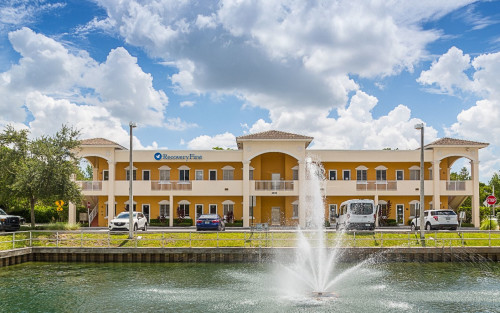
Recovery First Treatment Center is an American Addiction Centers provider in Hollywood, Florida, with medical detoxification, residential addiction treatment, and outpatient programs. Its services occupy different spaces rather than one interchangeable residential campus. The main AAC facility listing gives 4110 Davie Road Extension, while the outpatient center is listed next door at 4100 Davie Road Extension. The location is in Broward County, between Fort Lauderdale and Miami. People considering treatment should establish which building will handle their assessment, where they will sleep, and whether a later change in care level also changes their accommodation.
The program combines individual and group work with medical support, recovery education, and activities intended to help people build a workable daily routine. It also offers specialized pathways for veterans, first responders, and healthcare professionals. Its creative program is a particularly identifiable feature: music lessons and songwriting sit alongside the clinical schedule. Recovery First is principally described as a substance use treatment service that also addresses co-occurring mental health needs. This profile does not establish a separate acute psychiatric hospital or a residential program for every mental health condition without addiction.
Medical detoxification and the residential setting
Recovery First’s Hollywood facility information describes a detox facility and a nearby apartment-style residential setting. That distinction matters because the supervision, daily activities, and physical environment during withdrawal may differ from those later in rehabilitation. The residential apartments are intended to support everyday routines as well as formal therapy. The provider describes residents preparing some family-style meals with peers. Someone who needs help with mobility, food preparation, or managing medication should discuss those needs before assuming that apartment living will be suitable.
A medically supported withdrawal episode is one stage of treatment, with the following plan depending on the assessment and the person’s response. Request a clear account of the medical and nursing coverage at the actual admission location, the plan for existing prescriptions, and the criteria for transfer to a hospital. A facility’s ability to treat addiction does not establish that it can manage every unstable physical illness or psychiatric emergency. Recovery First’s public service menu supports detox and residential treatment; it does not make a particular withdrawal protocol, length of stay, or residential placement automatic for every applicant.
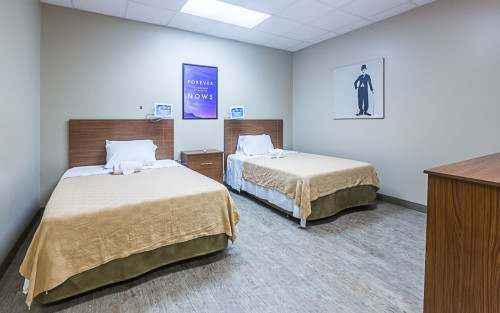
The apartment description also does not establish that every resident receives a private bedroom or bathroom. Some website comparison tables contain room-related labels without explaining availability or occupancy. Before choosing a package on the basis of privacy, get the number of people sharing the bedroom, bathroom, and common areas in writing. This profile retains the distinction between residential accommodation and outpatient care rather than treating access to a building, group room, or recreational area as an overnight room entitlement.
How the clinical methods fit together
On its therapy information page, Recovery First describes cognitive behavioral therapy, dialectical behavior therapy approaches, motivational interviewing, process groups, and medication when appropriate. These provide different ways of working on a treatment plan. CBT sessions can examine patterns linking thoughts, feelings, and substance use. DBT-related work emphasizes skills such as emotional regulation and coping with distress. Motivational interviewing gives space to explore ambivalence and personal reasons for change. Naming these approaches does not establish that every resident receives a complete specialist DBT program or the same number of individual sessions.
The published menu includes work on anger, trauma, grief, relationships, and other issues relevant to a participant’s recovery. Group sessions can provide opportunities to practice communication and hear how peers manage similar situations; individual work can address information that is difficult to discuss in a group. A useful treatment plan should make that connection explicit. For example, a person working on returning to employment may need a different set of practical goals from someone arranging stable housing or rebuilding family contact. Ask how progress is reviewed and how those goals influence the weekly schedule.
Recovery First also describes medications for alcohol and opioid use disorders among the options clinicians may consider. Their use depends on the individual’s history, current health, preferences, and prescribing assessment. A prospective resident already taking an addiction medication should establish whether it can be continued and who will provide follow-up prescriptions after discharge. Medication management and psychotherapy are different parts of the plan; neither a general reference to medication-assisted treatment nor a recovery-group timetable explains the whole clinical arrangement.
A distinctive music and creative program
The dedicated music program page describes sessions after the main clinical day, with opportunities for voice, guitar, drums, keyboards, and original songwriting. Participation is subject to the program’s rules and earned privileges. Gary Wayne leads this work as Director of Music and Creative Arts. The provider also describes a Friday open-mic event where clients can share their work. These activities are useful details for someone who finds music a familiar way to communicate or wants a structured interest to carry into recovery.
Gary Wayne’s published biography describes a background in music, performance, and creative leadership. It should not be read as proof of a credential in licensed music therapy. The practical distinction is that Recovery First offers a named creative activity within a broader clinical service. Music sessions do not replace assessment, medical care, or the agreed therapy schedule. Someone interested in the program can ask which instruments are currently available, whether beginners can participate, and how access works during detox versus later residential or outpatient treatment.
Staff and specialized recovery pathways
The current staff directory identifies Richard Seely as Medical Director, Dina Kershteyn as Clinical Director, and Isabelle Thibeault as Director of Nursing. It also lists psychiatric nursing, clinical therapy, case management, and alumni-related roles. These named positions give a more useful starting point than an undated total staff count. They do not establish that every named professional is present every day or will personally treat every patient. Admissions should identify the clinician responsible for the proposed case and explain how medical, nursing, and therapy decisions are coordinated.
The veterans pathway is described as serving military veterans and first responders, including police, firefighters, and paramedics. The provider’s material addresses the interaction between substance use, trauma, occupational experiences, and co-occurring symptoms. A person seeking this pathway should ask how much of the week takes place in a dedicated peer group, what individual trauma work is available, and how the team coordinates with an existing clinician. The existence of a veteran-focused track does not itself establish suitability for every traumatic brain injury, pain condition, or psychiatric presentation.
For veterans using benefits, Recovery First describes participation in VA community care in its coverage information. Referral and authorization requirements still need to be resolved before arrival. A named program is not a guarantee that a particular admission, length of stay, or subsequent outpatient episode will be funded. Healthcare professionals should likewise clarify confidentiality, work-related reporting obligations, and any monitoring requirements with the appropriate parties. Treatment attendance alone does not guarantee return-to-work clearance or a licensing outcome.
Outpatient treatment at the neighboring address
The outpatient center at 4100 Davie Road Extension offers partial hospitalization and intensive outpatient programs. AAC describes individual and group therapy, process groups, family work, psychoeducation, medication management when indicated, and support for co-occurring substance use and mental health problems. Group topics can include relapse prevention, anxiety, depression, trauma, and relationship skills. Specialized sessions may be organized around participants’ needs, including veteran or first-responder experiences. The exact timetable and group allocation should be confirmed for the current program.
PHP and IOP are different levels of attendance, so the choice should reflect clinical needs and the person’s circumstances outside sessions. Someone continuing from residential care should obtain the proposed weekly hours, attendance days, transport arrangements, and accommodation plan before the transition. Living at home, staying with family, or using separate recovery housing creates different practical demands. The public outpatient description does not establish that housing is included in every treatment authorization or that all residential residents automatically move into the same follow-up program.
Family contact and planning beyond the stay
The main facility page describes family education delivered with clinical staff and a recurring family program. It also indicates that visits are generally restricted during detox, with later visits arranged around treatment. Families should obtain the current calendar and communication rules directly rather than making travel plans around a generic website schedule. Participation should also be discussed with the person receiving care: family involvement may concern education, agreed therapeutic goals, or practical discharge support, and does not mean unrestricted access to private clinical information.
Recovery First’s treatment information lists several mutual-help options, including 12-Step groups, SMART Recovery, and Refuge Recovery-related activities. Availability can change, and these resources have different formats and approaches. The discharge plan should identify what the person intends to attend, where ongoing prescribing or therapy will take place, and whom to contact if the plan is not working. Alumni meetings can add continuity, but membership is different from an ongoing appointment with a licensed clinician or a new funded treatment episode.
Fees, insurance, and choosing a realistic plan
No current fixed public tariff for a defined residential stay was verified for this profile. Recovery First’s AAC pages list several insurance relationships and payment options, but coverage depends on the policy, service, authorization, and remaining cost-sharing obligations. Ask for separate estimates for detox, residential care, outpatient treatment, medication, and any accommodation. The written estimate should identify the assumed number of days and explain how a shorter stay, extension, transfer, or change in care level affects the bill.
Recovery First may be a relevant option for someone seeking an addiction-focused clinical program in South Florida with multiple care levels and a structured creative component. The most informative next step is a campus-specific assessment that turns the published menu into a proposed plan: where the person will be treated, which methods they are likely to receive, how often individual appointments occur, and what support will continue afterward. A clear plan makes its residential, outpatient, and music offerings easier to compare with other providers without relying on an assumed private room, a fixed duration, or a promised outcome.
Provider information and linked primary sources checked October 20, 2026. Program access, staffing, room allocation, and funding remain subject to current assessment and written confirmation.
Conditions
Levels of care
Treatment approach
Individual and group therapy, CBT, DBT-related skills, motivational interviewing, process groups, medication management when indicated, family education, recovery groups, and a named music and creative program
Fees & admissions
Confirm current pricing
No current defined public provider tariff verified. Obtain separate written estimates for detox, residential care, outpatient treatment, medication, housing, and changes in duration; insurance and VA authorization are individualized.
Confirm the current program, duration, accommodation and included services directly with the center.
Clinical and financial assessment before admission; confirm the exact building, withdrawal support, psychiatric suitability, existing medication plan, specialized track, and insurance or VA authorization