
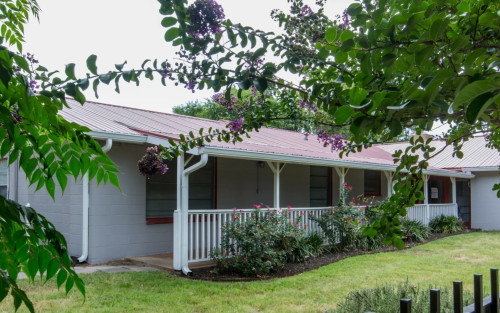
Care at Recovery Unplugged — Austin FM 969
The FM 969 campus in Austin
Recovery Unplugged’s FM 969 location is an Austin addiction treatment campus listed on the provider’s official contact page at 14109 FM 969, Austin, Texas 78724. The program combines clinical treatment with music-assisted work and continuing-care planning. This profile concerns the FM 969 residential setting. Recovery Unplugged also lists other Austin addresses, so the admission offer should identify the exact campus and the services proposed there.
The provider’s current central admissions number is 855-384-5794. Its official contact directory separately identifies Austin Detox at 7211 Albert Road and another Austin treatment location at 5419 South Congress Avenue. Those addresses should not be treated as interchangeable. A person who needs more than one level of care should understand where each stage occurs and whether a move between locations is part of the recommended plan.
Residential addiction treatment
The official Austin program describes residential care as an on-site setting with individual counseling, groups, psychiatric support, wellness activities, and music-assisted treatment. The purpose is to provide a structured period in which the person can focus on clinical work and recovery skills. The actual plan should follow assessment of current substance use, medical needs, mental health, previous treatment, and the support available outside the program.
Recovery Unplugged’s published Austin services cover alcohol, opioids, stimulants, prescription medication-related problems, and other substance use concerns. It also describes integrated care when anxiety, depression, trauma, or other mental health difficulties occur alongside addiction. Those descriptions identify the program’s areas of work. They do not establish suitability for every person or every level of medical or psychiatric need.
The exact FM 969 third-party profile describes a residential program of at least 30 days, while the official Austin information covers several pathways with different time commitments. Applicants should therefore obtain an individualized recommendation rather than assume one duration applies to the entire local network. The plan should explain the initial stage, how progress is reviewed, and what determines the next level of care.
Music-assisted treatment and expression
Music is central to Recovery Unplugged’s identity. The provider describes using it to help patients engage with treatment and express experiences that may be difficult to put into words. It is incorporated alongside clinical therapies, not presented as the only form of care. The relevant admission discussion is how music-assisted work will be used for the individual and how it connects with the goals agreed with the treatment team.
The FM 969 profile describes activities involving songwriting and musical expression and states that prior music training is not required. A person should not assume that they need to be a performer to participate. The program should explain the available formats and how participation is adapted to preference and comfort. An interest in music can be one reason to explore the service, while clinical fit remains the basis for choosing treatment.
The official Austin page also lists experiential therapy, including creative activity and role-play. These methods provide other ways to explore responses, emotions, and patterns. Their place in the schedule should be clear. A music room, a concert, a recreational activity, and a clinician-led therapeutic session may all contribute differently to residential life, so applicants should understand which parts of the program provide formal clinical treatment.
Clinical therapies and coping skills
Recovery Unplugged identifies cognitive behavioral therapy, dialectical behavior therapy, and motivational interviewing among its Austin approaches. The published descriptions connect these methods with thought patterns, emotional regulation, coping, and motivation for change. The individual’s plan should explain which approaches are selected and why. A broad modality list does not establish the frequency, clinician contact, or exact format offered to every resident.
Individual therapy can provide space for personal history and priorities, while group work introduces discussion and interaction with peers. The program should make the balance clear for the proposed stay. A patient may need private attention for some concerns and structured practice with others for different goals. The team should review how the mix is working as the person progresses, rather than rely on a fixed schedule that ignores changing needs.
Relapse-prevention work and coping skills appear in the exact-campus description. These components should connect the residential work with the situations a person expects after treatment. Relevant issues may include stress, relationships, isolation, or returning to familiar environments. The useful plan identifies the person’s own warning signs and support arrangements, with practical steps that can be carried into the next stage of care.
Detox and medication support
Medical detoxification is part of Recovery Unplugged’s Austin service network. Its official contact page names the separate Albert Road detox location. Someone entering through withdrawal care should confirm whether that is the proposed starting point, how the transfer to residential treatment works, and whether any additional assessment is required. The availability of detox within the network should not be used to promise that every withdrawal service takes place at FM 969.
The official Austin program also describes medication-assisted treatment when appropriate. Medication decisions should be made by the treating clinician in the context of the person’s needs and preferences. The admission and discharge plans should identify prescribing responsibility, monitoring, and continued access when medication is recommended. A service description does not establish that everyone receives the same treatment or that one medication is suitable for every substance use concern.
Trauma and co-occurring mental health concerns
The provider describes integrated mental health care alongside addiction treatment and lists a trauma-focused residential option within its Austin continuum. Applicants should establish the relevant track and campus for their needs. The existence of a trauma service does not mean that every resident receives the same trauma-focused intervention. Assessment, readiness, clinical history, and the person’s preferences should inform the timing and content of that work.
Someone with an existing psychiatric diagnosis should discuss current symptoms, earlier treatment, and prescribed medication during intake. The team should explain which clinicians will be involved and how mental health needs are reviewed during the stay. If additional or more intensive psychiatric care is required, that should be identified before the admission plan is finalized. The goal is a placement that matches the person’s actual presentation.
The residential environment and activities
The official Austin page describes amenities across its detox, trauma, and residential services, including full-size beds, chef-prepared meals, a music room with a grand piano, fitness space, and outdoor recreation. It also lists activities such as movie nights and on-site concerts. Because that page covers multiple service settings, the particular amenities available at the assigned FM 969 residence should be confirmed rather than assumed from the wider list.
The exact-campus profile describes accommodation with music spaces, an outdoor lounge, recreation areas, and meals arranged around nutritional and dietary needs. It does not establish a guaranteed private-room configuration for every patient. Applicants should confirm the bedroom, bathroom arrangement, accessibility, and any dietary requirements in the actual offer. The room and campus details should be tied to the proposed dates and phase of care.
Recovery Unplugged’s Austin information describes pet-friendly options for eligible clients and asks applicants to confirm current policies. Someone hoping to bring an animal should discuss the specific campus, approval requirements, and responsibilities before arrival. A dog area or a general pet-friendly statement does not mean that all animals can accompany every patient in every program. That decision should be part of the confirmed admission arrangements.
Device access and outside responsibilities also need practical discussion. Wi-Fi appears among the provider’s broader Austin amenities, but availability of a connection does not establish that a full work schedule can continue during residential care. The patient should understand the daily treatment commitments and current rules. People coordinating work, caregiving, or study can then make plans that fit the actual program rather than assumptions about flexibility.
Family participation and the support network
The FM 969 program description includes family involvement arranged according to the individual. The purpose may be to improve communication, share appropriate information, and prepare for the person’s return to daily life. Participation should reflect consent and the suitability of the relationships involved. Some residents may want a partner or relative included, while others may rely on a different support person or an existing clinician.
Someone traveling to Austin should establish whether family work can occur remotely and how visits are organized. The clinical team should explain what information is shared and how boundaries are handled. A practical plan helps the people involved support treatment without assuming that every relative needs the same role or access to private discussions. Family participation is one possible component of a broader support system.
Moving into outpatient care
The official Austin continuum includes partial hospitalization, intensive outpatient treatment, and virtual outpatient services. These provide different amounts of structure and time outside clinical sessions. The next stage should be selected according to the patient’s needs and readiness. The location, schedule, and treatment team should be identified before discharge, especially when a transition involves another Austin address or a return to a different home community.
Recovery Unplugged describes separate housing arrangements for some outpatient pathways. Those living environments have their own amenities, rules, and degree of independence. They should not be combined with the FM 969 residential accommodation when comparing programs or costs. If housing is part of the next-stage proposal, the patient should understand its address, supervision, transport, fees, and relationship to the clinical service.
Continuing care also needs named clinicians, scheduled appointments, a medication plan when relevant, and transfer of the information needed by the receiving providers. Recovery-community participation can complement those arrangements. The discharge plan should be specific enough for the person to follow after leaving the residential routine, with clear contacts if an appointment, housing arrangement, or other part of the plan changes.
Fees and comparing the FM 969 program
The exact FM 969 Recovery.com profile inspected on October 20, 2026 displays an estimated cash-pay amount of $30,000 for 30 days. This is third-party pricing, not an official provider quotation. The final estimate should name the campus, recommended duration, room, clinical services, and any separate detox or outpatient charges. Insurance coverage and patient responsibility require individual verification. Compare the program with other treatment centers in the United States and the Texas treatment guide, keeping the different Austin locations clear.
Sources reviewed October 20, 2026: official Austin program, official location directory, and the exact FM 969 Recovery.com profile. Network services and campus-specific descriptions are distinguished; pricing is a third-party estimate.
Conditions
Levels of care
Settings
Amenities
Treatment approach
Music-assisted and experiential therapy, CBT, DBT, motivational interviewing, individual and group work, family involvement and relapse prevention
Fees & admissions
USD 30,000 / program
Recovery.com exact FM 969 card displays an estimated USD 30,000 for 30 days, checked October 20, 2026. Embedded general pricing differs at USD 25,000–30,000; use the visible card as the attributed estimate, not a provider guarantee. Confirm detox, duration and inclusions.
Confirm the current program, duration, accommodation and included services directly with the center.
Ask which Austin address provides the recommended level of care, whether detox is needed first, current room arrangements, total self-pay cost and aftercare planning.