About Recovery Unplugged Lake Worth
Recovery Unplugged in Lake Worth: identify the right Florida program
Recovery Unplugged’s Lake Worth location is at 3153 Canada Court, Lake Worth, Florida 33461, according to its official contact directory. The organization markets the program on a West Palm Beach page, but the treatment address is Lake Worth. Its current service breakdown assigns medical detox and residential treatment to this location. PHP, IOP, and virtual IOP are listed under Fort Lauderdale. These distinctions matter when deciding where you will stay, where appointments occur, and whether a proposed continuation of care involves a move, travel, or a separate online program.
The initial question is level of care
Ask the clinical team to explain the recommended starting point using your current needs, rather than choosing a program solely because a room is available. An assessment should include substance use, prescribed medication, previous withdrawal experiences, physical health, mental health symptoms, and the support available at home. If detox is recommended, ask whether the proposed Lake Worth service can meet the identified needs or whether hospital assessment is needed first. If you have already completed stabilization elsewhere, ask what records and clinical information are required before residential admission is confirmed.
The provider uses inpatient and residential language for its live-in care. That wording does not describe every aspect of medical coverage. Ask which professionals are present during the day and overnight, how urgent concerns reach a prescriber, and how a higher level of care would be arranged if necessary. A useful answer identifies the actual service and staff arrangements at Lake Worth. Clinical Recovery’s residential care guide can help structure the discussion, while the assessing professionals determine whether the proposed environment is appropriate for the individual situation.
Moving from detox into the residential schedule
Recovery Unplugged’s general residential information describes an individualized course and gives a usual range of seven to 24 days. Its FAQ separately describes detox as generally five to seven days. These are program descriptions, not a personal timeline or a combined package duration. Ask whether the time proposed for your admission includes both stages, whether your room changes, and how readiness for fuller participation is assessed. Someone coordinating a work absence or family responsibilities should understand the possible variations before relying on a single expected departure date.
Discuss prescriptions and medication follow-up as part of this transition. Ask who reviews a medication prescribed elsewhere, how the team obtains relevant records with permission, and how any proposed changes are explained. The provider advertises medication support, but that does not establish that every existing regimen can continue without assessment. It is also useful to ask who will prescribe after the residential stay, where follow-up will take place, and how the team avoids leaving a gap between discharge and the first appointment. Those arrangements belong in the plan before you leave the structured setting.
The role of music in treatment
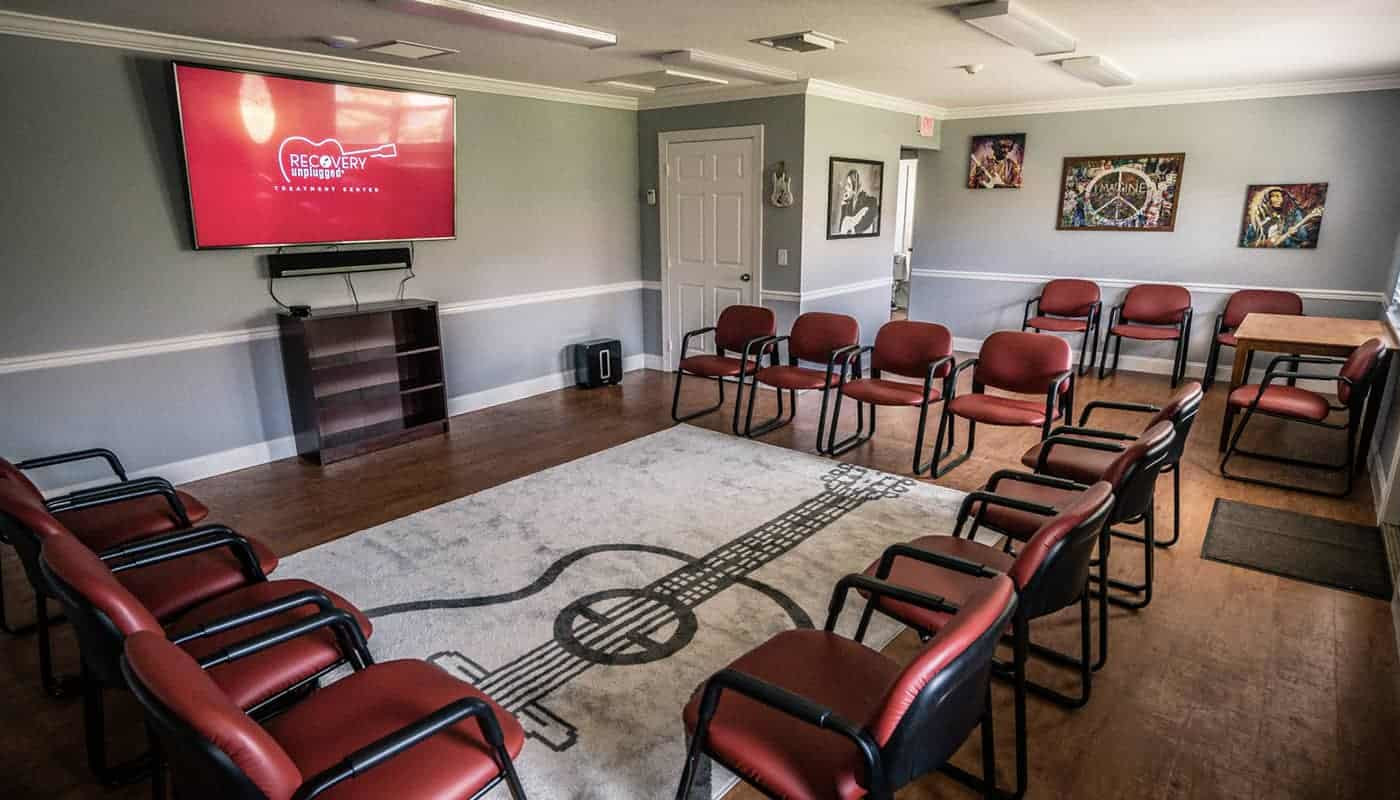
Music-assisted care is central to Recovery Unplugged’s description of its approach. The Florida page describes music spaces and performances alongside clinical therapies, and the residential information states that a musical background is not necessary. Ask what a typical session involves, how often music appears in the schedule, and how activities relate to your treatment goals. Someone who enjoys music may find the format appealing; someone who is uncertain can ask about quieter or non-performing ways to participate. The relevant question is the actual experience offered, not whether you already play an instrument or have worked in music.
Clarify who leads particular activities and whether any intervention described as music therapy is provided by a practitioner with the relevant credentials. Music appreciation, group expression, and clinical music therapy can involve different roles. Ask how the program adapts for hearing difficulties, sensory sensitivities, or music associated with distressing experiences. It is reasonable to explain these concerns before arrival. The creative setting should support participation in the overall treatment plan, and any claim about music’s value should be understood without assuming a guaranteed improvement or a replacement for the clinical care your assessment identifies.
Individual therapy and mental health support
The official Florida page lists cognitive behavioral therapy, dialectical behavior therapy, motivational interviewing, and experiential approaches. It also describes care for substance use alongside mental health concerns. Ask which clinician will coordinate your plan, how much individual contact is expected, and how psychiatric input is arranged at Lake Worth. If mental health symptoms are the main reason for seeking treatment, establish which program is being recommended and where it operates. The organization’s separate mental health services and other Florida locations should not be assumed to be part of the residential addiction program at Canada Court.
For a person comparing programs after previous treatment, it can help to describe what was useful and what was missing in earlier care. Ask how this team would approach those needs and how it responds if a particular method is not helping. Support for co-occurring conditions should be reflected in the individual plan, including medication review and an appropriate next service when needed. A broad menu of diagnoses or therapies is less informative than the specific appointments, goals, and clinical responsibilities proposed for your admission.
Shared living and practical comfort
The provider’s FAQ describes semi-private rooms at Lake Worth, shared residential spaces, meals, gym access, and laundry facilities. Ask for the number of people in the offered bedroom, the bathroom arrangement, and whether the room is used throughout detox and residential care. A request for privacy should be discussed directly rather than inferred from the word comfortable or from photographs. Also ask how roommate issues are handled and what alternatives are available if a particular arrangement interferes with sleep or participation. The actual accommodation should be clear before a payment or travel booking is made.
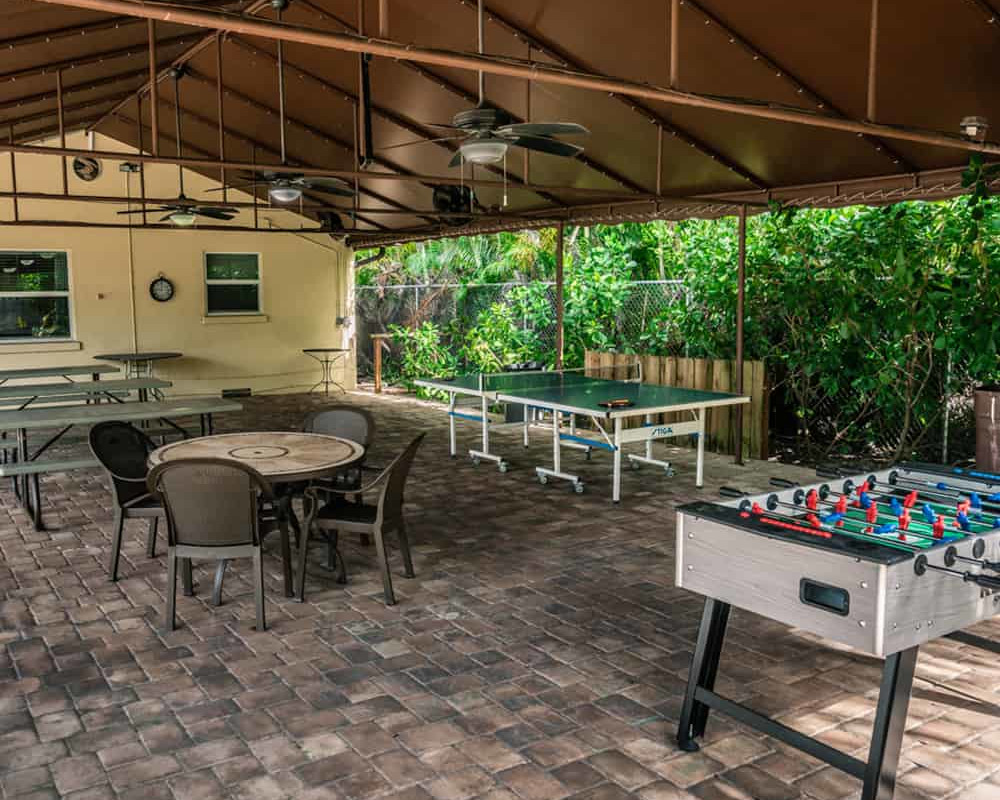
The Florida campus page lists music and recreational spaces, basketball, cornhole, and a game room. Verify which facilities are available to your stage of care and how off-site activities are organized. A location marketed near West Palm Beach does not mean a beachfront room or unrestricted beach access. Discuss mobility, stairs, bathing, dietary needs, allergies, and any equipment you use. A current description of the path between bedrooms, meals, and clinical sessions can be more useful than a broad amenity list, particularly for someone recovering from illness or managing a physical limitation.
Packing, devices, and pets
The official Florida packing guidance includes comfortable clothes, identification, insurance information, important contacts, and personal medication, with advance approval required for some items. It specifically limits laptops or other electronic devices that have not been approved. Ask for the current Lake Worth instructions before packing, especially if you need equipment for an essential task. The general FAQ allows residential phone use at designated times after an initial assessment period. Confirm the actual timing and an alternative way for family to contact staff about urgent logistical matters.
The provider also welcomes certain pets under its published policy, but acceptance needs to be confirmed for the particular stay. The FAQ specifies non-aggressive dogs and cats with current vaccinations and owner-provided food and an enclosure. Ask about any additional Lake Worth rules, costs, and responsibility for the animal during therapy or a medical appointment. Plan what would happen if you were transferred or the pet could not remain. An advertised pet-friendly policy can remove one practical barrier to treatment, but it still requires an arrangement that fits the residence and clinical schedule.
Fees: the listed range does not establish a period
Recovery.com’s Lake Worth profile displays an estimated USD 25,000–30,000 range. As checked on October 20, 2026, its fee field has no stated duration. A separate 30-day program description cannot establish that the quoted range covers 30 days, and it should not be displayed as a monthly tariff. Ask Recovery Unplugged for a current estimate identifying the proposed clinical stages, expected length, room, and included services. This profile leaves the numeric rate unconfirmed until the period and inclusions are clear.
Ask how detox, medications, testing, outside appointments, transport, and a longer stay are billed. If insurance is involved, verify the specific Lake Worth provider, network status, authorization requirements, and your anticipated responsibility with the insurer as well as the center. Coverage for one level of care may not resolve another stage, a different location, or housing. Obtain deposit, payment, and refund terms in writing, and ask how changes in approved days are communicated. These details allow you to compare the complete proposed course without relying on a range whose assumptions are unknown.
Planning a transition to Fort Lauderdale or home
Ask whether family sessions can help prepare for the particular transition you are considering. The provider describes family involvement under clinical guidance, but a move to another city may change how supporters can participate. A relative nearby in Lake Worth may need a remote arrangement once care shifts to Fort Lauderdale. Someone supporting you from another state may need clear contact details for a new team. Agree on the purpose of that involvement, the information you consent to share, and the person responsible for keeping the handoff organized.
The official program matrix places PHP, IOP, and virtual IOP under Fort Lauderdale. If one of these services is recommended after Lake Worth, ask for the exact program, address or online arrangement, schedule, and confirmed availability. Establish whether housing is included or separate, how transport would work, and whether the relevant clinicians can treat you where you will live. A transition within the same organization still needs a practical handoff. Someone who cannot relocate should say so early, allowing the treatment team to explore a local alternative before residential discharge.
Compare the outpatient timetable with work, caregiving, and household privacy, and ask which prescriptions or medical appointments will remain the responsibility of another clinician. A supporter may help organize the move or return home, but consent for clinical information and family participation should be discussed separately. Before leaving, request confirmed contacts, appointments, and a plan for resolving a referral that falls through. The main official number is 855-384-5794. Review the complete pathway alongside other United States programs, considering the clinical fit, shared living environment, creative approach, and realistic next steps together.
Destinations
Conditions
Levels of care
Settings
Program approach
Music-assisted activities with CBT/DBT, motivational and experiential work, medication support, family participation and co-occurring assessment
Fees & admissions
Confirm current pricing
Recovery.com checked 2026-10-20 shows USD 25,000–30,000 without a fee-specific duration. Separate 30-day program field is not a verified tariff period. Numeric/monthly range cleared pending current quote for detox/residential stages, room, duration and inclusions.
Confirm the current program, duration, accommodation and included services directly with the center.
Exact Lake Worth service, clinical/medication review, shared room and pet approval, benefits and written quote; separate Fort Lauderdale or local transition plan