
Care at Recovery Unplugged — Mental Health Fort Lauderdale
Residential mental health treatment in Fort Lauderdale
Recovery Unplugged’s Fort Lauderdale mental health program provides residential care for people seeking support with psychiatric and emotional difficulties. The official contact directory identifies the residence at 2677 Northwest 19th Street, Fort Lauderdale, Florida 33311. The official campus page identifies depression, anxiety, bipolar disorder, and post-traumatic stress among its areas of focus. It describes a structured overnight setting with support available around the clock, individual and group therapy, family involvement, and medical management. Music-assisted work is incorporated into the provider’s clinical approach.
This profile concerns the Fort Lauderdale residential mental health service. Recovery Unplugged also operates addiction treatment and outpatient programs, so the program name matters when discussing admission. A person looking for primary mental health care should establish that the proposed placement is the mental health residence and understand how any substance use concerns will be assessed. The provider’s current central admissions telephone is 855-384-5794.
The role of music in the program
Music is a distinctive feature of Recovery Unplugged’s treatment model. The provider describes using it to help people connect with feelings, memories, and experiences that may be difficult to discuss through conversation alone. It is presented alongside established clinical therapies and psychiatric support. The relevant question for a prospective resident is how music will be used in their own plan, including the activities involved and the clinician’s purpose in selecting them.
The approach should not be understood as a performance course or as a promise that music by itself addresses every mental health need. The campus information presents music as a way of supporting engagement and expression within treatment. Some residents may find a song, rhythm, or creative activity useful for opening a discussion, while others may prefer different ways of participating. The team should explain how the work is adapted to comfort, preference, and the person’s clinical goals.
Recovery Unplugged also lists experiential therapy, using activities such as role-play, creative materials, music, and art to explore feelings and responses. The purpose of these sessions should be clear within the broader treatment plan. Creative participation, recreation, and formal psychotherapy may all appear in a residential schedule, but they are not interchangeable measures of clinical contact. Understanding the role of each helps someone compare the program accurately.
Depression, anxiety, trauma, and bipolar-related care
The official program describes depression treatment in relation to emotional regulation, daily routines, relationships, and reconnecting with meaningful activity. An individual assessment should identify which areas are most relevant and whether the residential setting provides the right level of support. Depression can present differently from person to person, so a shared diagnosis alone does not establish an identical treatment plan or an appropriate length of stay.
For anxiety-related concerns, the provider describes work on recognizing triggers, developing coping skills, and managing overwhelming thoughts and emotions. The residential environment can provide time for focused treatment, but the proposed plan should also consider the situations the person will face after leaving. The clinician and resident should be clear about the difficulties being addressed, the skills being practiced, and how progress will be reviewed during the stay.
Trauma-informed care is another stated part of the program. The campus page discusses emotional safety, understanding trauma responses, relationships, and coping strategies. Any more intensive trauma-focused work should follow assessment and a discussion of readiness. A broad statement that a program treats trauma does not establish which specific method will be used for every resident. Applicants should understand the proposed approach and the support available if the work becomes difficult.
The provider’s bipolar-related treatment description includes mood awareness, routine, therapy, and longer-term planning. Medical management is part of the wider inpatient mental health service. Someone with an existing diagnosis should discuss current symptoms, prescribed medication, previous episodes, and the involvement of their usual clinician. The admission team needs to establish whether the residence can meet the person’s current needs or whether a different level of psychiatric care is required.
Clinical methods beyond music-assisted work
Recovery Unplugged identifies cognitive behavioral therapy as one of its treatment approaches. The campus page describes a focus on patterns of thought and behavior and how they relate to difficult experiences. Within an individualized plan, the clinician should explain what the patient will work on and how that relates to their goals. The name of the therapy is a starting point; the actual schedule, focus, and clinician contact determine what care the person receives.
Dialectical behavior therapy is also listed, with skills involving mindfulness, emotional regulation, distress tolerance, and interpersonal effectiveness. These areas can be explored in sessions and considered in the resident’s daily interactions. The provider should clarify whether the proposed program uses selected DBT-informed skills or a more comprehensive format. A website reference to DBT does not by itself establish the exact structure or amount of that work.
Motivational interviewing appears among the program’s published modalities. The provider describes a collaborative counseling style for exploring uncertainty and a person’s own reasons for change. This can be relevant when someone has mixed feelings about treatment or about the steps being proposed. The approach should support a clear discussion of goals and choices rather than be treated as a requirement to express certainty before an assessment can begin.
Individual, group, and family participation
The mental health service includes individual therapy and counselor-led groups. Private appointments can provide space for personal history and individual priorities, while groups introduce discussion and interaction with others receiving care. The balance should be specified for the proposed stay. A resident should understand which sessions are scheduled, how the plan changes with clinical need, and who coordinates the different parts of treatment.
Family therapy is included in the official description, but the meaning of family involvement will differ between residents. It may involve a partner, relative, or another trusted support person when appropriate and with consent. The program should explain the purpose of the sessions, who participates, and how communication is handled outside them. Someone traveling to Fort Lauderdale should also establish whether the relevant participation can occur remotely.
The relationship between treatment and privacy deserves practical attention. A person may want support from others while limiting what is shared about particular experiences or diagnoses. Those preferences should be discussed with the team at the start. The aim is a workable communication arrangement that supports care and the transition home, with the resident understanding who receives updates and how questions can be raised.
Co-occurring substance use concerns
Recovery Unplugged describes integrated treatment for people whose mental health concerns occur alongside substance use. The assessment should address both, including current use, prescribed medication, previous treatment, and any withdrawal needs. The existence of addiction services elsewhere in the network does not establish that every detox requirement is managed within the mental health residence. Admissions should identify the actual sequence and location of care for the individual.
This distinction also matters when comparing the program with a primarily addiction-focused residential service. Someone’s main treatment need may be psychiatric, substance-related, or a combination of the two. The proposed placement should reflect that assessment rather than the broad brand name. A clear plan identifies which team takes responsibility for each concern and how the services coordinate if more than one program is involved.
Living in the residential setting
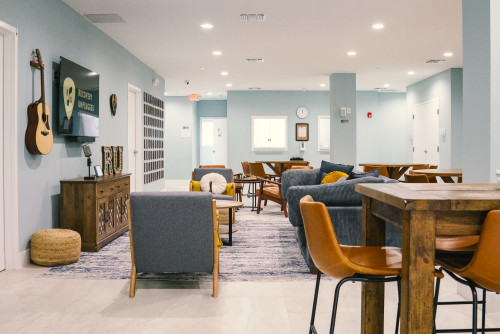
The official page describes residential mental health care as a structured setting with ongoing supervision and support. The inspected information does not establish a universal room type, a fixed campus capacity, or private accommodation for every resident. Applicants should confirm the exact residence, room and bathroom arrangements, accessibility, and any practical requirements before committing. A general coastal location should not be interpreted as a guarantee of an oceanfront room or a particular amenity.
The daily experience includes more than the formal appointments. Meals, rest, interaction with staff, and shared activities form part of living in a treatment community. Prospective residents should receive current guidance about devices, visitors, personal items, and communication with home. Someone who needs to make arrangements for work, caregiving, or study can then plan around the actual treatment expectations rather than assumptions about residential flexibility.
Length of care and the transition home
The appropriate duration should be determined through assessment and ongoing review. Recovery.com’s exact mental health profile lists a 30-to-45-day context for its fee estimate, but that is not a clinical recommendation for every applicant. The team should explain the proposed initial stay, how progress is reviewed, and what circumstances could lead to a different next step. A price-period label should not be used to decide the amount of treatment someone needs.
The provider’s wider Florida mental health offer includes intensive outpatient treatment and behavioral telehealth. These may be relevant after residential care when they fit the person’s needs and location. Some people may return to existing clinicians or require a different local service. The discharge plan should specify the next appointments, prescribing responsibility, and transfer of information so that the move from residential support to everyday life is clearly organized.
Cost information and admissions planning
The exact-campus Recovery.com profile reviewed on October 20, 2026 displays an estimated cash-pay range of $35,000 to $45,000 for 30 to 45 days. It is a third-party estimate, not an official provider tariff, and the range should not be silently converted into a monthly rate. A written quotation should identify the mental health program, intended duration, accommodation, clinical services, and any separately charged assessments or medications.
Recovery Unplugged offers insurance verification before admission. Benefits and patient responsibility depend on the policy and the proposed service, so the financial discussion should be tied to the actual residential recommendation. Compare this program with other treatment providers in the United States and the Florida treatment guide, keeping its primary mental health focus, clinical methods, and music-assisted approach central to the comparison.
Sources reviewed October 20, 2026: official Fort Lauderdale residential mental health program the official location directory, and the exact-campus Recovery.com profile. Program details are provider-reported; pricing is a third-party estimate and individual suitability requires assessment.
Conditions
Levels of care
Settings
Amenities
Treatment approach
Music-assisted and experiential work with CBT, DBT, motivational interviewing, individual and group therapy, family participation and medical management
Fees & admissions
USD 35,000–45,000 / program
Recovery.com exact mental health profile displays an estimated USD 35,000–45,000 for 30–45 days, checked October 20, 2026. This is a third-party program range, not a monthly tariff or an individual quote. Confirm inclusions and current total.
Confirm the current program, duration, accommodation and included services directly with the center.
Confirm diagnosis and acuity fit, medication management, room type, exclusions, the length covered by the quoted range, and aftercare recommendations.