About Recovery Unplugged Nashville — Brentwood
Recovery Unplugged Nashville: the Brentwood treatment location
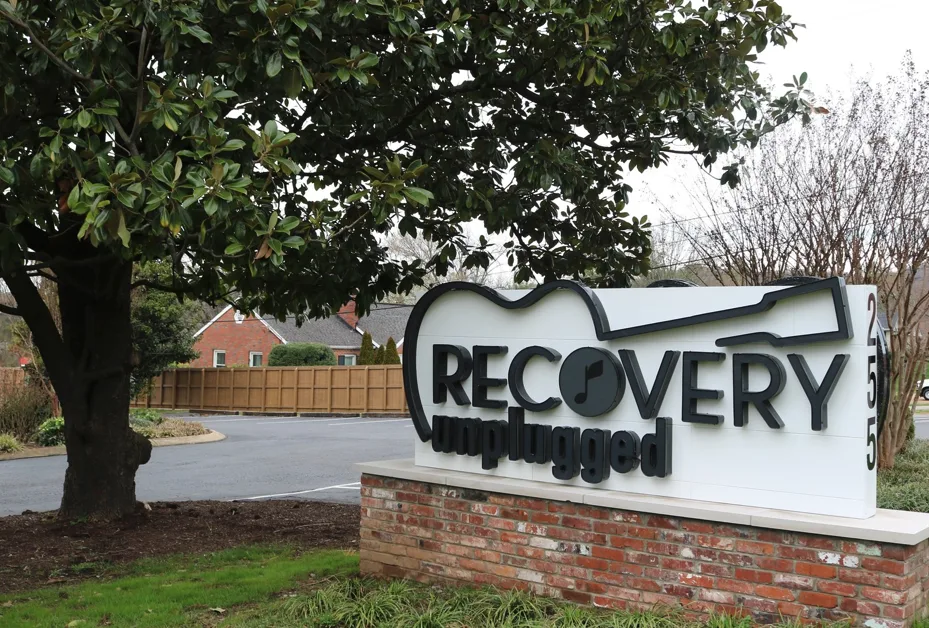
Recovery Unplugged markets this program as its Nashville center, while the official contact directory identifies the address as 255 Wilson Pike Circle, Brentwood, Tennessee 37027. Its Nashville program page lists medical detox, residential treatment, and virtual intensive outpatient care. Music-assisted activities are a prominent part of the approach alongside clinical treatment. When asking about admission, use the Brentwood address to confirm the receiving campus, and distinguish living there during treatment from participating in an online program later. That distinction affects travel, housing, work, and the services you should expect on arrival.
Music-assisted care and what participation involves
The provider describes music as a way to help people engage with treatment, express emotions, and participate in recovery activities. Its residential program information says a musical background is not required and describes opportunities for writing, music, and performances. Ask how those activities fit around individual therapy, groups, and medical appointments at Brentwood. A program using music does not require you to arrive as a performer. It is still useful to ask what participation looks like for someone who prefers listening, has no interest in playing an instrument, or feels uncomfortable performing in front of others.
If you have sensory sensitivities, hearing difficulties, or strong associations with particular music, discuss them before admission. Ask how volume, group participation, and quieter alternatives are handled. Also ask whether any sessions are delivered by a credentialed music therapist or use music within another clinician’s work; the phrase music-assisted treatment does not identify the qualifications of every practitioner. The relevant comparison is how the activity supports your individual goals and whether the program can adapt to your needs. Claims about emotional connection should not be taken as a guarantee of a particular clinical result.
Detox and residential treatment at Brentwood
The Nashville page advertises detox with medical and nursing support, followed by residential care as appropriate. Ask the admissions clinician to explain which stage is recommended, who provides care overnight, how a prescriber reviews symptoms, and what would require a hospital transfer. The provider also uses inpatient language for residential treatment; that description should not be assumed to mean acute hospital care. Give an accurate medication list and account of recent substance use, previous withdrawal difficulties, medical conditions, and psychiatric history so that the team can assess the suitability of the proposed setting.
The organization’s general residential page gives an expected range of seven to 24 days, while other directory material describes a 30-day program. These descriptions should not replace a current individual plan. Ask whether a proposed duration includes detox, residential therapy, or separate stages, and how the team decides when a transition is appropriate. This matters when arranging leave or a family commitment: a date quoted during an initial inquiry may be an estimate rather than a discharge decision. Request a clear explanation of how changes in clinical needs will affect both the treatment plan and the financial estimate.
Therapy, medication, and co-occurring needs
The campus describes cognitive behavioral therapy, dialectical behavior therapy, motivational interviewing, and experiential work. It also advertises support for mental health concerns alongside substance use and medication-assisted treatment when appropriate. Ask which clinicians will address your priorities and how frequently you will meet them individually. If you already take medication, establish how the treatment team reviews it, communicates with your prescriber with permission, and plans future prescriptions. A general description of medication support does not tell you whether a particular medicine or an existing regimen can be continued without an individual clinical review.
For someone seeking help mainly because of anxiety, depression, trauma-related symptoms, or another mental health difficulty, clarify the exact proposed program and level of observation. The organization’s wider mental health services include programs in other places, and a treatment category on a brand website does not confirm every service at Brentwood. Ask whether your needs can be managed during residential addiction care, through the virtual program, or require another setting. Clinical Recovery’s guide to co-occurring conditions can help organize that discussion without assuming that every combination of symptoms fits the same residential pathway.
Rooms and everyday life
The provider’s admissions FAQ describes the Nashville site as a 35-bed program with a VIP suite for additional privacy, while saying most residential clients share a room. Treat a private room as an option to confirm, including its availability, bathroom arrangement, and cost. A full-size bed does not establish a private bedroom. Ask whether your room would change between detox and residential treatment, how sleep-related concerns are handled, and what happens if a shared arrangement proves difficult. An offered room should be described specifically rather than inferred from a gallery image.
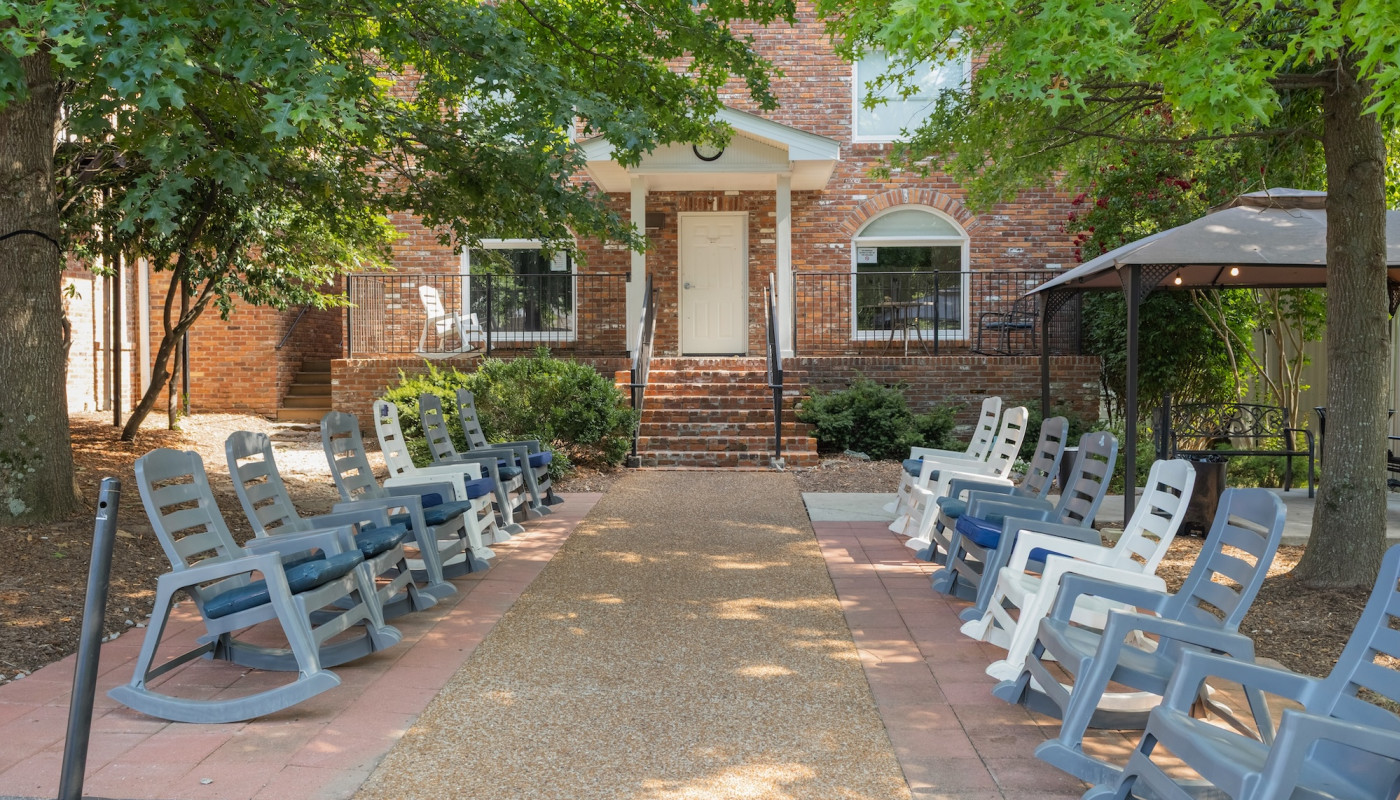
The campus page lists a fitness center, game room, meditation space, music room, basketball court, and chef-prepared meals. Find out which spaces are available during the stage of care proposed to you and how activities are supervised. Bring up dietary needs, allergies, mobility, stairs, and any equipment you use. A current sample week can show the balance between clinical sessions, music activities, rest, and recreation. It can also help someone arranging a work absence understand why continuing a normal workload during residential care may be impractical even when limited phone contact is permitted.
Pets and contact with home
Recovery Unplugged promotes a pet-friendly residential policy. Its FAQ specifies non-aggressive dogs and cats with current vaccinations and says clients are responsible for food and an enclosure. Obtain campus-specific approval before bringing an animal, and ask how care is managed during therapy, medical appointments, or an unexpected transfer. Clarify any cleaning charges, size restrictions, shared-space rules, and what happens if an animal cannot remain. A permissive policy can be valuable for someone whose pet is an important support, but it still needs a practical plan that works for everyone using the residence.
The FAQ says residential phone use is allowed at designated times after an initial assessment period. Ask when that period ends, what device rules apply to your program, and how urgent family matters are handled meanwhile. Explain responsibilities that cannot simply disappear during admission, such as a child’s care or an essential financial task, and ask whether a limited communication arrangement is possible. Make those arrangements before departure where you can. Knowing whom a supporter can contact for a logistical issue can prevent confusion without requiring continuous access to your personal phone throughout the clinical day.
Virtual IOP is a distinct next step
The current Nashville page specifically lists virtual IOP and describes online intensive outpatient services for addiction and mental health. This should not be presented as a confirmed in-person outpatient timetable at the Brentwood residence. Ask which virtual program you would join, the session times, expected weekly attendance, and whether it is available where you will physically live. Confirm the technology requirements and any private space you will need. Someone returning to another state should check eligibility before assuming that a program introduced during residential care can continue unchanged across state lines.
A remote program also requires a plan for the parts of care that do not happen through a screen. Ask who handles prescriptions, physical health concerns, urgent assessment, and any recommended testing, and whether local appointments must be arranged separately. Consider work hours, childcare, household privacy, and internet access when reviewing the schedule. If virtual participation is not practical, ask for an alternative referral before leaving residential care. Clinical Recovery’s outpatient care guide can help you compare these arrangements with local in-person options without assuming that online access alone resolves every continuing-care need.
Fees and insurance: no verified duration for the advertised range
Recovery.com’s exact-campus listing shows an estimated USD 25,000–30,000 range, but the fee field does not state a duration. Its separate 30-day program field cannot establish that the range is a 30-day tariff. As checked on October 20, 2026, this profile therefore requires a current provider quotation instead of displaying a monthly rate. Ask for the exact program, room, planned stages, and anticipated duration covered by the quote. Charges for a private suite, medication, laboratory work, outside appointments, or an extension should be explained separately if they are not included.
Recovery Unplugged offers insurance verification, but coverage depends on the particular plan and proposed care. Identify the exact Brentwood provider and ask the insurer to confirm network status, authorization requirements, deductible, coinsurance, and any relevant limits. A brand-level insurance relationship does not establish payment for every campus or level. Also ask how financial changes are communicated when clinical recommendations or approved days change. If self-paying, request deposit, cancellation, early-departure, and refund terms in writing. A complete estimate should help you understand both the initial commitment and the possible cost of a different treatment course.
Family involvement and a practical discharge plan
The provider describes family sessions and visits guided by the clinical team, with arrangements dependent on individual history and progress. Ask whether your chosen supporters can join, how consent is handled, and whether remote participation is possible. It may help to identify specific topics to address, such as the return-home environment, communication, or shared responsibilities. Family involvement should be coordinated with your treatment preferences and needs. A person helping to pay the bill may need financial information without being entitled to every clinical detail, so discuss those permissions as separate decisions during admission.
The current official contact number is 855-384-5794. When you call, confirm the Brentwood location, the recommended starting stage, room and pet arrangements, the actual fee terms, and the proposed next program. Before discharge, ask for confirmed appointments, medication follow-up, and the contact responsible for each referral. Compare that plan with other United States treatment options on the basis of clinical fit and continuity. The distinctive music environment is one part of the decision; the complete proposal should also explain how care will continue when you return to your everyday responsibilities.
Destinations
Conditions
Levels of care
Settings
Amenities
Program approach
Music-assisted activities alongside CBT/DBT, motivational and experiential work, medication support and co-occurring assessment; no musical background required
Fees & admissions
Confirm current pricing
Recovery.com checked 2026-10-20 displays USD 25,000–30,000 with no explicit fee period. Independent program length of 30 days does not establish a tariff duration. Numeric/monthly range cleared pending a current written quote for stages, room, duration and inclusions.
Confirm the current program, duration, accommodation and included services directly with the center.
Exact Brentwood program/medical review, room or VIP suite, pet approval, current fee quote and benefits; separate virtual IOP eligibility/schedule