
Care at The Recovery Village Palm Beach at Baptist Health
The Lake Worth campus
The Recovery Village Palm Beach at Baptist Health operates at 4905 Lantana Road in Lake Worth, Florida. Its current material describes treatment for addiction, mental health conditions, and co-occurring needs, with residential living and several connected levels of care. The name Palm Beach refers to the wider county and service area; the residential address is in Lake Worth. Confirm that address when arranging travel, and distinguish it from any community location used for later outpatient appointments.
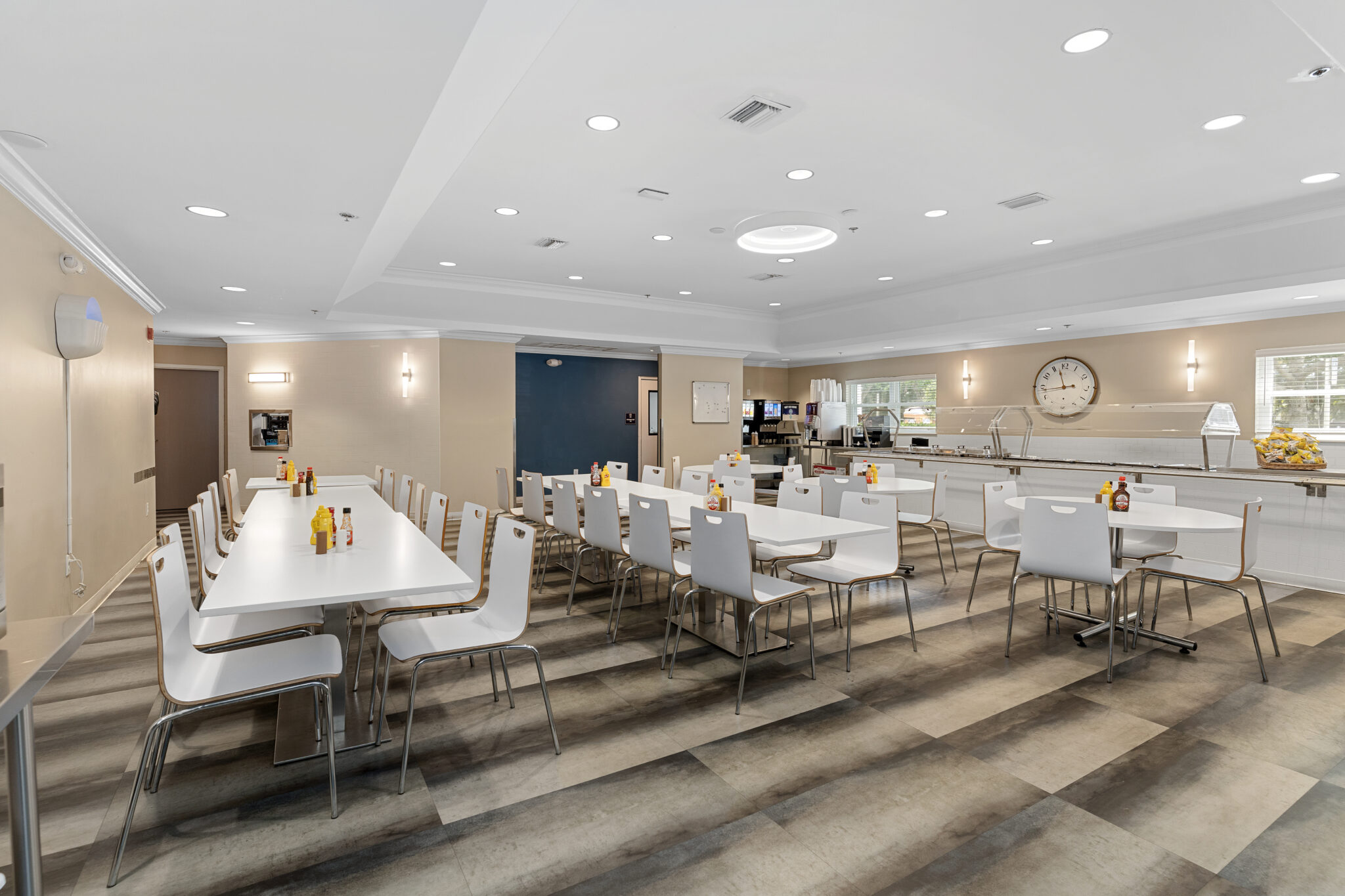
The official facility page describes a 40,000-square-foot campus with continuous professional staffing, shared living spaces, therapy areas, and recreational facilities. A prospective patient can use those details to understand the environment, while first establishing which clinical track is recommended. A person seeking primary psychiatric treatment may have a different plan from someone entering medical detox for substance dependence, even when both are admitted through the same telephone number.
Addiction and primary mental health tracks
The program overview includes medical detoxification, residential addiction care, residential mental health treatment, partial hospitalization, intensive outpatient care, and aftercare planning. Co-occurring support is described across levels. The current mental health page specifically confirms that the Lake Worth program serves adults eighteen and older. This is useful exact-campus evidence, rather than an inference from a network-wide mental health menu or from another Recovery Village facility.
The mental health program identifies depression, anxiety disorders, post-traumatic stress disorder, bipolar disorder, and other mood conditions as examples of concerns it treats. It is voluntary and subacute, intended for people who need more structure than weekly therapy but are not in immediate crisis. The provider explicitly says that the program is not a hospital or crisis unit. That boundary should remain clear despite the use of the word inpatient in some page titles and the Baptist Health name.
People leaving an acute psychiatric stay may be considered if they need continued residential support and the assessment finds the program suitable. That is different from accepting someone who still needs hospital-level stabilization. Describe recent symptoms, safety concerns, medical needs, current prescriptions, and any substance use during screening. The provider can then determine the appropriate setting and track. If there is immediate danger, routine residential admissions are not an emergency response; contact emergency services instead.
Detoxification and residential addiction treatment
For substance use, the provider describes medical detox with twenty-four-hour supervision and treatment for withdrawal symptoms. Detox may be followed by residential rehabilitation, where patients live on site while participating in individual and group therapy and other structured activities. The assessment determines whether withdrawal management is needed and how it fits with psychiatric care. Applicants should ask how existing medications are reviewed and which medical concerns can be managed within this campus’s capabilities.
The addiction program also describes medication-assisted treatment when appropriate and support for co-occurring conditions. A practical discussion should connect these services: who manages prescribing, how therapy addresses the relationship between symptoms and substance use, and when the plan is reviewed. The current source does not establish one fixed individual appointment schedule for every patient. Nor does a general list of medication options mean every drug or formulation is available locally; confirm the plan for any existing prescription before arrival.
Therapy and the daily mental health program
The current mental health description names cognitive behavioral therapy, dialectical behavior therapy, and cognitive processing therapy. The provider presents these within individual sessions, groups, skills practice, and medication management when indicated. CBT-related work addresses unhelpful patterns of thinking and behavior; DBT skills emphasize emotional and interpersonal coping; CPT is listed for trauma-related work. These are the provider’s described approaches, rather than a promise that every resident receives a full course of each treatment.
Ask how the team chooses among those methods and how the proposed work relates to the person’s goals. Someone with trauma symptoms may want to understand the pace of treatment and what private sessions are available, while another resident may need more emphasis on daily routines or managing mood symptoms. The key is a coherent plan that can be reviewed during the stay. A therapy name or a long menu by itself does not show the frequency, duration, or individual suitability of an intervention.
The program also describes family education, meditation groups, self-guided yoga, art activities, and therapeutic animal visits. These complement the clinical schedule and may provide different ways to engage during the day. Their presence should not be interpreted as an alternative to psychiatric assessment or as a guaranteed daily service. If a resident has allergies, mobility limitations, sensory needs, or concerns about a particular activity, ask how participation and reasonable adaptations would be arranged.
The team and accommodation
The facility page currently names Steven Kessler, MD, as medical director, David Sloan, LMHC, as clinical director, Carla Quinlan, RN, BS, as director of nursing, and Lauren Joeckel, MA, as site CEO. These are provider-published leadership roles checked in October 2026. An individual’s treating clinicians may differ, so establish who coordinates the plan, how medical and therapy staff communicate, and whom the patient can approach when a concern arises between scheduled appointments.
Both the mental health page and the admissions guide describe shared double rooms. The guide refers to a sink and adjoining bathroom, with occupancy potentially varying according to treatment stage or care needs. The reviewed current pages do not establish a guaranteed private-bedroom offer. Someone who needs particular sleeping or bathroom arrangements should discuss the actual available room, rather than infer privacy from a facility photograph or the description of comfortable accommodation.
Published amenities include a swimming pool, two fitness centers, basketball and volleyball, meditation and vegetable gardens, and indoor games. The mental health page identifies one fitness center as women-only. Meals are prepared in a full-service kitchen, and dietary requirements should be raised before admission. These details describe the environment rather than unrestricted access: the individual plan, staffing, and current schedule can affect use. Ask about the route from the offered bedroom to treatment areas if accessibility is a deciding factor.
PHP and community-based intensive outpatient care
Partial hospitalization is described as a later stage with structured daytime programming and greater independence. The important question is the actual arrangement offered to the individual: where they will sleep, when they attend, how medications are managed, and which costs remain separate. Program duration depends on clinical need and progress. Current source pages give different example ranges for addiction stages, while the mental health page expressly avoids a set number of days; neither should be treated as a universal package.
The dedicated IOP page makes a material location distinction: sessions take place in the community, rather than on the Lake Worth campus, on weekday evenings with in-person and online options. Some broader network pages still use less specific on-site wording. The more precise IOP description is the basis for this profile. Obtain the current address, schedule, eligibility, and technology requirements before planning housing or transport around that stage.
The same IOP page says the provider does not offer standard outpatient care for substance use or mental health, such as a regular weekly counseling appointment after the structured program. Instead, discharge planning helps connect patients with community providers. This distinction matters for someone comparing a full pathway: connected PHP and IOP do not automatically include indefinite individual therapy. Ask who will provide longer-term counseling and prescribing once the Recovery Village program ends and whether those appointments have been booked.
Phones and family contact differ by track
The current admissions guide describes different phone arrangements for substance-use and mental health patients. Substance-use patients generally use facility phones after detox, or after seventy-two hours if detox is not needed, with personal phone access later at IOP under restrictions. Mental health patients may use facility phones outside clinical hours, ordinarily between 4 and 10 p.m., unless the team directs otherwise; personal cell phone access is not included. Confirm the policy for the actual track before relying on routine personal-device use.
Family education is described weekly, both in person and through telehealth. The arrival guide gives different visiting arrangements for the two tracks, with clinical approval and the patient’s consent. Substance-use visits follow a required Saturday family education session; mental health visits are described on Wednesdays and Sundays from 4:30 to 5:30 p.m. Reconfirm the current times and any restrictions with the team. A scheduled family education group is also distinct from an individual family therapy appointment.
The provider requests identification, current prescriptions, and information about existing clinicians during preparation. Its pages vary in luggage instructions, so ask admissions for the current packing list and discuss necessary equipment directly. The same applies to travel assistance, belongings checks, and any restrictions that affect daily life. Resolving these practical details before arrival makes it easier to understand the clinical schedule without discovering that an essential item or contact arrangement has not been approved.
Costs, insurance, and support after discharge
No current numerical Lake Worth tariff was verified in the reviewed official pages. The payment article discusses broad ways people may fund treatment, including insurance and other resources, but it is not a campus-specific promise to accept every public or private plan. Request a written estimate for the actual track, levels, and expected duration. Confirm the policy’s network status, authorization, deductibles, coinsurance, and any separate medication, housing, or outpatient charges with the insurer and provider.
The aftercare description includes individualized relapse-prevention planning, medical and therapy referrals, local resources, and possible follow-up contact. It also mentions digital support, which should be checked for current availability and eligibility rather than assumed to include unlimited free therapy. Before leaving, identify the next appointment, prescription contact, and arrangements that will apply at home. Call 561-340-7269 to clarify the Lake Worth track and the community service that would follow it.
Information checked October 20, 2026 against current Lake Worth facility, mental health, addiction, IOP, admissions, payment, and aftercare pages. Exact clinical suitability, track-specific policies, room allocation, program length, and financial responsibility require confirmation.
Conditions
Levels of care
Treatment approach
Individual and group therapy, psychiatric care and medication management when indicated, CBT, DBT and CPT in the mental health track, dual-diagnosis care, family education, wellness activities and aftercare planning
Fees & admissions
Confirm current pricing
No numerical Lake Worth tariff verified. Obtain a track-specific quote and confirm care-level authorization, deductibles, coinsurance, medication and any separate housing or community IOP costs. General funding information does not establish acceptance of every insurer, Medicare or Medicaid plan at this campus.
Confirm the current program, duration, accommodation and included services directly with the center.
Adult eighteen-plus mental health program; clinical assessment of symptoms, substances, prescriptions and safety. Confirm exact track, medical suitability, shared room, phone/visiting policies, community IOP address and insurer authorization. This is not an emergency or crisis service.