About Retreat at Sky Ridge — Eureka Springs
Retreat at Sky Ridge in Eureka Springs
Retreat at Sky Ridge is an adult addiction treatment provider at 637 County Road 111, Eureka Springs, Arkansas 72631. Its current official admissions number is 877-693-6010. The program combines residential treatment, medically supervised detoxification when needed, and planning for care after discharge. It works with substance use and co-occurring mental health concerns. Confirm the assessed starting service, receiving team, and proposed dates before arranging travel to the campus.
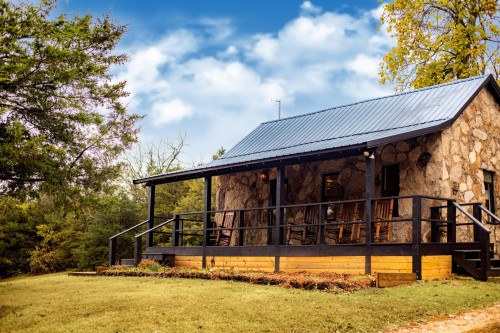
The property covers a provider-described 130 acres in the Ozark Mountains, with woodland, springs, creeks, and two fishing ponds. Its cabins and pavilions were renovated in 2020 after the property’s earlier use as a private resort. That history explains the accommodation style, but the treatment decision depends on the clinical program and medical resources. Ask how residential activities, appointments, meals, recreation, and overnight support operate within the grounds, including any access needs or limits during early stabilization.
Adult programs in the CARF directory
CARF’s current public provider entry lists Retreat at Sky Ridge at the same Eureka Springs address. It identifies adult residential withdrawal management and adult residential substance-use treatment, each with a three-year accreditation decision, and records first accreditation in 2023. These are the specific programs visible in the independent directory at the time of review. They do not establish an available bed, a particular treatment outcome, or an acute hospital admission for the individual seeking help.
The provider’s own accreditation page lists a broader range of services than the two programs currently displayed by CARF. Its aftercare pages also describe referrals, local meetings, and help arranging later housing. Those descriptions should not be combined into a claim that every outpatient or housing service is an accredited program at this address. Ask for the exact provider, location, current program authorization, and financial arrangement for any proposed step beyond residential treatment.
Assessment, medical detoxification, and medication
The residential process starts with an interview and assessment of physical, emotional, and psychological needs. The clinical-services page describes physician-approved admission, a nursing examination, and a biopsychosocial assessment. Medical detoxification is available at the facility when indicated, with the detox page giving a typical five-to-seven-day course. The actual plan should follow assessment rather than a fixed assumption about substances, previous withdrawal experiences, prescriptions, or associated medical and psychiatric conditions.
The official clinical description includes twenty-four-hour physician availability and nursing care and observation. Physician availability does not necessarily mean a doctor is continuously on site; clarify the staffing arrangement, monitoring, prescribing responsibility, and transfer process for the assessed needs. The FAQ asks patients to bring current prescriptions for medical review and says a local pharmacy supplies medication. Ask how existing treatment is coordinated with the prescriber, whether detox is included in the residential quote, and which pharmacy, medication, or laboratory charges are separate.
Residential length and the individual plan
The primary residential page sets a minimum commitment of thirty days and describes a program with an individualized duration. Its financial page discusses thirty-, forty-five-, sixty-, and ninety-day or longer courses, adding that many patients enter for forty-five to sixty days. Recovery.com separately describes a typical thirty-to-forty-five-day stay. Use the provider’s current assessment and written dates to plan the admission; neither a general average nor a secondary fee reference determines the recommended course.
The provider says its residential program is capped at twelve clients. This is its stated program limit, not a live vacancy count or a published staffing ratio. Treatment includes group activities while goals are adapted to the individual. Request the current weekly timetable, the frequency and length of individual appointments, group sizes, medical reviews, family work, and weekend arrangements. Clarify how progress is reviewed and how the patient participates in decisions about the plan, discharge, or an extension.
SMART Recovery and clinical approaches
SMART Recovery and cognitive behavioral approaches are prominent in Sky Ridge’s program descriptions. The clinical menu also includes DBT, motivational interviewing, trauma-related work, internal family systems, addiction education, and relapse-prevention planning. These are advertised methods rather than an instruction that every patient receives every therapy. Ask which approach is recommended for the person, the practitioner’s relevant training, and the goals that will be reviewed. Recreational and wellness activities should be distinguished from the time allocated to direct clinical treatment.
The current team page identifies Matt Long as administrator and addiction counselor, Dustin Rapp as nursing manager, and Riki Klutts as clinical case manager, alongside other counselors and operational staff. These are provider-published roles, not a verified roster for a particular admission or independent checks of professional credentials. Discuss the actual therapist, medical professional, nurse, and discharge coordinator assigned to the patient. Ask how psychiatric needs are assessed and followed, particularly when the person already has a treating clinician elsewhere.
Co-occurring needs and the relapse track
Sky Ridge describes addiction care for people whose substance use overlaps with mental health difficulties. Its dual-diagnosis and residential pages discuss coordinated assessment and treatment, but the reviewed material does not establish a separate primary psychiatric hospital program. Clarify which symptoms and levels of instability the team can manage, the frequency of psychiatric review, and whether another setting is needed first. A general co-occurring-condition description should lead to an individual clinical discussion rather than a presumed fit for every diagnosis.
The provider also advertises a relapse track for people returning to treatment after previous recovery efforts. Its stated focus is on understanding recurring patterns and developing a more workable continuing-care plan. Ask how this track differs from the ordinary residential schedule, how prior treatment records are used, and what changes are proposed beyond repeating the same program. The public descriptions do not establish a separate fee, guaranteed length, or success rate for that track. Those details should be discussed without assuming an outcome.
Cabin accommodation and everyday life
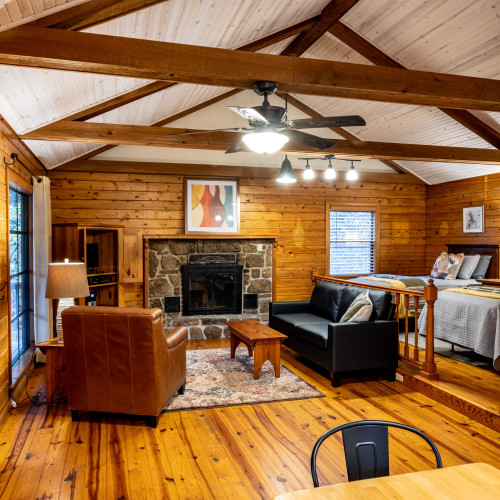
The official accommodation pages show cabins and describe Wi-Fi throughout the property. Recovery.com identifies shared rooms and shared bathrooms, so the cabin setting should not be interpreted as a private residence or a guaranteed private bedroom. Obtain the specific cabin, room occupancy, bathroom arrangement, accessibility, and any difference between detox and residential accommodation. Ask how patients reach treatment and dining spaces, especially if mobility, fatigue, weather, or medical needs affect participation in activities across a large rural property.
The program’s financial page includes food, toiletries, bedding, and towels in its stated living expenses. The FAQ describes washers and dryers, parking for patients, mail and packages, and medication supply through a local pharmacy. Discuss allergies, dietary requirements, assistance with everyday tasks, and the current packing list before arrival. Walking, fishing, and other outdoor or experiential activities are part of the setting and program descriptions, but participation should be confirmed against the individual plan, available supervision, and any separate costs.
Technology, visitors, and family communication
The provider allows personal phones, laptops, and tablets and advertises Wi-Fi and quiet workspaces. Its residential and detox pages describe device use alongside participation in the program. This is useful for people with outside responsibilities, but it does not establish that unrestricted work hours can be combined with every treatment plan. Discuss scheduled meetings, confidentiality, deadlines, and any need for clinical adjustments before treating the stay as a remote-working arrangement. Confirm the practical limits for the assessed stage of care.
The FAQ lists weekend visiting, generally from 11:30 a.m. to 6 p.m. on Saturday and Sunday, with other times potentially arranged. Visitors must check in before entering the campus. Confirm the current hours and the patient’s preference before supporters travel. The clinical program also describes services for families and significant others; ask how scheduled clinical participation differs from ordinary visiting, who facilitates it, whether remote involvement is available, and which information the patient authorizes the team to share.
Program prices, intake charges, and insurance
Recovery.com currently estimates USD 20,000–30,000 for thirty days and separately USD 40,000 for forty-five days. These are third-party references, not official tariffs or interchangeable monthly rates. The provider’s financial page describes individually priced residential courses and payment in four installments but does not publish the full residential amount. It separately lists a USD 1,000 intake fee for screening and admission assessments. Ask whether that fee is additional to the proposed residential quote and obtain the complete financial agreement.
The official financial page says medication is excluded from the program fee and that extensions are charged at an agreed daily rate. It lists several commercial insurers for benefit checks, while the FAQ describes the facility as out of network with all insurers and reimbursement dependent on the policy. The finance page excludes Medicaid, Medicare, Ambetter, Amwell, and QualChoice. Verify current network status, authorization, reimbursement, deductibles, and personal responsibility for the exact program. Also clarify cancellation, early departure, transport, outside care, tests, room charges, and any financing terms.
Continuing care and returning home
Sky Ridge says aftercare planning begins with the initial assessment and is refined during treatment. Its financial page includes three months of weekly check-in calls with a counselor or medical staff member, later relapse-prevention check-ins, and annual alumni reunions. The dedicated aftercare page describes weekly calls lasting thirty to forty-five minutes, local campus meetings, and remote contact. Confirm the actual schedule, practitioner, duration of support, and what is included in the admission agreement; alumni access should not be interpreted as unlimited clinical treatment.
The aftercare team can help connect patients with local practitioners, outpatient appointments, mutual-support groups, and suitable housing where needed. Clarify who actually provides each service, whether it is near home or in Arkansas, and any separate admission or payment requirements. Before discharge, request the next appointments, medication arrangements, record transfer with consent, and a named contact for coordinating the handover. Compare Sky Ridge through its assessed medical resources, residential schedule, shared cabin arrangements, clearly separated charges, and practical plan for the next stage.
Sources and further comparison
Source review: October 20, 2026. CARF adult residential and withdrawal-management entry; Provider accreditation-page descriptions; Residential program and twelve-client limit; On-site medical detoxification; Clinical services and medical coverage; Current provider team; Relapse track; Property and cabin descriptions; Device, visit, medication and insurance FAQ; Official intake fee and financial terms; Aftercare planning and follow-up; Recovery.com secondary program prices and shared rooms. Provider statements describe the advertised service; they do not establish an individual admission decision, current availability, or treatment outcome. Price evidence is identified separately from the provider’s own fee policy.
For a broader comparison, explore treatment options in the United States and read questions to ask a treatment center. Use the answers from the actual receiving team to compare the clinical plan, practical arrangements, and written financial terms.
Destinations
Conditions
Levels of care
Settings
Program approach
SMART Recovery, individual/group work, CBT, DBT, motivational interviewing, trauma-related therapy, internal family systems, relapse-prevention education, nursing/medical support, family participation and continuing-care planning
Fees & admissions
Estimated USD 20,000–30,000 / program
Recovery.com checked October 20, 2026 estimates USD 20,000–30,000 for thirty days; separate forty-five-day USD 40,000 reference is not one monthly range. Official financial page has no full residential tariff; separately lists USD 1,000 intake fee, four installment payments, medication excluded, and agreed daily charges for extensions. Confirm whether intake is additional, exact course/room, medical/test/outside care, transport, insurance and aftercare inclusions; no proration.
Confirm the current program, duration, accommodation and included services directly with the center.
Adult SUD/co-occurring needs assessed through physician-approved admission, nursing and biopsychosocial evaluation. Confirm detox, actual physician availability versus presence, nursing, prescriptions, shared room, device/visitor arrangements, schedule/dates, current network benefits, complete financial agreement and aftercare provider/location.