About Rippling Waters Men’s Retreat — Catskills
Rippling Waters in the Catskills
Rippling Waters Men’s Retreat and Recovery Center is a men-only residential program on a 400-acre property in New York’s Upper Catskills. It focuses on substance-use concerns, associated behavioral patterns, and co-occurring emotional difficulties within a small community. New York’s OASAS operating certificate 270312515 identifies nine adult residential rehabilitation beds at 1803 Federal Hill Road #1, Delhi, effective April 1, 2026. The provider FAQ separately says ten men; confirm current approved capacity and availability with admissions.
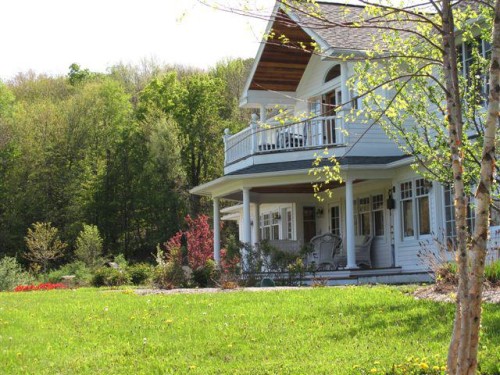
The setting combines a main residence, wooded grounds, a lake, and equine facilities with a structured therapeutic schedule. Its clinical model emphasizes active participation, individual reflection, shared responsibility, and preparation for returning to everyday life. The program describes founder-led clinical direction by Thomas Jefferys and Laura Maneates. Prospective residents should ask about the current team, each clinician’s role, the assigned therapist, and the available medical resources rather than assuming the property’s size determines clinical staffing.
Eligibility and care before arrival
The admissions page says the program works primarily with men between eighteen and seventy, with flexibility based on clinical fit; the FAQ identifies adulthood as the starting age. It describes serving professionals, business owners, tradespeople, veterans, and other men who need a structured residential environment. Ask how the team assesses suitability for the individual’s substance-use history, mental health, physical health, prior treatment, and goals. A broad description of clientele does not guarantee acceptance for every presentation.
Rippling Waters explicitly states that it does not provide detoxification. Clients must be medically stable before arrival, and admissions may help coordinate a detox referral when needed. Its FAQ also describes an admission drug-screen requirement. Discuss prescriptions, screening interpretation, recent treatment, and any withdrawal concerns with the receiving clinical team before travel. If another medical service is required first, establish its location, acceptance, transport arrangements, records transfer, and separate costs before confirming the residential admission.
The thirty-, sixty-, and ninety-day structure
The official residential model uses thirty-, sixty-, and ninety-day stages with continuing clinical evaluation. Initial work includes assessment, stabilization within the residential routine, and identifying recurring behavioral patterns. Later work can address trauma, relationships, beliefs, practical coping, and preparation for discharge. Extensions are described as collaborative decisions based on need and progress. Ask which initial duration is proposed, what review points are planned, and how the team will explain changes to the schedule or goals.
The three advertised durations are options within the provider’s model, rather than a guarantee that a longer stay produces a particular result. Confirm the recommended residential dates, the availability of the selected room, and how further days would be authorized and charged. Work, education, family responsibilities, and travel may need planning around that schedule. If an insurer is involved, establish what it has actually authorized and how that relates to the clinical recommendation and the private-pay agreement.
Individual therapy, groups, and clinical methods
The current FAQ describes two to five individual counseling sessions per week, with additional sessions when needed, and group therapy across seven days. Its clinical pages list CBT, DBT, trauma-informed interventions, EMDR when appropriate, relapse-prevention work, and psychoeducation. Ask for the proposed appointment pattern and the qualifications of the people delivering each service. Counseling, specialist trauma treatment, groups, and educational workshops should be distinguished when comparing the schedule with another residential offer.
Group work and community participation are central to the model. The provider describes discussion of emotional responses, relationships, avoidance, accountability, and practical ways to respond to difficult situations. Individual goals are intended to inform the wider schedule. Ask how the team adapts group participation for anxiety, neurodivergence, physical-health limitations, or other needs identified during assessment. If a particular therapy is important, confirm that a qualified clinician is available and that the approach is included in the individual plan.
The daily routine and experiential work
A typical day is described as beginning with a community meeting or reflection, followed by process groups, scheduled counseling, educational work, meals, and experiential activities. Evenings can include further groups, assignments, discussion, and reflection, with time for reading, journaling, exercise, and rest. The residential pages emphasize a predictable routine and participation in communal responsibilities. Request a current sample week, including weekends, so the person can understand the balance between appointments, structured activities, free time, and shared tasks.
Rippling Waters describes land-based activities and equine interaction as part of its therapeutic model, with the experiences discussed in clinical work. The property includes trails, a lake, and a twelve-stall stable with an indoor riding arena. Activities can involve hiking, seasonal outdoor recreation, and interaction with horses. Ask who supervises each activity, how participation is assessed, what safety arrangements apply, and which alternatives are available. A listing of outdoor opportunities does not establish that every activity runs throughout the year.
Rooms and practical life in the residence
The official campus-life page describes both private and semi-private bedrooms in the renovated main residence. Recovery.com’s narrative emphasizes shared rooms, so the current primary description should guide the initial inquiry while the actual allocation is confirmed directly. Ask about bathroom sharing, accessibility, room supplements, sleep needs, storage, and the room reserved for the proposed dates. The nine-bed operating certificate does not establish current vacancies or the availability of a particular room category.
The provider describes shared living areas, communal responsibilities, and space for reflection. Recovery.com additionally lists chef-prepared meals, fitness equipment, recreation space, sauna access, and massage; confirm those secondary details and any extra charge with admissions. Dietary requirements, laundry, smoking rules, mobility needs, and transport to a rural location deserve attention before travel. The official FAQ identifies a designated smoking area. Request the current packing list and house rules to understand what residents should bring and which items are stored or restricted.
Family work and residential communication
The provider describes family involvement according to clinical suitability and the resident’s chosen support network. Its Family Reconstruction Weekends are structured onsite intensives involving family or couples sessions, guided communication, boundaries, and planning for relationships after discharge. These are therapeutic arrangements with specific goals, rather than ordinary open visiting periods. Ask whether an intensive is recommended, when it can occur, who may attend, how participation is agreed, and whether clinical sessions or family accommodation create additional costs.
The FAQ says ordinary family visits are not typical, although visits or onsite family therapy may be arranged when useful. It also describes devices being kept in the office and used during designated times. The campus-life page more generally calls digital access structured. Anyone expecting to manage business, study, or regular remote contact should obtain the current policy before enrolling. Clarify access times, privacy for approved calls, emergency family contact, and how communication arrangements may change during the program.
Official price and the secondary deposit reference
The current official admissions page publishes US$1,500 per day or US$45,000 for thirty days. This is a provider-published price, replacing the need to rely solely on a third-party estimate for the daily reference. The page also describes private-pay arrangements and help navigating insurance. Ask for a dated written offer for the chosen duration and room, specifying accommodation, clinical sessions, experiential work, family services, external care, medication, testing, transport, and continuing support.
Recovery.com separately lists a US$15,000 down payment. That deposit reference is secondary evidence and should not be treated as the entire treatment price or as an additional fee without clarification. Ask whether a deposit is required, how it is credited, when the remaining balance is due, and what cancellation or refund conditions apply. The published thirty-day fee does not establish a discounted sixty- or ninety-day package. Extensions and any change in accommodation should have clear written terms.
Insurance and the admission process
Rippling Waters says it works with commercial health insurance and can help families navigate possible coverage or reimbursement. Its references to accepting insurance do not establish the status of every plan or guarantee that a private-pay bill will be reimbursed. Confirm the exact policy, provider network status, required authorization, deductible, coinsurance, documentation, and responsibility for excluded services. If reimbursement is expected after payment, ask who submits the claim and what remains due if the insurer declines or limits it.
Admission begins with a clinical consultation covering substance-use history, health, previous treatment, relational circumstances, and urgency. The FAQ describes acceptance forms and possible coordination with employers, schools, health professionals, or legal contacts when appropriate. On arrival, staff review paperwork and medications, conduct intake screening, inventory belongings, explain house rules, and orient the resident. The current contact number is 607-267-3877. Confirm arrival instructions for the Federal Hill Road site with the accepting team, since the provider contact page identifies the wider Upper Catskills area.
Aftercare and comparing the proposed plan
The provider describes discharge planning beginning early and becoming more detailed as residential treatment progresses. The plan may include individual therapy, psychiatric follow-up when indicated, outpatient referrals, support groups, sober living, family or couples work, and agreed check-ins. Ask which services Rippling Waters itself will provide and which require enrollment elsewhere. For someone returning to another state, the next clinician, appointment date, medication arrangements, transfer of records, and local support should be clear before departure.
A useful comparison focuses on the actual offer: a small men’s community, a rural setting, medically stable admission without onsite detox, an individualized counseling schedule, structured device access, family participation when appropriate, and a published daily price. Confirm those details for the intended dates. The proposed clinical plan, realistic practical arrangements, transparent financial terms, and a clear transition home provide a stronger basis for a decision than an unqualified promise of transformation or an assumption based on photographs.
Sources and further comparison
Source review: October 20, 2026. New York OASAS operating certificate and nine-bed service site; Official residential program; Official admissions, daily price, and detox exclusion; Official FAQ and practical policies; Rooms and campus life; Daily schedule and clinical model; Family Reconstruction Weekends; Continuing-care planning; Official contact information; Recovery.com secondary deposit and amenities reference. Provider statements describe the advertised service; they do not establish an individual admission decision, current availability, or treatment outcome. Price evidence is identified separately from the provider’s own fee policy.
For a broader comparison, explore treatment options in the United States and read questions to ask a treatment center. Use the answers from the actual receiving team to compare the clinical plan, practical arrangements, and written financial terms.
Destinations
Conditions
Levels of care
Settings
Amenities
Program approach
Individual counseling two to five times weekly as described in the current FAQ, groups across seven days, selected CBT/DBT/EMDR, trauma-informed care, experiential and equine work, family intensives and relapse-prevention planning
Fees & admissions
From USD 1,500 / day
Official admissions page checked October 20, 2026 publishes USD 1,500/day or USD 45,000 for thirty days. Recovery.com separately lists a USD 15,000 down payment; its current applicability and credit toward the balance require confirmation. Obtain the actual duration, room, therapy, experiential and family services, outside care, medicines, tests, transport, aftercare, extension and cancellation terms in writing. Insurance support does not guarantee reimbursement.
Confirm the current program, duration, accommodation and included services directly with the center.
Clinical consultation and accepted treatment plan; establish medical stability, any separate detox, prescriptions and screening, age/clinical fit, room, schedule, family arrangements, structured device access, insurance responsibility and written financial terms.