Care at Rippling Waters Men’s Retreat and Recovery Center — Upper Catskills
A men’s residential program in Delhi, New York
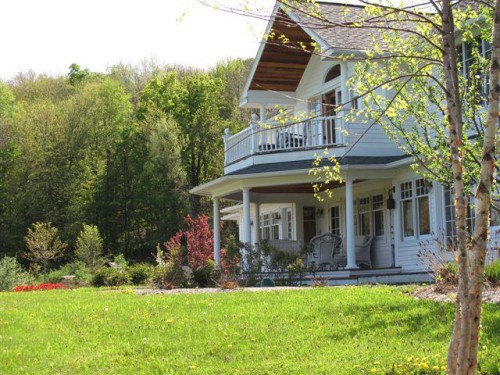
Rippling Waters is a men’s residential recovery program in Delhi, New York, in the Catskills region. Its current official information describes treatment on a rural property of approximately 400 acres, with woodland, trails, gardens, horses, and a private lake. The program combines clinical sessions with structured community life and experiential work. The setting is part of the provider’s stated treatment model, so the program is best understood through the relationship between its clinical work, daily responsibilities, and outdoor activities.
The official residential page makes an important distinction: Rippling Waters is not a detox facility. Its program is intended for men who need ongoing residential work beyond immediate withdrawal management or brief stabilization. Any detoxification or other medical needs should therefore be assessed and appropriately arranged before admission. A prospective resident should have a clear account of the clinical requirements for entry, including medication arrangements and any information that needs to transfer from an earlier treatment service.
The 30-, 60-, and 90-day structure
Rippling Waters describes a staged residential model with 30-, 60-, and 90-day options and ongoing clinical review. The initial period focuses on assessment, stabilization within the residential setting, and interruption of established behavioral patterns. Longer treatment may include further work on trauma, relationships, personal beliefs, and life after discharge. The provider says extensions are discussed according to clinical need and progress. These stages are a framework for planning, not a promise that every person follows the same timetable.
The published model places substantial emphasis on participation and accountability. Residents are expected to engage in therapy and in the life of the community. Someone considering the program should understand what those expectations look like in practice: the schedule, shared responsibilities, group participation, and how staff respond when a person struggles to take part. A clear explanation helps distinguish a structured clinical residence from a loosely scheduled retreat, even when both use a natural setting and comfortable accommodation.
The provider describes many prospective residents as having tried outpatient care, shorter programs, or self-directed changes before seeking a more sustained placement. That background is useful to the assessment. Earlier treatment records and the person’s own account can show what was helpful, what remained unresolved, and which plans were difficult to maintain. A longer stay has a purpose only when the additional time is connected to identified treatment needs and a realistic plan for continued support afterward.
Substance use, trauma, and emotional patterns
Rippling Waters’ current materials identify substance use concerns involving alcohol, opioids, benzodiazepines, stimulants, prescription medications, and more than one substance. The site also describes work with co-occurring mental health difficulties, trauma histories, emotional regulation, and certain compulsive behaviors. These are provider-published areas of focus rather than an admission guarantee. The assessment should establish whether the person’s main concerns fit the program and whether the residence can provide the required level of clinical and medical support.
The program’s stated philosophy pays attention to the beliefs and relationship patterns that accompany behavior. For an applicant, that means being prepared for treatment that goes beyond a discussion of substance use alone. The work may also examine how the person responds to frustration, handles responsibility, communicates, or relates to others. Those areas should be approached through the individual’s history and goals, without assuming that all men share the same experiences or that one explanation accounts for every person’s difficulties.
A men’s setting may be a meaningful preference for some applicants, particularly when they want to discuss experiences within that particular peer community. It is still important to consider the program’s culture and approach to individual differences. The admissions conversation should make room for the person’s identity, relationships, health needs, and concerns about group life. A shared gender does not eliminate the need for an individualized plan or establish that every prospective resident will feel comfortable in the same environment.
Clinical sessions and treatment methods
The residential program lists individual therapy, small-group work, psychoeducation, reflective practice, cognitive behavioral therapy, dialectical behavior therapy skills, trauma-informed interventions, EMDR, and relapse prevention planning. The provider presents these as parts of a coordinated schedule rather than isolated optional activities. The actual plan should show which methods are being used for the resident and what each is intended to address. Availability in the general program does not mean every method is suitable at every stage of an individual’s stay.
Individual sessions provide space for personal history and concerns that may be difficult to discuss in a group. Small-group work creates opportunities to examine interaction, receive feedback, and practice communication within the community. Cognitive behavioral and DBT-informed work can be discussed in terms of the specific patterns and skills the person wants to address. The useful distinction is between knowing the name of a method and understanding how it connects to the situations the resident expects to face outside treatment.
Trauma-related treatment requires attention to the person’s readiness and the wider clinical plan. Rippling Waters includes EMDR in its published residential modalities, but an applicant should establish how assessment, preparation, and any later trauma work are sequenced. The treatment team should explain who provides the work and how it is coordinated with the rest of the program. A residential stay should not be framed as a guarantee that all traumatic experiences will be processed within a set number of days.
Experiential work on the property
The provider’s experiential model uses the rural property as a setting for structured therapeutic activity. Its official information describes equine interaction, land-based assignments, outdoor tasks, and opportunities for reflection. The stated aim is to connect ideas discussed in therapy with observable situations involving patience, cooperation, frustration, boundaries, and responsibility. This gives a more specific account of the program than simply listing horses or a lake as amenities.
Equine work is described as structured interaction with horses within the wider clinical approach. A prospective resident should understand the nature of the activity, the staff involved, and how it relates to their treatment goals. The presence of horses does not establish that every resident rides or that all equine activities have the same purpose. Physical needs, experience with animals, and personal comfort should be discussed so the program can explain what participation would involve for that individual.
Land-based work and outdoor challenges also need to be understood through their purpose and supervision. A task can provide material for reflection on communication or responses to difficulty, but the clinical value depends on how the experience is connected with treatment. The provider should explain how staff support participation, how physical limitations are accommodated, and whether alternative activities are available. Seasonal conditions in the Catskills may also affect the actual schedule during a particular stay.
The experiential component sits alongside individual and group treatment in the provider’s description. Someone attracted to the natural setting should still examine the amount and type of clinical contact, while someone primarily seeking therapy should understand the expected outdoor and community participation. The most useful admission outline shows how those parts fit together across an ordinary day or week. That allows the applicant to assess the program as a whole rather than focus only on one appealing feature.
Family and relationship work
Rippling Waters describes family sessions, couples therapy, and on-site family weekends as part of its residential process. The published emphasis includes communication, trust, boundaries, and the effects of addiction or emotional difficulties on relationships. Those activities should be organized around the resident’s consent and the circumstances of the people involved. A family program does not imply that every relationship should take the same form or that all relatives must participate for treatment to be useful.
For someone traveling from outside New York, family participation also involves practical planning. The provider should explain which sessions can be remote, when on-site participation may be proposed, and whether related travel or accommodation carries additional costs. The purpose of each meeting should be clear to those attending. A focused discussion about the transition home may have different aims from ongoing couples therapy or a broader family education event.
Accommodation and life in the community
The official program describes a residential setting that balances private reflection with small-group participation and shared responsibility. Exact bedroom arrangements should be confirmed for the proposed admission. The rural property and the word private do not, by themselves, establish that every person has a private room or an entirely individual program. The applicant should receive clear information about sleeping space, bathrooms, accessibility, meals, and the support available outside scheduled therapy.
Distance from everyday surroundings is part of the reason some people consider a rural residence. It also means that transport, medical appointments, work obligations, and communication with home need to be planned deliberately. The program should provide current guidance on what to bring, devices, visitors, and any travel arrangements. Understanding those details makes it easier to assess whether the proposed stay is practical for the person and for anyone depending on them at home.
Aftercare and the move beyond residential treatment
Rippling Waters describes personalized aftercare and relapse prevention planning. Its stated areas include situations associated with return to substance use, environments that may be difficult, ongoing therapy, and ways to maintain accountability. A useful plan translates those themes into arrangements the person can actually use. It should identify the next clinicians or services, the living situation, and the support available during the transition, rather than rely only on a general intention to remain connected.
The destination after discharge may be quite different from the Catskills setting. A person returning to work, family responsibilities, or a different state will need a plan shaped around that environment. The provider and resident should consider which routines developed during the stay are realistic to continue and which require adaptation. The goal of planning is to make the move manageable and supported, not to assume that the structure of a residential property can simply be reproduced at home.
Fees and comparing the program
The directory’s September 17, 2026 price record cites a Recovery.com estimated rate of $1,500 per day. Multiplying that by 30 gives $45,000 as an arithmetic comparison. This is a dated third-party estimate rather than an official current package or a guarantee about the cost of a 30-, 60-, or 90-day stay. The provider should explain the proposed period, included clinical and residential services, and any separate charges in a written financial outline.
Rippling Waters’ current information describes work with commercial insurance and benefits verification. Coverage should be confirmed for the particular policy and recommended service. A self-pay proposal should be equally clear about extensions, family participation, external appointments, and aftercare where those may affect cost. Compare the program with other treatment centers in the United States using the same level of care and duration. Its distinguishing considerations are the men’s residential model, staged treatment structure, experiential work, and preparation for life after the stay.
Official sources reviewed October 20, 2026: Rippling Waters provider website, men’s residential program, and experiential and nature-based therapy. The Recovery.com profile is cited for the directory’s dated September 17, 2026 price estimate. The official residential page states that Rippling Waters is not a detox facility.
Conditions
Levels of care
Settings
Amenities
Treatment approach
Individual and group clinical work, trauma-informed care, experiential and nature-based therapy, community responsibilities, recovery skills and continuing-care planning
Fees & admissions
USD 1,500 / day
The directory recorded a Recovery.com estimate of USD 1,500/day on September 17, 2026. This dated third-party rate is not a current provider quote or a 30-day package. Confirm the 30-, 60- or 90-day plan, included services, room and written total.
Confirm the current program, duration, accommodation and included services directly with the center.
Ask about clinical eligibility, detox arrangements, medications, room type, daily-rate inclusions, minimum stay and continuing-care coordination.