About Riverside Recovery — Tampa
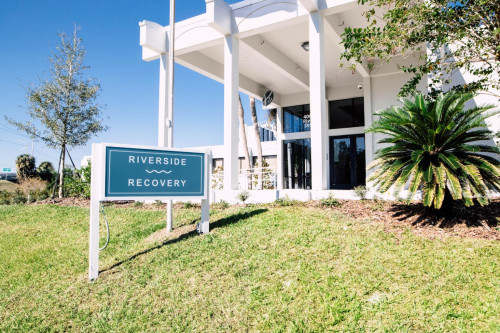
Riverside Recovery’s Tampa treatment campus
Riverside Recovery of Tampa offers medical detox, residential addiction treatment, and continuing outpatient care near the Hillsborough River. The published residential address is 4004 North Riverside Drive, Tampa, Florida 33603. Day/Night treatment, intensive outpatient care, and standard outpatient services operate at 4001 North Riverside Drive, directly across the street. These nearby services create a local continuum, while remaining distinct levels with different schedules, living arrangements, and prices. The provider’s admissions number is 800-871-5440. An assessment determines which service is appropriate and how the person’s care should be sequenced.
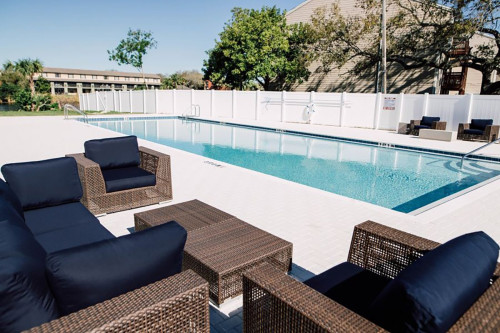
The organization describes a 60,000-square-foot waterfront campus with clinical and physical-wellness spaces. That setting supports a residential schedule combining medical oversight, psychotherapy, recovery activities, and daily living. The important choice is the actual program and level of support, rather than the waterfront description alone. Someone comparing Riverside with another provider should identify whether the proposed admission includes detox, residential care, an executive-room option, or outpatient treatment. Written confirmation of the exact service makes it easier to understand what happens on site and what the financial agreement covers.
Assessment and medical detox
Riverside says its intake assessment uses ASAM criteria and considers substance use, severity, physical health, co-occurring mental health concerns, and personal history. The person should share relevant records, medications, prior treatment, and previous withdrawal difficulties so that the clinical team can recommend an appropriate pathway. A telephone inquiry or benefit check does not, by itself, establish clinical acceptance. Applicants can ask who reviews the assessment, what information is needed before arrival, and how the team coordinates a transfer if the person is already receiving care in another setting.
For clients who need withdrawal support, Riverside advertises on-site medical detox with continuous medical staffing and physician oversight. The provider describes a transition into residential treatment within the same organization and facility, avoiding a separate move solely because detox has ended. The individual still needs a medical plan suited to their presentation, including arrangements if a higher level of care becomes necessary. Detox is an initial clinical phase, not a replacement for the psychological and practical work that may follow. Its duration and medication decisions should be determined by the treating professionals.
Residential treatment and co-occurring needs
The residential program includes individual therapy, groups, psychiatric services, medication management, and physical-wellness activities within a structured day. Riverside describes treating addiction alongside concerns such as anxiety, depression, trauma-related symptoms, bipolar disorder, and attention-related difficulties when relevant to the person’s presentation. That integrated approach should be discussed in terms of actual assessment and assigned professionals. A broad dual-diagnosis description is not a guarantee that every psychiatric or medical condition can be managed within the residence. The care team should explain the scope and any services that require outside involvement.
CBT and DBT are the main psychotherapy approaches named on the residential page. Cognitive behavioral work addresses patterns of thought and behavior, while DBT-informed skills focus on managing emotions, distress, and interpersonal situations. Individual sessions allow the person to discuss personal history and goals, and group sessions provide a setting for practicing skills with others. The relevant plan should show how these methods connect to the person’s needs, including any trauma work, medication support, and changes in daily routines. Applicants can ask how progress is reviewed and communicated during the stay.
The published sample schedule includes morning routines, recovery reflection, educational and process groups, individual clinical work, family contact, and evening recovery meetings. Twelve-step meetings are a regular part of the advertised week, with on-site and off-site options described. Weekends also include programming, expressive activities, and scheduled visits. This gives a useful picture of the program’s pace without establishing an identical timetable for every client. Someone with a strong preference about recovery frameworks or a need for specific accommodations should discuss those matters before agreeing to the placement.
Physical wellbeing and living arrangements
Riverside describes fitness, yoga, nutrition, and physical therapy as components of its broader residential approach. Their suitability should follow the person’s medical and clinical plan. Access to a gym does not imply that unrestricted exercise is appropriate, and a general wellness offering does not establish that every specialist service is included without assessment. Applicants can explain mobility needs, injuries, dietary requirements, and other health concerns in advance. The purpose is to understand the support available and the arrangements required, while keeping the primary treatment goals central to the stay.
The provider’s residential self-pay description includes accommodation and meals, with an executive option adding a private room and enhanced device access. That option is distinct from assuming every standard placement is private or permits unrestricted work. Confirm the actual room, bathroom, accessibility, device rules, and approved belongings. Adults balancing employment or caregiving may need practical arrangements outside treatment as well. The program can explain what contact is compatible with the schedule, while the person arranges responsibilities that cannot reasonably be maintained during an intensive residential admission.
A defined family program
Riverside’s family program includes joint therapy, a weekly online support group, a monthly in-person Family Weekend, and scheduled visitation. The provider describes fifty-minute family sessions and states that one or two sessions are included during inpatient care, with one included during outpatient treatment; additional sessions have a separate charge. Joint work begins after the client authorizes appropriate information sharing. These arrangements can give relatives or chosen supporters a clearer role during treatment, while preserving the client’s involvement in deciding who participates and what information is discussed.
The current family page describes a Sunday Zoom support group and Sunday residential visits, with orientation and an approved visitor list required. Family Weekend is separately scheduled and limited in size, so participation should be booked rather than assumed to be available during every stay. Its published fee is USD 200 for the first family member and USD 100 for each additional participant within the stated limit. Families traveling to Tampa should confirm current dates, capacity, visiting rules, and any additional costs before booking travel or accommodation. Remote support may help when in-person attendance is impractical.
Care for licensed professionals
Riverside offers a program for licensed professionals and people in high-responsibility roles. Its official description includes professional peer groups, treatment coordination, and help with practical documentation related to leave or monitoring arrangements. The focus is on combining clinical care with the realities of returning to a demanding role. That does not guarantee a particular employment, licensing, or monitoring outcome. The person should clarify the clinical recommendation, any external requirements, and what information may need to be shared, obtaining appropriate professional advice where decisions extend beyond healthcare.
The provider also publishes separate educational and relapse-prevention courses for professionals referred through monitoring pathways. These courses should not be confused with a residential admission or assumed to satisfy every external requirement automatically. A participant needs to confirm that the specific course meets the relevant request and understand the schedule, documentation, and cost. Someone who needs a higher level of treatment may require detox, residential, or outpatient clinical care instead of, or alongside, an educational course. Assessment and the applicable professional process determine the appropriate arrangement.
Published self-pay prices
Riverside publishes a residential self-pay rate of USD 1,000 per day, shown as USD 30,000 for thirty days, including accommodation and meals. Medical detox is separately listed at USD 1,500 per day for a seven-day program costing USD 10,500. The pricing page states that additional detox days are not charged when the clinical team determines they are needed. That policy concerns the detox program and should not be extended by assumption to residential days or other services. The admissions team should confirm the exact sequence and total quotation for the proposed treatment plan.
The executive option adds USD 500 per day for a private room and enhanced device access. Partial hospitalization is published at approximately USD 315 per day, with a thirty-day figure of USD 9,450. Outpatient detox and intensive outpatient care are listed at USD 5,250 and USD 8,000 respectively per episode of care, rather than per overnight stay. These are distinct services, not interchangeable packages. Ask what each quotation includes, whether any housing or external services are separate, and how charges change if the level, schedule, or length of care is revised.
The provider describes thirty-, sixty-, and ninety-day residential timeframes while emphasizing that the clinical team determines length and readiness for transition. A published thirty-day price therefore does not establish that everyone needs exactly that stay. Riverside does not present a fixed fourteen-day combined package; a proposed combination of detox and residential days needs an individual agreement. The written plan should identify the recommended stages, review points, inclusions, and financial consequences of a change. That gives a more useful comparison than multiplying a day rate without considering the clinical sequence.
Insurance and continuing outpatient care
Riverside says it works with many commercial insurance plans and offers benefit verification, while explicitly stating that it does not accept Medicare or Medicaid. Coverage depends on the policy, network arrangements, medical necessity, and authorization. Applicants should ask for an explanation of deductibles, coinsurance, covered services, and any costs outside the approved plan. A provider’s relationship with an insurer does not guarantee payment for the full recommended course. The clinical and financial teams should explain how they handle a change in authorization so the person understands the available choices.
Day/Night treatment, IOP, and standard outpatient care are available through the separate building at 4001 North Riverside Drive. These levels can maintain a connection with the organization while the person resumes more activity outside treatment. The overnight arrangement still needs to be planned, whether that is home or separately arranged housing. Transport, appointment times, medication follow-up, and work responsibilities should be considered together. A step-down recommendation is most useful when it identifies the actual place, start date, clinical handover, and support available between sessions.
The alumni program describes meetings, events, service opportunities, and continuing contact intended to help former clients stay connected. Those resources can complement ongoing medical and therapy care, but they serve a different role from scheduled clinical treatment. Compare Riverside with other United States providers and the Florida treatment guide using the full proposed course. Its most concrete features are the connected Tampa levels of care, defined family support, professional programs, and published prices that allow the different services to be discussed separately before admission.
Sources and verification
Checked October 20, 2026. Official sources: residential program, clinical schedule, and addresses; provider-published self-pay rates; family services and separate charges; licensed-professional support; alumni services. Rates are published references subject to the individualized agreement; coverage, clinical suitability, room, and schedules require confirmation.
Destinations
Conditions
Levels of care
Amenities
Program approach
Assessment using ASAM criteria, individual/group CBT and DBT, psychiatric services and medication management, recovery and twelve-step meetings, family therapy/support, adapted physical wellness, professional peer programs and continuing outpatient or alumni support
Fees & admissions
From USD 30,000 / program
Official self-pay residential rate USD 30,000 for 30 days (USD 1,000/day), checked October 20, 2026; accommodation/meals included. Executive private-room/device option adds USD 500/day. Separate medical detox USD 10,500 for 7 days with clinically needed extra detox days not charged under published policy; PHP USD 9,450/30 days, outpatient detox USD 5,250/episode and IOP USD 8,000/episode. Confirm individualized total; no Medicare/Medicaid.
Confirm the current program, duration, accommodation and included services directly with the center.
Admissions verifies insurance benefits and confirms the recommended level of care, room type and total cost before enrollment. Ask whether medical detox is required and how step-down care is coordinated.