
Care at Sacramento Wellness — El Dorado Hills
Sacramento Wellness in El Dorado Hills
Sacramento Wellness provides addiction treatment at a residential location in El Dorado Hills, California. Its official website gives the address as 2011 Kaila Way, El Dorado Hills, CA 95762 and describes services for adults that include detox, residential care, and treatment for co-occurring mental health concerns. The Sacramento name identifies its regional service area; the listed residence is in El Dorado Hills. Use that address when discussing arrival, transportation, family visits, and nearby accommodation. Ask admissions to confirm the exact building and program before making travel arrangements.
The program appears among United States treatment providers. It may be relevant to someone seeking a planned sequence from withdrawal management into residential treatment and later support, but the appropriate sequence depends on an assessment. Explain the reasons for seeking care, current health needs, and any difficulties with previous treatment. A provider’s list of programs is a starting point for comparison. The more useful information is how the team would respond to the individual’s needs and which services would actually be included at this location.
Detox and the first clinical decisions
The official detox page describes medically supervised care for adults, including assessment of substance use and health history, monitoring, and planning for treatment after stabilization. Ask which clinician reviews suitability before arrival and how current prescribers will be involved. If someone is already in hospital or another treatment program, the sending and receiving teams should agree what information is needed for the transfer. Bed availability and medical suitability are separate questions. A confirmed admission should explain where to arrive and who is responsible for the next clinical step.
Be specific about prescribed medicines, recent substance use, previous withdrawal experiences, and physical or psychiatric conditions. Ask what the El Dorado Hills service can manage directly and when another setting is needed. If medication-based treatment is relevant, discuss the options and ongoing plan with the prescribing professional rather than treating a detox advertisement as a complete medication policy. Do not make changes to prescribed treatment or decide how to stop a substance using directory information alone. The assessment should guide the plan, including any advice about whether and when travel is appropriate.
What residential care includes
The residential treatment page describes a staffed living environment, individual and group work, and approaches including CBT, DBT, and trauma-informed care. It also discusses skills practice and wellness activities. Those descriptions do not mean that every resident receives every method or the same appointment schedule. Ask for the proposed balance of individual clinical time, groups, education, recreation, and rest. If a particular approach is important to the person seeking care, find out who provides it, how suitability is assessed, and when it is available during the stay.
Translate the treatment plan into a few practical goals. A resident may want to rebuild a routine, address difficult relationships, develop a plan for recurring cravings, or coordinate ongoing mental health care. Ask how the team reviews those goals and how the patient can raise concerns when the plan is not meeting expectations. Someone returning to treatment may have useful information about what was missing from an earlier experience. A specific discussion of that history makes the proposed care easier to evaluate than a general statement that the program is tailored to each client.
Clarify the difference between staff support, nursing availability, and access to a prescribing clinician. Ask who is physically present overnight and what happens if a resident needs urgent outside assessment. These questions are relevant even when a service uses both residential and inpatient wording. If there is a need for assistance with everyday activities, a medical device, or a particular observation arrangement, describe it before admission. The team should be able to explain the actual capabilities of the residence and any limits that affect the person’s placement or care plan.
Substance use and mental health together
Sacramento Wellness advertises dual-diagnosis and co-occurring care. Ask how the proposed plan coordinates substance use treatment with concerns such as anxiety, depression, or trauma symptoms. The important details include who carries out mental health assessment, how medication decisions are made, and which therapeutic appointments are available. A person seeking primarily psychiatric treatment should confirm whether the service accepts that presentation and level of need. The co-occurring conditions directory can help identify comparable programs, while clinical eligibility needs to be established by the receiving team.
Bring relevant summaries from previous clinicians and explain which concerns most affect daily life. A person may need support with sleep, concentration, distress in groups, or keeping track of appointments. Ask how the team accommodates those difficulties and how feedback is considered during the stay. The program’s response should describe a process for assessment and adjustment rather than promise that a specific method will resolve every concern. Involving an existing therapist or prescriber, with consent, can help the receiving clinicians understand what has already been tried and what needs continuity.
Rooms, privacy, and daily living
The official residential page describes access to shared or private rooms. This means a private bedroom should be treated as an option to confirm, rather than a guaranteed feature of every admission. Ask which room is available, whether the bathroom is shared, and whether any upgrade changes the fee. Confirm the arrangement for both detox and the later residential stage if those involve different placements. A general accommodation description does not establish that a specific room can be reserved for the dates being discussed or that every clinical need can be accommodated in it.
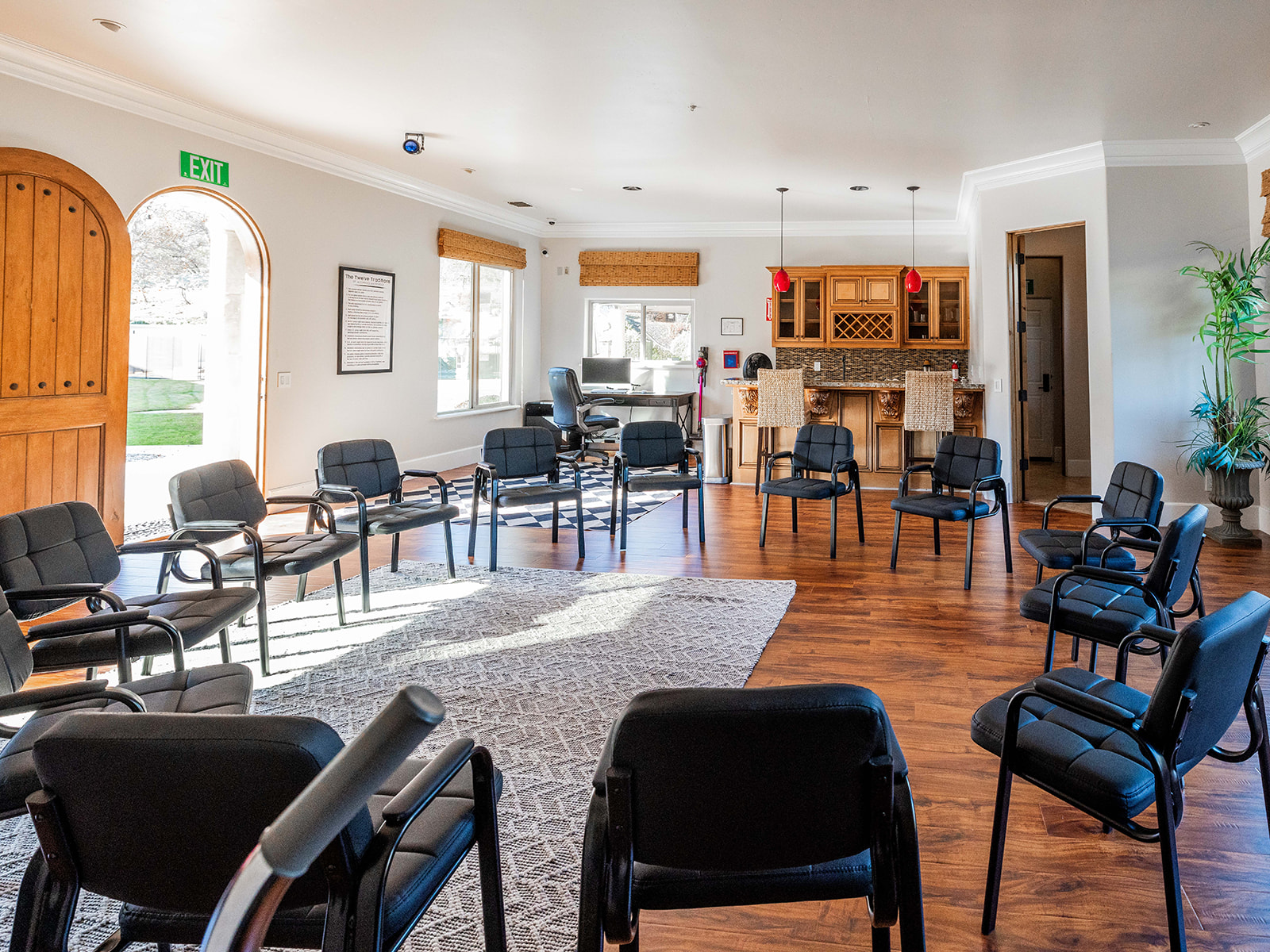
Ask about the ordinary details of living at the residence: meals, laundry, storage, permitted belongings, phone use, internet access, and visiting arrangements. If a dietary requirement or mobility limitation matters, describe it in advance and request confirmation of the practical support available. Photographs can introduce the setting, but they cannot show how a room will be assigned or how an accessibility concern will be handled. Someone who values quiet time may want to understand the balance between shared activities and personal space. These questions help turn a broad promise of comfort into a realistic picture of daily life.
Work, family contact, and participation
Discuss outside responsibilities before deciding that a residential stay is workable. Some people need help arranging leave, childcare, care for a dependent adult, or essential financial tasks. Ask which administrative support the program can provide and what communication is permitted during each treatment stage. Access to a phone does not necessarily mean that a normal work schedule can continue. It may be more practical to agree limited essential contact and arrange help at home. The treatment team needs to know which responsibilities could interfere with participation so those pressures can be discussed openly.
Family involvement should have a clear purpose and consent process. Ask whether support for relatives consists of education, joint appointments, updates, or referrals to another service. A family member paying for treatment does not automatically know what clinical information the resident wants shared. Agree those boundaries early, along with a route for passing on urgent practical information. If relationships are strained or unsafe, explain the concern directly to the clinical team. Planning support around the resident’s needs is more useful than assuming that every family contact will be helpful or that all relatives require the same information.
Understanding the quoted cost
At the October 20, 2026 review, the Recovery.com listing displayed an estimated cash-pay figure of US$52,000 for 30 days of detox and residential care. This is a secondary estimate for that stated program period. It is not a provider-confirmed tariff, a fixed calendar-month price, or a guarantee that the same duration and service combination will be recommended. Request a written quotation identifying the actual care sequence, room arrangement, included appointments, and any separately billed services. If the clinical plan changes, ask how the estimate will be updated.
The provider offers insurance verification, but the patient’s financial responsibility depends on the specific plan and service. Confirm network status, authorization, deductible, cost sharing, and separate professional charges with the insurer and provider. Ask who handles additional authorization if a longer stay or a different level of care is recommended. For private payment, discuss deposits, extensions, cancellations, and early departure. Keeping the financial agreement aligned with the clinical plan makes it easier to compare Sacramento Wellness with another program whose quotation may cover a different room, duration, or combination of services.
Outpatient options and the move home
The official website describes further options including partial hospitalization, intensive outpatient care, and virtual intensive outpatient care. Ask which of these is currently available for the individual, where sessions occur, and whether a proposed transition includes accommodation or transport. A program name alone does not answer those practical questions. Someone returning to another city may need an outside provider or a different arrangement from a local resident. Confirm whether Sacramento Wellness delivers the next service directly or helps arrange a referral, and ask how records are transferred with the patient’s consent.
Plan the first days after residence before the discharge date approaches. Identify where the person will live, who will manage prescriptions or medical follow-up, and which appointments are already arranged. Consider how work, family, and transportation affect attendance. If virtual treatment is proposed, ask the provider to confirm whether it can serve the patient’s actual location and how urgent concerns are handled between sessions. Continuing care should be a practical plan with responsibilities and contact details, rather than a general instruction to stay connected or attend more treatment after leaving.
A focused admissions conversation
Sacramento Wellness publishes (916) 535-1740 as its contact number. A useful inquiry should establish the exact El Dorado Hills location, assessment requirements, proposed treatment stages, current room availability, and written financial terms. Bring the questions that matter most to the person seeking care, including any previous experiences that shape the decision. The final choice should rest on how well the actual service can meet those needs and support the transition afterward. Clear answers about the care and living arrangements provide a better basis for deciding than the regional name or an attractive residential image alone.
Conditions
Levels of care
Settings
Treatment approach
Provider-described assessment, individual and group therapy, CBT, DBT, trauma-informed care, and medication support where appropriate
Fees & admissions
USD 52,000 / program
Recovery.com estimate checked 2026-10-20: USD 52,000 for 30 days Detox & Residential. Not a provider quotation or calendar-month tariff; exact care and room arrangement determine pricing.
Confirm the current program, duration, accommodation and included services directly with the center.
Clinical assessment; confirm exact residence, care sequence, and written financial terms