
About Sanctuary Treatment Center — Tarzana
Sanctuary Treatment Center in Tarzana
Sanctuary Treatment Center provides addiction treatment in residential homes in Tarzana, within Los Angeles’s San Fernando Valley. Its current program describes detoxification, residential care, treatment for appropriate co-occurring mental health concerns, and continuing-care planning. The provider emphasizes small household settings and individualized care. For a prospective resident, the useful comparison is the actual home and clinical plan being offered: who provides treatment, what support is available overnight, which medications can be managed, and how the person moves into the next stage.
The current admissions number is 888-584-4314, and the contact page identifies Whitestone Court in Tarzana, California 91356. The organization operates more than one house under the reviewed state record, so ask for the exact receiving address and room before traveling. A photograph or directory address may identify one property within the group rather than the particular house assigned. The assessment location, detoxification setting, residential room, and later outpatient appointments should each be clear in the admission plan.
Understanding the houses and the state record
California’s substance use facility dataset, updated August 17, 2026 and reviewed October 20, identifies Sanctuary Treatment Center under Executive Recovery Group, LLC, record 190042AP. It lists licensed and certified residential and detoxification services with incidental medical services, a coeducational population, and 36 treatment places across the listed locations. The record’s main address is 19233 White Stone Court. Additional locations include 19241 and 19249 White Stone Court and 19236, 19240, and 19246 Cammie Lane.
The provider says each of its facilities has a maximum of six beds. That description is compatible with a state capacity covering several homes; the 36-place record should not be described as 36 residents in one house. The reviewed record displays an expiration date of February 28, 2028. A dated registry entry does not indicate today’s vacancies or establish the particular staffing on a future admission date. Ask for current documentation and the clinical resources of the specific home.
The current residential-program page explicitly distinguishes its residential service from hospital-level inpatient care. That distinction is more precise than treating every use of inpatient as a hospital admission. This directory therefore identifies the supported overnight program as residential care. Ask which medical or psychiatric circumstances exceed the home’s scope, how the team assesses them, and how a transfer is arranged when another setting is needed. Incidental medical services do not turn a residential home into a hospital.
Assessment, withdrawal care, and medication
Sanctuary’s current program describes an individualized assessment rather than an automatic thirty-, sixty-, or ninety-day plan. Discuss recent substance use, previous withdrawal experiences, prescriptions, physical health, mental health concerns, and the support available at home. Ask who makes the clinical recommendation, what records are needed, and when the proposed level is confirmed. The length and sequence should reflect the individual’s needs and clinical review, rather than a duration inferred from an older price description.
If withdrawal management is recommended, ask which licensed home will provide it, what nursing and prescriber resources are available, and what monitoring or outside medical services may be required. Clarify how the team decides when to begin the next therapeutic phase and whether the resident changes rooms or houses. A multi-house program should be able to explain transport, clinical handoff, medication continuity, and any separate charges. Those practical details matter even when the services operate under the same organization.
The provider advertises medication-assisted treatment and medication evaluation when clinically indicated. Ask about the exact prescription, formulation, prescriber, pharmacy arrangements, and follow-up schedule. Someone already receiving recovery, psychiatric, or physical-health medication should coordinate the plan with the relevant clinicians before making changes. Confirm which medication and monitoring costs are included. A broad service description does not establish that every medicine or every medical circumstance can be managed at every house.
Individual therapy, groups, and co-occurring needs
The current residential description includes individual and group therapy, recovery education, family work when appropriate, and preparation for continuing care. Ask for the actual weekly schedule and how often a resident meets individually with a therapist. A small house does not by itself guarantee a particular amount of one-to-one clinical time. Clarify group size, clinician responsibilities, progress reviews, and how the team changes the plan when a resident needs a different approach or finds an activity difficult.
Sanctuary describes treatment for addiction alongside appropriate co-occurring mental health concerns. Ask how psychiatric assessment and prescribing are coordinated with therapy and substance use treatment. Discuss current symptoms and the level of support needed between appointments, including during the night. The directory’s guide to co-occurring conditions can help frame the discussion, but a list of diagnoses does not establish suitability for every presentation. Confirm the receiving team’s actual scope before admission.
The provider’s service menu includes trauma-related therapies, family services, and additional interventions such as TMS and neurofeedback. The residential page itself explains that specialized services are not automatically appropriate for every client. Ask which intervention is being recommended, why, where it takes place, who provides it, and whether it carries a separate fee. A method’s availability somewhere within the program should not be confused with guaranteed access at the assigned house or inclusion in the quoted residential package.
The room and everyday living arrangements
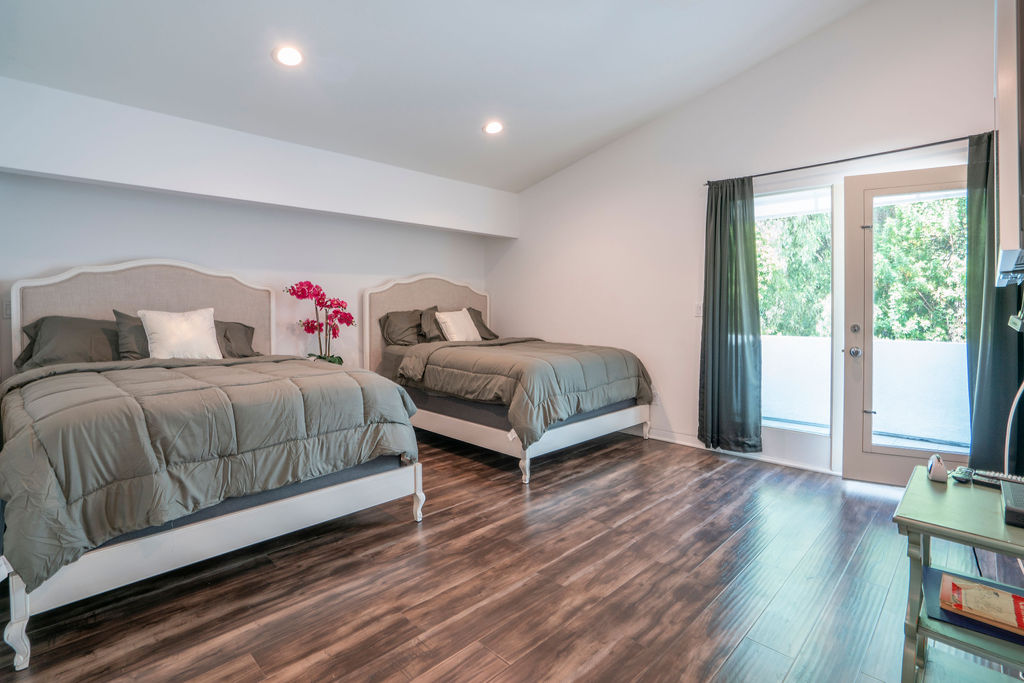
Current secondary information describes private-or-shared bedroom options and shared bathrooms. Ask for the exact room category, number of occupants, bathroom arrangements, supplement, and availability at the assigned property. A private bedroom does not mean a private bathroom or exclusive use of the house. The room agreement should also identify stairs, accessible features, storage, laundry, and any practical assistance needed. These details are especially relevant when choosing between several small residential homes.
Discuss meals, allergies, dietary needs, sleep arrangements, noise, and access to shared spaces. Photographs of recreation areas or a pool should prompt questions about the actual property, current availability, supervision, and clinical suitability. A feature shown for one residence should not automatically be assigned to all six listed addresses. If a particular accommodation is essential, ask the team to confirm it before arranging travel and explain what happens if a room or house assignment changes.
Ask about phones, internet, work contact, visitors, deliveries, smoking policies, and time away from the home. The rules may differ during withdrawal management and later residential treatment. Someone responsible for children, finances, or another dependent should agree on practical communication arrangements in advance. A trusted support person can help with logistics when the resident chooses, but the program should explain how consent is recorded and how practical contact differs from sharing clinical information.
Family participation and continuing care
Family services are part of Sanctuary’s advertised approach. Ask how the resident chooses who participates, when involvement is appropriate, whether sessions can be remote, and which professional facilitates them. Visiting, receiving general education, and joining therapy are different arrangements. Family work should reflect the resident’s goals and relationships rather than assume every relative belongs in every conversation. Confirm any separate fees or travel requirements before family members commit to attending in person.
The provider’s aftercare page describes planning for the next stage before the current level ends. Possible elements include outpatient therapy, recovery housing, peer support, and continued attention to mental health concerns. Ask which options are actually proposed for the individual and who delivers them. The wider website lists outpatient services, but a residential address does not establish that every outpatient appointment happens there. Obtain the receiving office or provider, timetable, housing plan, and payment arrangements separately.
For a move into recovery housing, clarify the operator, address, room, rent, house rules, medication responsibilities, and transport to treatment. For a return home, request a named clinician, appointment date, prescription plan, and practical support arrangements. The directory’s explanation of outpatient care can help distinguish scheduled clinical sessions from support during the rest of the week. Alumni or peer contact should not be assumed to replace therapy, psychiatric follow-up, or medical care.
Ask how the team handles a change in the proposed plan, including a delayed appointment, unexpected medical need, or a housing arrangement that falls through. The resident and any chosen support person should know whom to contact and what information the next provider receives with consent. A useful discharge plan is specific enough to be acted on: names, dates, locations, prescriptions, transport, and responsibilities. General recommendations are less useful if nobody has confirmed that the next service can receive the person.
Price information and the written agreement
Recovery.com, checked October 20, 2026, displays an estimated USD 40,000 without a defined price period. Its separate description of a thirty-day-or-longer program does not establish what that amount buys. No current official numeric tariff was verified for this review. Ask for a dated quote covering the exact house, room, anticipated phases and nights, withdrawal care, therapy, medical and psychiatric appointments, medication, tests, transport, additional interventions, and any continuing-care services.
Verify insurance for the actual provider, location, clinical level, and plan, including network status, authorization, deductible, and cost sharing. Ask how an extension, a move between houses or levels, an early departure, or a clinical transfer affects charges and refunds. A private-pay amount should not be interpreted as the expected insured cost. The provider’s general willingness to work with insurers does not settle the terms of a particular policy or every proposed service.
Compare Sanctuary with other United States treatment options using the individual clinical recommendation, the specific small-house environment, room and bathroom arrangement, medical resources, and continuing-care plan. Before arrival, confirm the receiving address, clinical acceptance, room, prescriptions, transport, emergency contact arrangements, and financial agreement. The important feature of this listing is a group of small residential homes whose services and capacity should be understood at both the individual-house and overall-program levels.
Sources and verification
Reviewed October 20, 2026: provider program and house-size description, contact information, residential scope, continuing-care planning, California facility dataset dated August 17, 2026, and Recovery.com secondary room and price information. Current individual-house availability and financial terms require direct confirmation.
Destinations
Conditions
Levels of care
Settings
Amenities
Program approach
Individualized assessment, individual/group therapy, medication evaluation and support where indicated, appropriate co-occurring and trauma-related work, family participation and continuing-care planning; specialized interventions assessed separately
Fees & admissions
Confirm current pricing
Recovery.com checked October 20, 2026 displays USD 40,000 without a defined billing period. Its separate thirty-day-plus duration reference does not establish the services or nights that amount covers. Request the exact home, room, clinical phases, detoxification, professional appointments, medication, tests, transport, specialized services and continuing care in a written offer.
Confirm the current program, duration, accommodation and included services directly with the center.
Confirm the assigned licensed home, clinical suitability, detoxification need and medical resources, prescriptions, room/bathrooms, accessibility, meals, visits/devices, exact service inclusions, insurance authorization, written costs and the receiving service after residential care.