
About Serenity at Summit New England — Haverhill
Addiction treatment at the Haverhill location
Serenity at Summit New England identifies its Haverhill facility at 61 Brown Street, Haverhill, Massachusetts 01830. The current Haverhill program page describes Acute Treatment Services, usually abbreviated ATS, and Clinical Stabilization Services, or CSS. Those names help distinguish withdrawal treatment from the residential work that may follow it. The location-specific contact number is 978-312-9830. Ask the receiving team which service is being proposed, whether a bed is available, and how the assessment determines the appropriate starting point.
The provider also operates in New Jersey, so a conversation about Serenity at Summit should identify Haverhill explicitly. A network-wide description is not enough to establish the actual room, staffing, schedule, or financial agreement for Brown Street. Request the location and level on the admission confirmation, insurance verification, and written quote. This matters especially when a family makes several inquiries, when a central admissions team discusses alternative placements, or when a treatment recommendation changes before arrival.
ATS, CSS, and the meaning of inpatient treatment
In the provider’s Haverhill description, ATS concerns medically supervised withdrawal care, while CSS supplies a structured residential setting for continued treatment. The broader residential program page specifically identifies Haverhill CSS as a step after inpatient detoxification. The provider uses inpatient terminology for these services, but that wording alone does not establish general hospital capabilities. Ask about the exact medical and nursing resources available in the proposed unit and which situations require a transfer to another facility.
A person does not need to decide between ATS and CSS from a directory description. Provide the assessment team with current prescriptions, recent substance use, prior withdrawal experiences, relevant medical conditions, and psychiatric history. Ask who makes the placement decision and whether additional records or an outside evaluation are required. Request an explanation of how a move from ATS to CSS is arranged, including whether it requires a new authorization, changes the room, or creates a separate charge.
The location page describes continuous medical monitoring during detox. Clarify who is physically present overnight, how prescribing decisions are made, and how the team responds to a change in symptoms. A published statement about monitoring should not be interpreted as a promise that every medical concern can be treated onsite. Likewise, a short typical withdrawal period is not an individual completion date. The treatment plan should explain how staff review readiness for the next phase and communicate changes to the resident.
What to ask about the residential treatment plan
Serenity’s residential overview describes individual and group work, behavioral therapies, medication support where appropriate, and continuing-care planning. It gives a general residential duration of 30–90 days, with individual assessment guiding the actual course. Ask how the recommended stay applies to Haverhill CSS, which appointments are included, and what would lead to a review of the plan. The number of days on an insurance authorization and the number clinically recommended should be explained separately.
Ask for a sample week that identifies individual therapy, group sessions, skills practice, peer support, recreation, and time for appointments. Request the qualifications and responsibilities of the primary clinician rather than relying only on a list of therapies. Someone who has attended treatment previously can explain which elements helped, what was difficult, and what support was missing after discharge. Ask how those observations will affect this plan and when the resident can discuss progress or request an adjustment.
Group participation can raise practical questions that are easy to overlook before admission. Ask about group size, how new residents join an established schedule, and whether there are alternatives when a particular activity is unsuitable. If a person has hearing, language, reading, sensory, or mobility needs, describe those specifically during assessment. The relevant issue is whether the proposed program can make workable arrangements, rather than whether its general description sounds comprehensive.
Substance use and co-occurring mental-health needs
The Haverhill page describes integrated support for substance-use and mental-health concerns, including psychiatric medication management and behavioral approaches. It also advertises residential mental-health care. Someone inquiring mainly for a mental-health condition should ask which specific program is offered, what its admission criteria are, and whether the proposed care requires a substance-use treatment need. A broad description does not settle eligibility for an individual presentation or prove that an acute psychiatric hospital service is available.
Ask how psychiatric appointments are scheduled, who reviews medication, and how existing clinicians can contribute with the resident’s permission. Clarify what happens if symptoms change, if a medication needs specialist oversight, or if the person requires care outside the facility. The co-occurring conditions guide can support comparisons, but the receiving clinical team must explain the limits of its own program. Written details are particularly helpful when the person has experienced transfers or gaps between services before.
Rooms, amenities, and everyday life
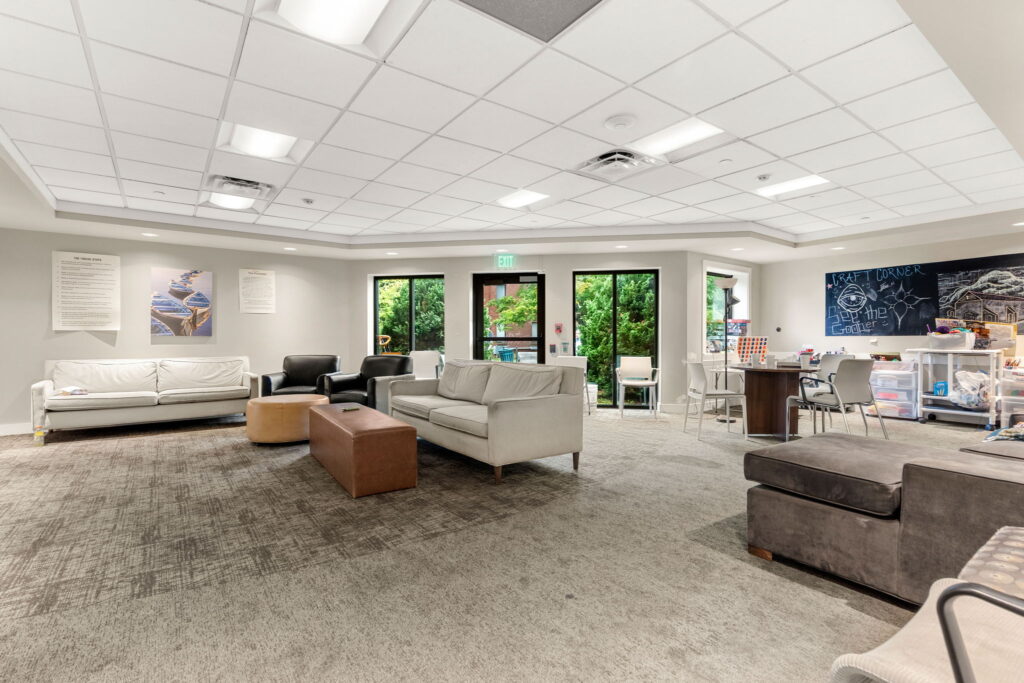
The current Haverhill page advertises private and shared accommodation, fitness and recreation areas, and prepared meals. The exact-campus secondary listing also identifies private or shared rooms. A private room is therefore an advertised option, subject to availability and the agreed quote, rather than an automatic feature of every stay. Ask about the actual room offered, bathroom sharing, any supplement, and whether a transition between ATS and CSS changes the accommodation.
For daily planning, discuss meals, dietary restrictions, laundry, storage, permitted belongings, phone access, quiet time, and accessibility. If a resident needs a particular bed arrangement, assistance with stairs, or a quieter sleeping environment, ask for confirmation before travel. Photographs may show a room type without establishing that it is available on the intended dates. Request an explanation of the process for reporting a room problem, a concern about another resident, or a need for help during the night.
The provider’s wellness descriptions include activities such as yoga and mindfulness. Ask which are currently scheduled in Haverhill, who leads them, whether participation is optional, and how alternatives are arranged when an activity is unsuitable. Separate any complementary activity from the clinical appointments that form the core treatment plan. A resident can reasonably ask what is included in the standard fee and whether an advertised service requires an outside practitioner or an additional payment.
Family involvement and communication
The network’s family program page describes a three-day educational program addressing communication, boundaries, and sources of support. It does not establish the next Haverhill dates or guarantee that every family can attend during a particular stay. Ask whether the program is currently available for Brown Street residents, whether it is onsite or remote, who may participate, and whether the fee includes it. Ordinary visiting and a structured clinical or educational program should be discussed separately.
Before admission, agree on how the resident wants updates handled and who should receive them. Ask how consent is recorded, what information staff can share, how urgent family matters are communicated, and what happens if the resident changes their preferences. A support person may need help understanding the schedule without being included in every clinical discussion. Families can also ask about their own support options, particularly when travel, childcare, employment, or uncertainty about the return home complicates participation.
Family work should not presume that relatives caused the substance-use problem or that every relationship should be repaired during one stay. Ask how the program approaches strained or unsafe relationships, disagreement about contact, and residents who do not have available family. A practical goal might be planning a supportive living arrangement, clarifying transport to follow-up care, or agreeing how to communicate a concern. The resident’s circumstances should shape the work rather than a general expectation of family involvement.
Fees and insurance: what the published estimate means
The Recovery.com exact-campus page, checked October 20, 2026, gives an estimated price starting at USD 25,000 for 30 days. This is third-party information, not an official Serenity tariff. The plus sign matters: it does not establish a maximum quote. The figure should be treated as a dated 30-day reference, not a fixed monthly charge or a confirmed price for the individual’s recommended combination of ATS, CSS, room, and clinical services.
The admissions information emphasizes verifying individual coverage. Request a written quote and benefits explanation for the exact Haverhill program, including detox, residential dates, room type, medication, testing, outside appointments, transportation, and later care. Ask how deposits, extensions, early departure, and transfers are charged. A broad statement that an insurer is accepted does not establish the network status, authorization, or remaining liability of a particular plan. The secondary listing says Medicare, Medicaid, and state insurance are not accepted; confirm current eligibility directly before relying on that status.
Outpatient options and a confirmed handoff
When planning time away from home, ask the team to distinguish an estimated withdrawal stay, the proposed CSS period, and any later outpatient schedule. Those stages can involve different daily commitments even when admissions presents them as one course of care. Discuss how a change in the clinical recommendation would affect travel, work documentation, family participation, and payment. A flexible return arrangement may be useful, but it should follow the actual treatment proposal rather than a directory’s illustrative 30-day price or a general program duration.
The current location page advertises Haverhill partial hospitalization and intensive outpatient services, describing IOP as at least nine hours a week. Ask for the receiving address, current timetable, admission criteria, and financial terms of the proposed outpatient service. The advertisement does not by itself confirm that every outpatient appointment occurs inside the Brown Street residential building. Someone returning to another New England community should also ask about a local alternative and how clinical information will reach it.
A useful discharge plan identifies appointments, prescriptions, transport, housing, and a person responsible for unresolved arrangements. Ask which services are actually booked before departure and which remain recommendations. Compare Serenity with other residential programs, outpatient options, and United States treatment listings using the same questions about assessed need, setting, staff coverage, room, total cost, and follow-up. The clearest offer is one that names the service and location at each stage and explains how the transition will work.
Destinations
Conditions
Levels of care
Amenities
Program approach
Individual and group therapy, behavioral approaches, medication support when appropriate, family education, wellness activities and continuing-care planning
Fees & admissions
Estimated USD 25,000 / program
Recovery.com checked 2026-10-20 estimates USD 25,000+ for 30 days. Third-party starting reference, no verified official tariff or upper limit. Confirm ATS/CSS allocation, room, medication, tests, outside appointments, transport and follow-up. Secondary says no Medicare/Medicaid/state insurance; verify current exact-plan eligibility.
Confirm the current program, duration, accommodation and included services directly with the center.
Clinical assessment, exact Haverhill unit and level, medical/psychiatric and prescription review, room, coverage and itemized quote. Confirm separate ATS/CSS authorizations, current family-program dates, and any proposed outpatient receiving location.