
About Serenity at Summit New Jersey — Union
Serenity at Summit’s Union treatment service
Serenity at Summit’s Union, New Jersey, program provides substance-use treatment with medical detoxification, residential care, and outpatient options. The current Union location page identifies 1000 Galloping Hill Road, Union, New Jersey 07083, and telephone 844-326-4514. This profile concerns the Union service. Program information from other Serenity at Summit or Harmony locations should not be assumed to describe the same accommodation, clinical team, or admission arrangement.
Ask admissions to identify the proposed starting level and the location responsible for it. The Union page describes a continuum of treatment, but an individual should not assume they must complete every stage or that the same room and appointments continue throughout. The useful comparison is the specific recommendation, its clinical reasoning, and the practical arrangements for each phase. These details should be clear before travel, a transfer, or a financial commitment is made.
Detoxification and actual medical resources
The provider describes medically supervised detoxification with continuous monitoring and medication when appropriate. Discuss current substance use, previous withdrawal complications, physical health, psychiatric symptoms, and prescriptions with the assessing team. Ask which professionals perform the evaluation, who is onsite at different times, and how urgent medical changes are handled. A public description of medical supervision does not replace an individual withdrawal plan or establish that the setting can manage every possible medical need.
Serenity at Summit uses inpatient terminology for residential care. The reviewed information does not establish hospital-level inpatient admission at Union, so the directory treats the described living program as residential treatment. Ask about nursing presence, prescriber access, monitoring, and arrangements for services that require another medical setting. Similar terminology across providers can conceal practical differences; understanding the actual resources is necessary to assess whether the proposed service matches the person’s current needs.
If withdrawal support precedes residential care, clarify how the phases are sequenced, whether the room changes, and who approves the transition. Ask whether the proposed dates and fees include both phases and what happens if stabilization takes longer than expected. A statement that detoxification begins the program should not be interpreted as a requirement for every person. The assessment should explain whether withdrawal support is needed and where it fits in the individual course.
Residential treatment and the weekly plan
The Union page describes cognitive behavioral therapy, motivational interviewing, trauma-informed work, life skills, and complementary activities such as yoga and mindfulness. Ask which approaches the assigned clinicians recommend and how they fit the person’s goals. A sample week should distinguish individual therapy, clinician-led groups, recovery education, peer support, recreational activities, and personal time. A long list of methods does not establish a particular amount of one-to-one therapy or guarantee that every method is included.
The provider describes reassessing treatment plans as people progress. Ask when those reviews occur, how the resident participates, and who coordinates changes across therapists and medical staff. If work, education, caregiving, or another commitment affects the plan, discuss it before arrival and clarify how it can be addressed within the treatment schedule. A flexible approach should still lead to specific expectations about attendance, clinical appointments, daily routines, and the time available for outside responsibilities.
The exact Recovery.com Union profile lists thirty days as a typical program length and describes residential stays as potentially varying from weeks to months. Those are secondary references, not a fixed prescription for every admission. Ask for the initial recommendation, review dates, and criteria for extending treatment or moving to outpatient care. The thirty-day price estimate should not be treated as proof that all recommended treatment will fit within that period.
Co-occurring mental-health needs
The current Union page describes integrated care for substance use alongside concerns such as anxiety, depression, trauma, and bipolar disorder. Ask how psychiatric assessment and medication follow-up are provided and whether an existing outside clinician can contribute relevant records. The co-occurring conditions guide can help structure these comparisons. The program description should lead to a specific explanation of the needs the assigned team can support, including how changes in symptoms are managed.
The secondary profile makes broader claims about mental-health treatment, including more acute or complex presentations. Those should not be treated as proof that every person with those concerns can be admitted to the residential addiction program. Ask whether a separate mental-health service is proposed, which address provides it, what clinical resources it has, and whether a higher level is needed first. A diagnosis label alone is not enough to determine suitability or the required setting.
If medication is part of ongoing care, establish who reviews prescriptions on arrival, who can change them, and how decisions are discussed with the resident. Ask about coordination with existing prescribers and arrangements after discharge. A general medication-management or medication-assisted-treatment description does not establish availability of every medication or the same prescribing arrangement at every level. The plan should identify responsibilities during detoxification, residential treatment, and any later outpatient service.
Rooms, meals, and ordinary daily arrangements
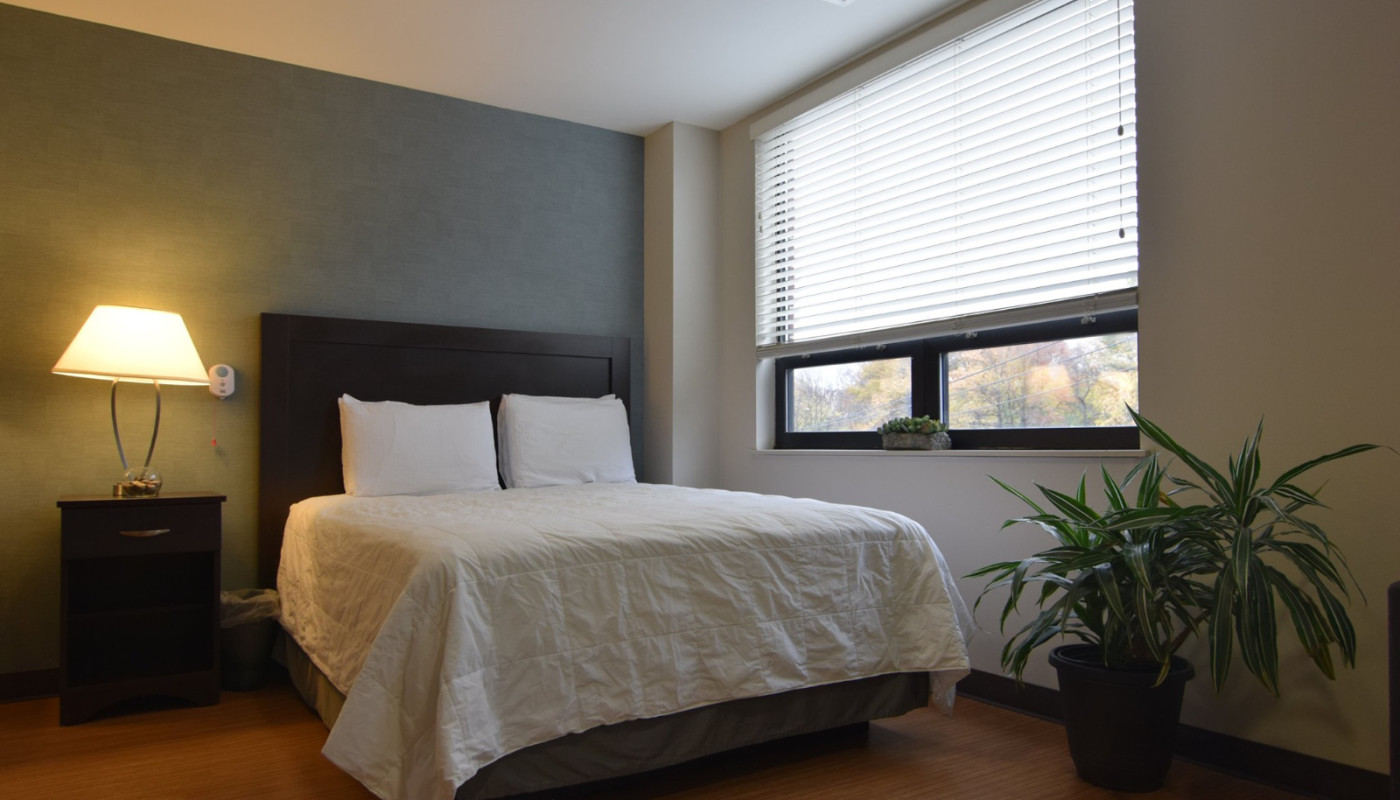
The primary Union page explicitly describes private-room options alongside shared accommodation, plus meals and recreational facilities. Ask which room is actually available for the proposed dates, whether it has a supplement, and how bathroom sharing is arranged. A private bedroom does not automatically establish a private bathroom or a particular observation arrangement. Confirm accessibility, stairs, storage, and any other accommodation requirement before relying on a general room description or a photograph.
The provider lists fitness and leisure spaces and chef-prepared meals. Ask which amenities are available during the proposed phase and how dietary needs or limitations on physical activity are handled. Recreation can be part of daily life without replacing the clinical program. If the choice depends on a particular feature, ask about its current availability and whether it is onsite, scheduled, supervised, or subject to an additional charge.
The secondary listing describes technology access, but the current rules should be obtained from the Union team. Discuss phones, computers, private calls, work obligations, and contact with support people. These arrangements may change between withdrawal care and residential treatment. A desk or internet connection does not establish unrestricted work access, and a general description of privacy does not define how clinical observations, visitors, or information sharing are handled.
Family participation and support preferences
Serenity at Summit publishes a family program within its wider service. Ask what is currently available for Union residents, the format and dates, whether remote participation is possible, and what it costs. A network description should not be treated as a confirmed event at this location. Family therapy, education, visiting, and discharge planning have different purposes, so clarify which are included in the proposed treatment plan.
Discuss the resident’s consent and the limits on sharing clinical information before a support person expects routine updates. If relationships are difficult, ask how participation can be planned appropriately. A family member may help with practical arrangements without being responsible for guaranteeing the resident’s progress. Similarly, if faith-based or another specialty group is important, ask about current availability, optional participation, and the actual schedule rather than infer a dedicated residential track from a secondary program label.
Outpatient care after the residential stay
The Union location page describes outpatient options that allow participants to continue care while living at home. Ask which level is recommended, where appointments occur, and what the current weekly commitment is. A move to day treatment or IOP changes the support available outside sessions and needs its own practical plan. Confirm whether the same clinicians continue, how records are transferred, and when the first appointment will take place before assuming there will be no gap.
If a person needs somewhere to live while attending outpatient treatment, ask who arranges the housing, who operates it, and what supervision it provides. Clarify rent, meals, transport, and any conditions of residence separately from clinical fees. A full continuum of treatment does not automatically include accommodation at every level. Someone returning to another part of New Jersey or another state should also confirm that the proposed service can be attended from that actual location.
The thirty-day price estimate
Recovery.com, checked October 20, 2026, publishes an estimate of USD 22,500 for thirty days. This is an explicitly defined third-party program reference, not a verified official tariff from Serenity at Summit or a calendar-month rate. The source does not resolve every detoxification, room, medication, laboratory, or professional-fee inclusion. Request a current quote for the individual course rather than assume that the amount covers every service described across the provider’s continuum.
The written proposal should identify dates, phases, accommodation, therapy and medical appointments, medications, outside services, and potential additional charges. Ask what happens if detoxification or residential treatment lasts longer, the room changes, or the person moves to another level early. Review deposits, cancellation, refunds, and responsibility for a transfer. A defined thirty-day estimate is a useful reference only when its scope is compared with the actual offer.
Insurance and preparing to arrive
The provider’s insurance information offers benefits verification, and the Union page describes work with major private plans. Confirm the specific plan, location, network relationship, authorization, covered dates, deductible, and coinsurance with the payer. A familiar insurer name does not establish individual approval. Ask who explains coverage changes during treatment and how the resident can consider options before taking on further charges or committing to another phase.
The admissions process should conclude with clinical acceptance, the receiving address, actual room availability, and clear instructions for records, prescriptions, identification, belongings, and arrival. Confirm transport and the contact for delays. Compare Union with other residential services and United States listings using the assessed level, medical resources, weekly schedule, room, complete quote, and confirmed continuing-care plan. Those details make the provider’s broad service description concrete.
Destinations
Conditions
Levels of care
Settings
Amenities
Program approach
Individualized substance-use and co-occurring-condition care with cognitive behavioral therapy, motivational interviewing, trauma-informed support, individual and group work, medication review, family participation and continuing-care planning
Fees & admissions
Estimated USD 22,500 / program
Recovery.com checked October 20, 2026 estimates USD 22,500 for thirty days. This is a third-party program reference, not an official tariff or a calendar-month rate. Confirm exact phases, room, detoxification, therapy and medical appointments, medications, laboratory work, outside services and any later outpatient or housing charges.
Confirm the current program, duration, accommodation and included services directly with the center.
Confirm the proposed Union level and location, withdrawal and medical risk, psychiatric suitability, prescriptions, actual nursing and prescriber resources, current room, payer authorization and full written quote. Clarify any separate mental-health program, outpatient housing, family participation and the receiving service after discharge.