
About Serenity Light Recovery — Angleton
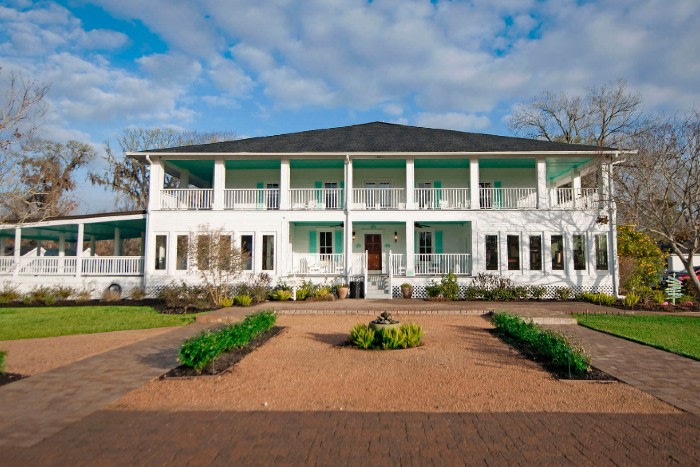
Serenity Light’s Angleton campus
Serenity Light provides addiction treatment and support for co-occurring mental-health concerns in Angleton, Texas. The current provider website identifies a partnership with Sierra Health + Wellness and describes medical detoxification, residential treatment, and a virtual intensive outpatient program. The partnership reference provides context for the present service; it does not establish a particular ownership-change date or mean that every Sierra program is delivered at Angleton. Ask which team and location will be responsible for the proposed care.
The contact page gives 1820 CR 36, Angleton, Texas 77515, and telephone 281-431-6700. This is the current primary contact, distinct from numbers displayed by third-party directories. Confirm the entrance, receiving staff, arrival time, and transport plan before visiting or transferring. The provider specifically cautions that its email form is not a route for immediate medical assistance; an unanswered online inquiry should not be treated as an assessment or an agreed admission.
The residential setting and room choices
Serenity Light’s location page describes an Angleton campus of more than ten acres, a residential community of approximately 15 to 25, and optional private suites. The community description is not an independently verified licensed-bed count or a statement of current availability. Ask how many residents are ordinarily in the proposed house or unit, whether a private suite is available on the required date, and whether that choice changes the quoted price.
The Recovery.com profile also describes shared accommodation and a rural outdoor setting. These descriptions can coexist with the primary private-suite option, but the actual room needs confirmation. Establish bedroom and bathroom occupancy, stairs, mobility access, storage, and the distance between accommodation and clinical activities. A photograph of a private suite should not be taken to mean that every placement includes one or that a standard estimate covers its supplement.
Ask which outdoor and fitness activities are currently available and how alternatives are arranged when someone cannot participate. Older secondary descriptions mention a broad range of complementary activities; those should not automatically be assumed to remain in the current weekly schedule. Meals, dietary requirements, personal belongings, electronics, and visiting arrangements also deserve direct discussion. The purpose is to understand ordinary life at this specific campus without using amenities as evidence that the clinical program will fit every person.
Detoxification, residential support, and medical resources
The provider describes medical detoxification and a residential program with continuous support. Its use of inpatient refers to living at the treatment facility; the reviewed material does not establish an admission to a hospital. Ask about the actual nursing and medical staffing, including who is physically present overnight, who is on call, and how urgent changes are managed. These operational details are more useful than assuming a particular medical capability from the program label.
An admission discussion should cover substance use, previous withdrawal complications, physical health, psychiatric history, medications, and recent treatment. Ask whether withdrawal support is needed, where it would occur, and how the transition into the residential schedule is handled. Clarify the circumstances that would require assessment or treatment elsewhere. A description of detoxification should not be interpreted as advice that every person needs the same process, medication, or length of observation.
Serenity Light describes medication-assisted treatment as part of its approach. If medication is relevant, ask how the assigned clinicians review existing prescriptions, discuss available options, and coordinate with outside prescribers. Confirm how refills and follow-up will be arranged after the residential stay, particularly when the person returns to another area. The public website does not replace an individual prescribing decision, and a broad medication-treatment description does not establish availability of every medicine for every condition.
Length of stay and the treatment schedule
The current FAQ says many residents begin with a 30-day stay, while some continue for 60 or 90 days according to needs and progress. These are possible durations rather than fixed requirements or a promise that treatment will be complete on a particular day. Ask what the initial recommendation includes, how progress is reviewed, and when the resident will be involved in decisions about extending care or moving to another level.
The residential page describes assessment, an individualized plan, therapy, recovery education, wellness activities, and discharge preparation. Request a sample week that separates individual appointments, clinician-led groups, peer support, practical activities, and personal time. Ask which staff members lead the sessions and how often a resident meets their primary therapist. This turns a broad program description into information that can be compared with another residential treatment option.
Serenity Light lists cognitive behavioral therapy, dialectical behavior therapy, and trauma-related approaches, including written exposure therapy. These are available approaches described by the provider, not a guarantee that each is appropriate or included in every plan. Someone seeking help with trauma can ask how readiness is assessed, who delivers the work, and how treatment is coordinated with substance-use care. A named therapy should lead to a discussion of the person’s goals and the assigned clinician’s role.
For co-occurring mental-health concerns, establish whether the proposed program can support the current level of need and what additional psychiatric services are available. Ask how the team responds if symptoms worsen or a different level becomes necessary. A secondary directory listing of several diagnoses does not prove that Angleton offers a separate specialist program for every one. The assessment should identify the actual service, responsible professional, and limits relevant to the individual case.
Family involvement and support preferences
The provider includes family work among its therapeutic approaches. Ask whether this means individual family sessions, education, discharge planning, or another format, and whether participation can happen remotely. Clarify the resident’s consent, the information that can be shared, and how communication will be handled when relatives disagree. Family involvement can be discussed without assuming that every relative should attend or that a support person is responsible for ensuring a particular treatment outcome.
Serenity Light also describes 12-step education alongside alternative recovery-support options. Ask how participation is organized, whether a particular spiritual practice is expected, and how the program accommodates different beliefs and preferences. Secondary descriptions mention veteran-specific services and scholarships, but current eligibility, availability, and funding terms require direct confirmation. A specialty label or an older scholarship reference should not be treated as proof of an available funded place, a separate clinical unit, or a guaranteed payer authorization.
The virtual intensive outpatient program
The current virtual IOP page describes online addiction and mental-health treatment for people in Texas, with scheduled individual or group work and clinical review. This is a distinct nonresidential service, not evidence that the same outpatient schedule is delivered in person at the Angleton house. Ask about current enrollment criteria, the required hours and days, the clinician’s role, and whether the proposed program can be attended from the person’s actual location.
Someone considering virtual care needs more than an internet connection. Discuss access to a suitable device, a private place to participate, the plan for missed connections, and how urgent concerns are managed between sessions. Ask whether medication management is included or coordinated separately and whether any in-person assessment is required. For a resident moving into virtual IOP, confirm the handoff, start date, separate charges, and support available before the first online appointment.
The provider’s FAQ describes continuing care as dependent on needs and location. If another outpatient or housing arrangement is proposed, establish who operates it and where it takes place. A reference to the Sierra network does not mean every option is automatically available, included in the residential fee, or suitable for a person returning to another state. The discharge plan should identify a receiving service and confirmed appointments instead of relying only on a general promise of continued support.
Two price references with different inclusions
Recovery.com, checked October 20, 2026, lists USD 20,000 for 30 days without detox and USD 35,000 for 30 days including detox. These are two third-party program estimates with different stated inclusions. They should not be presented as a single interchangeable room-price range or an official tariff from Serenity Light. The lower estimate is the residential reference; the higher combined estimate needs its own confirmation of detoxification and residential dates.
The difference between those estimates does not establish a standalone detoxification price. It also does not prove that both include the same room, medications, laboratory services, professional fees, or number of therapy appointments. Request one current written proposal for the actual recommended course. It should explain the accommodation, phases of care, included services, potential additional charges, and how a longer stay or change in level would affect the total.
Serenity Light states that it works with many major insurance providers and offers benefits verification through admissions. Confirm the exact plan, network relationship, service location, authorization, deductible, and coinsurance with the payer. Ask what happens if authorization is shorter than the recommended stay and who explains any resulting financial responsibility. For private payment, review deposits, refunds, cancellation, early departure, and private-suite supplements before treating either directory estimate as a dependable budget.
Making the placement and transition concrete
The admissions page advertises telephone support day and night. Use that conversation to obtain an assessment pathway and clear next steps, including current clinical acceptance, room availability, arrival instructions, and required records. Ask who should send medication information or transfer documentation from another service. A call answered outside business hours can begin the process, but it does not by itself establish that the full admission and financial arrangements are complete.
Before leaving residential care, establish which follow-up appointments, prescriptions, transport, and living arrangements are confirmed and who will help resolve any gap. Compare Serenity Light with other United States treatment listings using the Angleton location, actual medical resources, therapy schedule, room, complete quote, and planned next level. The current partnership, virtual program, and private-suite options are useful details when their practical meaning is made clear for the individual placement.
Destinations
Conditions
Levels of care
Amenities
Program approach
Clinical assessment, individual and group therapy, cognitive behavioral and dialectical behavior approaches, trauma-related care including written exposure therapy where appropriate, medication review, family support, and continuing-care planning
Fees & admissions
Estimated USD 20,000 / program
Recovery.com checked October 20, 2026 estimates USD 20,000 for 30 days without detox. It separately estimates USD 35,000 for 30 days including detox; these are different bundles, not interchangeable room-price endpoints or an official tariff. Confirm the current phases, room, medications, clinical fees, laboratory work and other inclusions. The difference does not establish a standalone detox price.
Confirm the current program, duration, accommodation and included services directly with the center.
Confirm clinical suitability, withdrawal and medical needs, psychiatric history, prescriptions, current room, actual nursing and prescriber resources, insurance authorization, arrival instructions, and a written quote. For virtual IOP verify Texas location eligibility, current schedule, clinical handoff and separate fees.