Care at Starlite Recovery Center
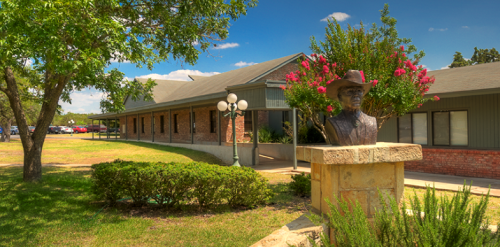
Starlite Recovery Center provides adult addiction treatment on a fifty-five-acre residential campus in Center Point, in the Texas Hill Country. Its services include medically supervised detoxification, residential rehabilitation, and specialized programming for co-occurring mental health concerns. Separate outpatient services operate in Kerrville and New Braunfels. That geographic distinction matters: a person admitted to the Center Point residence should not assume that subsequent day treatment takes place in the same building or includes continued accommodation. The program and actual treatment address should both be specified in the admission or discharge plan.
Starlite’s adult residential program serves people aged eighteen and older. The provider combines clinical treatment with recovery groups, family work, life-skills activities, and use of the rural setting. It also has named pathways for LGBTQ+ clients, people seeking a Christian perspective, and military members or veterans. These distinctions can help someone find relevant peers and therapeutic material, but the appropriate pathway depends on clinical needs and personal preference rather than a program label alone.
Detoxification and assessment at Center Point
The residential description specifies twenty-four-hour nursing during detox, daily physician visits, and on-call physician coverage. The separate detox information describes therapeutic support and medication according to the person’s withdrawal needs. Clinical assessment should establish whether detox is required, which setting is appropriate, and how existing prescriptions will be handled. A person who does not need withdrawal management may follow a different starting pathway from someone requiring close medical observation before fuller participation in rehabilitation.
The admissions process includes initial screening, a nursing assessment, a physician’s history and physical examination, and a psychosocial assessment. The provider says additional tests can be arranged when indicated. Together, these assessments are intended to inform an individualized plan rather than simply assign everyone the same sequence of activities. Families or referring clinicians can help by supplying an accurate treatment and medication history. Any change in care level should be explained in terms of current needs, with the receiving location and funding arrangements confirmed.
How the residential program uses therapy and activity
Starlite describes individual and group therapy, themed groups, life-skills work, and 12-Step participation within its residential model. The physical setting supports a different set of activities from an urban outpatient office: the published amenities include nature trails, a ropes course with a climbing wall and zip line, equine-assisted work, a gym, and personal training. Yoga is listed subject to availability. These activities are components of the program, not evidence that every resident can participate immediately or that all recreational access is unrestricted.
The clinical purpose and staffing of an activity should be clear. Work involving horses or a ropes course may be used to explore communication, reactions to difficulty, or relationships with others, while formal psychotherapy addresses agreed treatment goals. Someone with a mobility limitation, fear of animals, or a preference for less physical activities can ask about alternatives. A full schedule should distinguish clinical appointments from recreation and wellness, so the amount of direct therapy remains understandable when comparing Starlite with another provider.
The current staff directory identifies Bryan M. Davis, D.O., as Medical Director and Christian Mitchell, LPC, as Clinical Director. It also lists activity therapy, dietary, risk-management, and other operational roles. These named positions provide a useful starting point for understanding the service. They do not establish that every patient is personally treated by the same professional or that a named clinician is present at all times. The individual plan should identify responsibility for medical review, therapy, and discharge coordination.
The Dual Recovery Program
The Dual Recovery Program is for adults with substance use and co-occurring mental health concerns, including depression, anxiety, bipolar disorder, panic-related problems, and trauma or PTSD. Starlite describes dedicated housing in a stand-alone building on the Center Point campus. Its published typical length ranges from two weeks to forty-five days, adjusted to individual needs. That range is specific to the described pathway and should not be turned into a universal length of stay for every Starlite admission.
The program describes weekly individual therapy, family sessions every other week or as needed, daily groups, and medical or medication-management contact. Experiential activities may occur two or three times weekly. Its clinical menu includes CBT and DBT-related approaches, psychoeducation, skills training, SMART Recovery, and a 12-Step model. These details give a more realistic picture than assuming daily private psychotherapy from the phrase individualized care. The weekly contact pattern should be confirmed for the current plan, especially if a person expects a particular therapist or trauma intervention.
This is a co-occurring treatment pathway. Its mental health component should not automatically be presented as a separate acute psychiatric hospital admission or as proof that every primary mental health condition can be treated without substance use concerns. The assessment should clarify the principal clinical need, symptom stability, and whether the Center Point setting is appropriate. Starlite’s published outpatient criteria are more limited still, requiring that participants can manage without round-the-clock supervision.
Specialized programs reflect different personal contexts
The Freedom Program is designed for LGBTQ+ people. Starlite describes tailored groups several times a week, community peer support, weekly Lambda 12-Step meetings, and individual or family-related counseling when needed. The program addresses the recovery context of issues such as rejection, shame, trauma, and relationships. An applicant can ask how much of the week is spent in dedicated groups, how room assignments are handled, and how the team supports their particular identity and circumstances.
The Journey Program offers a nondenominational Christian perspective for people who want faith integrated into care. Its described activities include Bible study, journaling, chaplain contact, Celebrate Recovery, and process groups combining religious perspectives with clinical work. This is a specific pathway within Starlite’s broader service, rather than proof that every resident must receive the same religious content. Someone who prefers a different recovery framework should discuss the available groups and how their preferences will be reflected in the treatment schedule.
Operation Liberty serves active-duty military members and veterans aged eighteen and older with a primary substance use disorder, including people with co-occurring PTSD, depression, anxiety, or bipolar disorder. The program lists CBT, DBT-related work, trauma-focused approaches, EMDR, motivational interviewing, Seeking Safety groups, and several mutual-help models. Individual therapy may occur up to twice weekly according to need, with weekly family sessions described. These are pathway-specific statements, not a guarantee of identical therapy frequency across the whole center.
The military page describes relationships with TRICARE, TRIWEST, and the VA, but the actual funding route still requires confirmation. Eligibility, referral, authorization, and cost-sharing can differ from a commercial insurance admission. Active-duty applicants should also clarify any coordination required with their existing care team or relevant military process. A specialized program can address a person’s occupational context without guaranteeing a return-to-duty decision, benefit approval, or a particular recovery outcome.
PHP and IOP are delivered at different locations
Starlite’s partial hospitalization program is offered in New Braunfels and Kerrville. The provider describes six hours of treatment a day, five days weekly, for up to four weeks, with the duration adjusted to need. It serves adults with a primary substance use disorder who can participate without continuous supervision. Weekly individual and family therapy, group treatment, basic medical care, and medication management may form part of the plan. PHP is a daytime service, not an overnight admission to the Center Point residence.
The PHP page explicitly says it does not provide care for eating disorders and identifies circumstances requiring a different level of support. This is a useful service boundary when comparing programs. A person with significant physical illness, unstable psychiatric symptoms, or a continuing need for detox may need another assessed pathway. The team should explain whether the proposal is direct entry to PHP or a transition after residential care, and how clinical information, prescriptions, and support between sessions will be coordinated.
The intensive outpatient program also operates in Kerrville and New Braunfels, with telehealth described as another option. It generally runs three days weekly, often for around eight weeks, depending on the person. Groups focus on practical recovery problems, cognitive patterns, boundaries, coping, and goals, with CBT and mutual-help approaches among the methods. Remote participation should be confirmed for the person’s location and clinical circumstances rather than assumed to be available from any state or country.
Accommodation, fees, and the next stage
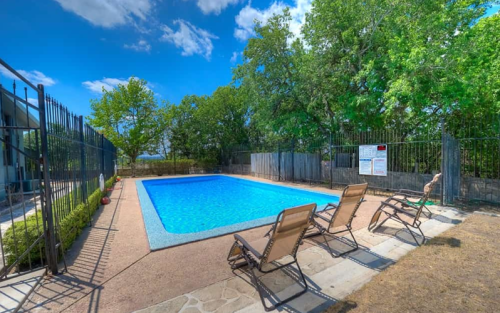
The official material reviewed does not establish a guaranteed private bedroom or bathroom for every Center Point admission. Dedicated housing for a particular track is not the same as single occupancy. Ask about the actual room assignment, shared spaces, accessibility, visitor arrangements, and current device rules. The rural property and recreation facilities can influence daily life, but they should be considered alongside the clinical schedule and the amount of individual contact rather than used as a substitute for those details.
A current public provider tariff for a defined residential stay was not verified. The former directory price came from a third-party estimate and is not presented as Starlite’s current official charge. Its admissions page says it accepts some managed Texas Medicaid plans and explicitly states that it is not a Medicare provider. Commercial coverage, military-related funding, and any managed Medicaid plan still require verification for the exact service. The provider also notes that copayments and some pharmacy or medication costs may remain payable by the client.
Before leaving residential treatment, Starlite describes a continuing-care coordinator working with the client and team on discharge planning. That plan may involve outpatient treatment, local clinicians, mutual-help groups, or other support, rather than a single standard next step. Confirm the receiving address, first appointment, transport and housing arrangements, medication follow-up, and expected personal costs. Starlite’s range of tracks and care levels is most useful when the connections between them are explicit and tailored to the person preparing to return to everyday life.
Primary Starlite program and admissions pages checked October 20, 2026. Published schedules are pathway-specific; admission, room allocation, staffing, and insurance coverage require current confirmation.
Conditions
Levels of care
Settings
Treatment approach
Individual and group therapy, CBT, DBT-related skills, family work, 12-Step and other mutual-help options, life skills, equine and experiential activities; distinct LGBTQ+, Christian, military/veteran and co-occurring pathways
Fees & admissions
Confirm current pricing
No current official defined residential tariff verified; previous US$20,000–US$30,000 estimate was third-party, not provider pricing. Starlite states it is not a Medicare provider and accepts some managed Texas Medicaid; exact benefits and personal charges require verification.
Confirm the current program, duration, accommodation and included services directly with the center.
Screening, nursing and physician assessment, psychosocial evaluation and funding verification. Confirm exact pathway and treatment location. Outpatient programs require ability to manage without 24-hour supervision; PHP excludes eating disorder treatment.