Care at Steps Recovery Center — St. George
Residential addiction treatment in southern Utah
Steps Recovery Centers operates a residential program in St. George, Utah, for adults dealing with substance use and related mental health concerns. Its current campus page describes individualized treatment, continuous support and supervision, trauma-informed care, family involvement, and preparation for continuing recovery. This profile focuses on the overnight residential service. Steps also operates outpatient services in St. George and other programs elsewhere in Utah, so a network-wide list of services should not be assumed to describe everything delivered at one property.
The official St. George residential page is the main source for the current clinical description. Recovery.com lists the residence at 3638 Sugar Leo Road and publishes a thirty-day price reference. Those details should be confirmed in the actual admission instructions and financial agreement. For people comparing treatment in the United States, this is a structured residential option in a southern Utah setting, rather than an acute hospital placement or an outpatient appointment with optional overnight lodging.
Clinical assessment and the appropriate starting point
Steps says treatment begins with a review of substance-use history, mental health concerns, medical needs, and personal goals. That information guides the recommended level and duration of care. A residential environment may be useful when a person needs more structure and support than appointments alone provide, but the diagnosis by itself does not establish suitability. The assessment should identify immediate priorities, previous treatment experiences, and the practical circumstances that will influence recovery after the stay. The resulting plan should be specific to the individual.
The St. George page says its team determines whether medical detox is needed and coordinates appropriate care. The wider Steps website lists a separate Payson detox location, while Recovery.com’s St. George record marks detox as not offered at that center. The available information should therefore not be turned into a guarantee of on-site withdrawal management at the Sugar Leo Road residence. Before traveling, the person should know whether stabilization occurs elsewhere, how transfer is arranged, and who is responsible for each part of the sequence.
The network describes medical professionals as part of its care and asks for an accurate medication history during admission. That does not establish a universal on-site physician or registered-nurse schedule at every campus. Someone with significant monitoring needs should have those requirements assessed against the actual St. George service. A plan that includes medical review is different from a hospital bed with a particular level of observation. The provider should explain what it can manage, how outside consultations are arranged, and what happens if a person’s needs change.
CBT, DBT, and trauma-focused work
The current residential description identifies cognitive behavioral therapy, dialectical behavior therapy, individual counseling, groups, EMDR, and other trauma-focused work. Cognitive behavioral approaches can help examine patterns linking situations, thoughts, feelings, and behavior. DBT-based skills can address distress, emotional regulation, and relationships. The purpose of listing these methods is to show the range the provider describes, not to promise that every client receives every intervention. The treatment team should explain which methods it recommends and what specific difficulties each is intended to address.
Trauma-informed care shapes how treatment is organized and how the person is supported; it is not identical to undertaking intensive trauma processing. A resident interested in EMDR should clarify the assessment, practitioner, timing, and intended goals rather than assume sessions begin immediately. The clinical plan may change as the person becomes more stable or as additional needs emerge. The current campus page supports the presence of trauma-focused options, but does not give a fixed number of EMDR appointments for every admission or guarantee a particular outcome.
Dual-diagnosis treatment is described as coordinated attention to substance use and co-occurring mental health concerns. That can involve understanding how symptoms, coping patterns, and substance use influence one another. It should not be interpreted as proof of a separate primary psychiatric inpatient program at this residential campus. The assessment needs to establish whether the current combination of symptoms is appropriate for the setting. Clear responsibilities for clinical review, medication, therapy, and outside care help avoid a fragmented plan in which each concern is treated as unrelated to the others.
Individual work, groups, and the residential routine
Individual counseling provides space to discuss personal history, current challenges, and treatment goals. Groups create a different environment for learning, accountability, and communication with peers. Steps describes both, but its public St. George page does not establish a universal number of private psychotherapy hours each week. A sample schedule should distinguish individual clinical sessions, groups, educational work, and activities. That makes the amount and type of care easier to compare with another program than a broad statement that treatment is individualized.
The residential setting is intended to reduce outside distractions and organize daily life around recovery. The provider describes continuous support, family work, wellness education, and opportunities to practice healthier responses to stress. Those elements require active participation rather than simply staying at the property. The person should understand the daily expectations, how concerns are raised, and how the team reviews progress. A useful plan connects what happens in the residence with the actual situations the person expects to face when returning to work, relationships, or other responsibilities.
Complementary activities on the current campus page include mindfulness, meditation, yoga or movement, art, and stress-management work, selected according to needs and goals. The directory additionally describes adventure and equine activities in the surrounding region. These should be understood as provider- or directory-described options, not a guaranteed itinerary. Weather, staffing, clinical suitability, and current scheduling can affect participation. Outdoor activities and a desert setting may help someone engage with the program, but they do not replace the clinical assessment or define the effectiveness of treatment.
Rooms, practical preparation, and device rules
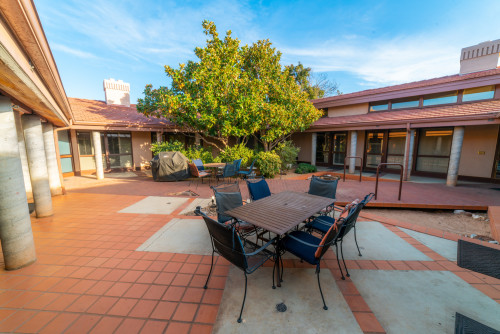
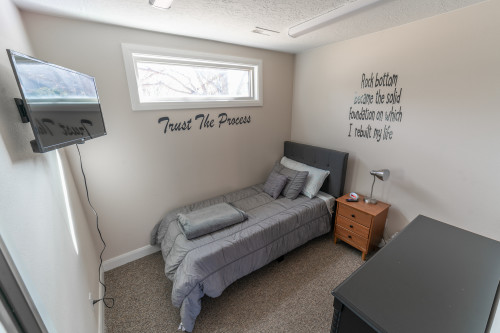
The current Recovery.com profile describes communal guest rooms, shared bathrooms, treatment spaces, outdoor areas, fitness equipment, and a tennis court. This profile does not promise a private room. The assigned bedroom, the number of people sharing, bathroom access, and accessibility arrangements should be confirmed before admission. Existing photographs help illustrate the setting but do not determine the room a future resident will receive or whether every pictured amenity will be available during the stay.
The official admissions guidance asks residents to bring prescriptions in their original containers, identification, insurance information, and contact details for clinicians or relatives they wish to involve. Vitamins or supplements must be unopened and approved by the medical team. It also asks for a credit card for medications. These instructions make medication review and payment an explicit part of preparation. They should not be interpreted as a reason to change a prescription without a clinician or assume all medication expenses are included in the residential price.
The network packing list restricts electrical devices, while the St. George FAQ directs people to admissions for the specific phone policy. The public wording does not establish unrestricted access to a personal phone or laptop. Before arrival, residents should obtain the current campus rules and plan for necessary contact, personal administration, work, or caring responsibilities. The packing guidance also favors a limited amount of comfortable clothing and practical personal items. A clear understanding of those everyday arrangements can prevent avoidable uncertainty during the first days of treatment.
Family participation and outpatient transitions
The St. George program describes family therapy and support as part of the available treatment plan. This work may help relatives understand substance use, communication, boundaries, and the changes needed after discharge. The particular participants and information shared should follow the resident’s consent and the clinical assessment. A family program should not be assumed to include unrestricted updates or the same schedule for every household. The provider should explain which sessions are proposed, how they are delivered, and whether any support for relatives is arranged outside the residential program.
Steps has a separate St. George outpatient service. Its description emphasizes scheduled treatment while people live outside the facility and continue appropriate responsibilities. Outpatient care may follow residential treatment or be considered directly for someone whose needs fit that level. It requires a suitable living environment and a workable clinical plan; it is not simply a less expensive version of an overnight stay. The exact location, schedule, eligibility, and cost should be agreed independently of the residential booking.
The wider Steps continuum also includes day treatment, sober living, alumni activities, and aftercare resources. Their existence does not mean every resident automatically receives each service or that later housing is included in the residential fee. Discharge planning should identify the actual appointments, prescribing responsibility, living arrangements, and recovery support that will follow. For a person returning outside southern Utah, the plan needs providers and resources that function where they live, with records and contact information transferred appropriately rather than only a general recommendation to continue care.
Thirty-day pricing and admissions
Recovery.com currently publishes an estimated cash-pay amount of USD 20,000 for thirty residential days. This is an attributed third-party estimate, not a numerical tariff published by Steps. It is shown as a thirty-day program reference rather than a calendar-month billing rule. The official St. George FAQ says duration depends on individual needs and clinical recommendations. A thirty-day price comparison therefore does not establish a mandatory or sufficient length of treatment, or the total cost of a longer admission.
The written quotation should specify accommodation, clinical services, medication expenses, any separate detox placement, outside appointments, transport, and additional days. Insurance verification should identify the precise policy benefits, authorization, and personal liability. The current official Steps number is +1 801-800-8142, which can be used to confirm the St. George placement and admission process. An informed decision should bring together clinical suitability, the assigned room, practical rules, duration, cost, and the next-stage plan, so that the residential stay is understood as one defined part of an ongoing course of care.
Conditions
Levels of care
Settings
Treatment approach
Individual and group counseling, CBT, DBT, EMDR and trauma-focused work when appropriate, coordinated co-occurring care, family therapy and selected mindfulness, movement, art and wellness activities
Fees & admissions
USD 20,000 / program
Recovery.com third-party estimated cash-pay rate checked October 20, 2026: USD 20,000 for thirty residential days. This is not an official tariff or calendar-month billing policy. Confirm accommodation, medical services, medications, any separate detox, outside appointments, transport, additional days and insurance liability. The official admissions guide requests a credit card for medications; subsequent outpatient care or housing has separate terms.
Confirm the current program, duration, accommodation and included services directly with the center.
Confirm clinical suitability, the St. George residential placement, any detox elsewhere, the exact room and arrival instructions, current phone/device rules and medication arrangements. Obtain a written thirty-day or individualized quote and separately confirm outpatient follow-up or housing.