
Care at The Dawn
The Dawn is a residential mental health and addiction treatment provider in Chiang Mai, Thailand. It offers clinical assessment, individual and group therapy, medical withdrawal support when appropriate, and continuing care. Its current accommodation information identifies two campuses: the main Dawn campus and the Viva campus. Both provide private en-suite rooms, but program assignment determines where a client stays. The setting and package should therefore be specified together when comparing an admission proposal.
The provider describes care for people seeking help with mental health concerns, substance use, or both. Its published approach places particular emphasis on trauma-informed treatment and a phased plan called the Treatment Roadmap. Those are descriptions of The Dawn’s model, not a conclusion that trauma explains every mental health condition. The assessment should consider the individual’s history, symptoms, medical needs, and goals without assuming one cause or one pathway for everyone.
Primary mental health care and addiction treatment
The mental health program describes residential support for concerns such as depression, anxiety, trauma-related symptoms, and burnout. It also addresses substance use when that occurs alongside the presenting mental health difficulty. A person does not need to assume that an addiction diagnosis is the primary reason for admission. The clinical conversation should establish which difficulties require attention first and whether the residential environment can support the necessary level of care.
That page describes an average stay of approximately sixty days, with longer stays sometimes considered for more complex needs. This is provider guidance, not a guaranteed timetable for improvement or a fixed recommendation for an individual. Ask what the proposed duration covers, how the plan will be reviewed, and which needs should continue to receive attention after discharge. A person recently discharged from hospital should also establish whether The Dawn can meet the specific follow-up and monitoring requirements.
How the Treatment Roadmap organizes the stay
The Treatment Roadmap begins with pre-arrival assessment and preparation, including contact with existing clinicians or family members when the client consents. A primary therapist is involved in understanding goals before or early in the admission. The next stage focuses on stabilization, orientation to the community, psychiatric review, and withdrawal management when needed. Its purpose is to establish a workable basis for participation in the more intensive therapeutic schedule.
The subsequent treatment phase includes coping skills, work on thoughts and behavior, emotional regulation, communication, and recovery planning. The published methods include cognitive behavioral therapy, dialectical behavior therapy, and psychoeducation. Ask how these elements are delivered in the selected program: individual appointments, skills groups, assignments, or a combination. Listing DBT among available methods does not by itself describe every component of a comprehensive DBT program, so a client seeking that specific model should clarify the format.
The final part of the Roadmap concerns consolidation and the transition out of residential treatment. Continuing-care planning begins earlier and is refined as the resident discovers which situations remain difficult. This phased structure is useful when it connects therapy to practical goals and review points. The website’s week ranges should be treated as an outline of the provider’s approach, rather than a schedule that every resident must follow at an identical pace.
Trauma-focused treatment and the question of timing
The trauma and PTSD program combines group work, individual therapy, and body-based activities. It names trauma-focused cognitive and behavioral work, narrative therapy, EMDR, and exposure-based approaches, with family work subject to consent. The provider also describes mindfulness, yoga, and other somatic practices. These are different kinds of intervention; their appearance in the same program does not establish that each has an equivalent evidence base or role.
The Dawn emphasizes preparation before directly addressing traumatic experiences and describes an extended commitment for its dedicated trauma phase. The detailed pages use different stage descriptions, so ask the clinical team to explain the complete proposed duration, including preparation and transition. A useful plan identifies the responsible therapist, the proposed method, how readiness is assessed, and how distress between sessions is managed. It should also explain what happens if the resident prefers to slow, adapt, or postpone particular work.
Medical support and withdrawal management
The alcohol-detox information describes registered nursing support around the clock, with medication and withdrawal management under a consultant psychiatrist. It also identifies access to hospitals in Chiang Mai when a medical emergency requires transfer. This distinguishes on-site monitoring from having the full resources of an acute hospital at the residence. The admission assessment should establish the medical needs the campus can manage and those requiring another setting.
The team page names Dr. Panu Khuwuthyakorn in psychiatric and medication-management work, alongside clinical psychologists, counselors, nurses, and client-support staff. It describes different therapeutic backgrounds within that group, including cognitive behavioral, acceptance-based, family, and trauma-related work. These are provider-published roles and biographies. A prospective resident should confirm who will actually be assigned, how psychiatric appointments are scheduled, and who responds to concerns between formal sessions.
Bring an accurate medication list and relevant clinical records through the admissions process. If detoxification is proposed, obtain the clinical location, anticipated monitoring, and transfer arrangements before travel. The provider’s published broad descriptions of safe or comfortable withdrawal should not replace an individualized medical assessment. The financial agreement also needs to distinguish included staff support from medication and external medical services, which the pricing page lists separately.
Optional TMS and other additions
The Dawn offers transcranial magnetic stimulation, or TMS, as a separately priced option within its residential services. The page describes an initial suitability consultation and sessions delivered by trained nursing staff. It currently publishes US$1,500 for a ten-session series. That is an add-on price, not the cost of residential treatment, and it does not establish the number of sessions appropriate for a particular clinical plan.
Before agreeing to TMS, ask the responsible clinician to explain the proposed indication, alternatives, relevant risks, and how response will be assessed alongside other care. The provider’s broad claims about several conditions should not be treated as universal indications or predicted outcomes. Similarly, its reports of changes in questionnaire scores describe selected provider records; they cannot determine whether a prospective client will benefit. Keep the clinical decision and the separate financial commitment visible.
Main campus, Viva, and private accommodation
The accommodation page places the Bespoke and Signature programs at the main campus, and Signature at VIVA and the Step Down program at the Viva campus. It describes Viva as a short drive away, with transport provided. Both campuses offer private rooms with en-suite bathrooms, television, internet access, toiletries, and housekeeping. A private bedroom is part of a broader residential community, rather than exclusive use of the whole property.
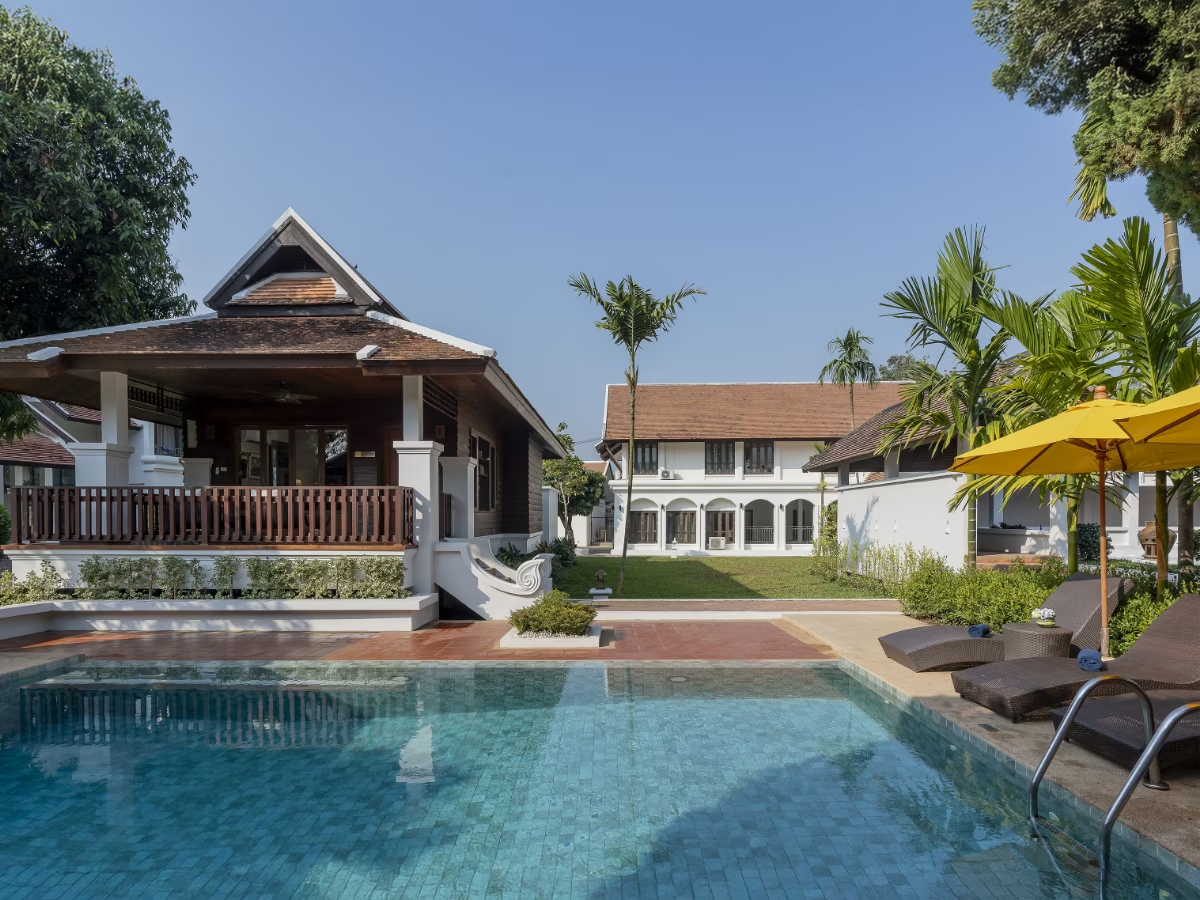
The main campus’s published facilities include therapy rooms, a pool, fitness facilities, a yoga and meditation studio, a massage studio, a library, and indoor and outdoor dining. The weekly program combines clinical appointments with wellness and selected outings. Confirm which facilities and activities apply at the assigned campus, especially if mobility, diet, sensory needs, or exercise restrictions affect participation. Photographs and the general amenity list should be checked against the actual room and program being booked.
What changes in the Step Down program
The detailed Step Down page describes a more independent stage for clinically suitable clients who have completed at least two months of primary treatment, with a minimum one-month step-down commitment. The broader Roadmap places this transition later in its illustrative sequence, so confirm individual eligibility and timing. This stage should not be presented as identical to the supervision or intensity of primary residential care.
Published step-down services include accommodation and laundry, a daily process group, one individual counseling session per week, fitness access, medical support, and transport to a designated point near town. Clients practice independent activities outside the premises and are expected back by 9 p.m. The program encourages some meals in town to build self-management. Ask how outside spending, appointments, attendance, and changes in wellbeing are handled, and which circumstances would require a different level of support.
Fees, insurance, and admission decisions
The official pricing page gives general Thailand market figures but asks clients to discuss The Dawn’s actual rates according to needs and duration. Those market figures are not a verified Dawn package quotation. The page lists medication, TMS, flights, visa-related costs, and off-site medical services among exclusions. Request an itemized proposal for the named program and campus, with the expected number of weeks and any optional services.
The admission process includes preliminary clinical screening, an admission decision, a published US$2,000 deposit, and settlement of the balance before arrival. The pricing page says clients normally pay directly and seek reimbursement themselves; any direct insurer arrangement must be agreed in advance. Verify the actual policy and any authorization requirement before relying on coverage. Clinical acceptance also depends on being able and willing to participate in the program and follow its guidelines.
Continuing care after returning home
The detailed aftercare page describes free online group sessions for alumni, lasting ninety minutes and limited to eight participants. Individual online counseling is available by arrangement for an additional charge. Some pages use different frequency wording, so confirm the live timetable and applicable time zone. The lifetime aftercare description concerns the ongoing group offering; it should not be understood as unlimited individual psychotherapy or continuous emergency monitoring.
Before leaving Chiang Mai, identify the clinicians who will provide local psychotherapy, medication review, and any physical-health follow-up. Arrange access to the online groups before discharge where possible, while ensuring the plan remains practical around work, family, and travel. The Thailand treatment directory can support comparisons, but the final decision should rest on the assessed level of care, exact campus and package, clear exclusions, and realistic support after the residential stay.
Official Dawn program, pricing, accommodation, and team pages reviewed October 20, 2026. Provider claims of exclusive accreditation status or guaranteed clinical benefit are not adopted. Program duration, staffing assignment, and insurance arrangements require individual confirmation.
Conditions
Levels of care
Settings
Treatment approach
Phased Treatment Roadmap with CBT, DBT-informed work, individual and group therapy, trauma-focused methods when indicated, psychiatric support, and continuing-care planning
Fees & admissions
Confirm current pricing
A current residential package tariff is supplied on inquiry. The USD10,000–20,000 range on the cost page describes the Thailand market and is not a Dawn quote. Medication, TMS, flights, visa-related expenses, and off-site medical services are excluded. Optional TMS is separately listed at US$1,500 per ten-session series. Published admission deposit is US$2,000, with the balance normally due before arrival; confirm current terms and insurance reimbursement individually.
Confirm the current program, duration, accommodation and included services directly with the center.
Confirm the care track, main-site accommodation, medical needs and extras.