Care at The Retreat at Sheppard Pratt – Towson
Residential psychiatric treatment at The Retreat
The Retreat at Sheppard Pratt is a self-pay residential psychiatric program in Towson, Maryland, with twenty-two private suites on the organization’s main campus. It serves adults whose mental health difficulties call for a sustained period of assessment, therapy, and support away from their usual environment. The service is particularly relevant when several problems overlap or earlier treatment has left important questions unresolved. This profile concerns The Retreat’s residential program and its associated transition options. Sheppard Pratt also operates other services with different admission requirements, payment arrangements, and levels of supervision; admission to this program does not automatically include those services.
The provider identifies depression, bipolar disorder, obsessive-compulsive disorder, personality disorders, and mental health conditions occurring alongside substance use as areas of focus. Its description of the adults it treats includes young people adjusting to independent adulthood, professionals struggling with work and relationships, and adults facing grief or major life transitions. These circumstances help explain the program’s emphasis on understanding a person’s situation beyond a diagnostic label. A particular diagnosis or stressful experience does not establish eligibility on its own; the admission team needs to consider symptoms, present functioning, and the kind of supervision required.
An unlocked environment with a defined admission threshold
The residential area is unlocked. Sheppard Pratt explicitly states that Retreat residents must be able to function without a locked unit, seclusion, or restraint. That distinction matters when comparing a private residential stay with admission to an acute psychiatric unit. The presence of doctors and around-the-clock nursing does not remove the program’s stated admission limits. Families should describe recent changes in behavior, substance use, medication, and ability to manage daily activities accurately during screening so that the team can determine whether this particular environment is appropriate. The Retreat’s location on a hospital campus is not a promise that every hospital service is part of its residential package.
Admission begins with a telephone discussion about the person’s history and reasons for seeking care. An advance tour can be arranged. On arrival, belongings are reviewed with staff, and the resident is introduced to the building, routines, and private suite. The published arrival guidance describes separate nursing, psychiatric, and physical assessments, including a review of medications and laboratory work on the following morning. These steps provide a practical starting point for treatment. Bringing an accurate medication list and relevant previous records can make discussions more useful than relying on a relative’s recollection of a complicated treatment history.
Assessment and therapy proceed together
The Retreat’s model combines diagnostic work with treatment from the beginning of the stay. Residents do not simply wait for a final assessment report before participating in therapy. Individual appointments, observation during ordinary activities, and group participation can each contribute information about symptoms and functioning. The provider describes a diagnostic and family meeting around day fifteen, when the team presents its findings and recommendations. That meeting is a point for reviewing the developing picture, rather than evidence that an initial diagnosis will necessarily change or that every question will be resolved within a fixed number of days.
According to the current program overview, residents have individual time with their treating doctor or specialized clinician and additional work with other members of the team. Depending on the plan, these may include family, art, movement, social-work, and wellness professionals. The overview also advertises up to thirty-five hours of group programming per week. This figure should be understood as group and interdisciplinary activity, not thirty-five hours of individual psychotherapy. For someone choosing between intensive programs, the useful comparison is the proposed balance of doctor-led work, other individual sessions, groups, and time to practice skills.
The published treatment approaches include psychodynamic therapy, cognitive behavioral work for anxiety and obsessive-compulsive symptoms, and dialectical behavior therapy. These approaches address different parts of a person’s experience: recurring emotional and relationship patterns, connections between thoughts and behavior, and skills for managing distress and interpersonal difficulties. The appropriate combination depends on the assessment and treatment goals. A resident with long-standing relationship difficulties may need a different emphasis from someone whose daily life is dominated by compulsive rituals. The presence of several approaches on a service list should therefore lead to an individualized plan, rather than an expectation that everyone follows the same sequence.
Substance use within a psychiatric treatment plan
For residents with both psychiatric and substance use concerns, The Retreat describes a combined approach that includes medication when appropriate, specialized addiction counseling, and peer support. Its biomedical and addiction treatment page describes co-occurring-disorder groups on five days each week and a weekly individual meeting with an addiction counselor. The counselor works with the primary therapist, allowing the substance use assessment to inform the wider psychiatric plan. This is more specific than assuming that every resident receives the same addiction program regardless of why they were admitted.
The substance use work includes examining the effects of use, preparing for triggers, and developing coping strategies. The provider also describes Alcoholics Anonymous, Narcotics Anonymous, and Al-Anon meetings on campus and encourages participation. Those meetings are a component of the available support, alongside professional treatment. Someone who has previously found a particular peer-support format helpful or difficult can discuss that experience before admission. The central planning issue is how the resident will apply what they learn after returning to familiar relationships and environments, including how their continuing psychiatric care and substance use support will fit together.
Relationships, family participation, and daily practice
The Retreat’s family and relationship work addresses communication, recurring interactions, and the difficulty of balancing personal needs with those of others. The relationships group may use role play to practice expressing needs and recognizing patterns that escalate conflict. Family and couples sessions provide a separate opportunity to examine strengths, difficulties, and possible changes within important relationships. These are clinical conversations, rather than a requirement that relatives agree on one explanation of the problem. The resident and team can establish who should participate and what information can appropriately be shared.
Family involvement is especially useful when returning home will involve practical changes. Examples include renegotiating household responsibilities, setting boundaries around work, or deciding how relatives can respond when symptoms begin to interfere with daily life. These decisions should be connected to the individual’s actual circumstances. Participation in a family meeting does not make relatives responsible for providing clinical care, and a carefully prepared discharge plan should specify the role of outside professionals. For a resident who does not have an available or appropriate family network, planning can instead focus on other supports agreed with the treatment team.
The residential routine also includes movement, creative activities, and opportunities outside conventional talking therapy. Published examples include yoga, art, rock climbing, and equine-assisted activities. Nursing staff check in about medication, physical observations, and the use of coping skills. These contacts can help identify difficulties that arise between scheduled therapy sessions. Activity choices should reflect the resident’s health, mobility, interests, and treatment plan. An advertised outing is not a commitment that every activity will occur during every stay, and physical participation should be discussed when there are medical or accessibility concerns.
Private suites on the Towson campus
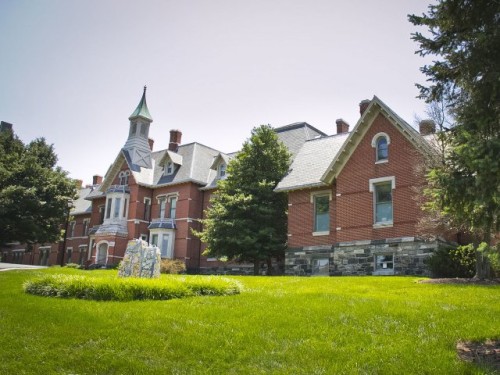
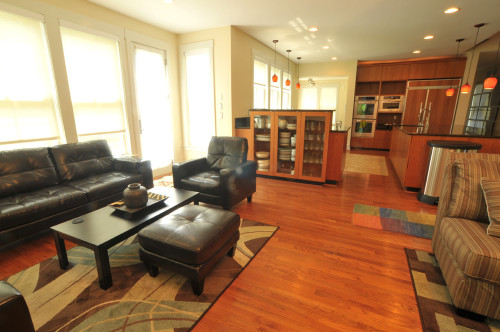
The Retreat provides private suites with bathrooms, Wi-Fi, and television, together with shared lounges and an outdoor courtyard. The wider eighty-seven-acre campus includes walking routes and other facilities. Phones, tablets, and laptops are allowed under the provider’s published arrangements, which can matter for staying in touch with family or managing essential responsibilities. Access to a device should still be coordinated with the therapeutic schedule. Private accommodation offers personal space, while meals, groups, and common areas create regular contact with other residents; the program is not an exclusive one-client residence.
Early in a stay, many residents are accompanied by staff when they leave their unit. The psychiatrist decides the appropriate escort level, and nursing staff help the person become familiar with the setting. An unlocked environment should therefore not be interpreted as unrestricted movement from the moment of admission. Before travel, it is useful to establish the likely arrival arrangements, any mobility support, and how visiting or leaving campus will be managed. These details are particularly relevant for people traveling from outside Maryland or balancing treatment with family responsibilities in another state.
Published fees and the self-pay arrangement
The official pricing page, checked October 20, 2026, lists US$70,000 for a minimum twenty-day stay. The continuing rate is US$3,500 per day, with payment for the first twenty days due on arrival. The published package includes doctors’ fees, medication, nursing, consultations, therapeutic programming, a private suite, meals, laundry, and therapeutic outings. The twenty-day minimum is a financial and program entry commitment, not a guarantee that a resident’s clinical needs will be resolved within that period. Extensions should be considered alongside the evolving treatment plan.
The Retreat states that it does not participate with health insurance. It refers families to SJ Health Insurance Advocates, an outside company that may help explore reimbursement through out-of-network benefits. Possible reimbursement is different from insurer participation or an assurance that the residential bill will be covered. Other Sheppard Pratt programs have their own insurance arrangements. Anyone relying on reimbursement should establish the relevant terms independently before treating it as available funding, and should clarify whether additional services or a subsequent step-down residence require separate payment arrangements.
Planning the transition beyond residential care
A discharge coordinator works with residents during their stay. For some people, the next step is returning home with local clinicians; others may benefit from additional support near Baltimore. Sheppard Pratt’s current continuing-care information describes Magnolia House and Ruxton House as residences available immediately after completing The Retreat. They combine outpatient treatment with supported daily living and preserve contact with the treating clinician. Admission is discussed with the Retreat team; these houses are not presented as independent entry points that can be substituted for the initial residential assessment.
The transition houses have private bedrooms, shared living areas, and twenty-four-hour staffing by mental health professionals. Occupational therapy focuses on practical tasks such as meals, time management, finances, study, volunteering, or employment. That emphasis differs from simply extending the same intensive residential schedule. The appropriate next step depends on what the person can manage and where continuing support will be available. Readers comparing the Towson program with care in another region can use the directory of treatment providers in the United States, while keeping the specific admission threshold, payment model, and transition needs central to the comparison.
Conditions
Levels of care
Settings
Amenities
Treatment approach
Concurrent diagnostic assessment and treatment, doctor-led individual care, psychodynamic therapy, CBT for OCD/anxiety, DBT, co-occurring addiction counseling, family work, creative/movement therapies and discharge coordination
Fees & admissions
USD 3,500 / day
Official rate checked October 20, 2026: USD 70,000 for the minimum twenty-day stay, with USD 3,500/day continuing throughout treatment. The first twenty days are paid on arrival. Published inclusions cover doctors, medication, twenty-four-hour nursing, therapeutic programming, private suite, meals, laundry and therapeutic outings. The Retreat does not participate with insurance; possible out-of-network reimbursement through an outside advocate is not guaranteed. Step-down arrangements require separate confirmation.
Confirm the current program, duration, accommodation and included services directly with the center.
Telephone screening and an optional tour precede admission. Review clinical suitability for an unlocked residence, medication and physical health needs, escort arrangements, the twenty-day minimum, self-pay terms and discharge or step-down planning.