About Tranquil Shores — Madeira Beach
Tranquil Shores in Madeira Beach
Tranquil Shores provides addiction treatment for adults eighteen and older in Madeira Beach, Florida. Its current website describes clinical programming, condominium accommodation, support for co-occurring mental health concerns and continuing care. The published admissions number is 727-361-6707. This profile concerns the Madeira Beach service in the United States; applicants should confirm their actual treatment and accommodation addresses rather than assuming every appointment and overnight service takes place in the same building.
The official overview emphasizes individualized treatment and a beachside environment. It also describes a limited counselor caseload, with three clients assigned to each counselor. That is a provider-stated caseload model, not an independently verified staffing ratio for every shift or a guarantee of continuous individual therapy. Ask how the assigned counselor works with other clinicians, how frequently individual appointments occur and who provides support outside the scheduled clinical day.
Clinical scope and detoxification arrangements
The programs page describes live-in treatment, day-and-night programming, outpatient services and aftercare. These should be compared by their actual clinical schedule and living arrangements. In this directory, the overnight model is described as residential care; the reviewed sources do not independently establish hospital admission. Ask which service is recommended, how it is licensed and staffed, and what support is available at the residence versus the clinical setting.
The provider’s medical detoxification page specifically describes trusted medical partners supervising detoxification. A listing of medical detox among Tranquil Shores’ programs therefore should not be read as proof of an onsite detoxification unit inside the condominiums. Ask whether detoxification is needed, the receiving facility’s name and address, its medical resources and how the transfer into Tranquil Shores will work. The initial assessment should establish the appropriate sequence for the individual.
If another service provides the first phase, obtain its admission and financial terms separately. Confirm who reviews existing prescriptions, which records are needed and whether a room is reserved for the later program. Ask how medication, laboratory testing, outside consultations and transport are billed. A quoted residential package does not automatically include all partner services. It is useful for the patient and anyone helping with arrangements to understand the same clinical and logistical plan before travel begins.
An integrated approach with optional twelve-step meetings
The current FAQ explicitly says the program is not based on twelve-step treatment. It describes an integrated recovery model and offers optional twelve-step meetings for participants who want them. This distinction may matter to someone comparing approaches. Ask how the regular clinical schedule is organized, what alternative support is available and how personal preferences are considered. Optional meetings should not be interpreted as the entire treatment model or as a guarantee of a particular weekly timetable.
The provider describes care for substance use alongside concerns such as trauma, depression and anxiety. For someone seeking co-occurring-condition treatment, ask how mental health assessment, psychiatric appointments and medication review fit the plan. Discuss current symptoms, previous treatment and any need for additional support. A general dual-diagnosis description does not establish unrestricted suitability for every presentation or replace the clinical team’s assessment of what this setting can provide.
Ask for a sample schedule showing individual work, groups, family sessions, practical skills and wellness activities. Clarify how often the plan is reviewed and how the resident raises concerns about a method, group or therapeutic relationship. The programs page describes a range of clinical and other approaches, but their availability and suitability should be established for the person considering admission. Neither a provider’s confidence in its approach nor a favorable review predicts an individual outcome.
Specialized tracks and outside requirements
Tranquil Shores describes programs for executives, athletes, medical professionals and military clients. The executive description includes planned access to phones and computers around treatment. Ask what is actually offered within the relevant track, which clinicians provide it and how it changes the schedule or price. A professional label should not be assumed to mean exclusive groups, a particular room or unlimited work time without a specific agreement.
If admission relates to a professional monitoring program, employer, sporting organization or other external requirement, confirm acceptance with the responsible organization as well as the treatment provider. The website describes relationships with professional and veteran programs, but participation may require an appropriate referral or authorization. Treatment should not be presented as a guarantee of restored employment, professional standing or satisfaction of every outside condition. Ask who prepares reports, what consent is needed and how responsibilities are coordinated.
Condominium accommodation and daily responsibilities
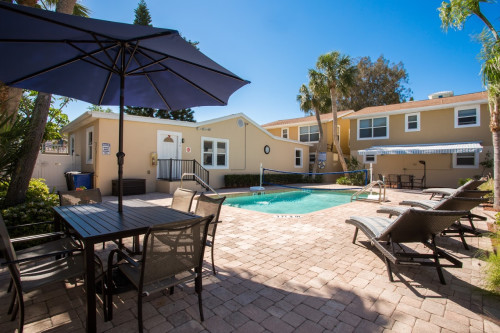
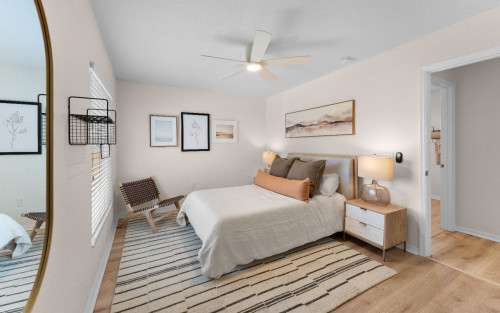
The current tour page describes private condominium accommodation, shared living and dining spaces, and separate group and counseling areas. The current secondary listing includes private-or-shared rooms. Confirm whether the offer is for a private bedroom, a shared bedroom or sole use of a condominium, along with the bathroom and common-space arrangements. These are different forms of privacy, and the phrase private accommodation does not settle the exact occupancy of an individual unit.
The published contact address is 4300 Duhme Road in Madeira Beach, but the actual assigned residence and route to clinical services should be confirmed. Request current photographs or an in-person tour when layout, mobility or privacy is important. Ask about stairs, walking distances, laundry, storage and staff access. The provider’s pages contain both twenty-two- and twenty-four-bed descriptions, so an exact current capacity should not be inferred from a single figure; current admissions can explain the actual arrangement and availability.
The programs page says clients take responsibility for grocery shopping, laundry and keeping their condominium tidy as part of practical living skills. This is a useful distinction from assuming a fully serviced hotel-style stay. Ask what assistance is available, how shopping and meals are arranged, and which costs are included. Explain dietary restrictions, allergies and support needs before admission. The tour page’s nutrition and meal-planning descriptions do not remove the need to understand the resident’s own day-to-day responsibilities.
The primary tour lists a pool, beach area, sports spaces, fitness facilities and wellness activities. Ask which are currently accessible, what supervision or clinical approval is required and whether any service attracts a separate fee. Photographs of a pool or beach do not establish unrestricted access or an identical view from every room. Activities such as yoga, massage or acupuncture should be discussed as possible elements of the program without assuming that each is appropriate, included or associated with a guaranteed health benefit.
Commitment, visitors and communication
The current FAQ states a minimum commitment of thirty days and describes ninety days as the standard program length, while acknowledging individualized stays. That is more specific than treating thirty-, sixty- and ninety-day references as equivalent interchangeable bookings. Ask what initial commitment is actually required, how clinical progress is reviewed and how financial terms apply if the plan changes. A minimum commitment is also different from an insurer’s authorization or a guarantee that a particular duration meets every person’s needs.
The FAQ identifies family therapy among the program’s services. Ask who can participate, whether sessions may be remote, how visits are arranged and what information is shared with the resident’s consent. Confirm device rules for the actual program rather than relying on the executive track or a general technology-friendly label. Request the current packing guidance before arrival, including rules concerning medication, supplements, electronics and nicotine products. An approved item or use arrangement may require a specific process.
Understanding the thirty-day estimate
The Recovery.com profile checked October 20, 2026 lists an estimated USD 32,000 for thirty days. This is a third-party program reference, not an official monthly tariff. It does not establish the total cost of the provider’s standard ninety-day course. Ask for the actual price of the recommended commitment, room arrangement and treatment sequence, including any partner detoxification. Do not assume that a longer stay is priced by simply repeating the headline amount.
A written offer should identify clinical services, accommodation, groceries or meals, medications, tests, outside appointments, transport, activities and family sessions. Ask about deposits, cancellation, early departure, transfer and extensions. If different organizations provide parts of the care, establish who bills each component and how new charges are communicated. Clarity about these details helps compare a condominium-based program with a residential offer that may include different domestic services or medical arrangements.
The secondary listing says Tranquil Shores accepts PPO policies and excludes HMO, EPO, Medicare, Medicaid and state-funded plans, while the primary material discusses out-of-network benefits and a veteran community-care route. These descriptions require policy- and referral-specific verification. Ask the provider and insurer about the exact service, network status, authorization and personal responsibility. A veteran referral pathway should be checked separately; it does not establish general acceptance of every public insurance plan or guarantee payment for the proposed stay.
Aftercare and the return to daily life
The provider describes alumni support and continued group therapy at no charge for alumni, alongside aftercare that may include outpatient services and help with job transitions. Ask which group is available, where or how it meets, and who is eligible. A free alumni group is not the same as all continuing therapy, medical care or housing being free. The outpatient stage should have its own agreed schedule, provider responsibilities and financial terms.
Before leaving, request named follow-up appointments, a medication plan and a suitable living arrangement. Discuss how local support will be organized if the person returns to another region, and how records reach the next clinician with consent. Choosing Tranquil Shores should connect an assessed clinical need with a clear residential arrangement, an understood commitment, appropriate financial terms and a practical continuation plan. Those details make the beachside setting one part of a complete decision.
Sources checked October 20, 2026: Tranquil Shores’ homepage, FAQ, programs, medical detoxification, tour and insurance-verification pages; Recovery.com for attributed room, insurance and thirty-day price information. Provider descriptions are distinguished from independently verified capacity or individual availability.
Destinations
Conditions
Levels of care
Settings
Amenities
Program approach
Integrated recovery model that is not twelve-step based, with optional twelve-step meetings; individual/group and family work, co-occurring support, practical living skills, professional tracks and assessed wellness activities
Fees & admissions
Estimated USD 32,000 / program
Recovery.com checked October 20, 2026 lists an estimated USD 32,000 for thirty days. This is a third-party program reference, not an official monthly tariff or the full price of the standard ninety-day course. Request the actual commitment, room/unit, partner detoxification, clinical services, groceries/meals, medication, tests, transport, activities and continuing-care charges in writing.
Confirm the current program, duration, accommodation and included services directly with the center.
Adults eighteen and older subject to assessment. Confirm exact clinical and condo addresses, partner detoxification if needed, medical and medication arrangements, actual bedroom/unit/bathroom occupancy, domestic responsibilities, diet/accessibility, devices/visits, minimum commitment, written fees and exact insurance or referral authorization.