Care at Twelve Oaks Recovery Center — Navarre
Twelve Oaks Recovery Center in Navarre, Florida
Twelve Oaks Recovery Center provides addiction and mental health treatment in Navarre, on Florida’s Emerald Coast. Its services include medical detoxification, residential care, partial hospitalization, and intensive outpatient treatment. The program overview identifies adults eighteen and older as the population served. This is a provider with several care pathways, so the most useful starting point is whether the person needs residential addiction treatment, a primary mental health program, or a less intensive service. Those options have different clinical criteria and should not be reduced to a single standard rehabilitation package.
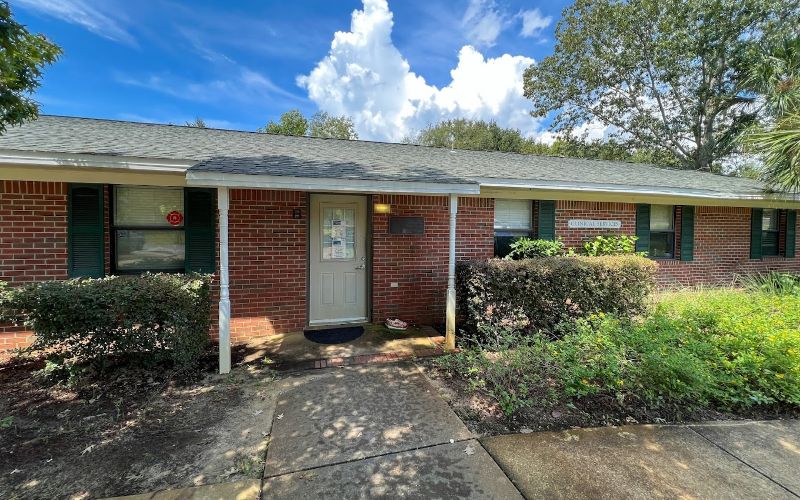
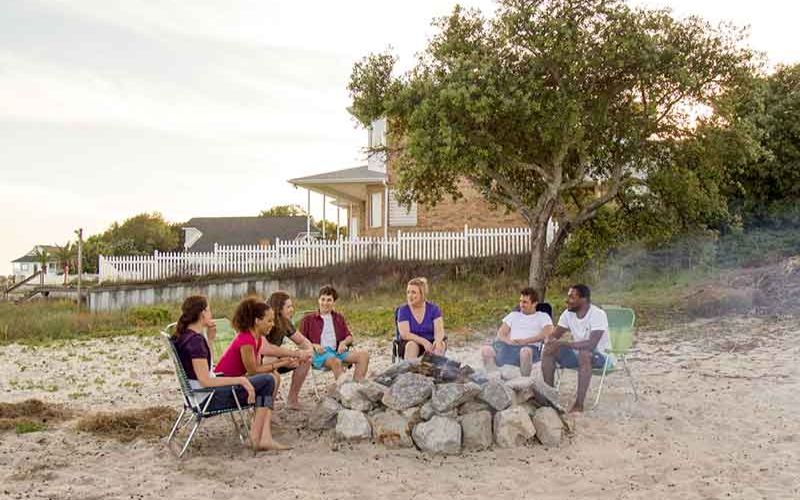
The campus is at 2068 Health Care Drive in Navarre. The provider’s FAQ describes a five-acre property beside the intracoastal waterway and a sandy beach, with 102 beds. That capacity is the provider’s published description, not an independently verified count of beds currently available. The waterfront setting offers a distinct environment for treatment, but accommodation and recreation are only part of the experience. The clinical plan, staff coverage, and suitability of the particular program remain the more consequential considerations.
Residential addiction treatment and its group-based model
The residential addiction program assigns a licensed or master’s-level primary counselor who works with the resident and the wider team on an individual plan. Published components include physical and substance use evaluation, psychiatric evaluation when needed, process groups, educational sessions, relapse prevention, exercise, yoga, and AA or NA support. The provider describes a six-phase model and identifies group treatment as a central part of its approach. Someone seeking a predominantly individual psychotherapy program should compare that preference with the actual balance of groups and one-to-one work proposed for them.
The FAQ describes practices consistent with the Matrix Model and Twelve-Step Facilitation. Cognitive work, recovery education, and discussion are used to help participants understand their own patterns and practice different responses. The published residential material also gives spiritual aspects of 12-step participation a prominent role. Applicants should discuss how the team accommodates their beliefs, previous experience with mutual-help groups, and any concerns about participation. The presence of 12-step meetings does not replace professional assessment or individualized treatment for accompanying mental health symptoms.
The admissions material describes a combination of diagnostic evaluation, developmental and social history, psychological testing, physical examination, and self-assessment. The team then reviews findings and recommends a treatment approach. This is an opportunity to distinguish current symptoms from assumptions based only on a previous diagnosis or substance history. The provider does not publish one guaranteed individual-session frequency for every addiction resident. Ask for the schedule that applies to the actual program, including how additional sessions are arranged when a clinical need emerges.
Detoxification and medical care
The detoxification service describes registered nurses observing residents around the clock, monitoring vital signs, and administering prescribed medication. Doctors are described as available twenty-four hours a day. Availability should not be interpreted automatically as a physician being continuously on the premises. An applicant with significant medical complexity should confirm the relevant staffing, monitoring capabilities, and hospital transfer arrangements before admission. The team needs an accurate account of recent substance use, withdrawal history, existing prescriptions, and other health concerns.
Medication decisions are described as individualized and made with the person’s informed consent. The FAQ also says residents may be maintained on medicines prescribed by their own physicians, subject to the treatment assessment. A prospective resident should obtain confirmation of the exact medication plan instead of assuming that every prescription will be continued unchanged or that discontinuation is required. Detoxification is presented as preparation for further addiction care, with residential or outpatient treatment following according to need. The duration and location of that next stage should be agreed as part of the admission process.
A distinct residential mental health pathway
Twelve Oaks also has a residential mental health program for adults with a primary mental health diagnosis. Its published criteria include symptoms that do not require acute inpatient stabilization and the ability to engage in the program. Examples of conditions considered include depression, anxiety, bipolar disorder, and PTSD. This distinction is useful for people who do not have a primary substance use disorder. It also establishes a boundary: the program is not described as a replacement for an acute hospital when that level of stabilization is needed.
The mental health page gives more specific clinical frequencies than the general addiction overview. It describes at least one weekly meeting with a psychiatrist, weekly individual therapy with additional sessions as needed, family sessions at an appropriate frequency, and multiple groups daily. Two core process groups are scheduled on weekday mornings, with further groups later in the day and on weekends. Basic medical care is available, with referral to partner hospitals when more intensive attention is required. Detox may be included when a primary mental health condition is accompanied by substance dependence.
The published duration for this particular mental health pathway is thirty to sixty days, adjusted to the individual. Its team includes a medical doctor, psychiatrist, registered and advanced practice nurses, and master’s-level or licensed clinicians. A discharge plan may involve outpatient treatment, community services, and peer support. Those descriptions make the mental health pathway more specific than a generic claim to treat co-occurring conditions. Before enrolling, confirm which groups are shared with addiction programs and which are designed around the person’s primary mental health needs.
Partial hospitalization and intensive outpatient care
The partial hospitalization page describes daily programming, including individual therapy, family work, medication management, and groups. It names motivational interviewing, CBT, rational-emotive behavior therapy, DBT, and brief solution-focused therapy. Groups address topics such as communication, triggers, conflict, self-esteem, and recovery skills; experiential activities may include art, guided imagery, recreation, and psychodrama. These methods are a menu from which an individual plan can be developed, rather than a guarantee that every participant will receive every intervention.
There is a material inconsistency in the provider’s public PHP information. The dedicated PHP page describes six hours daily, a typical thirty-day course, and on-site living. The general programs page instead describes returning home or to a supportive environment each evening and an average of approximately seventeen days. This profile does not choose one arrangement as definitively current. Anyone comparing PHP costs or arranging accommodation should obtain the current timetable, location, housing arrangement, and expected duration in writing before making plans.
The intensive outpatient program includes separate addiction and mental health programming, group work, one weekly individual session, and family therapy when needed. Its mental health options include CBT, DBT, EMDR, and experiential work, while the broader page also names motivational interviewing and Seeking Safety. However, published timing again varies: the dedicated page gives an average of eight weeks and a Monday, Wednesday, Friday schedule, while the overview mentions an average of two weeks. Even the dedicated page alternates between four therapy hours and a nine-to-noon timetable. Confirm the current schedule directly rather than relying on a single online figure.
Military personnel and first responders
The Service Resiliency Unit addresses the needs of active-duty service members, veterans, retirees, and first responders with substance use or mental health concerns. It emphasizes trauma, PTSD, depression, anxiety, and bipolar disorder, with individual, family, and group therapy. The group component is intended to create a community of people with relevant occupational experiences. Applicants can ask whether their proposed group is specific to service members or first responders, how confidentiality is handled, and what communication with a referring organization is required.
The military page contains broad wording about adolescent and adult beneficiaries, while the principal program pages specify adults eighteen and older. That does not establish that this Navarre campus currently operates an adolescent residential unit. Families seeking care for a minor should obtain explicit confirmation of the eligible service and location. For adult military or veteran admissions, clinical acceptance and funding authorization are separate steps. A TRICARE reference or VA Community Care banner alone is not an approval for a particular person, length of stay, or level of care.
Daily life, rooms, and family contact
The daily schedule describes breakfast and meditation followed by morning groups, further treatment after lunch, and AA, NA, or Cocaine Anonymous meetings on many evenings. Optional evening process groups are also described. Weekends still include educational groups and recovery activities, with an optional local church visit on Sunday. Free-time options include beach walks, the fitness room, board games, and beach volleyball. This is a structured treatment community, with recreation arranged around the therapeutic schedule.
The program overview describes men generally staying in dormitories and women in cabins. It does not establish a universal private-room arrangement. Confirm the actual room, bathroom, accessibility, and gender placement for the admission being considered. The FAQ also limits personal electronic devices and describes a first-week restriction on calls, but it retains visibly inconsistent wording about visits and subsequent phone access. The practical response is to request the current written communication policy, especially when family, caregiving, or employment responsibilities require reliable contact.
Family involvement is encouraged, with private sessions offered in person or by phone as appropriate. The mental health and PHP pages give their own descriptions of family work, so there is no single published schedule that applies to every resident. The leadership directory identifies Heather Joseph as group chief executive officer, Ashley Mason, LCSW, as chief operating officer and clinical services director, and Timothy A. Gooden, MD, as medical director. These are provider-published roles, not a guarantee that a particular leader will be the resident’s treating professional.
Price, duration, and the transition home
No current numeric tariff was verified. The payment page offers free benefits verification and lists commercial insurance arrangements, TRICARE, and VA Community Care Network through Optum. It explicitly excludes Ambetter, Medicare, and Medicaid. Treatment costs depend on the clinical pathway, duration, and coverage. Residential addiction duration also varies across the website: the dedicated page and FAQ describe thirty days or more, while the overview says many residents receive about thirteen days. A written care and cost estimate should resolve that discrepancy for the individual admission.
The alumni program describes continuing contacts, meetings, online support, and events, alongside assistance arranging appropriate follow-up appointments. Different pages give different check-in intervals, so a fixed call schedule should be confirmed rather than assumed. Alumni participation is distinct from ongoing clinical treatment. Before discharge, the useful outcome is a practical plan identifying the next clinician or program, medication arrangements, housing, and accessible community support. Twelve Oaks offers several possible stages of care; the decision depends on which of those stages is actually proposed and how its current arrangements fit the person’s needs.
Conditions
Levels of care
Treatment approach
Group-centered individualized care, Matrix Model and Twelve-Step Facilitation, cognitive and behavioral therapies, medical and psychiatric support, family work, experiential activities, relapse prevention, and continuing-care planning
Fees & admissions
Confirm current pricing
No current numeric tariff verified. Request an individualized estimate and insurer authorization. Current payment page lists commercial insurers, TRICARE and VA CCN–Optum, and explicitly excludes Ambetter, Medicare and Medicaid.
Confirm the current program, duration, accommodation and included services directly with the center.
Principal programs specify adults 18+. Primary mental health residents must not need acute inpatient stabilization. Confirm actual unit, medical suitability, medication plan, duration, housing, schedule and funding authorization.