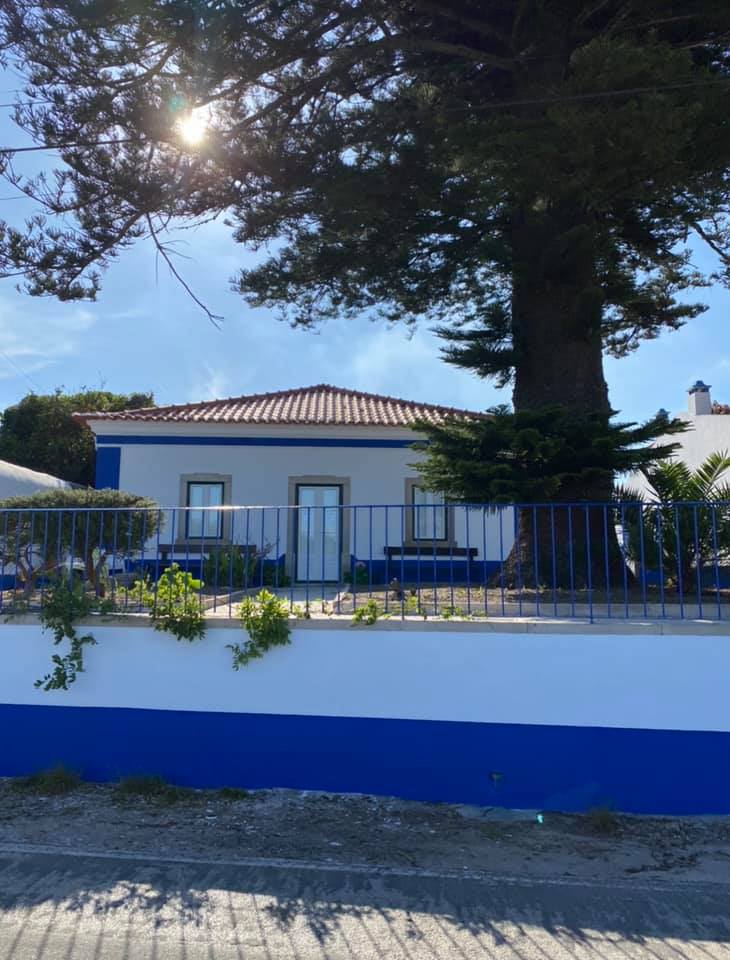
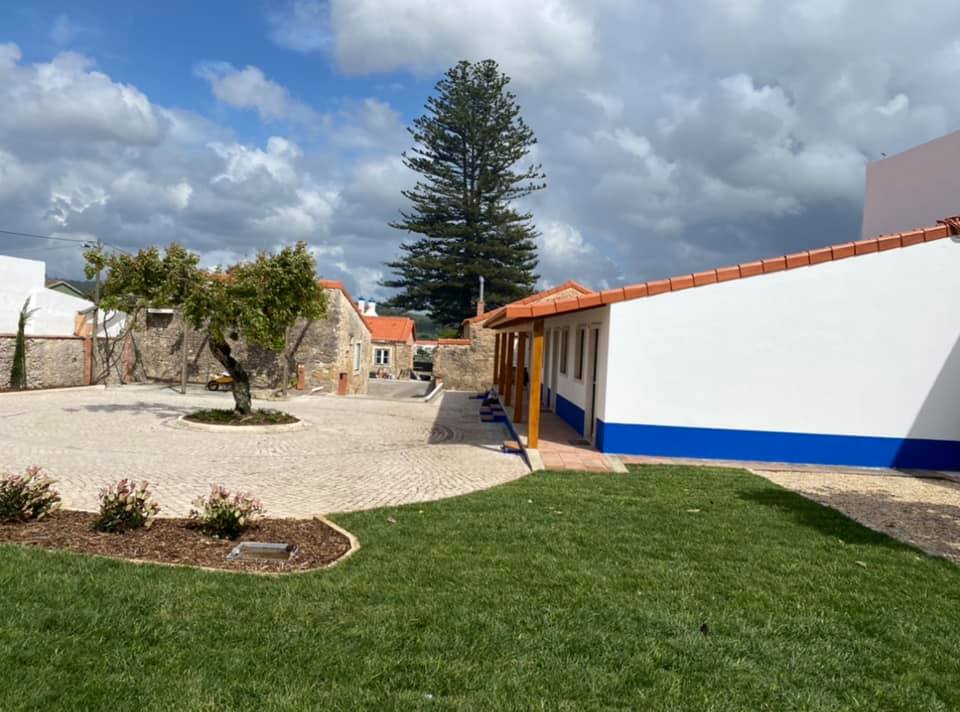
Care at VillaRamadas — Pine Tree House
About Pine Tree House in Bombarral
Pine Tree House is one of VillaRamadas’ treatment residences in Portugal. The provider’s current clinics page places this house in Bombarral and presents it within a wider service that also has residences in other towns and offers outpatient support. The distinction matters when planning an admission: Pine Tree House is a specific place to stay within the VillaRamadas program, not a separate clinical method or a guarantee that every service advertised across the organization is delivered inside that house. The assigned residence and treatment arrangements should be identified in the admission agreement.
The official residence listing also names Olive Tree House in Alcobaça, Garden House in Marinha Grande, and Ocean House in Pataias. Its renovation notices concern Olive Tree House and Garden House; they should not be transferred to Pine Tree House. At the same time, appearing on the current list does not confirm availability for particular dates. An applicant choosing Bombarral should obtain written confirmation that Pine Tree House is the intended residence and ask whether any parts of the program require travel elsewhere.
Who the wider program is intended to help
VillaRamadas’ main program description focuses on substance and behavioral addictions, emotional difficulties, and co-occurring psychiatric concerns. It describes an initial assessment that can take place online or in person, followed by an individualized plan. The provider identifies a multidisciplinary team that includes doctors, psychologists, nurses, and administrative staff. Those are organization-level statements, rather than an exact staffing roster for Pine Tree House. Prospective residents should ask which professionals will be responsible for their care and where appointments take place.
The treatment directory covers a broad range of concerns, including alcohol, drugs, prescription medication misuse, anxiety, depression, trauma, gambling, and relationship or behavioral difficulties. That breadth should lead to a careful assessment of the main problem and the required level of care. A person with several diagnoses should ask which concern the residential plan will primarily address and how the others will be managed. A list of conditions on a network website is not, by itself, evidence that a particular residence can accommodate every level of severity.
The provider also publishes information about eating-related treatment, including restrictive eating, bingeing, and purging. Someone considering the program for those concerns should obtain a specific explanation of nutritional support, medical monitoring, and the criteria for hospital referral. The reviewed pages do not establish an acute medical eating-disorder unit at Pine Tree House. The relevant admission question is whether the person’s current needs can be met within this residence and its clinical arrangements, rather than whether the wider organization discusses the diagnosis.
The Change & Grow approach
VillaRamadas uses its own Change & Grow model, developed by founder Eduardo Ramadas da Silva. The published therapeutic approach sets out five organizing principles: truth, acceptance, gratitude, love, and responsibility. It describes individual and group work intended to help people examine behavior, recognize consequences, and develop different responses. The model draws on several psychological traditions, including cognitive and behavioral approaches, acceptance and commitment therapy, psychodynamic ideas, and personal-development work. These are the provider’s description of its framework, not a promise of an identical therapy package for every resident.
More specifically, the provider describes individual CBT work, family-systems work, psychoeducation, practical problem solving, mindfulness, relaxation, and reading or writing tasks. It also uses a twelve-step sequence belonging to the Change & Grow model. Applicants should ask how that sequence is introduced and how it relates to any previous experience with mutual-aid programs. A meaningful treatment plan should explain how individual sessions, group discussion, and personal assignments connect with the person’s goals, rather than relying on the name of the model alone.
For example, someone whose substance use repeatedly follows conflict may want the team to explain how individual work on thinking patterns connects with communication practice and family involvement. Someone who finds written assignments difficult may need a discussion about language, concentration, literacy, or another way to participate. These are ways to assess the fit of the described program. They do not imply that the provider has guaranteed a particular adaptation. Establishing those details in advance makes the proposed daily work easier to understand and evaluate.
What the published research can establish
The provider’s research page lists publications on its therapeutic model and related topics such as mindfulness, cognitive functioning, and continuing care. Research activity is relevant background, but different studies answer different questions. A review of a therapy across several settings does not establish outcomes at Pine Tree House. Likewise, a paper written by members of a provider’s team should be assessed by its methods and limitations, rather than treated as an independent endorsement of the residence.
A 2019 preliminary study of Change & Grow reported changes in psychological measures between the beginning and end of treatment in twenty-six patients. The authors acknowledged a small sample, no control group, and no post-treatment follow-up; they also disclosed their roles at VillaRamadas. The study therefore does not establish a long-term sobriety rate or prove that the model outperforms another treatment. It is useful as an initial description and evaluation of the approach, with clear limits on what can be concluded for a person considering admission now.
Clinical roles and medical boundaries
The founder’s biography describes Eduardo Ramadas da Silva’s background in clinical psychology, addiction counseling, and development of the model. It should not be interpreted as identifying him as the resident’s medical doctor or psychiatrist. The wider team includes medical and nursing roles, but the reviewed public pages do not specify a Pine Tree House doctor schedule, nurse-to-resident ratio, or a guaranteed frequency of psychiatric appointments. Applicants can request those details from the clinical team when discussing the proposed plan.
For someone who may need alcohol or drug withdrawal management, the setting and level of monitoring should be agreed before travel. VillaRamadas’ general treatment pages do not establish which detox presentations can be managed inside Pine Tree House or whether a separate medical facility would be used. Ask where the initial assessment occurs, who prescribes, how observations are carried out, and what would prompt transfer. The same questions apply to significant physical illness or rapidly changing psychiatric symptoms. Around-the-clock residential support is not the same as hospital-level admission.
The quality policy describes staff training, multidisciplinary work, service improvement, and a commitment to applicable requirements, including the ISO 9001 framework. A policy statement does not independently establish a current external certificate or a license for every clinical activity. If a particular accreditation or licensed service is material to the decision, request the relevant current document and confirm that it applies to the intended residence and service. This keeps organizational aspirations separate from the practical details of an individual admission.
Shared bedrooms and life in the residence
VillaRamadas describes its Portuguese boutique residences as using rooms for two or three people with an en-suite bathroom. Room sharing is presented as an intentional part of the therapeutic community. In this description, a private bathroom belongs to the shared room; it does not mean each resident has a private bedroom. The same page says each treatment unit has a pool. Applicants should confirm the current Pine Tree House room layout, occupancy, bathroom arrangements, and pool access rather than assuming that photographs from another house show the proposed accommodation.
Sharing a bedroom can be a significant practical consideration for someone with disrupted sleep, a mobility need, or difficulty with communal living. It is useful to discuss those concerns as part of assessment instead of treating them only as hospitality preferences. Ask how the team handles incompatible schedules, quiet time, belongings, and concerns between roommates. The public material reviewed does not establish an individual-room entitlement at Pine Tree House. Someone who requires single occupancy should have that requirement explicitly accepted before relying on the residence as an option.
Duration, fees, and confirming the plan
There is no single verified length for every Pine Tree House admission. One example of the wider provider’s longer treatment pathways is its relapse-focused residential program, which describes approximately ninety to 135 days. That is a specific program description, not a universal minimum or the confirmed duration of a stay in Bombarral. An applicant should ask which program is being recommended, why that length is proposed, and what milestones will be reviewed before extending treatment or moving to less intensive support.
The current public pages reviewed do not publish a numerical Pine Tree House tariff. Obtain an itemized quote that identifies the residence, number of nights, bedroom arrangement, therapy, medical appointments, medication, transport, and any external clinical charges. If a proposed program changes after assessment, the revised costs and cancellation or early-departure terms should be explained before commitment. International applicants should also confirm the treatment language, travel arrangements, and which professional will coordinate with clinicians in their home country. The current contact page lists +351 918 120 945.
Continuing support after residential treatment
VillaRamadas publishes an Aftercare or HappyDay group-event format for current and former patients, with registration reviewed by the therapeutic team. Its rules emphasize confidentiality, participation, and the privacy of people still in residence. The page contains an event notice rather than a complete forward calendar or a guaranteed individual follow-up package. The relapse-treatment page also encourages monthly aftercare groups. Applicants should therefore confirm the actual schedule, eligibility, fees, location, and remote options that will apply when their stay ends.
The residence page separately describes structured individual outpatient sessions and online support across the organization. Those services should be distinguished from the care delivered while living at Pine Tree House. Before discharge, the plan should identify who is providing each follow-up appointment, who manages ongoing medication, and how local support will be arranged. The strongest basis for choosing this residence is a concrete agreement connecting the assigned house, the Change & Grow program, the necessary clinical services, and a realistic next step at home.
Information checked October 20, 2026 against the official Portuguese pages and primary research linked above. Organization-wide services are identified as such. No private-bedroom guarantee, exact on-site detox capability, individual outcome rate, or current external certification is inferred.
Conditions
Levels of care
Settings
Treatment approach
Provider-developed Change & Grow model with individual and group work, CBT, acceptance and commitment approaches, family systems, psychoeducation, mindfulness and personal assignments; plan individualized
Fees & admissions
Confirm current pricing
No current numeric Pine Tree House residential tariff verified on reviewed official pages. Obtain itemized quote for exact residence, duration, room, therapy, medical services, medication, transport and continuing care, with cancellation and extension terms.
Confirm the current program, duration, accommodation and included services directly with the center.
Online or in-person initial assessment; confirm Pine Tree House assignment, program and language, clinical staff, detox setting and transfer arrangements, room sharing, duration, full quote and continuing-care services.